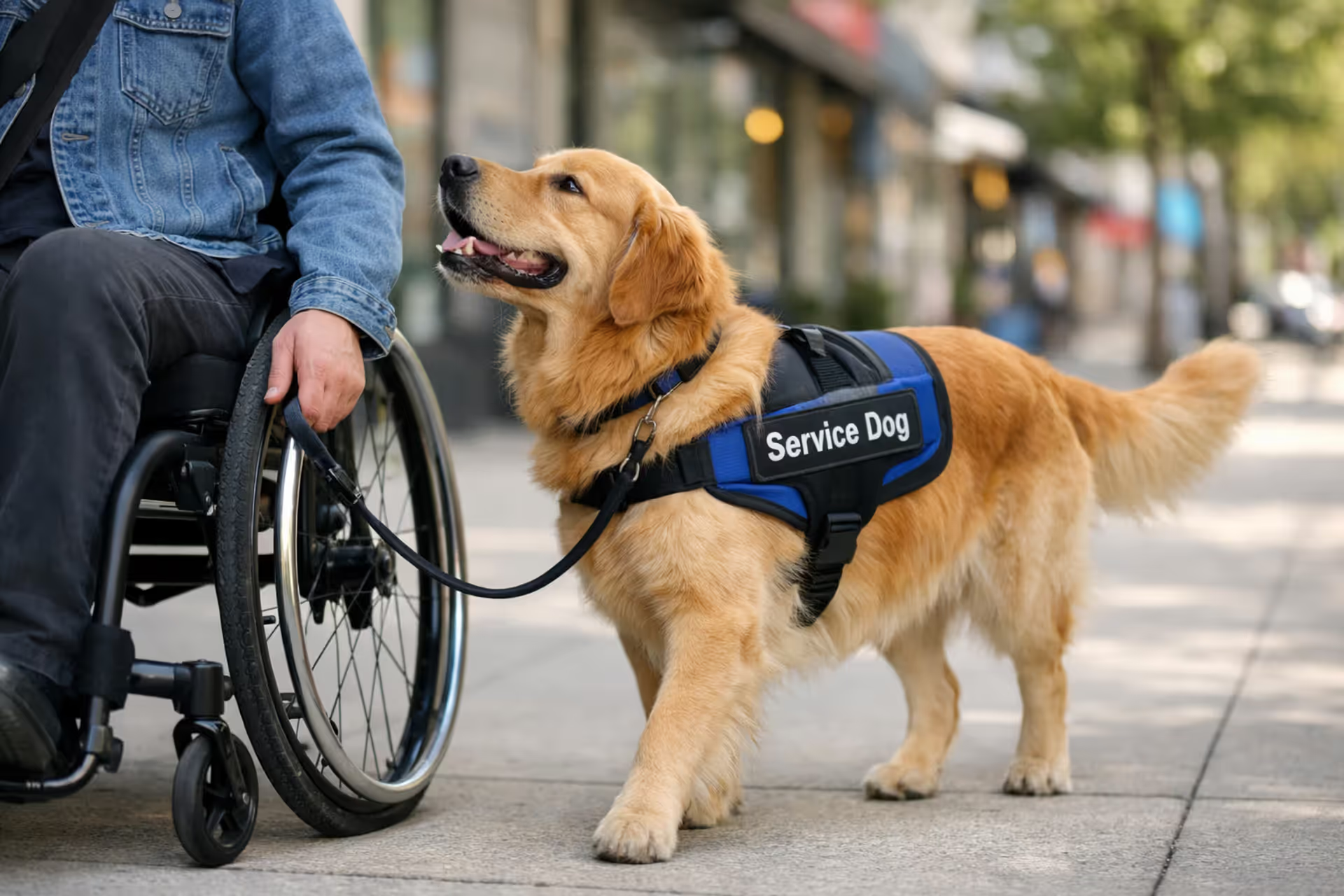
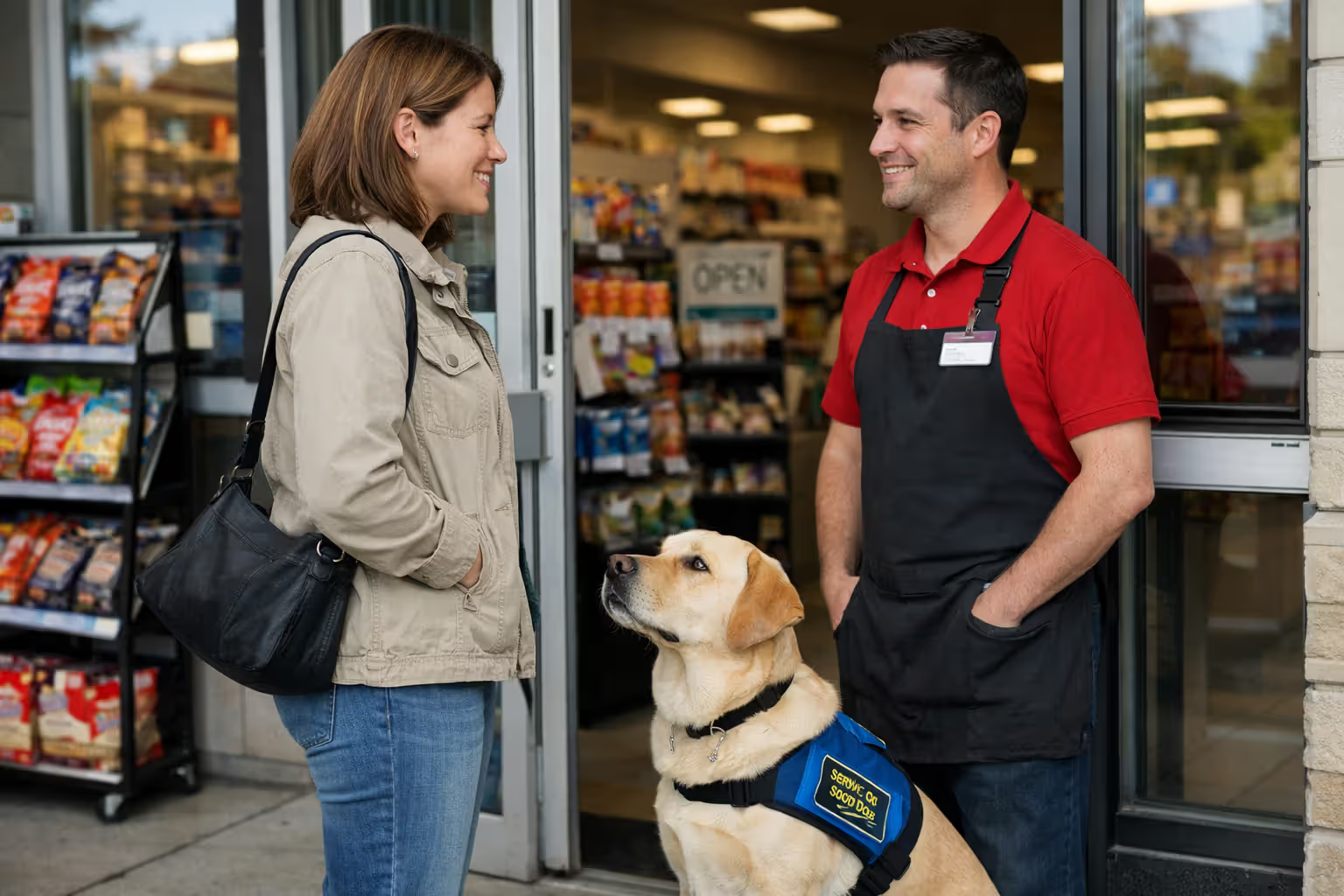
A woman collapses in a grocery store aisle. Before bystanders can react, her golden retriever presses an alert button on her medical vest, then positions itself as a brace so she can steady herself during the seizure's aftermath. Three aisles over, another shopper walks a vest-wearing Labradoodle that provides comfort during panic attacks but hasn't been trained to perform any specific task. Both handlers believe they have service dogs. Only one is correct under federal law.
The distinction matters. Service dogs receive legal protections that open doors—literally—to restaurants, airplanes, hospitals, and anywhere the public can go. Misunderstanding these rules creates problems for everyone: businesses unsure what questions they can ask, individuals with disabilities facing illegal denials, and properly trained service animals losing credibility because of untrained pets wearing fake vests.
What Legally Qualifies as a Service Dog Under the ADA
The Americans with Disabilities Act defines a service dog with surgical precision. The animal must be a dog (miniature horses qualify in limited circumstances, but that's the only exception). The dog must be individually trained to perform specific tasks directly related to a person's disability. The handler must have a disability as defined by the ADA—a physical or mental impairment that substantially limits one or more major life activities.
That task requirement separates service dogs from emotional support animals. Providing comfort through presence doesn't count. The dog must do something. A psychiatric service dog that interrupts self-harm behaviors, creates personal space in crowded environments, or retrieves medication during a dissociative episode qualifies. A dog whose mere presence reduces anxiety does not, even if that presence genuinely helps.
The greatness of a nation and its moral progress can be judged by the way its animals are treated
— Mahatma Gandhi
Service animals must also be under control. The ADA requires either a harness, leash, or tether unless the handler's disability prevents using these devices or they interfere with the dog's trained tasks. A German shepherd that alerts to oncoming seizures but also lunges at other customers loses its protected status during those outbursts. Handlers cannot claim disability accommodation as a shield for disruptive behavior.
Disabilities that qualify span physical and mental conditions: blindness, deafness, mobility impairments, diabetes, epilepsy, PTSD, severe depression, autism, and many others. The condition must substantially limit major life activities—walking, seeing, hearing, speaking, breathing, learning, working, caring for oneself, or performing manual tasks. A doctor's diagnosis helps establish this, but the ADA doesn't require handlers to carry medical documentation.
The law contains no federal certification or registration requirement. Websites selling "official service dog registration" are scams exploiting confusion. No government database tracks legitimate service animals. Businesses cannot demand proof of certification because no mandatory certification exists.
Service Dogs vs. Therapy Dogs, ESAs, and Other Assistance Animals
The terminology confuses people, sometimes deliberately. Companies profit from this confusion, selling ESA letters and fake certifications to individuals who want their pets in no-pet apartments or airplane cabins.
Emotional support dogs provide therapeutic benefit through companionship. They require no specialized training. A therapist or psychiatrist writes a letter stating the animal helps with a mental health condition. This letter grants housing rights under the Fair Housing Act—landlords must allow them even in no-pet buildings and cannot charge pet fees—but provides no public access rights. Your emotional support dog cannot enter Target, board a plane in the cabin (airlines changed their rules in 2021), or accompany you to work.
Therapy dogs visit hospitals, nursing homes, and schools to comfort multiple people. They undergo temperament testing and obedience training but work under handler direction rather than responding to a specific person's disability. These dogs have no legal access rights beyond what property owners voluntarily grant. They're working animals, but the work doesn't qualify them as service animals.
The term "assistance dog" sometimes appears as an umbrella category including guide dogs for the blind, hearing dogs for the deaf, and mobility assistance dogs. These are all types of service dogs with full ADA protections. "Assistance dog" isn't a separate legal category—it's descriptive language for service dogs that assist with specific disabilities.
Animal Type
Legal Definition
Training Required
Public Access Rights
Housing Rights
Documentation Needed
Service Dog
Dog trained to perform disability-related tasks
Extensive task-specific training
Full access to all public spaces
Yes, under FHA
None federally required
Emotional Support Animal
Animal providing comfort through presence
None legally required
None (not allowed in most public spaces)
Yes, under FHA with ESA letter
ESA letter from licensed provider
Therapy Dog
Animal providing comfort to multiple people
Temperament testing, basic obedience
Only where invited by facility
No special rights
Varies by therapy organization
Assistance/Guide Dog
Subset of service dogs for specific disabilities
Specialized task training (guiding, hearing alert, etc.)
Full access to all public spaces
Yes, under FHA
None federally required
Public Access Rights: Where Each Type Can Go
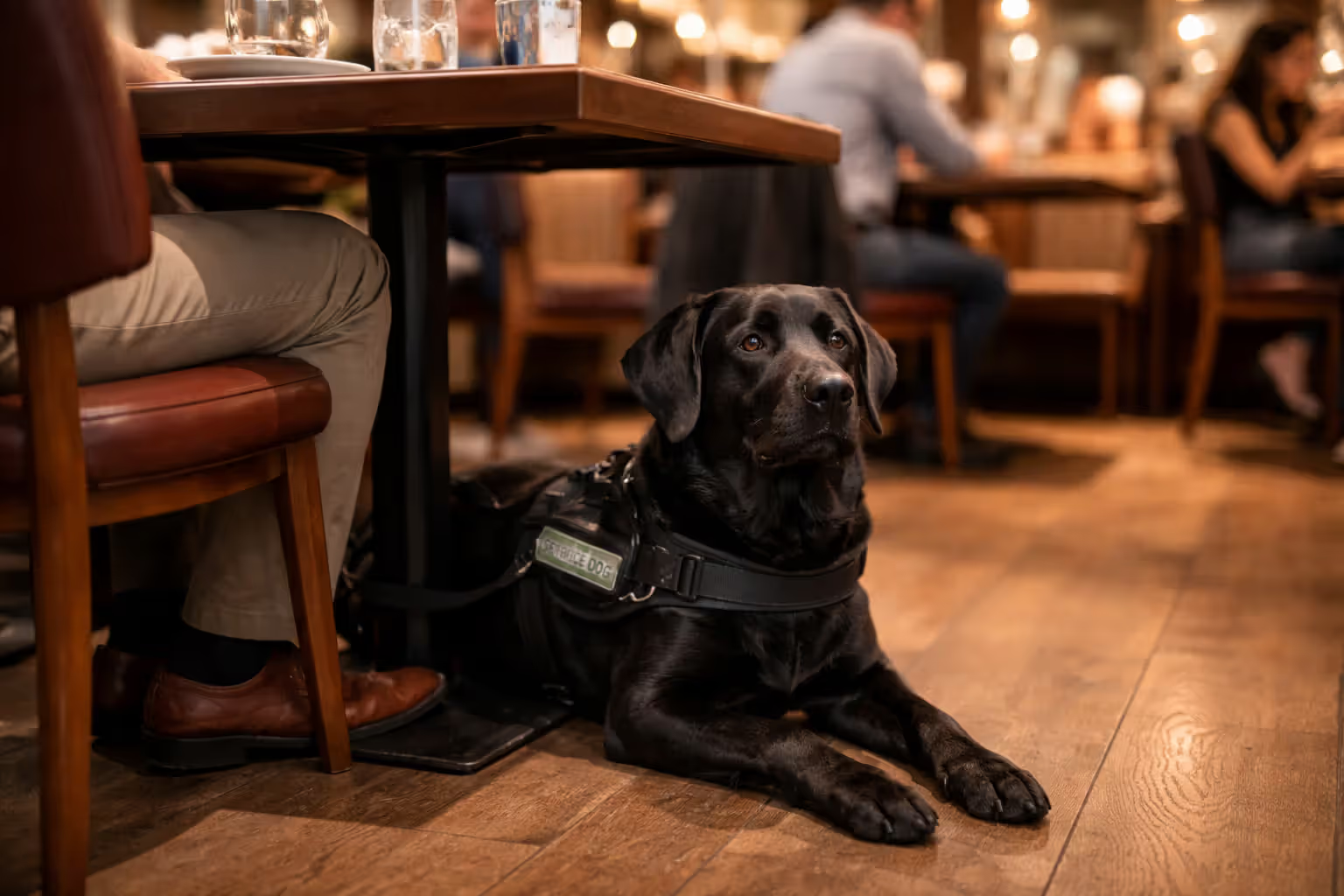
Service dogs accompany handlers into restaurants, grocery stores, hospitals, hotels, theaters, sports arenas, government buildings, and anywhere else the public is allowed. The dog's presence cannot be the reason for denial. A sushi restaurant cannot claim health code violations—the ADA overrides local health regulations on this point. Concert venues cannot relegate service dog handlers to special sections.
Exceptions exist but remain narrow. Operating rooms maintain sterile fields. Religious organizations receive exemptions for spaces used exclusively for worship. If a service dog's presence fundamentally alters a program's nature, exclusion may be justified—a dog in a swimming pool during water aerobics class, for instance, though even here, reasonable modifications should be explored first.
Emotional support dogs and therapy dogs enter public spaces only when property owners permit it. Store managers can refuse entry without violating any law. Flight attendants can require the animal to remain in a carrier under the seat. The handler has no legal grounds to object.
Author: Matthew Ridgeway;
Source: alwaysonsalepetsupplies.com
Housing and Travel Regulations for Different Animal Categories
Housing law diverges from public access law. The Fair Housing Act requires landlords to accommodate both service dogs and emotional support animals as reasonable accommodations for disabilities. This applies even in buildings with no-pet policies. Landlords cannot charge pet deposits or monthly pet rent for either type.
The landlord can request documentation for ESAs—that letter from a mental health professional. For service dogs, landlords can ask about disability-related need only if the disability isn't obvious and the need isn't apparent. They cannot require medical records or demand to know the specific disability.
Landlords can deny accommodation if the specific animal poses a direct threat to others' safety or would cause substantial property damage that reasonable modifications can't prevent. A service dog with a documented bite history might be denied even if the handler has a legitimate disability. The landlord must assess the individual animal, not make breed-based assumptions.
Air travel changed dramatically in 2021. Airlines now treat emotional support animals as pets, requiring carriers and charging fees. Service dogs still fly free in the cabin, but airlines can require handlers to submit forms attesting to the dog's training and behavior up to 48 hours before departure. The forms ask about the dog's ability to remain controlled in crowded spaces and whether it can avoid relieving itself during long flights or do so in a sanitary manner.
How Service Dogs Are Trained and Certified
Training a service dog takes between 18 months and two years on average. Programs breeding their own puppies start socialization immediately—exposing young dogs to sounds, surfaces, environments, and experiences they'll encounter throughout their working lives. Puppy raisers, often volunteers, teach basic obedience and house manners during the first year.
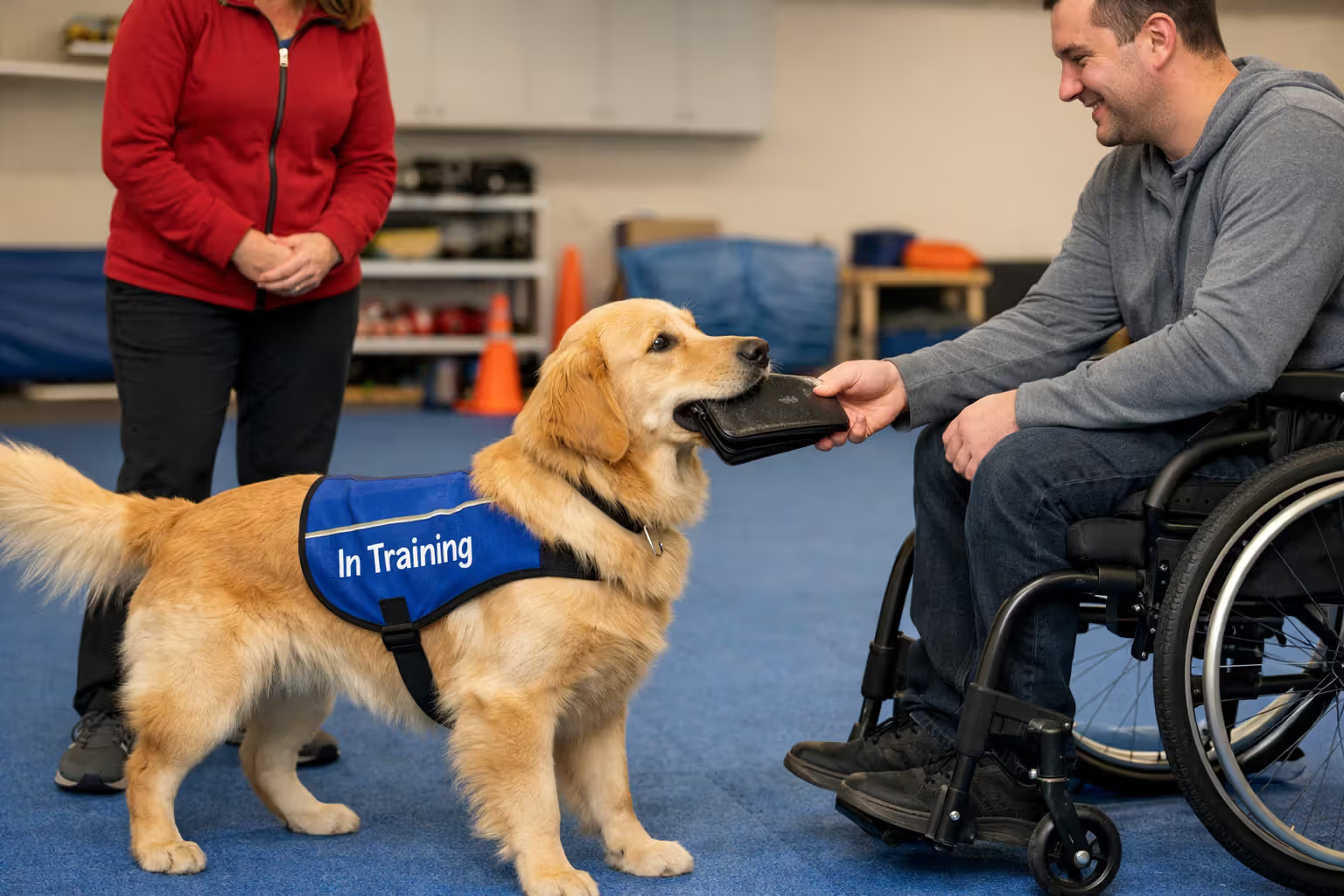
Formal task training intensifies around 12-18 months. Dogs learn the specific behaviors their future handlers need. A mobility dog practices bracing, retrieving dropped items, pulling a wheelchair, and helping someone stand. A diabetic alert dog trains to recognize the scent of blood sugar changes and alert through pawing, nudging, or retrieving a test kit. Programs use positive reinforcement—rewarding correct behaviors rather than punishing mistakes.
Author: Matthew Ridgeway;
Source: alwaysonsalepetsupplies.com
Professional programs charge between $15,000 and $50,000 for fully trained service dogs. Many nonprofits fundraise to provide dogs at reduced cost or free to recipients. Wait lists stretch two to five years at reputable programs. The high cost reflects intensive training, veterinary care, equipment, and the reality that not every dog completes training. Programs breed or acquire multiple dogs for every one that ultimately places with a handler.
Owner-training offers an alternative. The ADA explicitly allows individuals to train their own service dogs. This route requires significant time investment—several hours of training daily for months—and expertise many people lack. Poor training produces dogs that wash out or, worse, create public access problems that harm the service dog community's reputation.
Owner-trainers should work with professional trainers experienced in service dog work, not just basic obedience. The dog must learn to ignore distractions that typical pets find irresistible: dropped food, other animals, sudden noises, crowds. Task training requires understanding behavioral conditioning principles. A dog that alerts to seizures must reliably recognize pre-seizure indicators, a complex detection skill.
No certification requirement exists, but that doesn't mean standards don't matter. Responsible programs follow guidelines from Assistance Dogs International or similar organizations. These standards cover health testing, temperament evaluation, task proficiency, and public access behavior. A dog that growls at strangers or eliminates indoors hasn't met professional standards, legal or not.
Costs for owner-training include professional trainer consultations ($50-150 per session, with dozens needed), equipment, veterinary care, and potential costs if the dog washes out and the handler must start over. Budget $3,000-8,000 minimum. Many people underestimate the commitment and end up with an expensive pet rather than a working service dog.
Common Service Dog Tasks by Disability Type
Tasks must directly mitigate disability effects. The connection must be clear and specific. Here's what that looks like across different disabilities:
Mobility assistance dogs brace to help handlers stand from seated positions, pull wheelchairs, retrieve dropped objects, open doors, turn on lights, and press elevator buttons. A Great Dane might provide stability for someone with balance issues, positioning itself so the handler can lean against its sturdy frame. Smaller dogs retrieve items, bringing phones, medication bottles, or canes to handlers who cannot bend or reach.
Psychiatric service dogs interrupt anxiety attacks through tactile stimulation—pawing, nudging, or applying pressure. They create physical barriers in crowds, standing between the handler and other people. Some turn on lights and check rooms for intruders before handlers enter, helping those with PTSD feel safe. Others retrieve medication during panic attacks or lead disoriented handlers to exits or vehicles.
Guide dogs navigate obstacles, stop at curb edges, locate doors and stairs, and avoid overhead obstacles the handler might not detect with a cane. The dog doesn't decide where to go—the handler directs—but the dog ensures safe passage along that route. This requires intelligence and judgment; the dog must practice "intelligent disobedience," refusing commands that would lead into danger.
Dogs do speak, but only to those who know how to listen
— Orhan Pamuk
Hearing dogs alert deaf or hard-of-hearing handlers to sounds: doorbells, phone rings, alarm clocks, crying babies, smoke alarms, approaching vehicles. The dog makes physical contact, then leads the handler to the sound source or, for alarms, toward exits.
Diabetic alert dogs detect blood sugar changes through scent, alerting before levels become dangerous. The dog might paw the handler, retrieve a testing kit, or press a button to call for help if the handler becomes unresponsive. Accuracy varies—these dogs aren't substitutes for glucose monitors—but they provide an additional layer of warning.
Seizure response dogs protect handlers during seizures by clearing space, positioning themselves as cushions, activating alert systems, or retrieving medication and phones. Some dogs appear to predict seizures minutes before onset, though scientists don't fully understand this ability. Even without prediction, response tasks provide crucial safety.
Autism assistance dogs prevent wandering in children, interrupt repetitive behaviors, provide calming pressure during meltdowns, and tether to the child so parents maintain physical connection in public spaces. For adults, these dogs might interrupt dissociation, provide grounding during sensory overload, or buffer personal space.
The tasks must be trained behaviors, not natural responses. A dog that happens to notice its handler's anxiety and provides comfort hasn't performed a trained task. A dog taught to recognize specific anxiety indicators and respond with deep pressure therapy has.
Best Working Dog Breeds for Service Work (and Why Breed Isn't Everything)
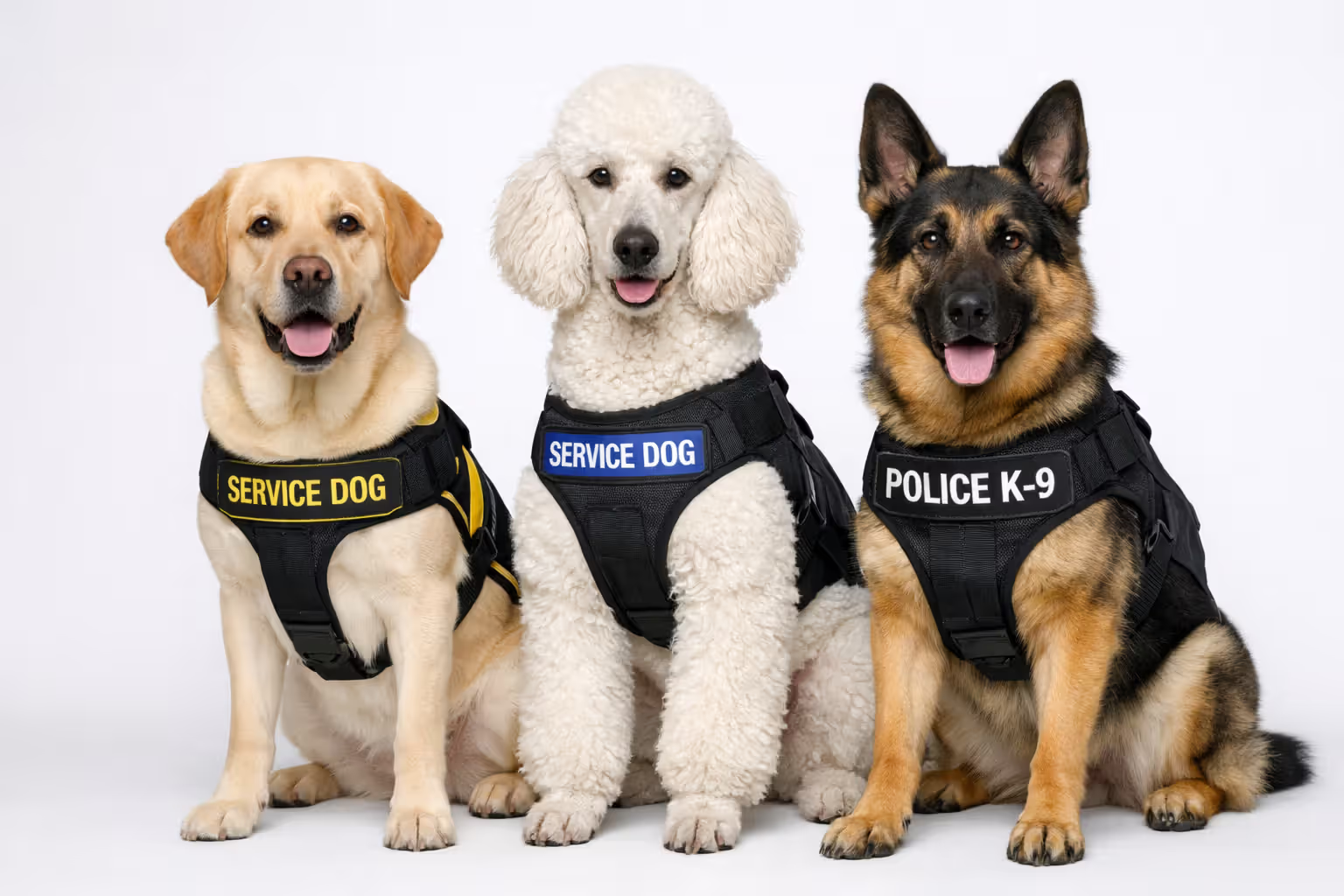
Temperament trumps breed, but certain breeds statistically succeed more often. Programs favor Labrador Retrievers, Golden Retrievers, and crosses between them for good reason. These working dog breeds typically exhibit the traits service work demands: eagerness to please, food or toy motivation, confidence without aggression, friendliness toward strangers, moderate energy, and resilience to stress.
Labrador Retrievers dominate guide dog programs. Their size suits harness work, their coats tolerate varied climates, and their temperaments remain stable across diverse situations. They want to work, which makes training efficient. Golden Retrievers offer similar advantages with slightly gentler temperaments, often preferred for psychiatric work.
German Shepherds and other herding breeds bring intelligence and handler focus but require experienced trainers. Their protective instincts must be carefully managed—a service dog cannot show territorial behavior. These breeds excel in mobility work where strength matters.
Standard Poodles appear frequently in programs, especially for handlers with allergies. Their intelligence and trainability rival any breed, and their non-shedding coats reduce allergen exposure. Poodle crosses—Labradoodles, Goldendoodles—attempt to combine Poodle coats with Retriever temperaments, though genetic outcomes vary more than in purebreds.
Small breeds work for specific tasks. Papillons, Pomeranians, and small Poodles perform hearing alert work effectively. Their size suits apartment living and makes travel easier. They cannot brace or provide mobility support, but not every handler needs those tasks.
Mixed breeds and rescue dogs succeed as service dogs, though at lower rates than purpose-bred dogs from working lines. A shelter dog's background remains unknown—early socialization, genetic temperament, trauma history. This unpredictability increases washout risk. That doesn't mean rescues can't become excellent service dogs, only that the odds shift.
Individual assessment matters more than breed. A Labrador from show lines bred for appearance might lack the drive programs need. A mixed-breed dog with the right temperament and motivation could outperform that Labrador. Responsible programs and trainers evaluate each dog's confidence, recovery from startlement, social attraction to people, touch sensitivity, and prey drive before investing training time.
Author: Matthew Ridgeway;
Source: alwaysonsalepetsupplies.com
Age affects suitability too. Programs typically start with puppies they can socialize systematically. Owner-trainers sometimes start with young adult dogs, but dogs over two years old have established behavior patterns harder to modify. A three-year-old pet dog rarely transitions successfully to service work.
Your Legal Rights and Responsibilities as a Service Dog Handler
Businesses can ask only two questions when your service dog's purpose isn't obvious: "Is this a service animal required because of a disability?" and "What work or task has the dog been trained to perform?" They cannot ask about your specific disability, demand medical documentation, require the dog to demonstrate tasks, or ask for certification papers.
You must answer honestly. "Yes, this is a service dog" and a brief task description suffice—"She alerts to my blood sugar changes" or "He helps me with balance." You don't owe detailed medical histories or disability specifics.
Businesses can exclude your service dog if it's out of control and you don't regain control, or if it's not housebroken. A barking dog disrupting other diners can be removed. A dog that eliminates inside a store can be banned. The business must allow you to return without the dog and should allow the dog back once you've resolved the behavior issue.
Author: Matthew Ridgeway;
Source: alwaysonsalepetsupplies.com
You're responsible for your dog's care and behavior. The dog must remain under control via leash, harness, or voice command. It cannot solicit food from other diners, jump on people, or wander away from you. Store employees aren't required to watch your dog while you shop or provide food and water. If your dog damages property, you're liable.
State laws sometimes expand protections beyond federal minimums. California prohibits businesses from charging service dog handlers damage deposits that other customers don't pay. New York increases penalties for misrepresenting pets as service animals. Some states require dogs to wear identifying gear; others explicitly state gear isn't required. Check your state's specific laws.
Misrepresenting a pet as a service dog carries consequences. Several states now impose fines ranging from $500 to $2,500 for fraudulent claims. Beyond legal penalties, fake service dogs undermine legitimate handlers. When untrained dogs bite, eliminate indoors, or disrupt businesses, owners become skeptical of all service dogs. Real handlers face increased questioning and illegal denials.
The world would be a nicer place if everyone had the ability to love as unconditionally as a dog.
— M.K. Clinton
If a business refuses your legitimate service dog, stay calm. Ask to speak with a manager. Explain the ADA's rules. If they persist, you can file complaints with the Department of Justice (for ADA violations) or your state's civil rights agency. Document the incident—date, time, employees involved, what was said. Many handlers carry ADA information cards summarizing the law, though you're not required to provide these.
Frequently Asked Questions About Service Dogs
Can my landlord deny my service dog even with a doctor's note?
Landlords must accommodate service dogs under the Fair Housing Act regardless of no-pet policies, and they cannot require a doctor's note for service dogs if your disability is apparent or the need is obvious. For emotional support animals, landlords can request documentation from a mental health professional. However, landlords can deny any animal—service dog or ESA—if that specific animal poses a direct threat to safety or would cause substantial property damage that reasonable modifications cannot prevent. They must assess the individual animal's behavior and history, not make assumptions based on breed. If your service dog has bitten someone or your ESA has destroyed previous apartments, denial might be justified.
Do service dogs need to wear vests or carry ID cards?
No federal law requires service dogs to wear vests, tags, or special harnesses, or to carry identification cards. Businesses cannot demand these items as proof. However, many handlers voluntarily use vests and patches because they reduce confrontations and signal to the public that the dog is working. Vests help other people know not to distract the dog. Just remember that vests have no legal weight—anyone can buy them online—so they don't prove anything under the ADA. Some state or local laws may have gear requirements, but these are exceptions.
How much does it cost to get a fully trained service dog?
Professional programs charge $15,000 to $50,000 for fully trained service dogs, reflecting 18-24 months of breeding, raising, training, and veterinary care. Many nonprofit organizations fundraise to provide dogs free or at reduced cost to recipients, but wait lists often stretch 2-5 years. Owner-training costs less in direct expenses—$3,000 to $8,000 for professional training consultations, equipment, and vet care—but requires hundreds of hours of your time and expertise many people lack. Some programs offer financing or payment plans. Veterans with service-connected disabilities may access free service dogs through VA partnerships with certain organizations.
Can I train my own dog to be a service dog, or must I use a program?
The ADA explicitly allows owner-training. You can train your own dog or hire a private trainer to help you. No law requires using an organization or program. However, owner-training demands significant time—several hours daily for 18+ months—and knowledge of advanced training techniques. Your dog must master both task work and public access behavior, remaining calm and controlled in challenging environments. Many owner-trainers work with professional service dog trainers (not just pet obedience trainers) to ensure proper technique. The advantage is lower cost and keeping your existing dog if it has suitable temperament. The disadvantage is high washout risk if your dog lacks the right temperament or you lack training expertise.
What happens if a business refuses my service dog entry?
First, calmly remind them of the ADA's rules: service dogs must be allowed in all public areas, and businesses can only ask two specific questions. Ask to speak with a manager. If they continue refusing, you can leave and file a complaint with the Department of Justice's Civil Rights Division or your state's civil rights agency. Document everything—date, time, location, employee names, exactly what was said. You may also have grounds for a lawsuit under the ADA, which can result in court orders requiring the business to change its policies and potentially monetary damages. Many local disability rights organizations provide advocacy support and can intervene on your behalf.
Are emotional support dogs allowed in restaurants and stores?
No. Emotional support dogs have no public access rights under federal law. Only service dogs—dogs trained to perform specific disability-related tasks—can enter restaurants, grocery stores, shopping malls, and other public accommodations. ESAs provide therapeutic benefit through companionship but lack the task training that qualifies an animal as a service dog under the ADA. Businesses can legally refuse entry to emotional support animals. ESAs do have housing rights under the Fair Housing Act and had airline cabin access until 2021, when regulations changed to classify them as pets requiring carriers and fees.
Understanding the difference between wanting your dog with you and needing your dog with you separates service dog handlers from pet owners. Service dogs perform jobs that create independence—alerting to medical crises, preventing dangerous situations, enabling navigation through a world built without disability in mind. The legal protections exist because these aren't pets; they're medical equipment with heartbeats.
If you're considering a service dog, start by honestly assessing whether you need task-based assistance or would benefit from companionship. Both are valid, but only the first qualifies for service dog protections. Research programs thoroughly, expect long waits and high costs, and understand that even after investment, some dogs wash out. For owner-trainers, find experienced service dog trainers and prepare for a multi-year commitment.
For everyone else, remember that service dog handlers navigate public spaces with invisible disabilities and visible accommodations. The dog wearing a vest in the grocery store might be the only reason that person can shop independently. A moment of education—understanding what questions are appropriate, why fake service dogs cause harm, how access laws actually work—makes public spaces more accessible for everyone who legitimately needs them.
Discover 25+ white dog breeds ranging from tiny apartment companions to powerful livestock guardians. Explore the genetics behind white coats, compare grooming demands across coat types, understand breed-specific health risks, and find the perfect snow-coated match for your actual lifestyle, family size, and daily routine
Searching for the perfect small dog breed that truly fits your daily routine? This detailed guide breaks down 15 popular tiny breeds by temperament, grooming demands, health risks, and annual costs. Whether you rent a studio apartment, raise young kids, or own a dog for the first time, find your match here
Explore the top 15 smartest dog breeds ranked by science-backed criteria, learn how canine intelligence is truly measured across three distinct categories, and get proven training strategies for brainy dogs. Find expert insights on matching a breed’s cognitive style to your lifestyle for a perfect fit
Looking for the perfect medium sized dog? Our detailed guide covers over 25 breeds, comparing them by family compatibility, suitability for apartment living, energy and activity levels, ownership costs, and daily care needs. Find the ideal match for your home, budget, and everyday routine today
The content on this website is provided for general informational and educational purposes only. It is intended to offer guidance on dog breeds, behavior, health, care, and lifestyle, and should not be considered a substitute for professional veterinary advice, diagnosis, or treatment.
All information published on this site is based on general knowledge, widely accepted research, and practical experience, but individual dogs may differ in behavior, health conditions, and needs. Results and outcomes may vary depending on the dog, environment, and circumstances.
The website is not responsible for any errors or omissions, or for actions taken based on the information provided. For specific concerns regarding your dog’s health or behavior, always consult a qualified veterinarian or professional dog specialist.