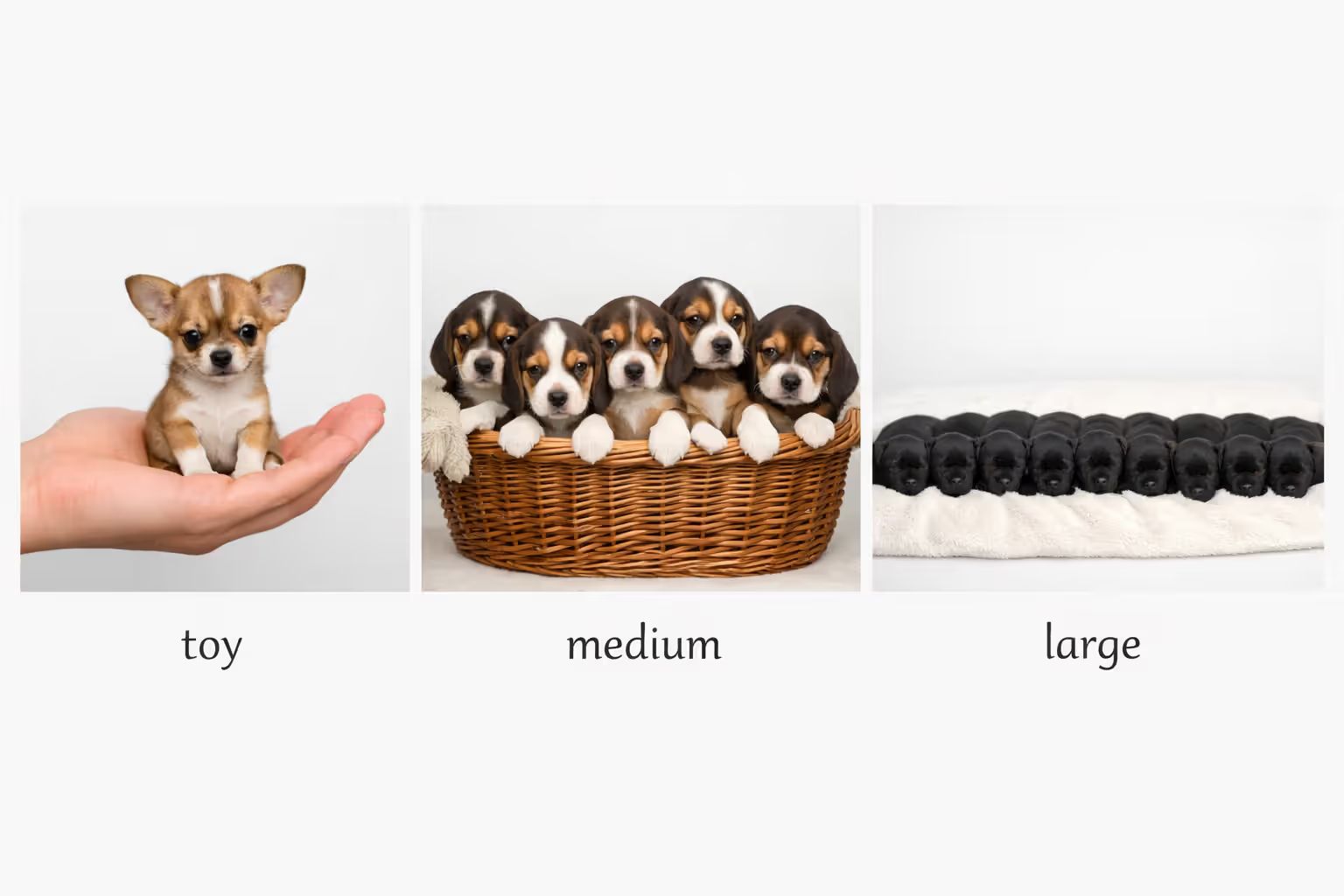
When your dog is expecting, one of the first questions on your mind is probably how many puppies to prepare for. The answer varies dramatically depending on breed, age, health, and genetics. A Chihuahua might deliver a single precious pup, while a Mastiff could surprise you with a dozen squirming newborns.
Understanding litter size helps you prepare financially, logistically, and emotionally for whelping day. Whether you're a breeder planning your next pairing or a pet owner navigating an unexpected pregnancy, knowing what influences puppy count gives you realistic expectations and helps you spot potential complications early.
Average Litter Size Across Different Dog Breeds
Most dogs deliver between three and seven puppies, but that's a misleading average. Breed size plays the dominant role in determining how many puppies arrive. A Neapolitan Mastiff and a Pomeranian both fall under "dog," yet their reproductive outputs couldn't be more different.
Veterinary data shows clear patterns when you group breeds by size category. Smaller dogs consistently produce fewer puppies per litter, while giant breeds regularly exceed eight or nine. This isn't random—it's tied to body mass, uterine capacity, and evolutionary factors that balanced survival rates with maternal resources.
These ranges represent healthy pregnancies in dogs aged two to five years. Individual results swing based on genetics, breeding timing, and the specific pairing. A Golden Retriever might have four puppies in her first litter, then nine in her second with a different stud.
Breed Size Category
Typical Litter Size
Example Breeds
Notes
Toy breeds
1–3 puppies
Chihuahua, Pomeranian, Yorkshire Terrier, Maltese
Single-puppy litters common; rarely exceed 4
Small breeds
2–5 puppies
French Bulldog, Shih Tzu, Boston Terrier, Miniature Schnauzer
Average around 3–4; first litters often smaller
Medium breeds
5–7 puppies
Cocker Spaniel, Bulldog, Border Collie, Australian Shepherd
Most consistent range; 6 is typical
Large breeds
6–10 puppies
Labrador Retriever, Golden Retriever, German Shepherd, Rottweiler
Can reach 12 in healthy, prime-aged dams
Giant breeds
8–12+ puppies
Great Dane, Mastiff, Saint Bernard, Newfoundland
Record litters often come from this group
What Determines the Number of Puppies in a Litter?
Litter size isn't random chance. Multiple biological and environmental factors converge to determine how many eggs get fertilized, implant successfully, and develop to term. Breeders who understand these variables make better pairing decisions and set appropriate expectations.
Author: Emily Crosswell;
Source: alwaysonsalepetsupplies.com
Dam's Age and Reproductive Health
Female dogs hit peak fertility between two and five years old. Breeding a dog during her second through fourth heat cycle typically produces the largest litters she'll ever have. Before age two, her reproductive system hasn't fully matured—follicle development may be inconsistent, and her uterus might not support as many embryos.
After age five, fertility gradually declines. Older dams release fewer viable eggs during each cycle, and implantation rates drop. A seven-year-old Labrador who had ten puppies at age three might only carry five or six in a later pregnancy. This decline accelerates after age seven, with single-puppy litters becoming more common.
Reproductive health matters just as much as age. Dogs with uterine infections, hormonal imbalances, or previous difficult births often have smaller subsequent litters. A dam who required a C-section due to uterine inertia may have scar tissue that reduces implantation sites. Brucellosis, a bacterial infection that causes infertility, can devastate litter size or prevent pregnancy entirely.
The greatness of a nation and its moral progress can be judged by the way its animals are treated
— Mahatma Gandhi
Breed Size and Genetics
Body mass directly correlates with uterine space and blood supply capacity. A 150-pound Mastiff has the physical room to nourish twelve developing puppies, while a six-pound Yorkie's body simply cannot support that many fetuses. Beyond the mechanical reality, genetics programs each breed for different reproductive strategies.
Toy breeds evolved (or were bred) to invest heavily in fewer offspring. Their puppies are relatively large compared to the mother's body weight—a Chihuahua puppy might weigh 15% of the dam's total mass at birth. Producing even three of these proportionally huge babies strains the mother's resources. Natural selection and human breeding priorities favored smaller litters with higher individual survival rates.
Giant breeds follow the opposite pattern. Their puppies are smaller relative to maternal body weight, and the mother's metabolism can support more simultaneous pregnancies. A Saint Bernard puppy represents maybe 2% of the dam's weight, making eight or ten feasible. Breeds developed for working roles often have genetic lines selected for larger litters to maximize breeding program efficiency.
Timing of Breeding and Stud Quality
When you breed matters enormously. Female dogs ovulate over a 24- to 48-hour window, but eggs remain viable for fertilization for about two to three days. Sperm can survive in the reproductive tract for up to five days. Breeding too early or too late relative to ovulation results in fewer viable embryos.
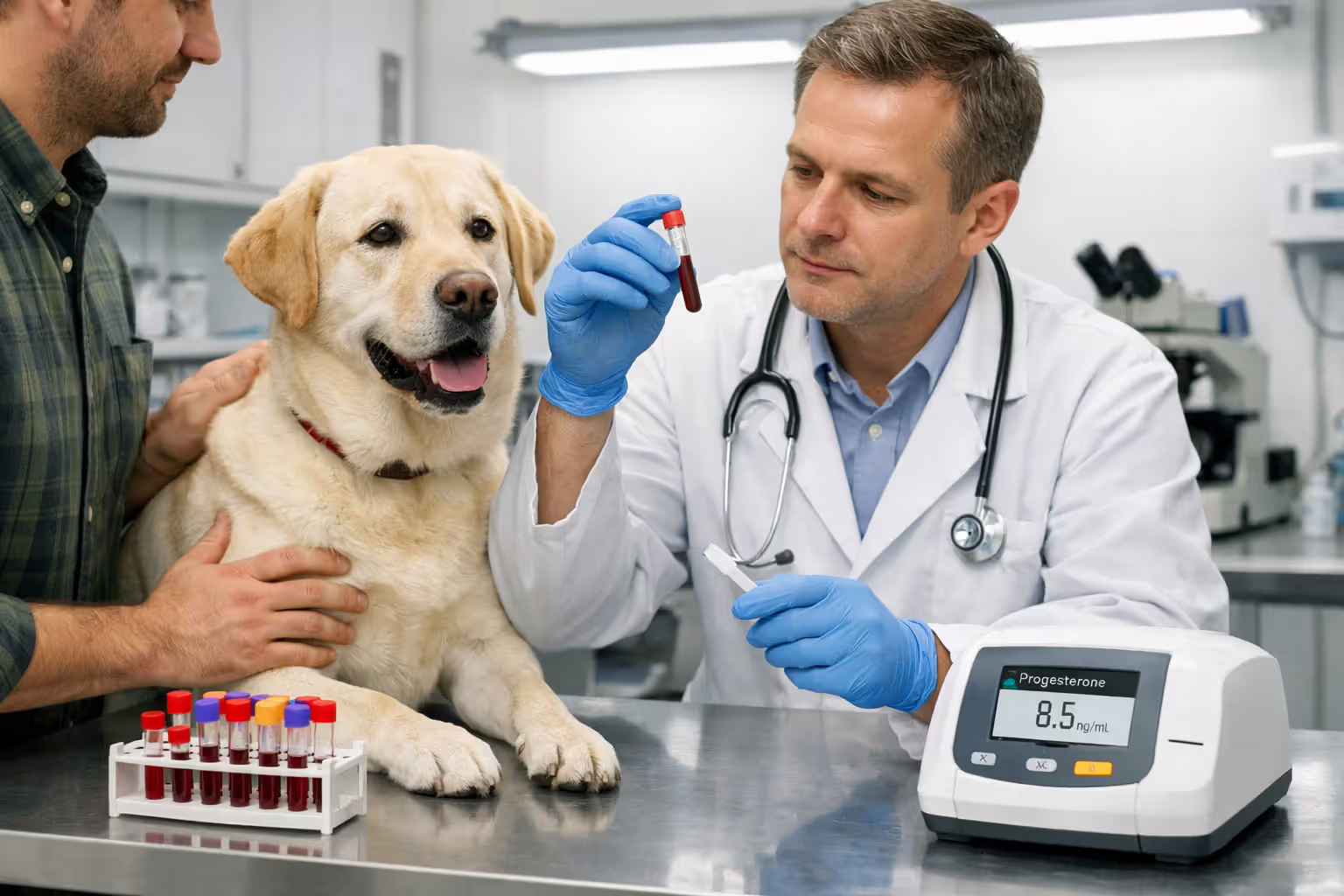
Optimal timing—breeding two days after ovulation—maximizes the number of eggs that meet healthy sperm. Breeders who use progesterone testing to pinpoint ovulation consistently report larger litters than those who guess based on behavior alone. A single mistimed breeding might produce three puppies when proper timing would have yielded eight.
Author: Emily Crosswell;
Source: alwaysonsalepetsupplies.com
The stud's fertility and genetic contribution also matter. Older males produce less concentrated sperm with lower motility. A ten-year-old male might sire half as many puppies as he would have at age four, even with the same female. Sperm quality varies between individual dogs too—some males consistently produce large litters regardless of the dam, while others underperform despite perfect health.
Overall Health and Nutrition
A well-nourished, fit dam carries more puppies to term. Obesity complicates pregnancy and reduces litter size—excess fat tissue disrupts hormone balance and can prevent proper implantation. Underweight dogs lack the nutritional reserves needed to support multiple fetuses, and their bodies may reabsorb embryos early in pregnancy.
Nutritional deficiencies before and during breeding affect egg quality and early embryo development. Folic acid deficiency, for instance, increases early pregnancy loss. Dogs fed high-quality diets with appropriate protein, fat, and micronutrients have better conception rates and larger litters than those on poor nutrition.
An animal’s eyes have the power to speak a great language. The bond between a human and their dog begins with responsibility
— Martin Buber
Chronic health conditions like hypothyroidism, diabetes, or Cushing's disease reduce fertility and litter size. Even temporary illness during the breeding window can impact results. A female fighting a urinary tract infection or recovering from an injury may have fewer viable eggs or a less receptive uterine environment.
Small Breed vs. Large Breed Litter Expectations
The size gap creates dramatically different whelping experiences. If you're preparing for puppies, knowing whether to expect two or ten changes everything from your supply budget to your time commitment.
Toy and small dogs typically deliver one to four puppies. French Bulldogs average around three, with four considered a large litter for the breed. Chihuahuas frequently have singletons or twins. These small litters come with their own challenges—single puppies grow larger in utero without competition for space, sometimes causing dystocia (difficult birth) that requires surgical intervention. The puppy may be too big to pass through the birth canal naturally.
Small breed pregnancies are also harder to count accurately. With only two or three puppies, ultrasound easily misses one, and even X-rays can show overlapping skeletons that confuse the count. Many small-breed owners arrive at the vet for a C-section thinking they're done, only to discover another puppy waiting.
Large and giant breeds routinely produce six to twelve puppies, with some litters reaching fifteen or more. A healthy Labrador in her prime typically has seven to nine puppies. German Shepherds average around eight. These larger litters spread risk—if one or two puppies don't survive, plenty of siblings remain. However, managing ten newborns requires serious time investment. Each puppy needs to nurse every two hours initially, and you must monitor all of them for adequate weight gain and warmth.
Author: Emily Crosswell;
Source: alwaysonsalepetsupplies.com
Exceptions exist in both directions. Some Golden Retrievers have three-puppy litters despite being a large breed, particularly in first-time or older mothers. Conversely, some small breeds surprise everyone—a Miniature Schnauzer once delivered eight healthy puppies, far above the breed's three-to-five average.
Record litters almost always come from giant breeds. The documented record belongs to a Neapolitan Mastiff who delivered 24 puppies via C-section in 2004, though only 20 survived. Great Danes, Saint Bernards, and Mastiffs regularly appear in large-litter reports. Their body size makes these numbers physically possible, though litters exceeding twelve often require extensive veterinary support.
What to Expect During Dog Pregnancy and Whelping
Dog pregnancy lasts approximately 63 days from ovulation, with normal variation between 58 and 68 days. The length doesn't change based on litter size—a dog carrying two puppies and one carrying ten both gestate for roughly nine weeks.
Early pregnancy offers few visible clues about litter size. Some dams show morning sickness around week three or four, but this doesn't correlate with puppy count. By week five, you'll notice weight gain and abdominal enlargement, but even experienced breeders can't accurately guess numbers by looking.
Ultrasound becomes useful around day 25 to 30 of pregnancy. A skilled veterinarian can confirm pregnancy and count gestational sacs, but accuracy varies. In large litters, sacs overlap and hide behind each other. Ultrasound works better for small litters where each puppy has distinct space. Expect an accuracy range of plus or minus two puppies.
X-rays provide the most accurate count, but only after day 45 when fetal skeletons have mineralized enough to show clearly on radiographs. Even X-rays aren't perfect—puppies positioned directly behind each other may appear as one, and in very large litters, the sheer number of overlapping skeletons makes counting difficult. Still, X-rays give you the best preparation estimate, usually within one puppy of the actual count.
As labor approaches, watch for nesting behavior, temperature drop (below 99°F), restlessness, and loss of appetite. These signs typically appear 12 to 24 hours before the first puppy arrives. Most dogs deliver all puppies within six to twelve hours, though large litters can take up to 24 hours.
Puppies usually arrive 30 to 60 minutes apart, though gaps up to two hours are normal if the mother is resting comfortably and not straining. If she actively pushes for more than 30 minutes without producing a puppy, or if more than four hours pass between puppies with more clearly remaining, veterinary intervention is needed.
Knowing the expected count helps you recognize when delivery is complete. If X-rays showed eight puppies and only six have arrived, you know to continue monitoring rather than assuming she's finished. This prevents life-threatening complications from retained puppies or placentas.
Until one has loved an animal, a part of one’s soul remains unawakened
— Anatole France
Record-Breaking and Unusually Large Dog Litters
While most litters fall within predictable ranges, occasionally a dam delivers an extraordinary number of puppies. These record litters fascinate dog lovers but often involve significant medical intervention and risk.
The largest reliably documented litter came from a Neapolitan Mastiff named Tia in 2004. She delivered 24 puppies via C-section in Cambridgeshire, England. Sadly, four were stillborn or died shortly after birth, but 20 survived—an enormous undertaking for the breeder who had to supplement feeding and provide round-the-clock care.
Other notable large litters include a Great Dane who delivered 19 puppies in 1987 and several Saint Bernards and Mastiffs with litters of 17 to 18. These cases share common factors: giant breed size, prime breeding age (usually three to five years old), excellent maternal health, and immediate veterinary support during whelping.
Certain breeds show genetic predisposition toward larger litters. Irish Setters, despite being only large (not giant) dogs, frequently produce litters of ten or more. Labrador Retrievers consistently rank among breeds with above-average litter sizes. Breeders sometimes select for this trait, choosing studs and dams from lines known for large, healthy litters.
Very large litters carry serious risks. The dam's body struggles to provide adequate nutrition to fifteen developing fetuses, often resulting in smaller birth weights and weaker puppies. Uterine overcrowding can cause premature labor or make natural delivery impossible. C-sections become necessary when the sheer number of puppies prevents normal contractions or when early puppies block the birth canal while many remain behind.
Newborn care becomes overwhelming with extremely large litters. A dam typically has eight to ten functional nipples. If she delivers fourteen puppies, supplemental feeding becomes mandatory—some puppies won't get adequate colostrum or milk. Breeders must weigh each puppy twice daily, rotate nursing positions, and bottle-feed the smallest or weakest to ensure everyone thrives.
Maternal exhaustion and calcium depletion (eclampsia) threaten dams with very large litters. The metabolic demand of producing milk for twelve or more puppies can cause life-threatening drops in blood calcium, leading to seizures and death if untreated. These mothers require calcium supplementation and close veterinary monitoring for weeks after delivery.
Author: Emily Crosswell;
Source: alwaysonsalepetsupplies.com
Frequently Asked Questions About Dog Litter Size
Can a dog have just one puppy?
Yes, singleton pregnancies occur in all breeds but are most common in toy and small breeds. Single puppies often grow larger than average because they don't compete for uterine space and nutrients. This can create whelping complications—the oversized puppy may not fit through the birth canal, requiring a C-section. Singleton puppies also miss out on early socialization with littermates, which can affect behavior development. Some breeders arrange playtime with puppies of similar age to compensate for this lack of sibling interaction.
Do first-time mothers have smaller litters?
Generally, yes. A dam's first litter is typically 20-30% smaller than her second or third litter, assuming she's bred during her peak fertility years. First-time mothers may release fewer eggs during ovulation, and their reproductive systems are less efficient at supporting multiple embryos. However, a first-time mother bred at optimal age (two to three years) will usually have a larger litter than an experienced mother bred at age seven or eight. Age matters more than experience.
How accurate are ultrasound puppy counts?
Ultrasound accuracy depends heavily on timing, equipment quality, and technician skill. Performed around day 28-32 of pregnancy, ultrasound can confirm pregnancy with near-perfect accuracy but struggles with exact counts. For litters of three or fewer puppies, accuracy reaches 80-90%. For litters of six or more, accuracy drops to 50-70% because puppies overlap and hide behind each other. Ultrasound works best for confirming pregnancy and assessing fetal health rather than providing exact numbers. X-rays after day 45 offer much better counting accuracy.
What's the maximum number of puppies a dog can have?
The biological maximum appears to be around 24 puppies, based on the Neapolitan Mastiff record. However, practical limits are lower—most giant breed females cannot successfully carry more than 15-16 puppies to healthy term without severe complications. The dam's uterine capacity, blood supply, and metabolic resources create hard limits. Litters exceeding 12 puppies almost always require C-section delivery and intensive supplemental feeding for the puppies. Any litter over 15 puppies should be considered exceptional and medically risky for both mother and offspring.
Does the father's breed affect litter size?
The sire influences litter size less than the dam, but his genetics and fertility do matter. In mixed-breed pairings, litter size typically follows the female's breed tendencies—a small female bred to a large male will still have a small-breed-sized litter because her body determines capacity. However, the male's sperm count, motility, and genetic fertility traits affect how many eggs get successfully fertilized. Some males consistently sire larger litters regardless of the female, suggesting genetic factors beyond simple breed size. Male age also matters—older studs produce less viable sperm, reducing litter size even with prime-aged females.
How long between puppies during delivery?
Normal intervals range from 30 to 60 minutes, though some puppies arrive just 10 minutes apart while others may have two-hour gaps. The pattern varies—a dam might deliver three puppies rapidly, then rest for 90 minutes before continuing. As long as she's not actively straining without results, these pauses are normal. She may clean puppies, nurse them, or simply rest between deliveries. Red flags include active pushing for more than 30 minutes without producing a puppy, signs of distress (excessive panting, trembling, vomiting), or more than four hours passing with puppies clearly still inside. Large litters often take 12-24 hours for complete delivery, with natural rest periods built in.
Preparing for a litter requires understanding that breed, age, health, and genetics all converge to determine how many puppies arrive. While averages provide useful guidelines, individual variation means you should prepare for a range rather than a specific number. Work with your veterinarian to get the most accurate count possible through X-rays after day 45 of pregnancy, and prepare both emotionally and logistically for the reality that counts can be off by one or two puppies in either direction.
Whether you're welcoming two puppies or twelve, each litter brings unique joys and challenges. Smaller litters mean more intensive bonding with each puppy but require vigilance for singleton complications. Larger litters spread your attention thin but offer the reward of watching a whole pack of personalities develop. Understanding what influences these numbers helps you make informed breeding decisions and provide the best possible care for both dam and puppies throughout the process.
Discover 25+ white dog breeds ranging from tiny apartment companions to powerful livestock guardians. Explore the genetics behind white coats, compare grooming demands across coat types, understand breed-specific health risks, and find the perfect snow-coated match for your actual lifestyle, family size, and daily routine
Searching for the perfect small dog breed that truly fits your daily routine? This detailed guide breaks down 15 popular tiny breeds by temperament, grooming demands, health risks, and annual costs. Whether you rent a studio apartment, raise young kids, or own a dog for the first time, find your match here
Complete guide to service dog requirements under the ADA, including legal rights for handlers, public access rules, housing and air travel regulations, training costs and timelines, task examples by disability type, best breeds for service work, and key differences between service dogs, emotional support animals, and therapy dogs under United States law
Explore the top 15 smartest dog breeds ranked by science-backed criteria, learn how canine intelligence is truly measured across three distinct categories, and get proven training strategies for brainy dogs. Find expert insights on matching a breed’s cognitive style to your lifestyle for a perfect fit
The content on this website is provided for general informational and educational purposes only. It is intended to offer guidance on dog breeds, behavior, health, care, and lifestyle, and should not be considered a substitute for professional veterinary advice, diagnosis, or treatment.
All information published on this site is based on general knowledge, widely accepted research, and practical experience, but individual dogs may differ in behavior, health conditions, and needs. Results and outcomes may vary depending on the dog, environment, and circumstances.
The website is not responsible for any errors or omissions, or for actions taken based on the information provided. For specific concerns regarding your dog’s health or behavior, always consult a qualified veterinarian or professional dog specialist.