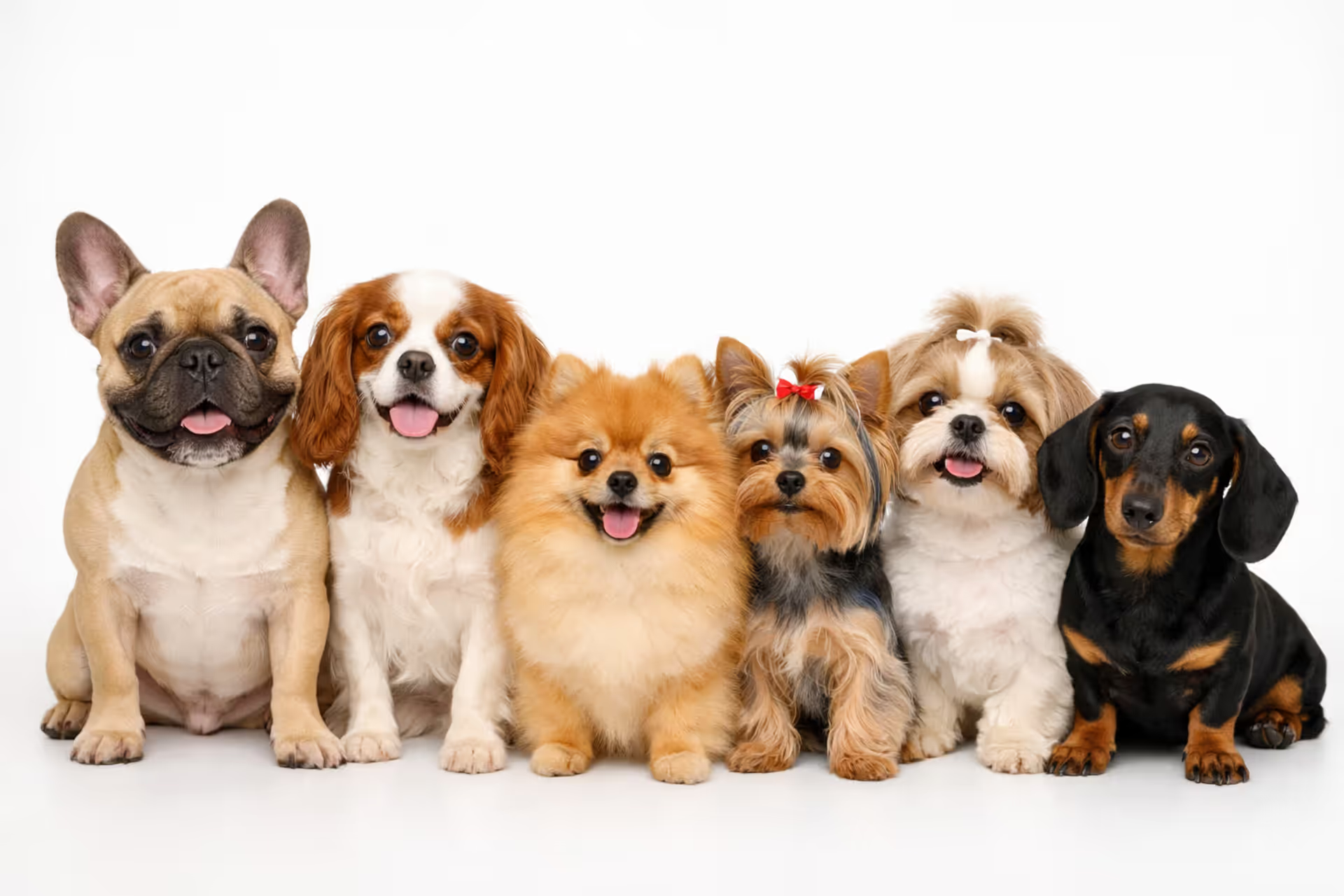
Group of popular small dog breeds including French Bulldog, Cavalier King Charles Spaniel, Pomeranian, Yorkshire Terrier, Shih Tzu, and Dachshund sitting together on a light background
Author: Lucas Fairmont;Source: alwaysonsalepetsupplies.com
Small Dog Breeds: Your Complete Guide to Choosing the Perfect Tiny Companion
Picking a dog isn't just about falling for a cute face at the shelter. When you're drawn to pint-sized pups, you're entering a world where a Chihuahua's needs differ wildly from a French Bulldog's, and where your studio apartment layout might make or break your relationship with your new four-legged roommate.
Small dogs account for roughly 40% of pet dogs in American households, yet many owners discover too late that their "perfect" breed barks incessantly, demands two-hour grooming sessions weekly, or refuses to use puppy pads. This guide cuts through the noise to help you match your actual lifestyle—not your idealized version of it—with a breed that'll thrive in your space.
What Qualifies as a Small Dog Breed?
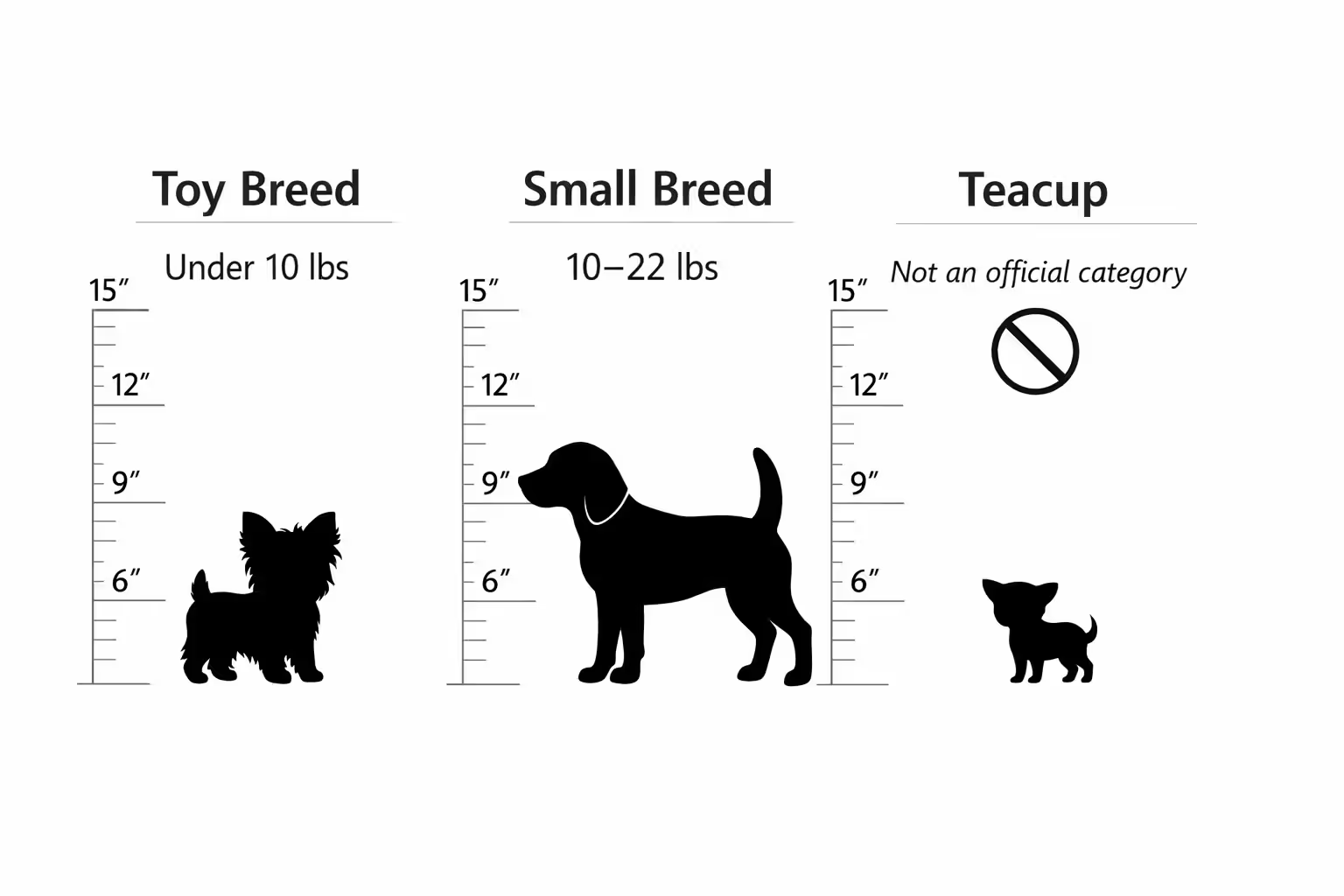
The American Kennel Club and most veterinarians place small dog breeds in the 5–22 pound range at adult weight. Height typically falls between 6–15 inches at the shoulder. But these categories get fuzzy quickly.
Toy breeds represent the smallest subset, usually under 10 pounds. Think Yorkshire Terriers, Pomeranians, and Maltese. These dogs fit in airline-approved carriers and can ride the subway in a tote bag without raising eyebrows.
Small breeds occupy the 10–22 pound middle ground. Beagles, Miniature Schnauzers, and Cocker Spaniels land here. They're portable but substantial enough that you won't worry about stepping on them in the dark.
Teacup dogs aren't an official category—they're marketing language for runts or dogs bred to unhealthy extremes. A "teacup Yorkie" weighing 2.5 pounds faces serious health risks, from hypoglycemia to fragile bones that snap during normal play. Reputable breeders avoid producing these ultra-tiny variants.
Weight matters for practical reasons. A 7-pound Papillon eats roughly $20–30 monthly in quality kibble. A 20-pound Cocker Spaniel might cost $50–70. Medication doses scale with weight, as do boarding fees at many kennels. That 15-pound difference translates to $300–500 annually in baseline costs before you factor in emergencies.
Author: Lucas Fairmont;
Source: alwaysonsalepetsupplies.com
15 Most Popular Small Dog Breeds in America
Popularity doesn't equal "right for you," but these breeds dominate shelters, breeders, and dog parks for good reasons. Each offers distinct trade-offs.
Breed Name
Adult Weight
Energy Level
Good for Apartments
Grooming Needs
Temperament Snapshot
French Bulldog
16–28 lbs
Low-Moderate
Excellent
Low
Easygoing, stubborn, heat-sensitive
Cavalier King Charles Spaniel
13–18 lbs
Moderate
Excellent
Moderate
Affectionate, gentle, velcro dog
Pomeranian
3–7 lbs
High
Good
High
Alert, vocal, confident
Yorkshire Terrier
4–7 lbs
Moderate-High
Excellent
High
Feisty, loyal, terrier attitude
Dachshund
11–32 lbs
Moderate
Good
Low
Independent, stubborn, prey-driven
Shih Tzu
9–16 lbs
Low-Moderate
Excellent
High
Friendly, adaptable, lap dog
Boston Terrier
12–25 lbs
Moderate-High
Excellent
Low
Playful, intelligent, sensitive
Miniature Schnauzer
11–20 lbs
High
Good
High
Alert, trainable, vocal
Pug
14–18 lbs
Low-Moderate
Excellent
Low
Charming, stubborn, heat-sensitive
Maltese
4–7 lbs
Moderate
Excellent
High
Gentle, playful, separation-anxious
Havanese
7–13 lbs
Moderate
Excellent
Moderate-High
Social, trainable, velcro dog
Pembroke Welsh Corgi
22–30 lbs
High
Fair
Moderate
Intelligent, herding instinct, vocal
Bichon Frisé
12–18 lbs
Moderate
Excellent
High
Cheerful, hypoallergenic, social
Cocker Spaniel
20–30 lbs
Moderate-High
Fair
High
Gentle, eager to please, ear infections
West Highland White Terrier
13–20 lbs
High
Good
Moderate-High
Confident, independent, prey-driven
French Bulldogs top adoption lists because they're couch potatoes with personality. They snore, overheat in 80°F weather, and cost $5,000–8,000 from reputable breeders due to artificial insemination requirements. Their pushed-in faces mean breathing problems—budget for potential palate surgery ($2,000–4,000).
Cavaliers bond so intensely they develop separation anxiety if left alone eight hours daily. They're silent, making them ideal for thin apartment walls, but heart disease affects over 50% by age five. Annual echocardiograms ($300–500) become non-negotiable.
Dachshunds come in standard (16–32 lbs) and miniature (under 11 lbs) sizes. Their long spines mean a 25% lifetime risk of intervertebral disc disease. No jumping off furniture, ever. Install dog stairs by your bed or face $3,000–7,000 surgery bills.
Best Small Dogs for First-Time Owners
First-time owners need forgiving breeds that don't require expert-level handling. Cavalier King Charles Spaniels tolerate novice mistakes gracefully. They don't resource-guard, they're food-motivated for training, and they signal bathroom needs clearly.
Boston Terriers bring similar ease with more energy. They learn commands quickly, don't challenge authority, and their short coats mean you can't mess up grooming. Watch for eye injuries—those prominent peepers catch door frames and sticks.
Havanese adapt to inconsistent schedules better than most toys. Miss a walk because of a work emergency? They'll forgive you. Forget to brush for three days? Minor mats, not a felted disaster.
Avoid Miniature Schnauzers and West Highland White Terriers as first dogs. Terriers need firm boundaries from day one. Show weakness and they'll run your household, barking at shadows and refusing recall commands.
The world would be a nicer place if everyone had the ability to love as unconditionally as a dog
— M.K. Clinton
Hypoallergenic Tiny Dog Breeds
No dog is 100% hypoallergenic—you're allergic to dander and saliva proteins, not fur. But some breeds produce less.
Bichon Frisés and Maltese have hair instead of fur, growing continuously like human hair. They shed minimally, trapping dander in their coats until you brush it out. Groom every 6–8 weeks ($50–75 per session) and vacuum with HEPA filters.
Yorkshire Terriers work for mild allergies. Their silky coats don't hold dander like double-coated breeds, but daily brushing becomes mandatory to prevent tangles.
Miniature Schnauzers shed very little and lack an undercoat. They're better for allergies than Labs or Shepherds, though their wiry coats need hand-stripping or clipping every 8 weeks.
Test your allergies before committing. Spend two hours at a breeder's home or foster a rescue for a weekend. Reactions vary wildly between individuals—you might tolerate Poodles but react to Bichons despite both being "hypoallergenic."
How to Choose the Right Small Breed for Your Apartment
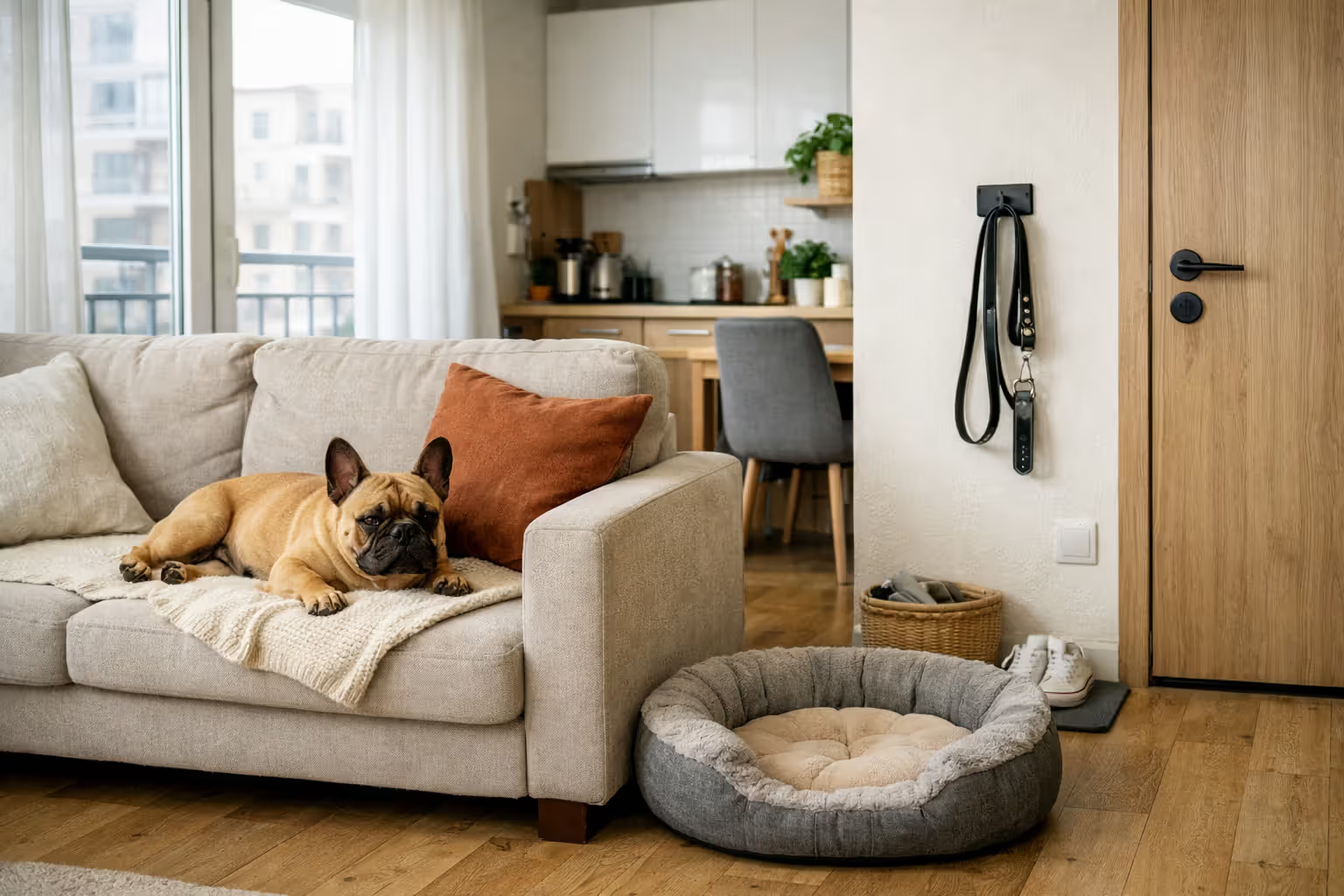
Square footage matters less than layout and building construction. A 600-square-foot loft with concrete floors and floor-to-ceiling windows suits a Frenchie perfectly. A 900-square-foot carpeted unit with shared walls and a noise-sensitive neighbor makes a Miniature Schnauzer a lawsuit waiting to happen.
Noise levels should drive your shortlist. Terriers (Yorkies, Westies, Miniature Schnauzers) were bred to bark at vermin. That instinct doesn't vanish in a high-rise. They'll alert-bark at hallway footsteps, elevator dings, and the neighbor's TV. Cavaliers, Pugs, and Shih Tzus stay quiet unless something genuinely warrants alarm.
Author: Lucas Fairmont;
Source: alwaysonsalepetsupplies.com
Exercise needs don't always correlate with size. A 7-pound Papillon needs 60+ minutes of activity daily—two walks plus indoor play. Skip it and they'll chew your baseboards. A 25-pound French Bulldog maxes out at 30 minutes before overheating, content to nap 18 hours afterward.
Landlord restrictions frequently ban "aggressive breeds," but definitions vary. Some lists include Boston Terriers due to their "terrier" name, despite their gentle nature. Get breed approval in writing before adopting. Emotional support animal letters don't override no-pet clauses as broadly as TikTok suggests—landlords can still reject specific breeds under Fair Housing Act exceptions.
Potty logistics in apartments require strategy. Puppies can't hold bladders longer than their age in months plus one (a three-month-old manages four hours maximum). If you work eight-hour shifts without midday access, hire a dog walker ($20–30 per visit) or install a real-grass patio potty system ($100–200 upfront, $30 monthly for grass replacement).
Balconies aren't automatic solutions. A Dachshund won't use a balcony potty in January in Chicago. A Pomeranian might blow off a 15th-floor balcony in high winds. Ground-floor units with patio access solve most issues, but expect your grass patch to die where your dog pees—urine nitrogen burns turf.
Small Dog Breeds by Lifestyle Match
Your daily routine determines success more than breed reputation.
Active singles who hike weekends and jog mornings need athletic compact dogs. Miniature Schnauzers keep pace on 5-mile trail runs. Pembroke Welsh Corgis herd livestock all day in their native Wales—your morning jog barely warms them up. Boston Terriers love fetch sessions and agility courses.
Avoid brachycephalic (flat-faced) breeds like Pugs and Frenchies if you're outdoorsy. They overheat on 75°F days. A Pug on a summer hike risks heatstroke by mile two.
Families with kids under eight need sturdy, patient breeds. Beagles tolerate toddler chaos and don't resource-guard toys. Cavalier King Charles Spaniels endure clumsy petting without snapping. Cocker Spaniels match kid energy levels for backyard play.
Skip fragile toys. A 5-pound Yorkie breaks a leg when a six-year-old trips over it. A Chihuahua that bites a grabby preschooler creates a liability nightmare. If you're set on a toy breed with young kids, wait until children reach age eight and understand "gentle hands."
Seniors benefit from low-energy companions that don't pull on leash. Shih Tzus move at a leisurely pace, happy with two 15-minute strolls daily. Cavaliers provide emotional support without demanding marathon walks. French Bulldogs require minimal exercise, though their health issues demand owners comfortable navigating vet visits.
Avoid high-energy terriers. A Westie that needs 90 minutes of daily stimulation becomes a burden when arthritis limits your mobility.
Work-from-home owners can manage needier breeds. Havanese and Maltese thrive with constant companionship but develop separation anxiety if you return to office work. If remote work might end, choose independent breeds like Miniature Schnauzers or Dachshunds that tolerate alone time.
Dogs do speak, but only to those who know how to listen
— Orhan Pamuk
Common Health Issues in Small Dog Breeds and Prevention Costs
Small dogs live 12–16 years on average, outlasting large breeds by 4–6 years. But their compact bodies concentrate specific problems.
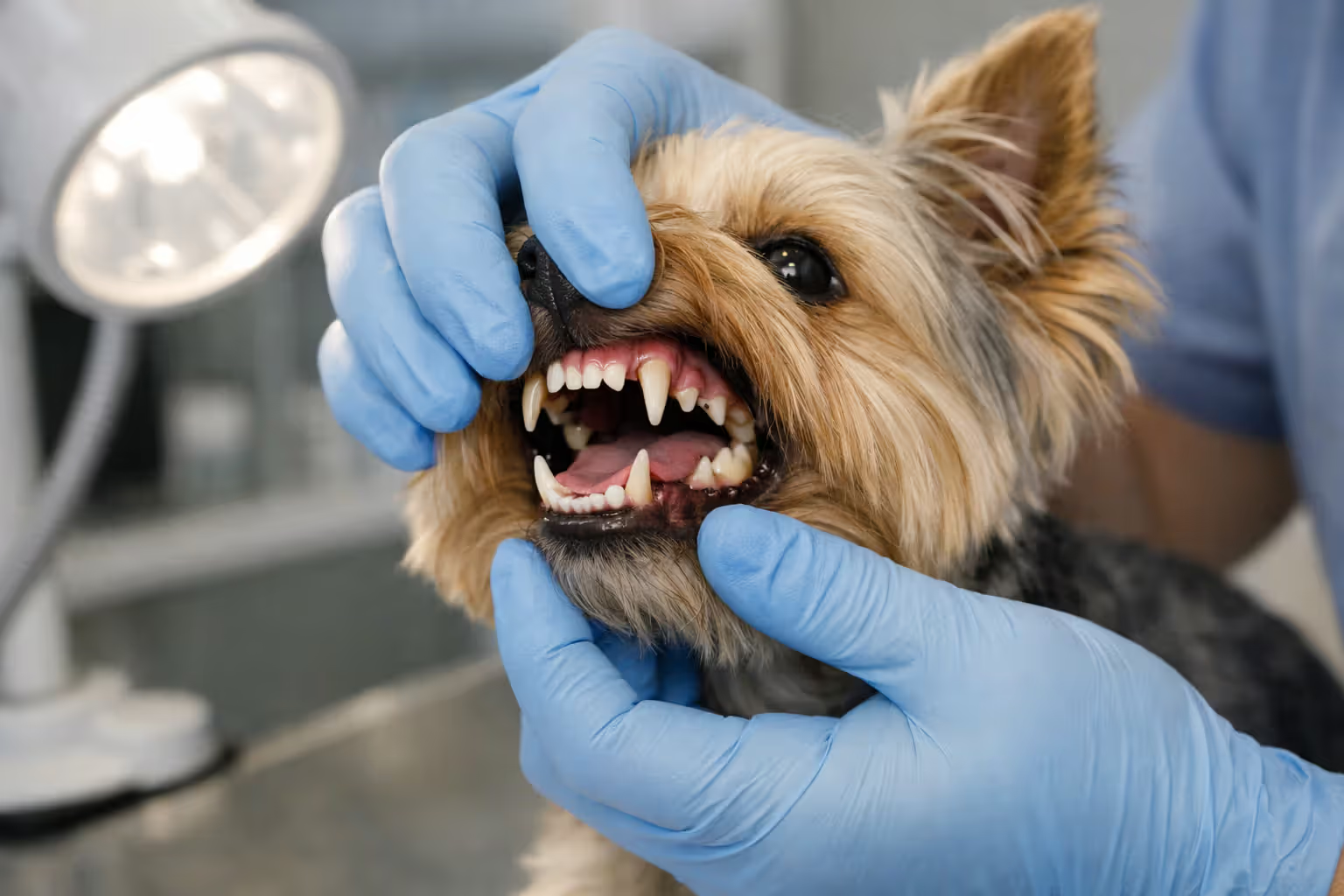
Dental disease plagues tiny mouths. A Yorkie's jaw fits 42 teeth into a space designed for 30. Crowding traps food particles, causing gingivitis by age three. Professional cleanings ($300–600 annually under anesthesia) prevent tooth loss. Brush teeth daily with poultry-flavored enzymatic paste—yes, daily, or budget $2,000–3,000 for extractions by age seven.
Author: Lucas Fairmont;
Source: alwaysonsalepetsupplies.com
Luxating patellas (dislocated kneecaps) affect 20–40% of small breeds, especially Pomeranians, Chihuahuas, and Yorkies. Mild cases need no treatment. Severe grades require surgery ($1,500–3,000 per knee). Pet insurance often excludes this as a "breed-specific pre-existing condition" if diagnosed after enrollment, so insure puppies before their first vet visit.
Tracheal collapse hits brachycephalic breeds and those walked on collars instead of harnesses. The windpipe cartilage weakens, causing a honking cough. Mild cases manage with cough suppressants ($30–50 monthly). Advanced collapse needs stent surgery ($4,000–6,000). Always use a harness—collars put direct pressure on fragile tracheas.
Hypoglycemia threatens toy breeds under 5 pounds. Missing a meal drops blood sugar dangerously low, causing seizures. Keep corn syrup on hand and feed three small meals daily, not one large dinner.
Annual costs for a healthy small dog run $800–1,500: routine vet visits ($200–300), vaccinations and preventatives ($300–400), quality food ($250–600), grooming for high-maintenance coats ($400–900). Add $50–100 monthly for pet insurance, which pays off when that $4,000 emergency hits.
Budget an extra $500–1,000 annually for breed-specific issues. Cavaliers need cardiology visits. Dachshunds need back X-rays if they show pain. Frenchies need dermatology appointments for skin-fold infections.
Training Challenges Unique to Tiny Dogs (And How to Overcome Them)
Small dog syndrome isn't genetic—it's learned behavior from owners who tolerate nonsense they'd never accept from a Lab.
Author: Lucas Fairmont;
Source: alwaysonsalepetsupplies.com
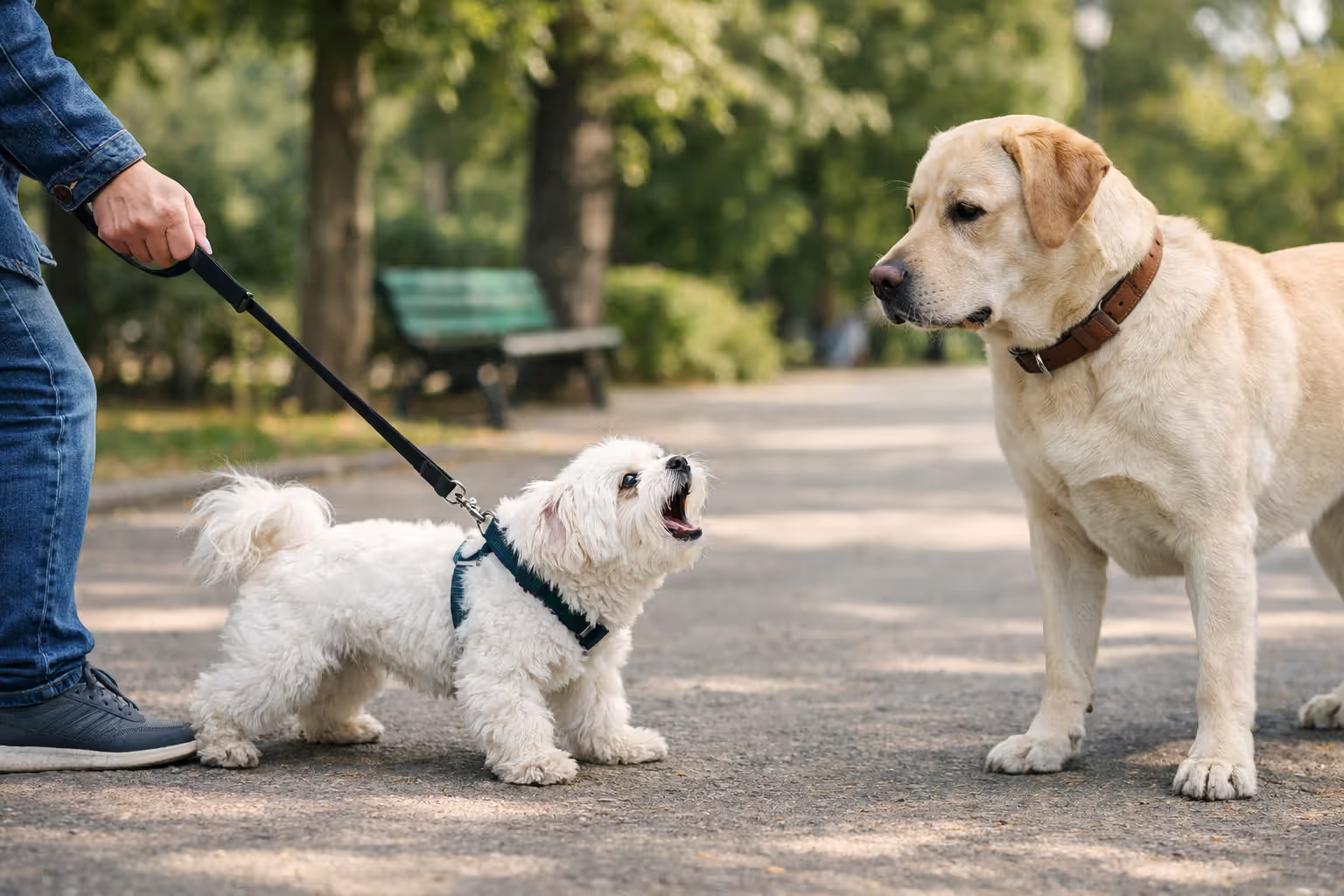
The pickup problem: When your Maltese lunges at a German Shepherd, you scoop her up "for safety." She learns that aggression earns rescue. The Shepherd's owner lets their dog work through fear because picking up 70 pounds isn't an option. Over months, the Maltese becomes leash-reactive while the Shepherd stays neutral.
Solution: Let your small dog experience consequences. If he barks at a calm dog, the other dog might bark back—scary but educational. Don't reward panic by creating escape routes.
Housebreaking difficulties stem from proportion. A Yorkie's bladder holds 2–3 ounces. She can pee behind your couch, and you won't notice for days because the puddle evaporates. A Lab's 16-ounce puddle is immediately obvious, so correction happens faster.
Solution: Restrict space with baby gates. A puppy loose in a 1,200-square-foot apartment has 50 hidden pee spots. A puppy confined to the kitchen has three, all visible. Use an enzyme cleaner (Nature's Miracle, Rocco & Roxie) that breaks down urine proteins—regular cleaners leave scent markers that say "bathroom here."
Socialization windows close by 16 weeks. Toy breed owners often delay puppy classes "until vaccines are complete" or "until he's bigger." By then, critical developmental periods passed. The dog fears strangers, dogs, and novel environments.
Solution: Carry your unvaccinated puppy in public (don't let paws touch ground). Let vaccinated, friendly adult dogs meet your puppy in controlled settings. Puppy classes that require first-round vaccines (usually given by 8 weeks) offer safe socialization by 10–12 weeks.
Recall training fails when owners don't practice in distracting environments. Your Havanese comes when called in your living room but ignores you at the dog park because you never trained around squirrels, other dogs, or interesting smells.
Solution: Use a 30-foot training lead in unfenced areas. Practice recall during walks, rewarding generously (real chicken, not kibble) when your dog returns. Gradually increase distractions. Never call your dog for something unpleasant (bath time, nail trims)—walk over and pick them up instead.
A dog is the only thing on earth that loves you more than he loves himself
— Josh Billings
Frequently Asked Questions About Small Dog Breeds
What are the calmest small dog breeds for apartments?
Cavalier King Charles Spaniels top the list for mellow temperament. They're bred as companion animals, not working dogs, so their default mode is "nap on couch." French Bulldogs and Pugs follow closely—both lack the energy for sustained activity and prefer climate-controlled lounging.
Shih Tzus were palace dogs in ancient China, selected for calm demeanor over centuries. They don't herd, hunt, or guard, so they lack the drive that creates anxiety behaviors. Havanese adapt their energy to yours; if you're relaxed, they're relaxed.
Avoid terriers (Yorkies, Westies, Cairns) if calm is your priority. They're hardwired for vigilance and action. Even well-exercised terriers stay alert, reacting to stimuli that other breeds ignore.
Do small dogs live longer than large breeds?
Yes, significantly. Small breeds average 12–16 years; large breeds average 8–10 years. A Chihuahua reaching 18 isn't unusual. A Great Dane at 10 is elderly.
Size correlates with accelerated aging. Large dogs grow rapidly, and that growth pace stresses organs and joints. Their hearts work harder to pump blood through bigger bodies. Small dogs' compact systems face less strain.
Toy breeds under 5 pounds sometimes buck this trend due to fragility. Teacup variants bred for extreme smallness develop organ problems that shorten lifespans. A well-bred 7-pound Maltese outlives a 3-pound "teacup" Maltese by years.
What are good names for small dogs?
Names with hard consonants (K, T, P) grab attention better than soft sounds. "Pip," "Max," "Bella," and "Coco" work well because dogs distinguish sharp sounds from background noise.
One or two syllables prevent confusion. "Alexander" becomes "Alex" in practice anyway. Short names cut through distractions at dog parks when you need immediate recall.
Match personality, not size. Naming your fierce Dachshund "Tiny" or "Peanut" feels ironic until you're shouting it at the vet. "Bruno" or "Stella" respects their self-image as large dogs in small bodies.
Popular small dog names in 2024 include Charlie, Luna, Milo, Daisy, Cooper, Rosie, Teddy, and Penny. Avoid top-10 names if you frequent dog parks—three Bellas per visit creates chaos.
Are small dog breeds harder to potty train?
Statistically, yes. Small breeds take 4–6 months to reliably housetrain versus 3–4 months for large breeds. But the difficulty isn't cognitive—it's physical and environmental.
Tiny bladders empty frequently. A Pomeranian puppy needs bathroom breaks every 2–3 hours. Large breed puppies manage 4–5 hours at the same age. More frequent needs create more opportunities for accidents.
Accident visibility affects training speed. You'll spot a Great Pyrenees puppy squatting in your hallway. A Maltese can pee under your bed, behind a potted plant, or in a corner you rarely check. Delayed correction (finding a dried puddle hours later) doesn't connect consequences to actions.
Weather impacts small dogs disproportionately. A Husky happily pees in a blizzard. A 6-pound Chihuahua refuses to step into 40°F rain, holding it until she has an indoor accident. Covered potty areas or raincoats solve this.
Which tiny dog breeds shed the least?
Bichon Frisés, Maltese, and Yorkshire Terriers shed minimally because they have hair, not fur. Hair grows continuously and falls out sporadically, like human hair. Fur grows to a set length, then sheds seasonally.
Poodles (toy and miniature) shed so little they're the base for "doodle" hybrids. Their curly coats trap loose hairs until you brush them out.
Shih Tzus and Havanese shed lightly but require daily brushing. Skip grooming and their fine hair mats into felt sheets that need shaving off.
Schnauzers (miniature) have wiry coats that shed minimally. Hand-stripping (plucking dead hairs) maintains coat texture, though most pet owners opt for clipping every 8 weeks.
Even low-shedding breeds require grooming. You're trading vacuum time for brushing time. A Bichon needs 10 minutes of daily brushing plus professional grooming every 6 weeks. A Pug sheds constantly but needs only weekly brushing and occasional baths.
How much does it cost to own a small dog annually?
Budget $1,500–3,000 annually for a healthy small dog, broken down as:
Food: $250–600 (premium kibble for a 15-pound dog runs $40–50 monthly)
Routine vet care: $300–500 (annual exam, vaccines, heartworm/flea prevention)
Grooming: $0–900 (depends on coat type; Pugs need minimal grooming, Yorkies need monthly appointments at $60–75 each)
Pet insurance: $300–600 (depends on age, breed, coverage level)
First-year costs jump $1,000–2,000 higher for spay/neuter surgery ($200–500), initial vaccinations ($100–200), microchipping ($50), and startup supplies (crate, bowls, collar, leash, bed, toys).
Breed-specific issues add $500–2,000 annually. Cavaliers need echocardiograms. Dachshunds need back X-rays if they show pain. French Bulldogs need dermatology visits for skin-fold infections.
Emergency funds matter more than averages. One foreign body surgery ($3,000–5,000) or broken leg ($2,000–4,000) wipes out years of savings. Pet insurance with a $500 deductible and 80% reimbursement turns a $4,000 emergency into a $1,300 out-of-pocket cost.
Choosing a small dog breed requires honest self-assessment. You might want a Yorkie's portable size but lack time for daily brushing. You might love Frenchie personalities but live in Phoenix, where 110°F summers create dangerous conditions for brachycephalic breeds.
Visit breeders and rescues to meet adult dogs, not just puppies. Puppies are universally adorable; adults show you the reality. Spend an hour with a two-year-old Miniature Schnauzer to gauge if their energy and vocal nature fits your lifestyle.
Consider adopting adult dogs (ages 2–5) from breed-specific rescues. You'll skip housetraining and teething while getting a dog whose personality is fully formed. Many small breeds end up in rescues because owners underestimated grooming needs or couldn't manage barking—problems you can screen for by fostering first.
Research breeders thoroughly if buying puppies. Reputable breeders health-test parents (cardiac, patella, eye exams depending on breed), raise puppies in-home with socialization protocols, and offer lifetime support. Puppy mill dogs sold in pet stores or through online ads cost $500–1,500 upfront but often carry $5,000+ in genetic health problems.
The right small dog breed adapts to your life while you adapt to their needs. That balance—not breed popularity or Instagram aesthetics—determines whether you'll still adore your choice a decade from now when their graying muzzle rests on your lap.
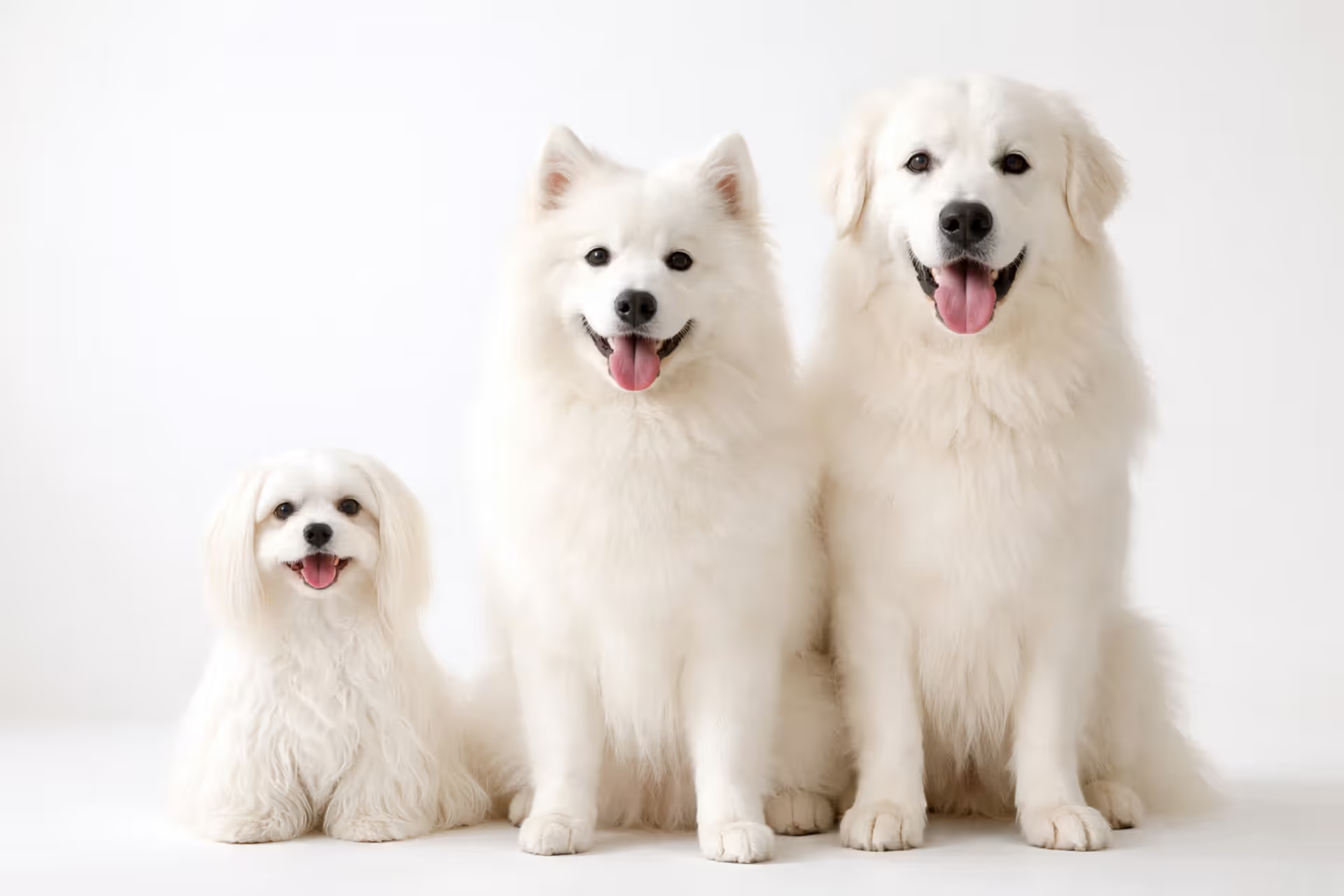
Discover 25+ white dog breeds ranging from tiny apartment companions to powerful livestock guardians. Explore the genetics behind white coats, compare grooming demands across coat types, understand breed-specific health risks, and find the perfect snow-coated match for your actual lifestyle, family size, and daily routine
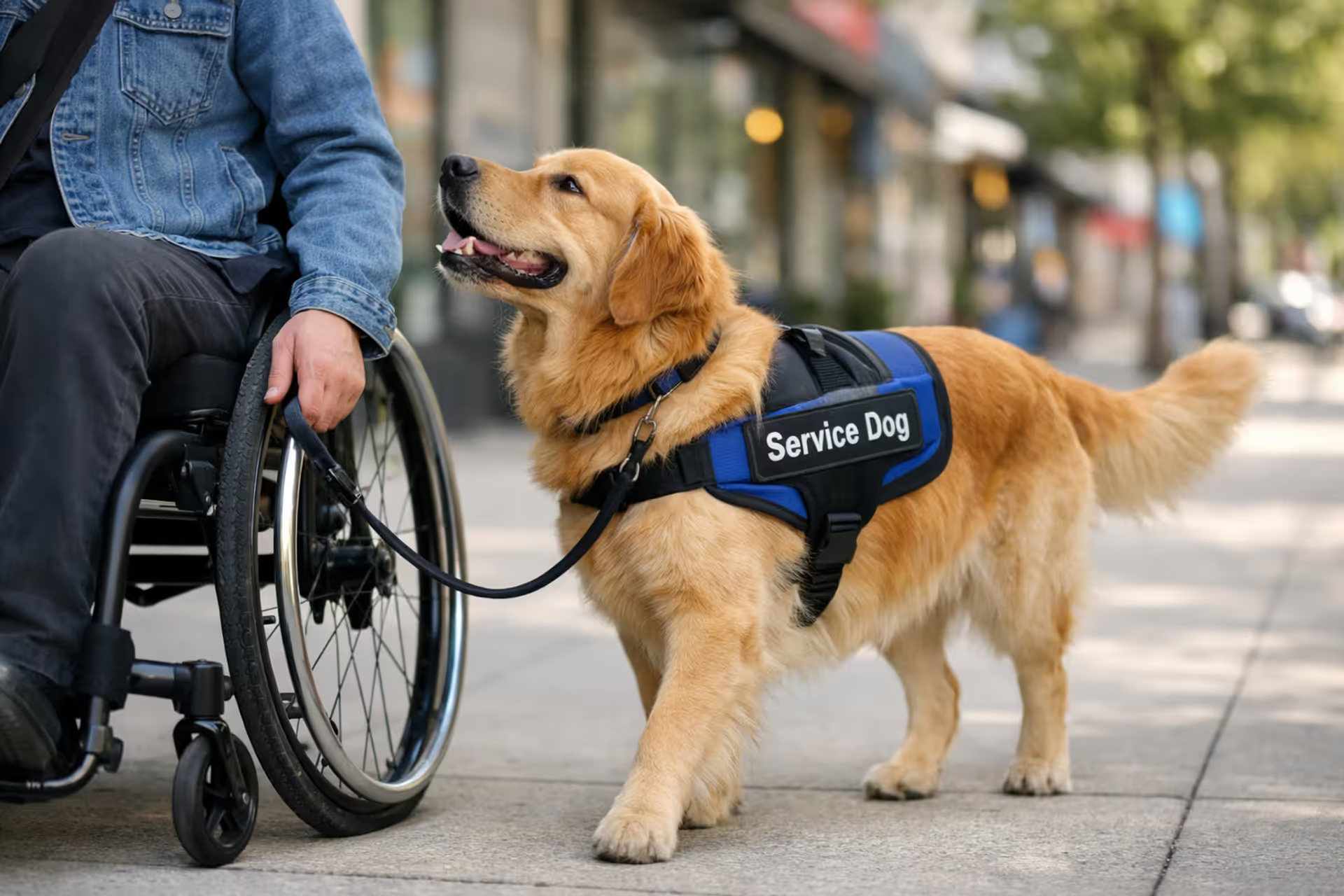
Complete guide to service dog requirements under the ADA, including legal rights for handlers, public access rules, housing and air travel regulations, training costs and timelines, task examples by disability type, best breeds for service work, and key differences between service dogs, emotional support animals, and therapy dogs under United States law
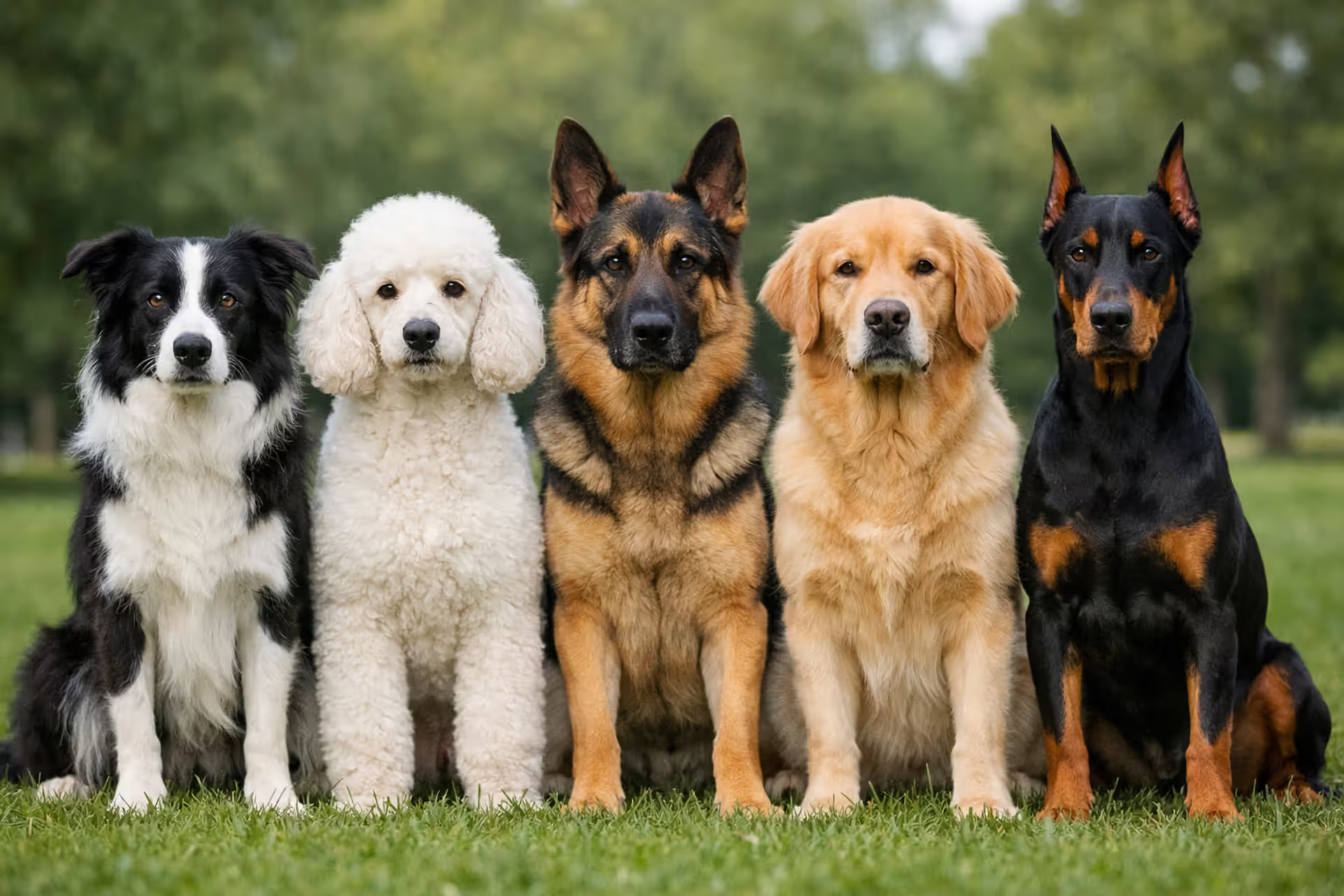
Explore the top 15 smartest dog breeds ranked by science-backed criteria, learn how canine intelligence is truly measured across three distinct categories, and get proven training strategies for brainy dogs. Find expert insights on matching a breed’s cognitive style to your lifestyle for a perfect fit
Looking for the perfect medium sized dog? Our detailed guide covers over 25 breeds, comparing them by family compatibility, suitability for apartment living, energy and activity levels, ownership costs, and daily care needs. Find the ideal match for your home, budget, and everyday routine today
The content on this website is provided for general informational and educational purposes only. It is intended to offer guidance on dog breeds, behavior, health, care, and lifestyle, and should not be considered a substitute for professional veterinary advice, diagnosis, or treatment.
All information published on this site is based on general knowledge, widely accepted research, and practical experience, but individual dogs may differ in behavior, health conditions, and needs. Results and outcomes may vary depending on the dog, environment, and circumstances.
The website is not responsible for any errors or omissions, or for actions taken based on the information provided. For specific concerns regarding your dog’s health or behavior, always consult a qualified veterinarian or professional dog specialist.