When you watch a Border Collie anticipate a shepherd's whistle from half a mile away or see a Poodle master a complex trick sequence in three repetitions, you're witnessing canine intelligence at work. But intelligence in dogs isn't a single trait—it's a collection of abilities that vary dramatically by breed, individual, and the specific task at hand.
Understanding which breeds excel mentally helps you make better decisions about training approaches, daily enrichment, and whether a particular dog fits your household. A German Shepherd's problem-solving drive differs fundamentally from a Golden Retriever's eager-to-please nature, even though both rank among the smartest dogs. Recognizing these distinctions prevents frustration and sets realistic expectations.
How Canine Intelligence Is Actually Measured
Stanley Coren's landmark 1994 research established the framework we still use to evaluate dog intelligence measurement today. A psychology professor at the University of British Columbia, Coren surveyed 199 obedience trial judges across North America, asking them to rank breeds based on working and obedience performance. His findings revealed that canine IQ breaks down into three distinct categories.
Instinctive intelligence refers to the behaviors a breed was developed to perform. Pointers naturally freeze when they detect game birds. Retrievers instinctively carry objects gently in their mouths. Terriers dig and chase small prey without formal instruction. This type of intelligence is hardwired through generations of selective breeding.
Adaptive intelligence measures a dog's ability to solve problems independently. When your dog figures out how to open a cabinet latch, navigates a new route during a walk, or learns your routine without explicit training, that's adaptive intelligence at work. This varies significantly between individual dogs, even within the same litter.
Author: Emily Crosswell;
Source: alwaysonsalepetsupplies.com
Working and obedience intelligence evaluates how quickly a breed learns commands and how reliably they execute them. Coren's research found that the top-tier breeds learn a new command in fewer than five repetitions and obey on the first command 95% of the time or better. Average breeds need 25 to 40 repetitions and respond about 50% of the time on the first command.
The limitation of this framework is obvious: it emphasizes biddability and task completion speed. Independent-thinking breeds like Basenjis or Afghan Hounds score poorly not because they lack intelligence, but because they were bred to make autonomous decisions while hunting, not to take constant direction from handlers. A livestock guardian breed that independently assesses threats and acts without human input demonstrates profound intelligence that obedience trials don't capture.
Top 15 Most Intelligent Dog Breeds Ranked
Based on Coren's research combined with working dog performance data and trainability assessments, these breeds consistently demonstrate exceptional cognitive abilities. The intelligent dog breeds ranking below reflects working and obedience intelligence primarily, with notes on other cognitive strengths.
Breed Name
Intelligence Rank
Primary Intelligence Type
Training Ease (1–5)
Best Suited For
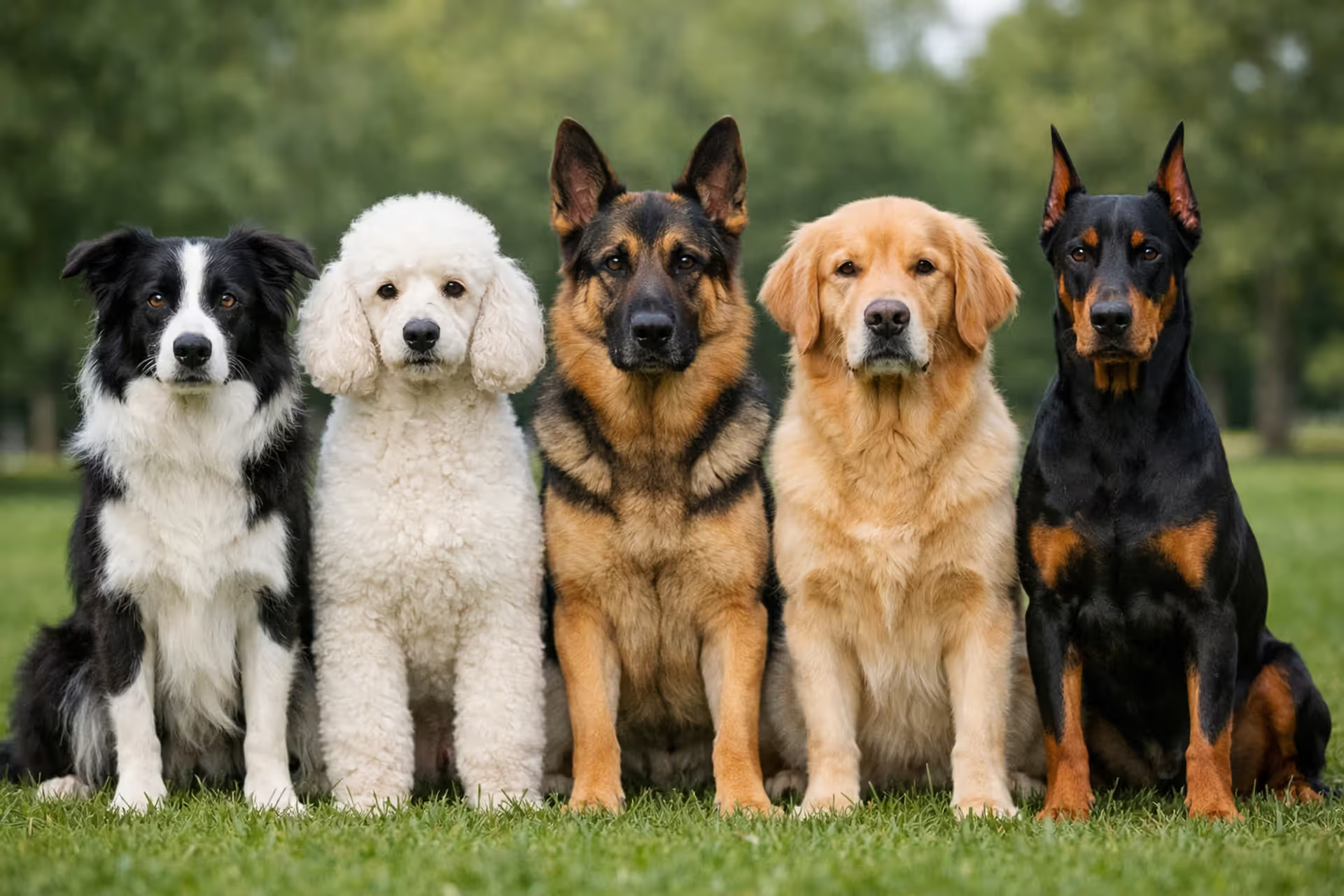
Border Collie
1
Instinctive + Working
5
Active owners, herding work, dog sports
Poodle (all sizes)
2
Adaptive + Working
5
Families, therapy work, versatile activities
German Shepherd
3
Working + Adaptive
5
Protection, police work, active families
Golden Retriever
4
Working + Instinctive
5
Families, service work, hunting
Doberman Pinscher
5
Working + Instinctive
5
Protection, active owners, guard work
Shetland Sheepdog
6
Instinctive + Working
5
Families, herding, agility
Labrador Retriever
7
Working + Instinctive
5
Families, service work, hunting
Papillon
8
Adaptive + Working
4
Apartments, companions, agility
Rottweiler
9
Working + Instinctive
4
Experienced owners, protection, work
Australian Cattle Dog
10
Instinctive + Adaptive
4
Active owners, herding, dog sports
Pembroke Welsh Corgi
11
Instinctive + Working
4
Families, herding, moderate activity
Miniature Schnauzer
12
Adaptive + Working
4
Families, apartments, vermin control
English Springer Spaniel
13
Instinctive + Working
4
Hunting, active families, field work
Belgian Tervuren
14
Working + Instinctive
4
Experienced owners, protection, sports
Belgian Sheepdog
15
Working + Instinctive
4
Protection, herding, active owners
Border Collies and Herding Group Standouts
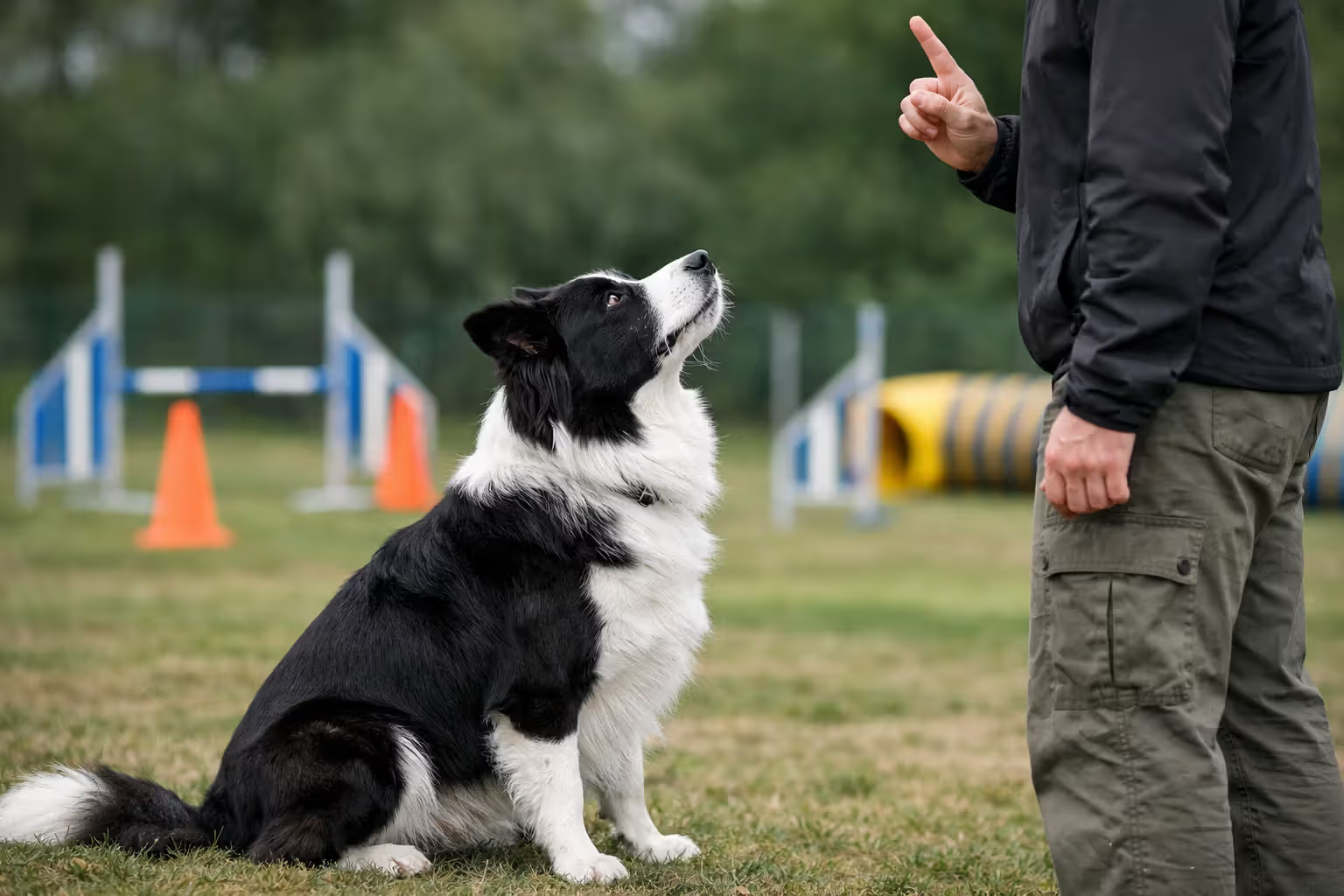
Border Collies dominate every intelligence assessment because they combine all three types of cognitive ability at exceptional levels. Bred to control sheep across vast Scottish highlands with minimal human direction, they read subtle body language, anticipate livestock movement, and adjust strategy in real-time. A working Border Collie might manage a flock of 200 sheep across changing terrain for hours, making hundreds of micro-decisions without handler input.
This intensity creates challenges for pet owners. A Border Collie in a suburban home without adequate mental work often develops obsessive behaviors—chasing shadows, fixating on light reflections, or herding children aggressively. They need jobs, not just exercise. Puzzle feeders, advanced obedience training, herding lessons, or dog sports like agility provide necessary cognitive outlets.
Shetland Sheepdogs and Australian Cattle Dogs share similar herding instincts but with different intensities. Shelties tend toward sensitivity and excel at reading human emotions, making them outstanding therapy dog candidates. Cattle Dogs (also called Blue Heelers) were developed to control stubborn cattle in harsh Australian conditions, giving them remarkable persistence and pain tolerance. They'll work through discomfort that would stop other breeds, which means owners must monitor them carefully during exercise to prevent overexertion.
The world would be a nicer place if everyone had the ability to love as unconditionally as a dog
— M.K. Clinton
Working Dogs Built for Complex Tasks
German Shepherds, Dobermans, and Rottweilers represent the working group's intellectual elite. These trainable dog breeds were developed for protection, police work, and guarding—roles requiring threat assessment, impulse control, and the ability to switch rapidly between calm companionship and defensive action.
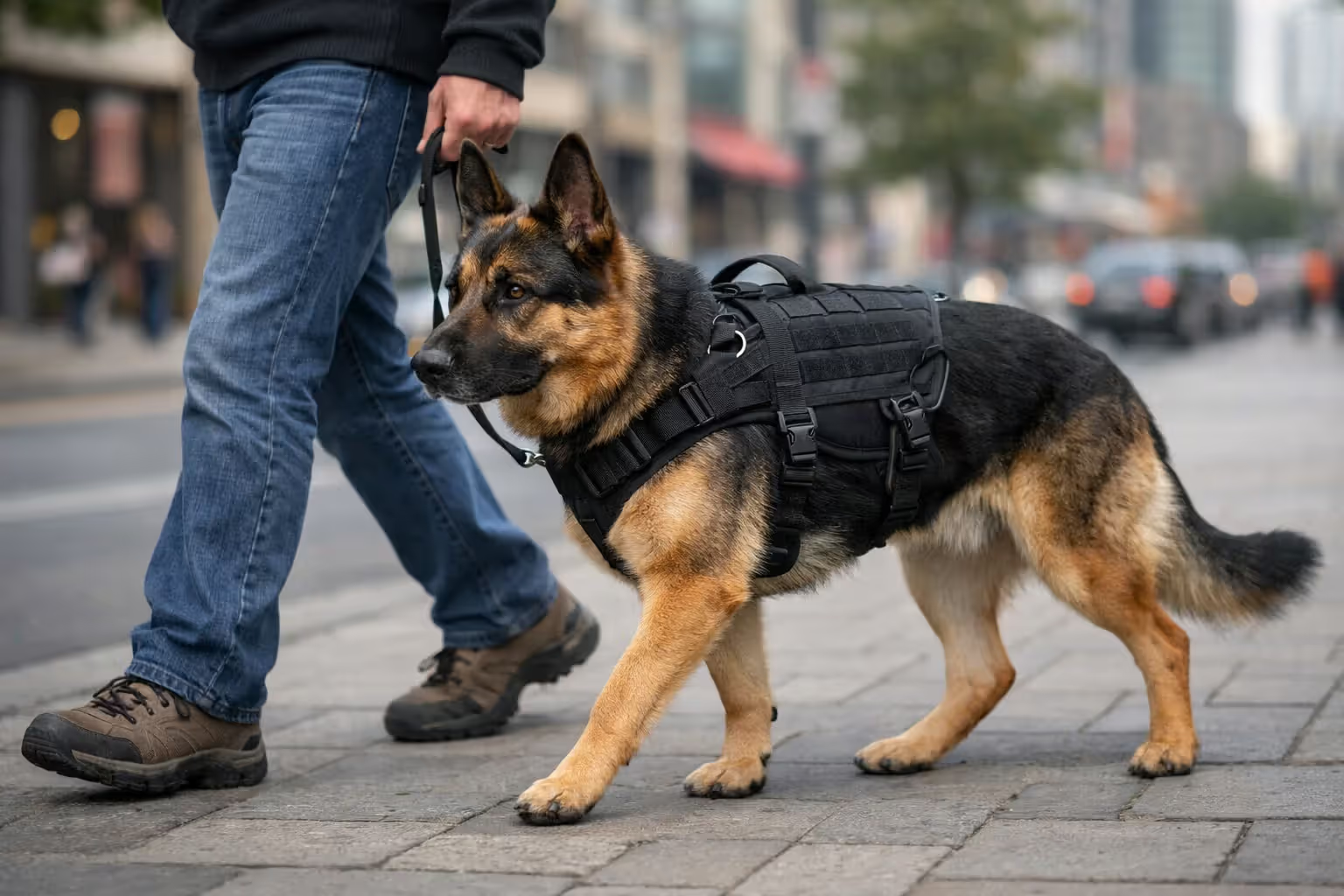
A police German Shepherd learns to track suspects through urban environments, distinguish between threatening and non-threatening individuals, apprehend on command, and release immediately when directed. This requires extraordinary impulse control and contextual understanding. The same dog must be safe around the handler's family, including small children.
Dobermans excel at pattern recognition. They quickly learn household routines and notice deviations—a stranger's car in the driveway, an unusual noise at night, a family member's distressed tone. This makes them exceptional personal protection dogs but also means they react to changes that other breeds ignore. Socialization during puppyhood is critical to prevent overprotective behavior.
Rottweilers demonstrate remarkable emotional intelligence. Despite their intimidating appearance, well-bred Rotties are confident and calm, not reactive. They assess situations before responding, showing the adaptive intelligence that separates truly smart dogs from merely obedient ones. A Rottweiler that barks at every stimulus hasn't been properly trained; a well-trained Rottie observes, evaluates, then acts appropriately.
Sporting Breeds With High Trainability
Golden Retrievers and Labrador Retrievers consistently rank among top smart dog breeds, but their intelligence manifests differently than herding or protection breeds. Sporting dogs were bred to work cooperatively with hunters—marking downed birds, retrieving on command, and working at a distance while remaining attentive to handler signals.
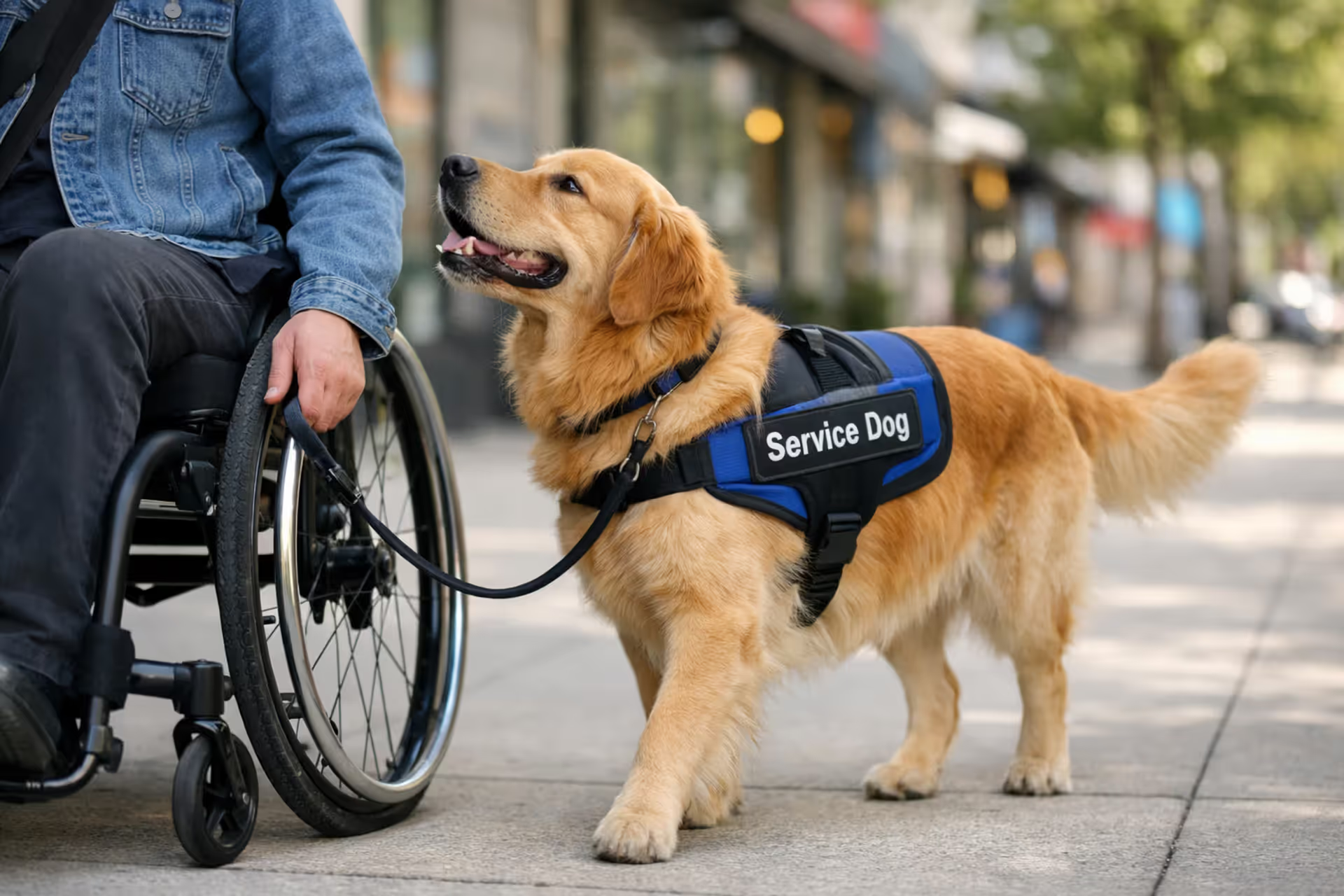
This creates dogs that are highly attuned to human communication. Goldens and Labs excel at reading subtle body language and vocal tone changes. They want to understand what you want and deliver it reliably. This eager-to-please temperament makes them ideal service dogs for disabilities, therapy work, and family companions.
English Springer Spaniels bring intense focus to scent work. While they're biddable and trainable, their hunting drive can override commands when they catch an interesting smell. This isn't disobedience—it's instinctive intelligence overriding working intelligence. Training sporting breeds effectively means working with their drives, not against them. Using scent-based games and retrieval exercises as rewards leverages their natural motivation.
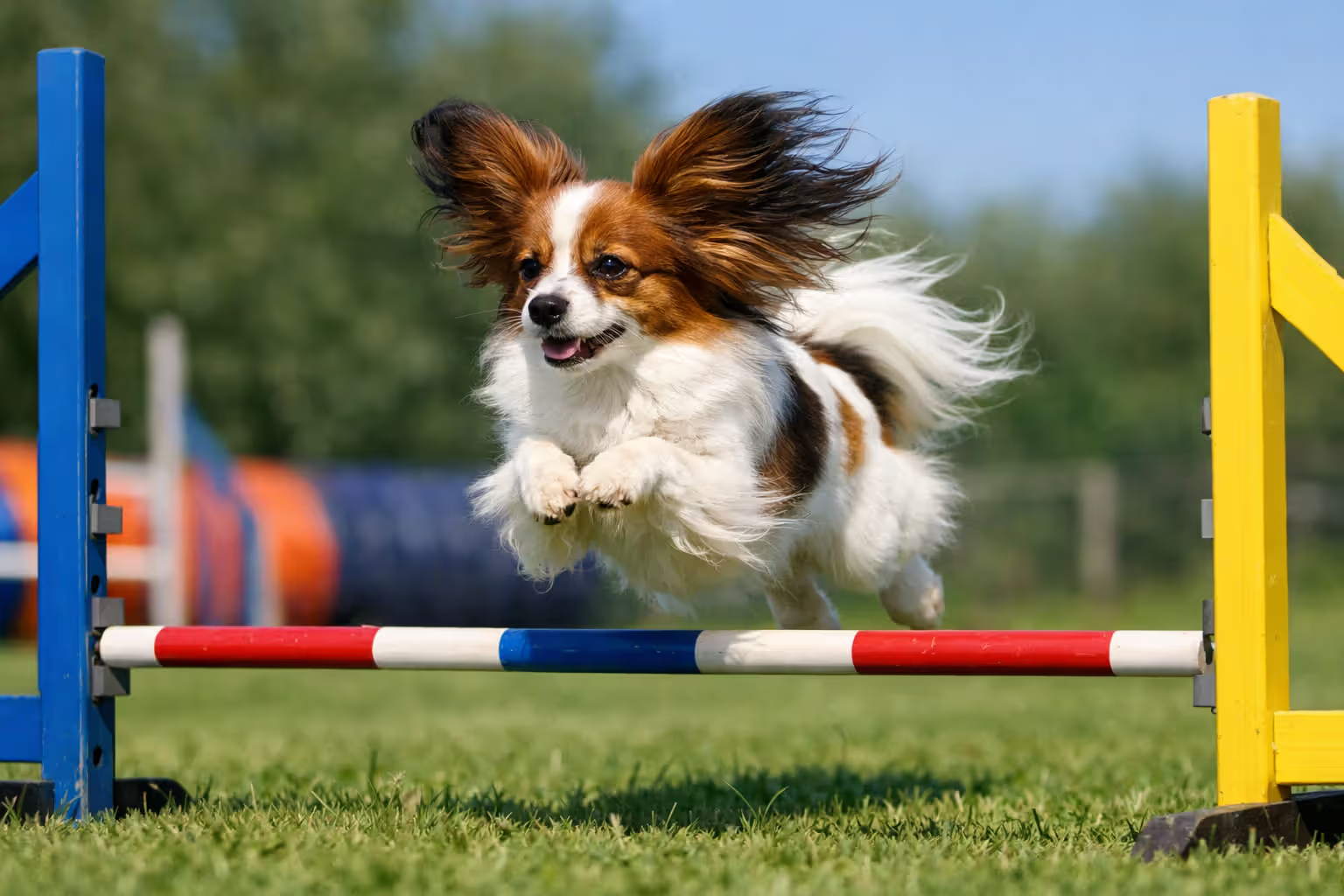
Papillons surprise people who assume small dogs lack intelligence. These tiny spaniels were bred as companions for European nobility, but they retained the sporting group's trainability and problem-solving ability. Papillons excel at agility courses, learning tricks, and reading human emotions. Their small size makes them suitable for apartments, but they need mental stimulation just like their larger sporting cousins.
Author: Emily Crosswell;
Source: alwaysonsalepetsupplies.com
What Separates Brainy Dogs From Average Learners
Dogs with high IQ share several observable characteristics beyond simple obedience. Understanding these traits helps identify intelligence in individual dogs and explains why certain breeds excel at specific tasks.
Learning speed is the most obvious marker. Highly intelligent breeds grasp new concepts in one to five repetitions, while average dogs need 25 to 40. A Border Collie watching another dog navigate an agility course might attempt the same sequence immediately. This rapid learning extends beyond commands to environmental understanding—smart dogs quickly figure out door mechanisms, recognize walking routes after one trip, and remember people they've met briefly months earlier.
Problem-solving persistence distinguishes truly intelligent dogs from merely obedient ones. When faced with an obstacle—a toy stuck under furniture, a closed door, a puzzle feeder—brainy dogs try multiple approaches. They might paw at it, push with their nose, use their mouth, or even fetch a human for help. Less intelligent dogs give up quickly or repeat the same failed approach.
Memory retention varies dramatically by breed. Herding and working dogs remember complex command sequences, recognize dozens of toy names, and recall training from months prior. A German Shepherd trained in protection work at age two will retain those skills for life with minimal refresher work. Conversely, some hound breeds bred for independent hunting show selective memory—they remember scent trails and hunting techniques perfectly but "forget" recall commands when pursuing prey.
Contextual understanding separates adaptive intelligence from rote obedience. Smart dogs recognize that rules change based on context. A well-trained Poodle understands that jumping is forbidden in the house but allowed during agility training. They distinguish between the mail carrier (routine, non-threatening) and an intruder (unusual, potentially threatening). This nuanced understanding requires cognitive sophistication that many breeds lack.
Dogs do speak, but only to those who know how to listen
— Orhan Pamuk
Independence versus biddability creates an interesting paradox. Some highly intelligent breeds—Afghan Hounds, Basenjis, Siberian Huskies—score poorly on obedience tests because they were bred to make autonomous decisions. A sled dog that stops when the musher commands "go" because the ice ahead is unsafe demonstrates profound intelligence, even though it's technically disobedience. These breeds think for themselves, which requires significant cognitive ability but frustrates owners expecting Golden Retriever-style compliance.
Matching Intelligence Type to Your Lifestyle
High-IQ dogs aren't always the best choice. A first-time owner adopting a Border Collie because "they're the smartest" often ends up overwhelmed when the dog develops destructive behaviors from insufficient mental stimulation. Matching a breed's intelligence type to your lifestyle prevents these mismatches.
High-energy working breeds (Border Collies, Australian Cattle Dogs, Belgian Malinois) need owners who provide 2-3 hours of physical exercise plus dedicated mental work daily. A 30-minute neighborhood walk doesn't satisfy these dogs. They need activities that engage their problem-solving abilities—herding lessons, advanced obedience training, scent work, or dog sports. Without adequate outlets, they redirect their intelligence toward undesirable behaviors like escape artistry, destructive chewing, or obsessive-compulsive actions.
Protective working breeds (German Shepherds, Dobermans, Rottweilers) require experienced owners who understand dominance hierarchies and can provide consistent leadership. These dogs constantly assess their environment and their position in the family structure. Inconsistent rules or permissive handling creates anxiety and potential aggression. They need clear boundaries, regular training to maintain skills, and controlled socialization to prevent overprotective behavior.
Author: Emily Crosswell;
Source: alwaysonsalepetsupplies.com
Sporting breeds (Golden Retrievers, Labs, Spaniels) fit active families well because their intelligence manifests as trainability and cooperation rather than independence. They're forgiving of training mistakes and adapt to various households. However, they still need regular exercise and mental engagement. A bored Lab will find entertainment—often by counter-surfing, chewing furniture, or digging in the yard.
Small intelligent breeds (Papillons, Miniature Schnauzers, Toy Poodles) suit apartment living and less active owners, but they still need mental stimulation. Puzzle toys, trick training, and short training sessions throughout the day keep their minds engaged. Many small dog behavioral problems—excessive barking, separation anxiety, aggression—stem from treating them as accessories rather than intelligent animals needing mental work.
Independent intelligent breeds (Basenjis, Afghan Hounds, Shiba Inus) require patient owners who appreciate problem-solving over obedience. Training these dogs means making them want to cooperate, not forcing compliance. They excel when given choices and mental challenges but resist repetitive obedience drills.
Training Tips for Highly Intelligent Breeds
Smart dogs learn quickly—both what you intentionally teach and what you accidentally reinforce. A German Shepherd that learns sitting by the door gets a walk will sit there constantly. A Poodle that discovers whining gets attention will whine manipulatively. Training intelligent breeds requires consistency and awareness.
Teach complex behaviors early. Don't waste a smart dog's learning potential on endless basic obedience repetition. Once they've mastered "sit," "down," and "stay," move to advanced commands—directed retrieves, distance work, discrimination exercises. Border Collies can learn to distinguish between dozens of toy names. Poodles can master elaborate trick sequences. Challenge them.
Use variable reinforcement schedules. Smart dogs quickly figure out that they only need to obey when you have treats. Transition from continuous reinforcement (reward every correct response) to variable reinforcement (reward randomly) once they've learned a behavior. This maintains performance while preventing treat dependency.
Rotate puzzle toys and training exercises. Intelligent dogs solve puzzles quickly and lose interest in repetition. Rotate several different puzzle feeders, hide-and-seek games, and training challenges. A treat-dispensing toy that takes a Border Collie 20 minutes to solve on Monday might take 2 minutes by Wednesday.
The greatest pleasure of a dog is that you may make a fool of yourself with him, and not only will he not scold you, but he will make a fool of himself too
— Samuel Butler
Prevent boredom destruction proactively. Don't wait for destructive behavior to develop. Provide appropriate outlets before problems start. A tired dog is a good dog, but an exhausted, mentally satisfied dog is a great dog. Combine physical exercise with training sessions, scent work, or problem-solving games.
Socialize extensively during puppyhood. Intelligent breeds form strong opinions about people, dogs, and situations based on early experiences. A German Shepherd puppy that meets 100 different people in various contexts before 16 weeks develops confidence and sound judgment. One that's isolated develops suspicion and potential aggression.
Address unwanted behaviors immediately. Smart dogs test boundaries constantly. A Rottweiler puppy that learns jumping gets attention will jump as an adult. A Doberman that discovers growling makes people back away will use growling manipulatively. Correct unwanted behaviors the first time they appear, before they become habits.
Train for impulse control explicitly. Many behavioral problems in intelligent breeds stem from poor impulse control, not lack of understanding. Teach "wait" before meals, doors, and car exits. Practice "leave it" with increasingly tempting distractions. These exercises build the self-control that prevents reactivity and aggression.
Common Misconceptions About Dog Intelligence
Several persistent myths about dog intelligence lead to poor breed selection and training approaches.
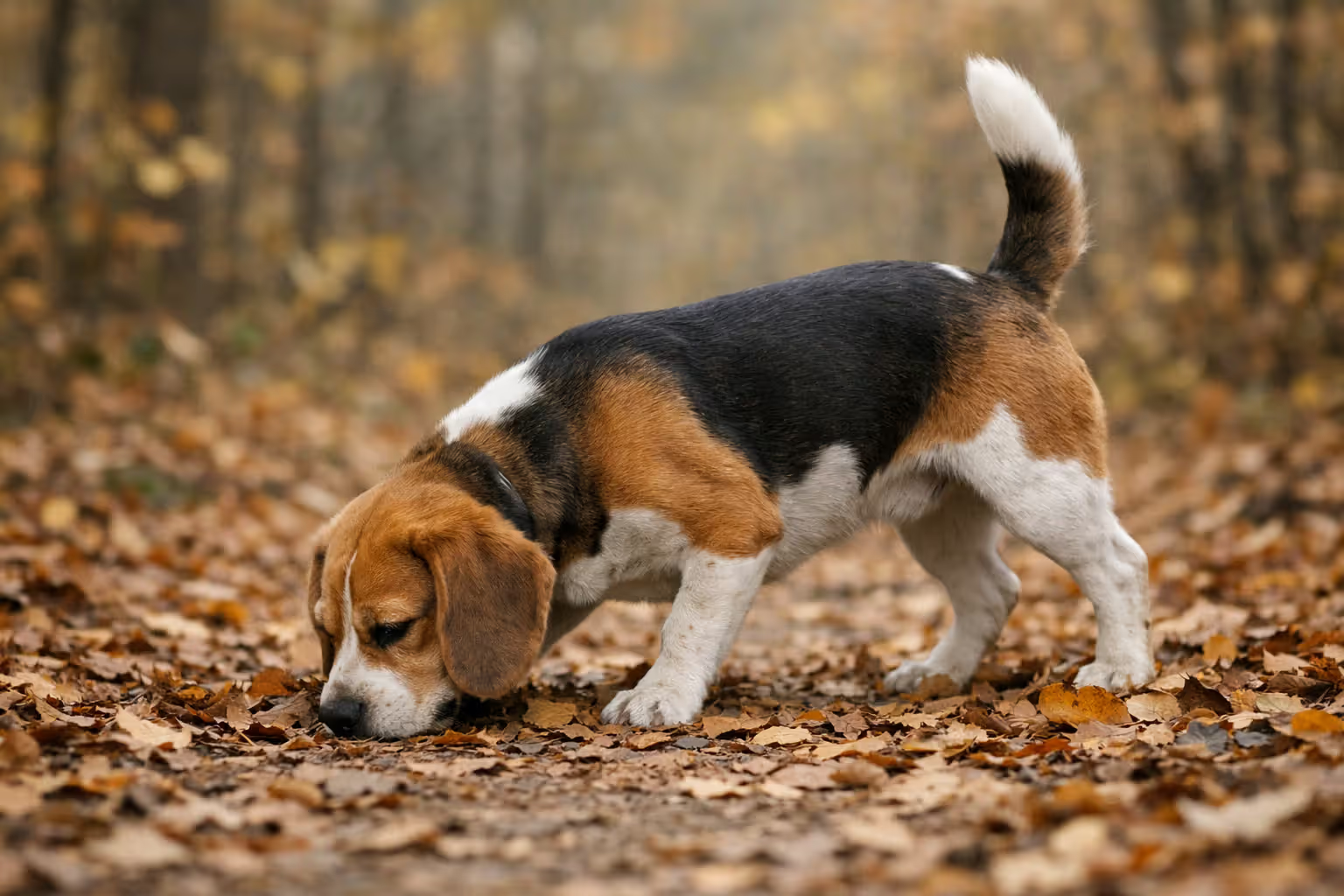
"Stubborn breeds are stupid breeds." Basset Hounds, Beagles, and Bulldogs often rank low on obedience-based intelligence tests, leading people to assume they're unintelligent. In reality, these breeds were developed for independent work—following scent trails for hours without human direction, or (in the case of Bulldogs) holding onto angry bulls despite pain. They're smart enough to question whether your command makes sense, not too stupid to understand it. A Beagle that ignores "come" while tracking a rabbit is demonstrating exceptional focus and scent-discrimination ability, not stupidity.
Author: Emily Crosswell;
Source: alwaysonsalepetsupplies.com
"Small dogs are less intelligent than large dogs." This myth persists because small dogs are often undertrained. Owners carry them instead of teaching leash manners, tolerate jumping because it's not physically threatening, and don't provide mental stimulation. A properly trained Papillon demonstrates problem-solving and learning speed rivaling any large breed. Size doesn't determine intelligence—training and genetics do.
"Mixed breeds are less intelligent than purebreds." Intelligence is heritable, but it's not breed-exclusive. A Border Collie mix inherits cognitive abilities from its parents. Mixed breeds often demonstrate hybrid vigor and can combine the best traits of multiple breeds. The key is understanding the mix's likely genetic background and training accordingly.
"You can't teach an old dog new tricks." Neuroplasticity continues throughout a dog's life. While puppies learn faster and form habits more easily, adult and senior dogs absolutely can learn new behaviors. In fact, adult dogs often learn more efficiently because they have better impulse control and attention spans than puppies. A five-year-old rescue German Shepherd can learn advanced obedience; it just requires patience and appropriate methods.
"Intelligent dogs train themselves." Smart dogs learn constantly, but without guidance, they learn unwanted behaviors as readily as desired ones. A Border Collie left alone in a yard all day will train itself to herd cars, chase shadows, or escape. Intelligence without direction creates problems. Even the smartest breeds need structured training and clear communication about expectations.
"All dogs of a breed have the same intelligence level." Breed tendencies are averages. Individual variation within breeds is substantial. Some Golden Retrievers are brilliant problem-solvers; others are sweet but slow learners. Genetics, early socialization, training, and individual personality all influence intelligence. Choosing a breed gives you probabilities, not guarantees.
Frequently Asked Questions About Smart Dog Breeds
Which dog breed has the highest IQ?
Border Collies consistently rank first in working and obedience intelligence, learning new commands in fewer than five repetitions and obeying first commands 95% of the time. However, "highest IQ" depends on how you measure intelligence. Bloodhounds have extraordinary scent-discrimination abilities that Border Collies can't match. Livestock guardian breeds like Great Pyrenees make independent threat assessments that demonstrate profound adaptive intelligence despite ranking low in obedience tests. If you want the most trainable, biddable, and quick-learning breed for traditional obedience and dog sports, Border Collies are unmatched.
Are mixed breeds as intelligent as purebreds?
Yes, absolutely. Intelligence is inherited from parents regardless of whether they're the same breed. A Border Collie-Poodle mix will likely be highly intelligent because both parent breeds rank at the top of intelligence assessments. Mixed breeds can even benefit from hybrid vigor—the genetic advantage that comes from diverse bloodlines. The challenge with mixed breeds is predicting which traits they'll inherit. A Labrador-Beagle mix might inherit the Lab's trainability or the Beagle's independent hunting drive—or both. Understanding the likely genetic background helps set appropriate training expectations.
Do intelligent dogs require more exercise than other breeds?
Not necessarily more physical exercise, but definitely more mental stimulation. A Border Collie needs mental work more than sheer mileage. Thirty minutes of advanced training or problem-solving exercises can tire an intelligent dog more effectively than two hours of simple walking. That said, most highly intelligent breeds were developed for demanding work—herding, protection, hunting—so they typically need both physical and mental exercise. A bored smart dog is destructive regardless of how much they've run. The key is combining physical exercise with cognitive challenges.
Can you train an older smart dog, or only puppies?
Adult and senior dogs learn throughout their lives. While puppies form habits more easily during critical socialization periods, adult dogs often learn faster because they have better focus and impulse control. Rescue organizations regularly train adult German Shepherds, Labrador Retrievers, and other intelligent breeds for service work, protection, and therapy roles. The training approach might differ—adult dogs have established habits to work around—but their capacity to learn remains strong. In fact, some complex tasks like scent detection are taught more successfully to adult dogs with mature attention spans.
What's the difference between a smart dog and an obedient dog?
A smart dog understands commands and context quickly; an obedient dog reliably follows commands. These traits don't always overlap. A Siberian Husky might perfectly understand "come" but choose to ignore it when something more interesting appears—that's intelligence with low obedience. A Golden Retriever both understands commands and eagerly complies—intelligence plus high obedience. Some breeds like livestock guardians are highly intelligent but bred for independent decision-making, not obedience. They'll ignore commands they judge inappropriate for the situation. True intelligence includes contextual understanding, problem-solving, and learning speed, while obedience specifically measures compliance with human direction.
Are small dog breeds less intelligent than large breeds?
No. Size doesn't determine cognitive ability. Papillons rank eighth in Coren's intelligence assessment, ahead of Rottweilers and many large breeds. Toy Poodles demonstrate the same problem-solving abilities as Standard Poodles. The perception that small dogs are less intelligent comes from training differences—owners often undertrain small dogs, tolerate behaviors they'd correct in large dogs, and don't provide adequate mental stimulation. A properly trained and challenged small dog demonstrates intelligence equal to large breeds. The difference is in how we treat them, not their inherent cognitive abilities.
Choosing a dog based on intelligence rankings makes sense only if you understand what type of intelligence you need and whether you can meet that breed's requirements. The smartest dogs demand the most from their owners—time, consistency, mental challenges, and appropriate outlets for their abilities.
A Border Collie in the right home—with an active owner who provides herding lessons, agility training, or advanced obedience work—is a joy. That same dog in an apartment with an owner who works 10-hour days becomes destructive and neurotic. A Basset Hound that ranks low on obedience tests might be perfect for someone who wants a companion for casual walks and doesn't need precise command execution.
Assess your lifestyle honestly. How much time can you dedicate to training? What activities interest you—hiking, dog sports, casual companionship? How much dog hair, drool, and chaos can you tolerate? Do you have experience managing strong-willed dogs? The answers to these questions matter more than intelligence rankings.
When you match a breed's cognitive style to your life, you get a partner whose natural abilities align with your needs. That's when canine intelligence becomes an asset rather than a challenge, and when the bond between human and dog reaches its full potential.
Discover 25+ white dog breeds ranging from tiny apartment companions to powerful livestock guardians. Explore the genetics behind white coats, compare grooming demands across coat types, understand breed-specific health risks, and find the perfect snow-coated match for your actual lifestyle, family size, and daily routine
Searching for the perfect small dog breed that truly fits your daily routine? This detailed guide breaks down 15 popular tiny breeds by temperament, grooming demands, health risks, and annual costs. Whether you rent a studio apartment, raise young kids, or own a dog for the first time, find your match here
Complete guide to service dog requirements under the ADA, including legal rights for handlers, public access rules, housing and air travel regulations, training costs and timelines, task examples by disability type, best breeds for service work, and key differences between service dogs, emotional support animals, and therapy dogs under United States law
Looking for the perfect medium sized dog? Our detailed guide covers over 25 breeds, comparing them by family compatibility, suitability for apartment living, energy and activity levels, ownership costs, and daily care needs. Find the ideal match for your home, budget, and everyday routine today
The content on this website is provided for general informational and educational purposes only. It is intended to offer guidance on dog breeds, behavior, health, care, and lifestyle, and should not be considered a substitute for professional veterinary advice, diagnosis, or treatment.
All information published on this site is based on general knowledge, widely accepted research, and practical experience, but individual dogs may differ in behavior, health conditions, and needs. Results and outcomes may vary depending on the dog, environment, and circumstances.
The website is not responsible for any errors or omissions, or for actions taken based on the information provided. For specific concerns regarding your dog’s health or behavior, always consult a qualified veterinarian or professional dog specialist.