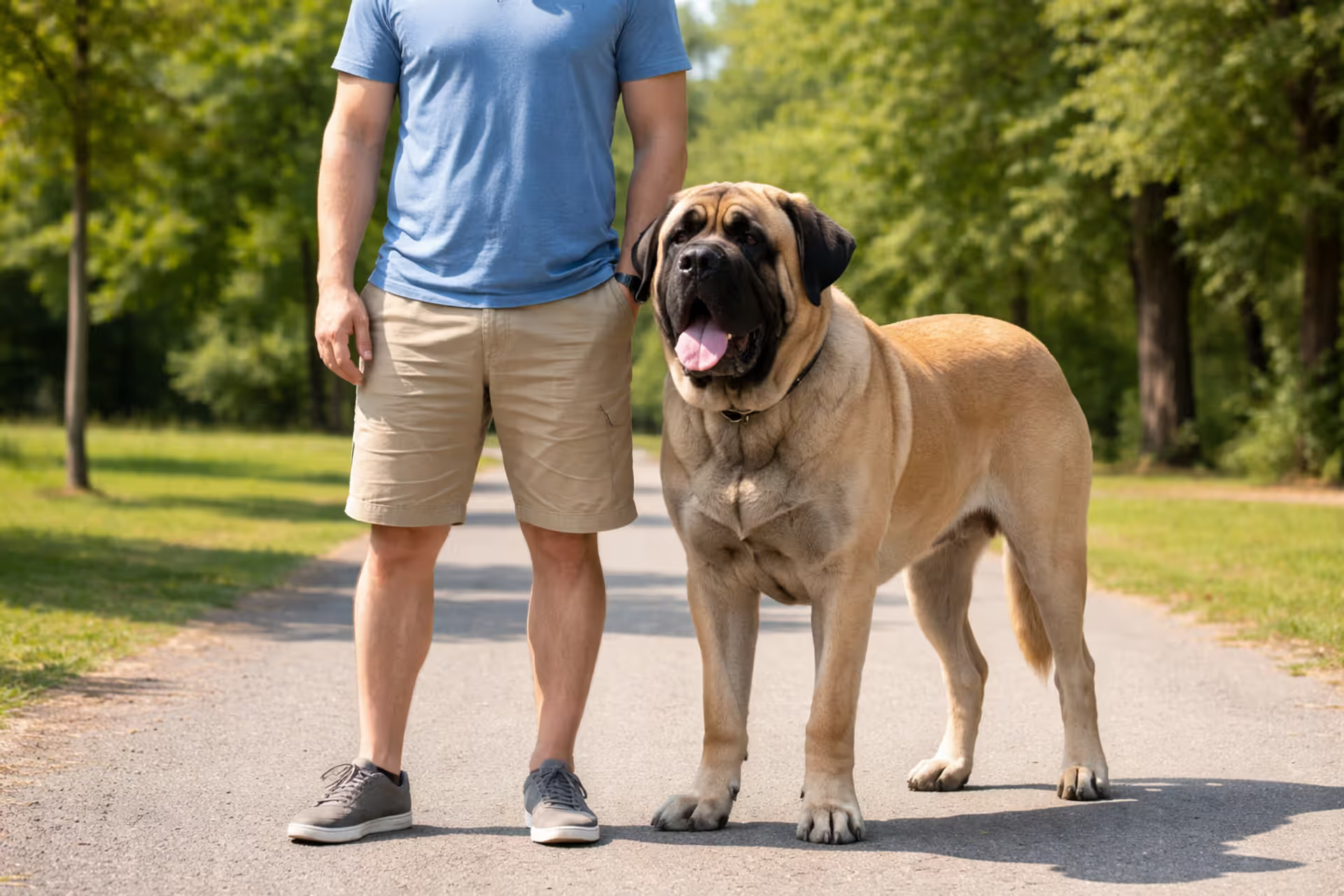
When you see a dog that stands waist-high and outweighs most adult humans, you're looking at one of nature's most impressive companions. These massive breeds command attention wherever they go, but choosing to bring one home means understanding exactly what "big" means—and what it demands from you.
Giant breeds aren't just scaled-up versions of smaller dogs. They come with unique care requirements, health considerations, and lifestyle adjustments that catch many first-time owners off guard. Some tower over countertops but weigh less than you'd expect. Others pack 200 pounds onto a frame that's surprisingly compact. The differences matter when you're planning your home, budget, and daily routine around a dog that might drink a gallon of water in a single day.
How We Measure "Biggest": Height vs. Weight vs. Overall Mass
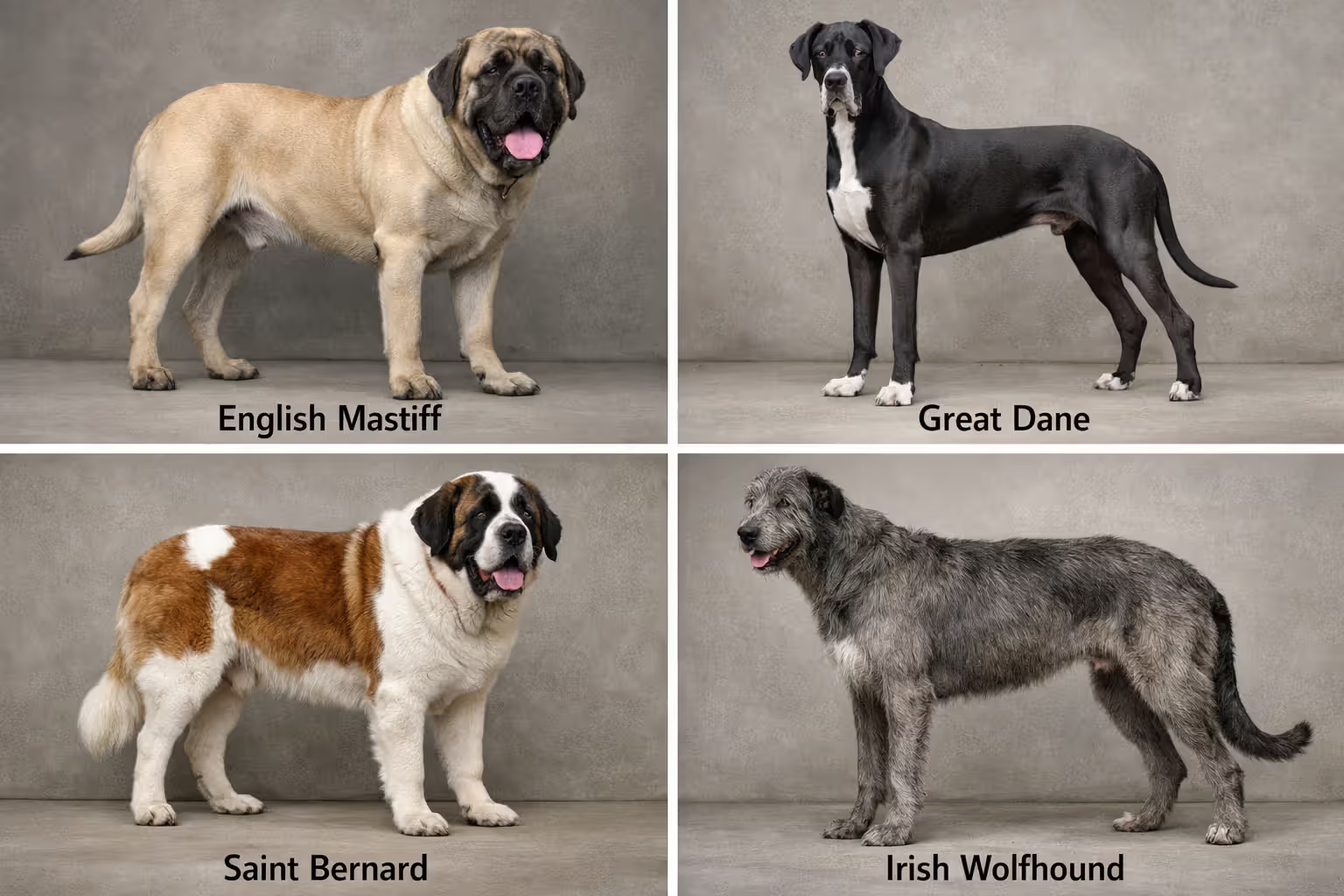
The title of "biggest dog breed" shifts depending on how you're measuring. A Great Dane might stand 32 inches at the shoulder but weigh 140 pounds, while an English Mastiff at 30 inches could tip the scales at 230 pounds. Which one is bigger? That depends on your definition.
Shoulder height (measured from the ground to the highest point of the shoulder blades) determines how tall a dog stands. This metric matters when you're considering whether your dog can reach kitchen counters or needs a taller doorway. Breeds like Irish Wolfhounds and Great Danes dominate this category, often exceeding 30 inches with some individuals reaching 34 inches or more.
Body weight tells you how much mass you're dealing with. This number affects everything from medication dosing to the strength of your flooring. English Mastiffs and Saint Bernards lead in this category, with males regularly exceeding 200 pounds. A 180-pound dog requires different equipment, vehicle space, and physical handling than a 140-pound dog of the same height.
Overall mass considers both dimensions plus body length and bone density. Some breeds are simply built heavier throughout their entire frame. A stocky Tibetan Mastiff might weigh the same as a taller but leaner Anatolian Shepherd, yet feel more substantial due to denser bone structure and thicker musculature.
Rankings shift depending on whether you're looking at breed averages or record-holding individuals. A particularly large Great Dane might outweigh an average Mastiff, even though Mastiffs are the heavier breed on average. Throughout this guide, we're focusing on typical breed standards rather than exceptional outliers.
The dog is a gentleman; I hope to go to his heaven, not man’s
— Mark Twain
Top 15 Largest Dog Breeds in the World (Ranked)
Breed Name
Average Height (inches)
Average Weight (pounds)
Country of Origin
General Temperament
English Mastiff
27-32
160-230
England
Gentle, protective, calm
Great Dane
28-34
110-175
Germany
Friendly, patient, dependable
Saint Bernard
26-30
120-180
Switzerland
Patient, gentle, watchful
Tibetan Mastiff
24-29
90-150
Tibet
Independent, protective, intelligent
Newfoundland
26-28
100-150
Canada
Sweet, patient, devoted
Irish Wolfhound
30-35
115-180
Ireland
Gentle, dignified, calm
Leonberger
26-32
90-170
Germany
Friendly, gentle, playful
Anatolian Shepherd
27-29
80-150
Turkey
Independent, loyal, protective
Caucasian Shepherd
24-30
99-170
Caucasus Region
Bold, fearless, protective
Great Pyrenees
27-32
85-160
France
Calm, patient, gentle
Boerboel
22-27
110-200
South Africa
Confident, intelligent, protective
Dogue de Bordeaux
23-27
99-145
France
Loyal, courageous, affectionate
Scottish Deerhound
28-32
75-110
Scotland
Gentle, dignified, polite
Bernese Mountain Dog
23-28
70-115
Switzerland
Good-natured, calm, strong
Kangal
28-32
90-145
Turkey
Protective, independent, calm
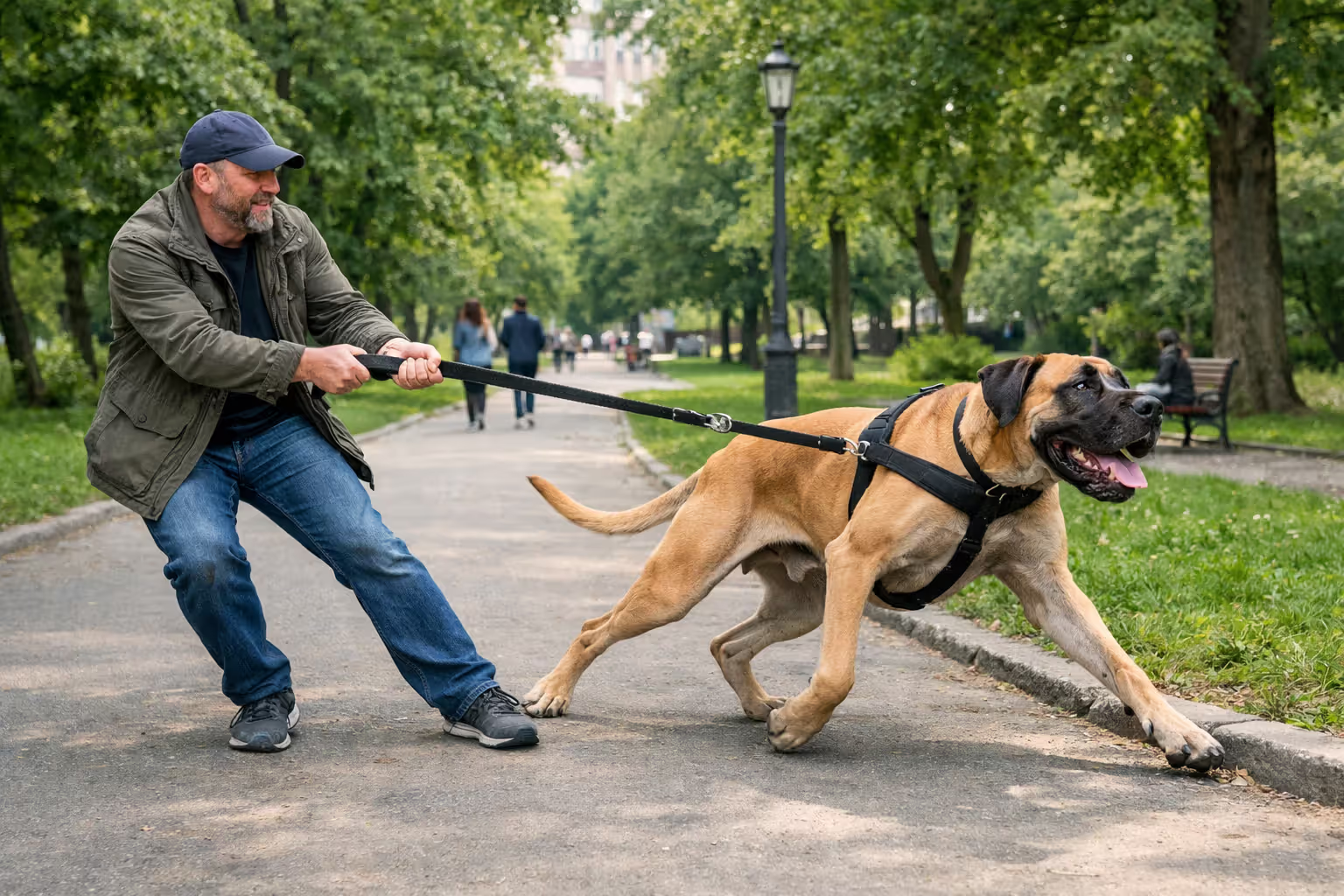
English Mastiff: The heavyweight champion of the dog world, with males often exceeding 200 pounds. Despite their intimidating size, they're known for being surprisingly gentle with family members, though their protective instincts remain sharp.
Great Dane: Holds records for the tallest dogs ever measured, with some individuals reaching nearly 45 inches at the shoulder. They're often called "gentle giants" but need early socialization to prevent their size from becoming a liability in public spaces.
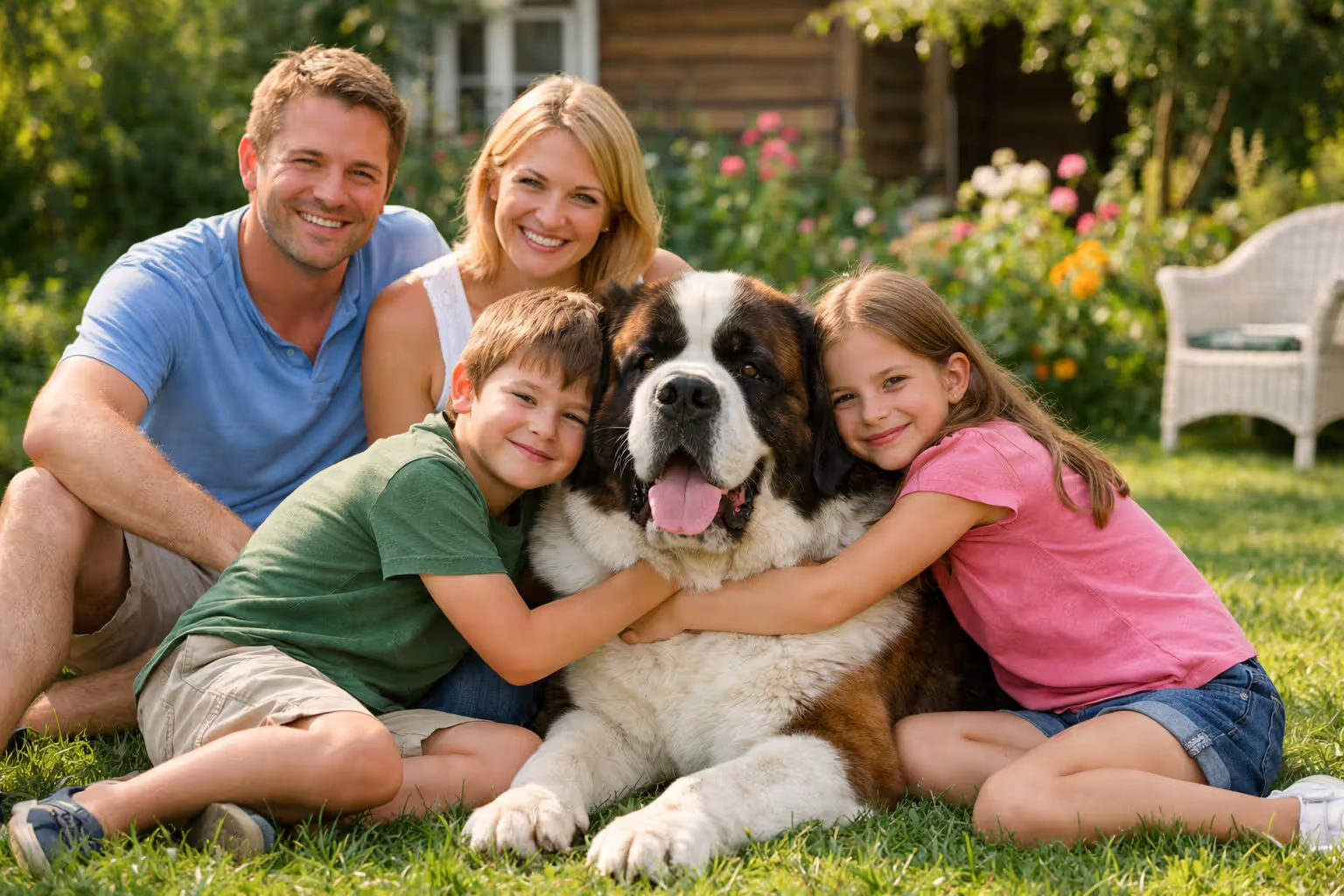
Saint Bernard: Originally bred for alpine rescue work, these dogs combine massive size with legendary patience. Their thick coats and heavy build made them ideal for locating avalanche victims, though modern Saint Bernards are primarily companions.
Tibetan Mastiff: One of the most expensive breeds, with some puppies selling for over $1 million in China. Their thick double coat makes them appear even larger than their actual weight, and they're known for being more independent than most giant breeds.
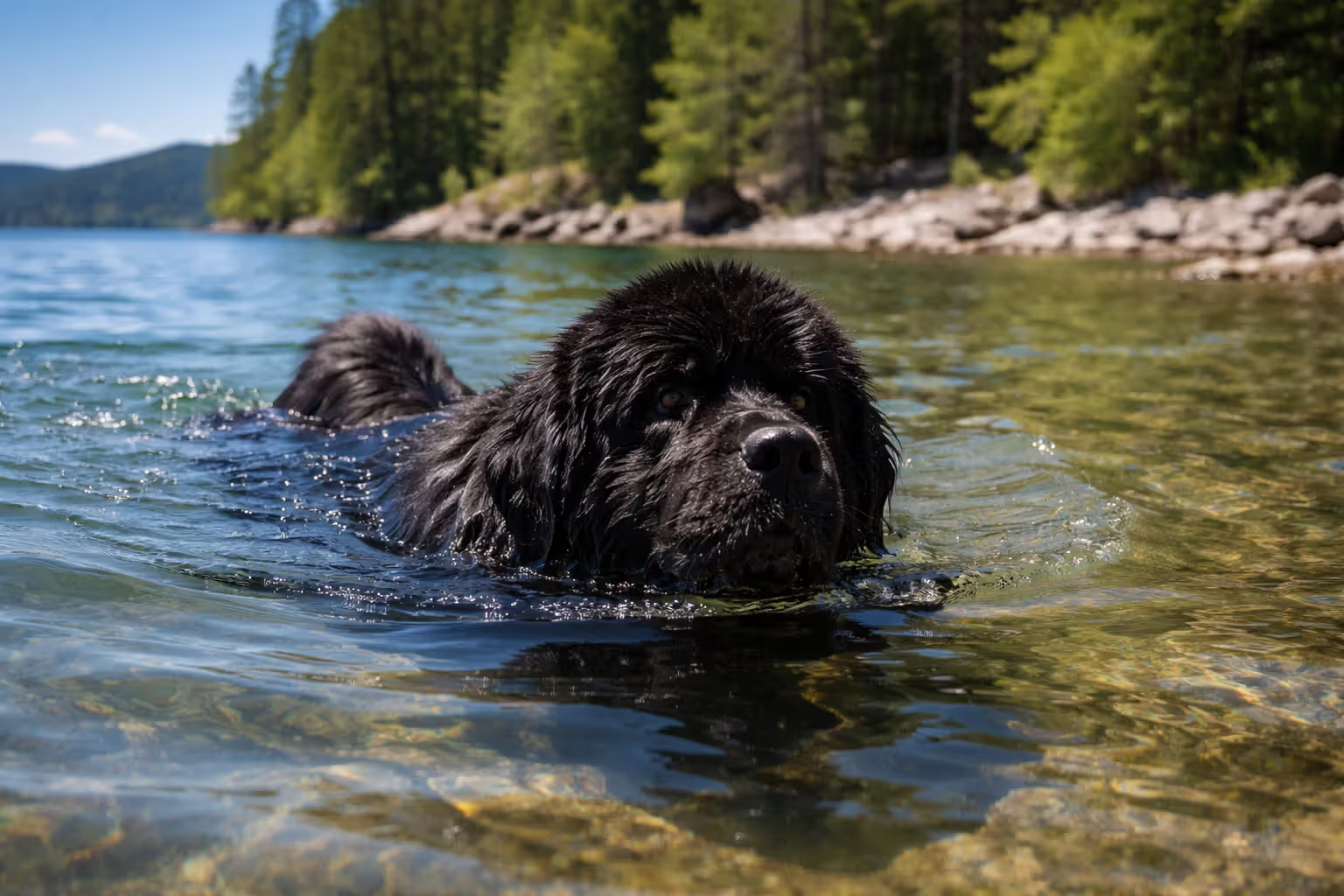
Newfoundland: Exceptional swimmers with webbed feet and water-resistant coats. Despite weighing up to 150 pounds, they're remarkably agile in water and have saved countless drowning victims throughout history.
Irish Wolfhound: The tallest breed on average, originally bred to hunt wolves and elk. Their slender build means they weigh less than stockier breeds of similar height, but they still require substantial space to stretch out.
Leonberger: Bred to resemble the lion on the town crest of Leonberg, Germany. They're less common than other giant breeds but known for being particularly good with children despite their imposing size.
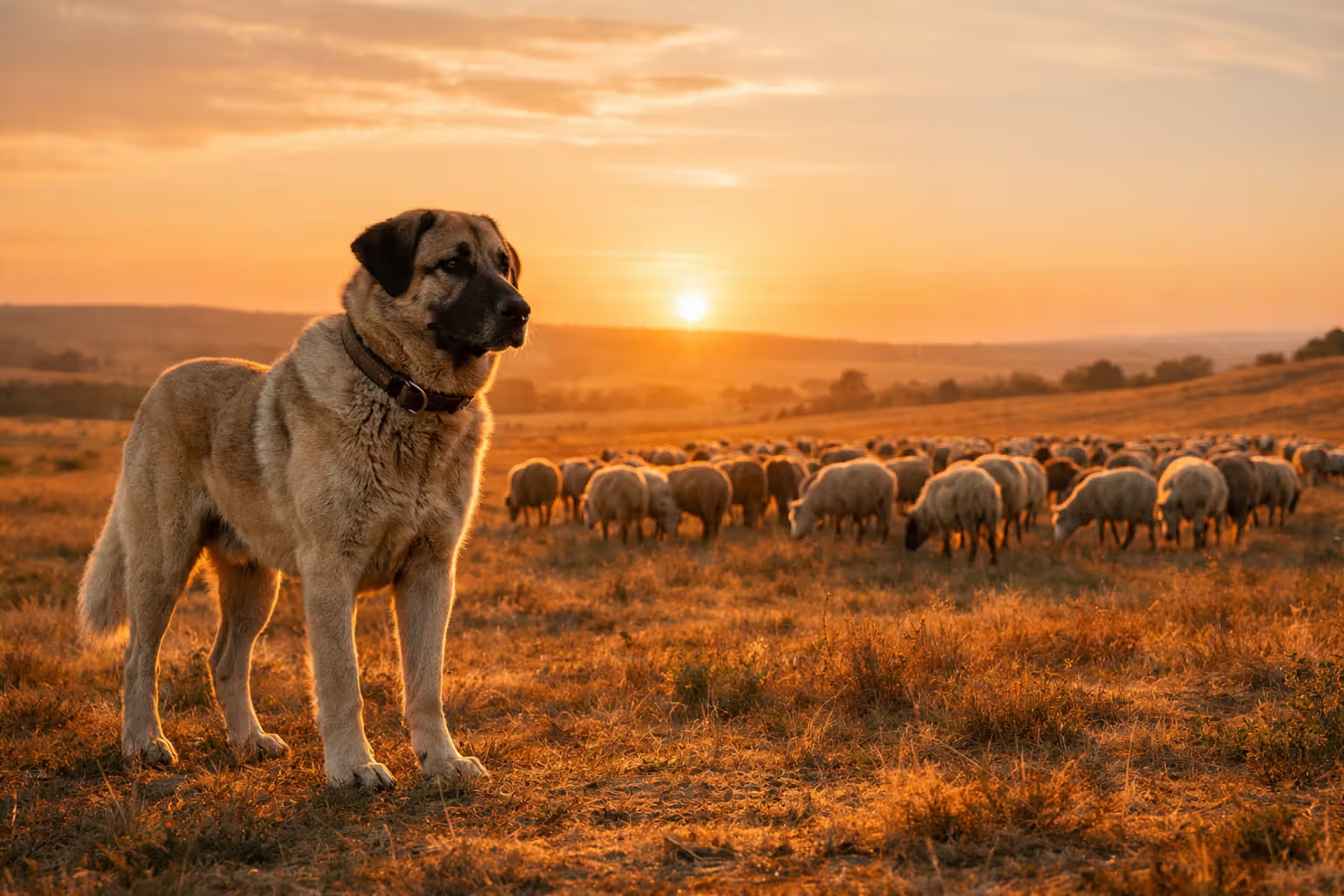
Anatolian Shepherd: Working livestock guardians that can be standoffish with strangers. They're built for endurance rather than bulk, with a leaner frame than Mastiff-type breeds but impressive strength and stamina.
Caucasian Shepherd: Also called Caucasian Ovcharka, these dogs were bred to protect flocks from wolves and bears. They're among the most protective breeds and require experienced owners who can manage their strong guarding instincts.
Great Pyrenees: Nocturnal by breeding, often more alert at night when predators historically threatened their flocks. Their white coats helped shepherds distinguish them from wolves in low light, and they're calmer indoors than many other livestock guardians.
Boerboel: South African farm guardians with a more compact build than many giant breeds. They're athletic despite their weight, capable of impressive speed and agility when protecting their territory.
Dogue de Bordeaux: Made famous by the movie "Turner & Hooch," these dogs have massive heads relative to their body size. They drool considerably and have shorter lifespans than most breeds, averaging 5-8 years.
Scottish Deerhound: Similar in appearance to Irish Wolfhounds but slightly smaller and with a different coat texture. They're sprinters rather than endurance runners, capable of reaching 28 mph in short bursts.
Bernese Mountain Dog: Tri-colored working dogs originally used to pull carts and drive cattle in Swiss farms. They're more people-oriented than many other giant breeds and struggle more with being left alone.
Kangal: Turkish livestock guardians with the strongest measured bite force of any domestic dog breed. They're less bulky than Mastiffs but have incredible jaw strength and protective instincts that require careful management.
Author: Emily Crosswell;
Source: alwaysonsalepetsupplies.com
What It Actually Costs to Own a Giant Dog Breed
Budgeting for a giant breed means multiplying typical dog expenses by factors most people don't anticipate. A 150-pound Mastiff doesn't eat twice what a 75-pound Labrador eats—it often eats three times as much, especially during the growth phase that lasts 18-24 months instead of the typical 12.
Food expenses start around $100-200 monthly for quality large-breed formulas. Giant breeds need food specifically formulated to support slow, steady growth; puppy food that's too rich can cause developmental orthopedic problems. You're looking at 6-10 cups daily for an adult, and premium brands that use quality protein sources cost more per pound. Many owners buy 40-pound bags weekly rather than monthly. Budget an extra $50-100 monthly if your dog has food sensitivities requiring limited-ingredient or prescription diets, which affects giant breeds at higher rates than smaller dogs.
Veterinary care scales directly with body weight for most medications and anesthesia. A heartworm prevention dose for a 150-pound dog costs three times what you'd pay for a 50-pound dog. Anesthesia for dental cleaning or surgery requires more drugs and longer monitoring, pushing costs from $300-500 to $800-1,200 for the same procedure. Hip and elbow X-rays to screen for dysplasia—recommended for all giant breeds—run $400-600. Emergency bloat surgery, which giant breeds face at higher risk, costs $3,000-7,000 and requires immediate intervention.
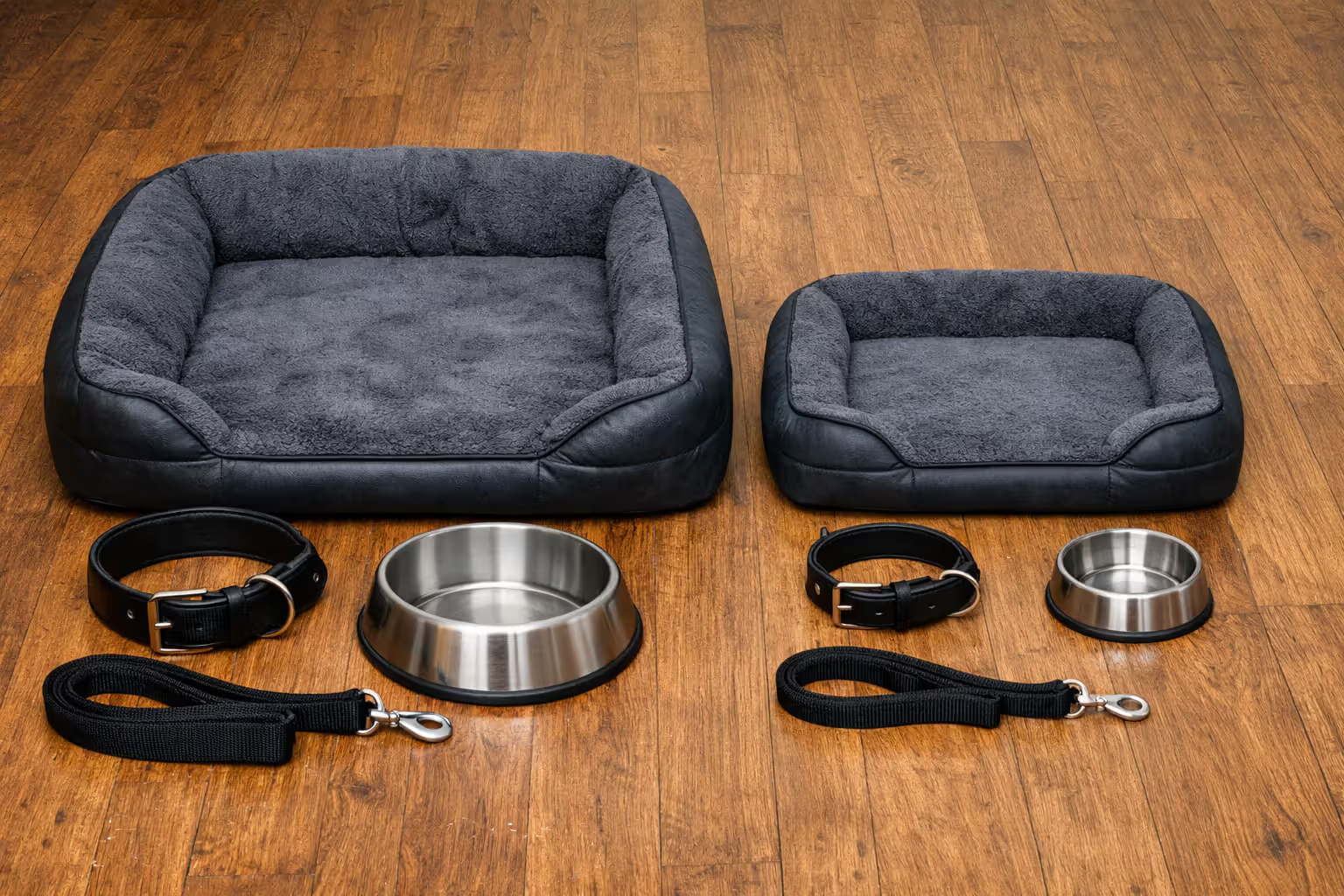
Equipment needs upgrading across the board. A crate large enough for a Great Dane costs $200-400 compared to $50-100 for a medium dog. Heavy-duty leashes, harnesses, and collars that won't snap under 150 pounds of pulling force cost 2-3 times standard versions. Vehicle barriers or crates for safe transport run $150-400. Many owners need to replace standard dog beds every 6-12 months as foam compresses under extreme weight; orthopedic beds that last longer cost $200-500. Some homes require ramp installation ($300-800) to help aging dogs access vehicles or navigate stairs without joint damage.
Author: Emily Crosswell;
Source: alwaysonsalepetsupplies.com
Author: Emily Crosswell;
Source: alwaysonsalepetsupplies.com
Insurance premiums reflect the higher claims giant breeds generate. Expect to pay $80-150 monthly for comprehensive coverage compared to $30-50 for smaller breeds. Some insurers exclude giant breeds entirely or cap coverage at amounts that won't cover major surgeries. Pre-existing conditions like hip dysplasia—which many giant breeds develop before age two—get excluded from future coverage, leaving you paying out-of-pocket for ongoing management.
Housing modifications catch people off guard. A waist-high dog can reach kitchen counters, requiring childproof locks on cabinets and trash cans. Fencing needs to be at least six feet tall and deeply anchored; a 180-pound dog leaning against a fence generates more force than most standard installations can handle. Reinforcing costs $15-25 per linear foot. Hardwood floors need area rugs or runners to prevent slipping, which can cause ACL tears and hip injuries. Some landlords charge additional pet deposits of $500-1,000 for giant breeds or refuse them entirely.
Author: Emily Crosswell;
Source: alwaysonsalepetsupplies.com
Author: Emily Crosswell;
Source: alwaysonsalepetsupplies.com
7 Common Mistakes People Make Before Getting a Big Dog
Underestimating space requirements: A 140-pound dog lying down occupies roughly 12-15 square feet. Many people visualize a dog standing but forget they spend 12-16 hours daily sprawled across floors. In a 1,000-square-foot apartment, that's 1.5% of your floor space permanently occupied. Add food bowls, water bowls (giant breeds need 2-3 gallon capacities), beds, and toy storage, and you've lost 20-30 square feet of usable space. Doorways, hallways, and staircases become traffic jams when you're navigating around a dog that can't easily squeeze past.
Ignoring exercise needs vs. energy levels: Many giant breeds have low energy but high exercise requirements—a distinction that confuses people. A Great Pyrenees seems lazy indoors but needs 60-90 minutes of daily walking to maintain joint health and prevent obesity. They won't bounce around demanding play, but skipping walks leads to arthritis and shortened lifespans. Conversely, breeds like Leonbergers have moderate energy and will initiate play, requiring both structured walks and interactive time. Assuming a calm dog needs minimal exercise causes preventable health problems.
Overlooking shorter lifespans: Giant breeds average 7-10 years compared to 12-15 for medium breeds. Some, like Dogues de Bordeaux, average just 5-8 years. You're committing to the same expenses and effort as with a longer-lived breed but getting half the time together. Families with young children might get a puppy when kids are 5-6 years old, only to face the dog's death when children are 12-15 and deeply bonded. This timeline matters emotionally and financially; you'll face end-of-life care and replacement costs sooner than anticipated.
Author: Emily Crosswell;
Source: alwaysonsalepetsupplies.com
Skipping breed-specific health research: All giant breeds face elevated risks for bloat, hip dysplasia, and heart problems, but specific breeds have additional concerns. Bernese Mountain Dogs have high cancer rates, with histiocytic sarcoma affecting 25% of the breed. Newfoundlands face subvalvular aortic stenosis at rates near 20%. Caucasian Shepherds can develop severe hip dysplasia requiring $6,000+ surgery per hip. Researching your specific breed's health profile helps you budget for likely expenses and choose a breeder who health-tests breeding stock.
Not budgeting for long-term costs: Initial purchase price ($1,500-3,000 for most giant breeds) is the smallest expense you'll face. Over a 10-year lifespan, you're looking at $150,000-200,000 in total costs when you factor in food, routine vet care, emergency care, equipment replacement, and housing. That's $15,000-20,000 annually. Many people budget for the first year but don't maintain that funding level, leading to difficult decisions when a seven-year-old dog needs $5,000 surgery.
Assuming all giant breeds are gentle: Size doesn't predict temperament. Saint Bernards and Newfoundlands are famously patient, but Caucasian Shepherds and Kangals are serious protection dogs that can be aggressive toward strangers and other animals. A 150-pound dog with strong guarding instincts becomes unmanageable if not properly trained and socialized. Even gentle breeds can cause injuries accidentally—a tail wag that knocks over a toddler or an enthusiastic greeting that knocks down an elderly person. Size amplifies every behavioral issue.
Failing to start training early: An eight-week-old Mastiff puppy weighing 20 pounds is manageable. By six months, that same puppy weighs 80-100 pounds and has the strength to pull an adult off their feet. Training must begin immediately, before the dog has the physical power to ignore you. Many people wait until behaviors become problems, then discover that a 120-pound adolescent can't be physically corrected or restrained. Professional training for giant breeds costs $150-300 per session, and most need 10-15 sessions minimum to establish reliable control.
A well-trained dog will make no attempt to share your lunch. He will just make you feel so guilty that you cannot enjoy it
— Helen Thomson
Choosing the Right Giant Breed for Your Living Situation
Matching breed characteristics to your actual lifestyle—not your ideal lifestyle—determines whether ownership succeeds or becomes a daily struggle. A dog that's perfect for a rural property with acreage becomes a problem in a suburban home with a quarter-acre lot.
Best Big Dogs for Families with Children
Newfoundlands rank at the top for families, combining patience with natural protectiveness. They tolerate rough handling better than most breeds and have soft mouths, meaning they're less likely to accidentally injure during play. Their swimming ability adds a safety factor around pools and lakes, as they instinctively monitor children in water.
Author: Emily Crosswell;
Source: alwaysonsalepetsupplies.com
Saint Bernards offer similar temperaments with slightly lower exercise needs. They're calm indoors and gentle with toddlers, though their size means supervision remains necessary. Their drool production is substantial, requiring tolerance from family members who prefer cleaner homes.
Leonbergers were specifically bred as family companions for European royalty. They're more playful than many giant breeds, engaging actively with children while maintaining gentle behavior. They're less common, which means finding reputable breeders requires more effort, but their temperament justifies the search for families wanting an interactive giant breed.
Bernese Mountain Dogs bond intensely with family members and show particular affection toward children. Their shorter lifespans (7-10 years) mean families should prepare children for earlier loss. They're less tolerant of being left alone than other breeds, making them better fits for families where someone is home most of the day.
Great Danes adapt well to family life despite their size. They're less protective than working breeds, making them friendlier toward visitors and other children. Their short coats mean minimal grooming, and they're less prone to destructive chewing than some other giant breeds.
Giant Breeds Suitable for Apartments (If Any)
True suitability is rare, but some giant breeds adapt better than others to apartment living. The key factors are energy level, barking tendency, and ability to get sufficient exercise through walks rather than free running.
Great Danes are surprisingly apartment-friendly due to low energy levels and minimal barking. They're content lounging most of the day and don't require yards for running. Two 30-45 minute walks daily meet their exercise needs. Their main drawback is space—they need room to stretch out, which means a studio apartment won't work, but a 900+ square foot one-bedroom can suffice.
English Mastiffs have similar low energy and can adapt to apartments if walked consistently. They're quieter than most breeds and less reactive to hallway noises. Their main issue is weight-related; upper-floor apartments with weight restrictions often exclude them, and stairs become problematic as they age.
Newfoundlands can work in ground-floor apartments near water access. They need swimming opportunities to maintain joint health without high-impact exercise. An apartment near a dog-friendly beach or lake suits them better than one requiring only street walking.
Most livestock guardian breeds (Great Pyrenees, Anatolian Shepherds, Caucasian Shepherds, Kangals) are poor apartment choices. They bark to alert and patrol, behaviors that generate neighbor complaints. Their protective instincts make shared hallways and elevators stressful for everyone.
Irish Wolfhounds and Scottish Deerhounds need space to sprint. Their exercise requirements can't be met through walking alone; they need safe areas to run at full speed several times weekly. Without this outlet, they develop behavioral problems.
Low-Energy vs. High-Energy Large Breeds
Low-energy giant breeds include English Mastiffs, Saint Bernards, and Newfoundlands. These dogs are content with moderate daily walks and indoor lounging. They were bred for short bursts of activity (guarding, rescue work) rather than all-day endurance. Their calm nature makes them easier to manage indoors, but don't mistake low energy for low exercise needs—they still require daily movement to maintain healthy weight and joint function.
Moderate-energy breeds like Great Danes, Leonbergers, and Bernese Mountain Dogs need more interaction. They'll initiate play, enjoy longer walks, and appreciate activities like swimming or hiking. They're not hyperactive but won't settle for minimal exercise. Plan on 60-90 minutes of daily activity split between walks and play.
Author: Emily Crosswell;
Source: alwaysonsalepetsupplies.com
High-energy giant breeds are less common but include younger Anatolian Shepherds and some working-line Great Pyrenees. These dogs were bred to patrol large territories and remain alert for hours. They need jobs—whether that's actual livestock guarding, advanced obedience training, or dog sports. Without sufficient mental and physical stimulation, they become destructive or develop excessive barking.
Age dramatically affects energy levels in giant breeds. A two-year-old Mastiff has significantly more energy than a six-year-old, even though both are technically adults. Giant breeds mature slowly, often maintaining puppy-like energy until age three. After age seven, most slow considerably as arthritis and other age-related issues develop. Your high-energy young adult will likely become a low-energy senior faster than smaller breeds, compressing the active years into a shorter window.
Frequently Asked Questions About Giant Dog Breeds
What is the absolute biggest dog breed in the world?
The English Mastiff holds the record for heaviest breed, with males regularly exceeding 200 pounds and some individuals reaching 340 pounds. For height, the Great Dane claims the title, with breed members holding multiple Guinness World Records for tallest dog. Zeus, a Great Dane who held the record until 2014, stood 44 inches at the shoulder. The answer depends on whether you're measuring weight or height, as no single breed dominates both categories simultaneously.
Which giant dog breed lives the longest?
Among true giant breeds (those regularly exceeding 100 pounds), Great Danes and Irish Wolfhounds average 7-10 years, while Anatolian Shepherds and Tibetan Mastiffs can reach 12-15 years with proper care. The longest-lived giants tend to be the leaner, more athletic breeds rather than the heaviest ones. Mastiff-type breeds (English Mastiff, Dogue de Bordeaux, Boerboel) typically have the shortest lifespans at 6-10 years, with some individuals not reaching their seventh birthday.
Are big dogs harder to train than small dogs?
Giant breeds aren't inherently harder to train, but the consequences of poor training are more severe. A poorly trained Chihuahua is annoying; a poorly trained Mastiff is dangerous. Many giant breeds are actually easier to train than small dogs because they were bred for working roles requiring cooperation with humans. Newfoundlands, Leonbergers, and Bernese Mountain Dogs are notably biddable. The challenge is that training must start earlier and be more consistent, as physical corrections become impossible once the dog outweighs you. Livestock guardian breeds (Great Pyrenees, Kangals, Anatolian Shepherds) are more independent and require experienced trainers.
How much does the largest dog breed eat per day?
An adult English Mastiff weighing 200 pounds typically eats 8-10 cups of quality large-breed dog food daily, split into two meals to reduce bloat risk. That's roughly 2-2.5 pounds of dry food, costing $8-12 daily for premium brands. Over a year, you're looking at $3,000-4,400 just for food. Growing puppies eat even more relative to their size, sometimes consuming 12-15 cups daily during peak growth periods. Raw or home-cooked diets require 4-6 pounds of food daily for a 200-pound dog, with costs varying based on protein sources but typically exceeding kibble expenses.
What health problems are common in heavy dog breeds?
Hip and elbow dysplasia affect 20-50% of giant breeds depending on breeding quality, causing arthritis and mobility problems. Bloat (gastric dilatation-volvulus) is life-threatening and occurs when the stomach fills with gas and twists, cutting off blood flow. Giant breeds face 20-25% lifetime bloat risk compared to under 5% for small breeds. Heart problems, particularly dilated cardiomyopathy, affect many large breeds. Osteosarcoma (bone cancer) occurs at higher rates in giant breeds, especially Great Danes, Irish Wolfhounds, and Saint Bernards. Cruciate ligament tears happen more frequently due to the stress that extreme weight places on joints. Many giant breeds also face higher rates of hypothyroidism and eye problems like entropion.
Can giant dog breeds be left alone during the day?
Most adult giant breeds can physically handle 6-8 hours alone, but some breeds tolerate isolation better than others. Mastiffs, Great Danes, and Newfoundlands are generally calm when alone if properly exercised beforehand. Bernese Mountain Dogs struggle with separation anxiety more than other giants and may become destructive or develop stress-related health issues. Livestock guardian breeds can be left alone but may bark excessively if they perceive threats, creating problems with neighbors. Puppies and adolescents under age two shouldn't be left alone for more than 4-6 hours due to house-training needs and higher energy levels. The bigger concern is bathroom access—giant breeds produce proportionally giant waste, and holding it for 10-12 hours can cause urinary tract infections or behavioral issues.
Giant breeds offer companionship on a scale that smaller dogs can't match. Their presence fills a home, their loyalty runs deep, and their gentle nature—when properly bred and raised—contradicts their intimidating appearance. But they demand more of everything: more space, more money, more training, and more acceptance that your time together will be shorter than you'd wish.
The right giant breed in the right home creates an extraordinary bond. The wrong match creates years of struggle, financial strain, and ultimately rehoming situations that traumatize both dog and family. Spend time with adult dogs of your chosen breed, not just puppies. Visit homes where they live, ask about daily routines and unexpected costs, and honestly assess whether your space, budget, and lifestyle can accommodate their needs for the next decade.
When you find the right match, you'll understand why giant breed owners rarely go back to smaller dogs. There's something profound about a 150-pound dog resting its head on your lap, trusting you completely despite having the physical power to do whatever it wants. That trust, and the responsibility it carries, defines the giant breed experience.
Discover 25+ white dog breeds ranging from tiny apartment companions to powerful livestock guardians. Explore the genetics behind white coats, compare grooming demands across coat types, understand breed-specific health risks, and find the perfect snow-coated match for your actual lifestyle, family size, and daily routine
Searching for the perfect small dog breed that truly fits your daily routine? This detailed guide breaks down 15 popular tiny breeds by temperament, grooming demands, health risks, and annual costs. Whether you rent a studio apartment, raise young kids, or own a dog for the first time, find your match here
Complete guide to service dog requirements under the ADA, including legal rights for handlers, public access rules, housing and air travel regulations, training costs and timelines, task examples by disability type, best breeds for service work, and key differences between service dogs, emotional support animals, and therapy dogs under United States law
Explore the top 15 smartest dog breeds ranked by science-backed criteria, learn how canine intelligence is truly measured across three distinct categories, and get proven training strategies for brainy dogs. Find expert insights on matching a breed’s cognitive style to your lifestyle for a perfect fit
The content on this website is provided for general informational and educational purposes only. It is intended to offer guidance on dog breeds, behavior, health, care, and lifestyle, and should not be considered a substitute for professional veterinary advice, diagnosis, or treatment.
All information published on this site is based on general knowledge, widely accepted research, and practical experience, but individual dogs may differ in behavior, health conditions, and needs. Results and outcomes may vary depending on the dog, environment, and circumstances.
The website is not responsible for any errors or omissions, or for actions taken based on the information provided. For specific concerns regarding your dog’s health or behavior, always consult a qualified veterinarian or professional dog specialist.