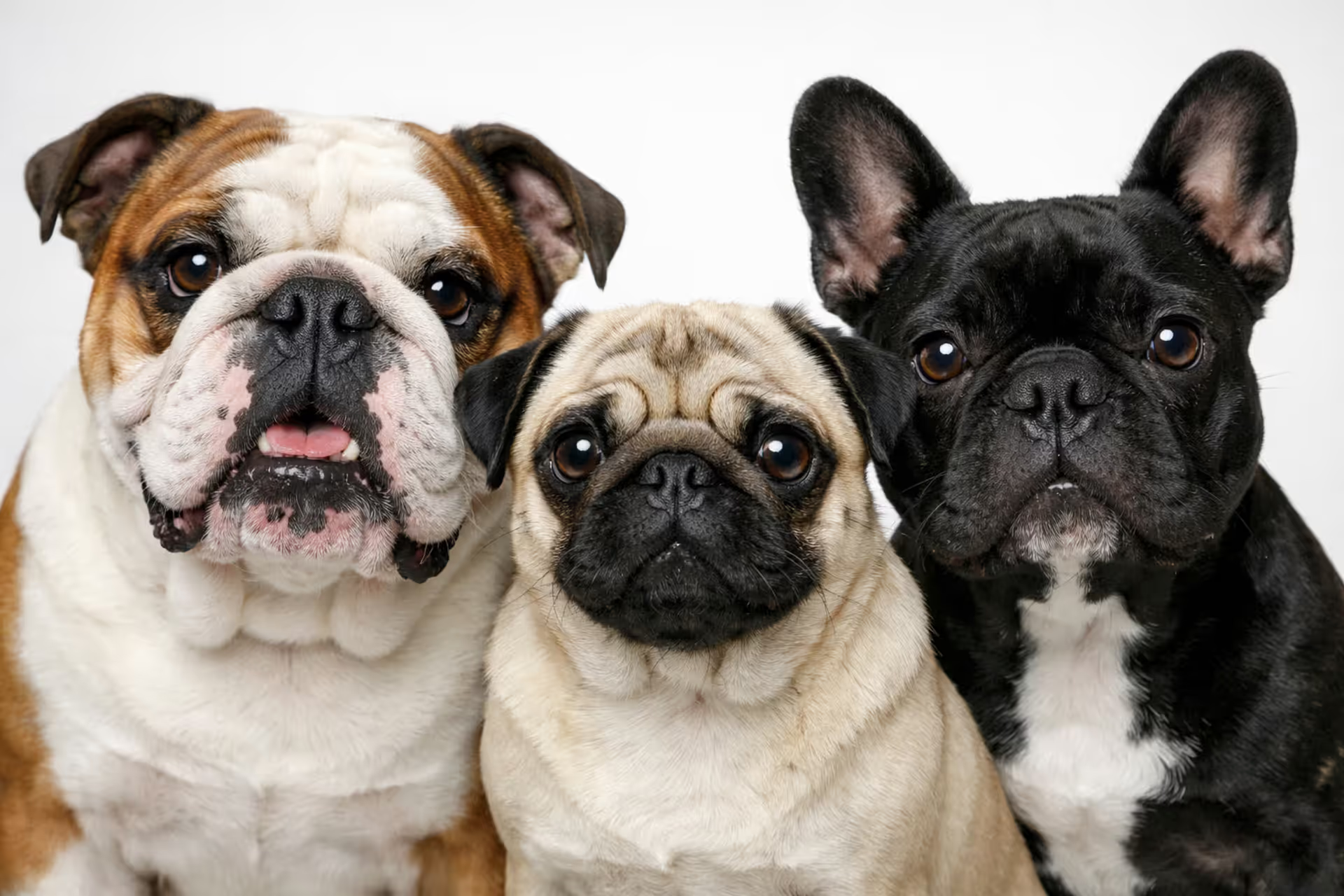
Walk through any dog park and you'll spot them immediately—Bulldogs with their smooshed noses, Pugs with those bulging eyes, French Bulldogs with their bat ears. Their faces look perpetually surprised or slightly grumpy, which makes them irresistible to millions of owners. But here's what Instagram doesn't show you: that adorable flat face often means a lifetime of breathing struggles, sky-high vet bills, and heartbreaking health crises that catch new owners completely off guard.
What Makes a Dog Breed Brachycephalic?
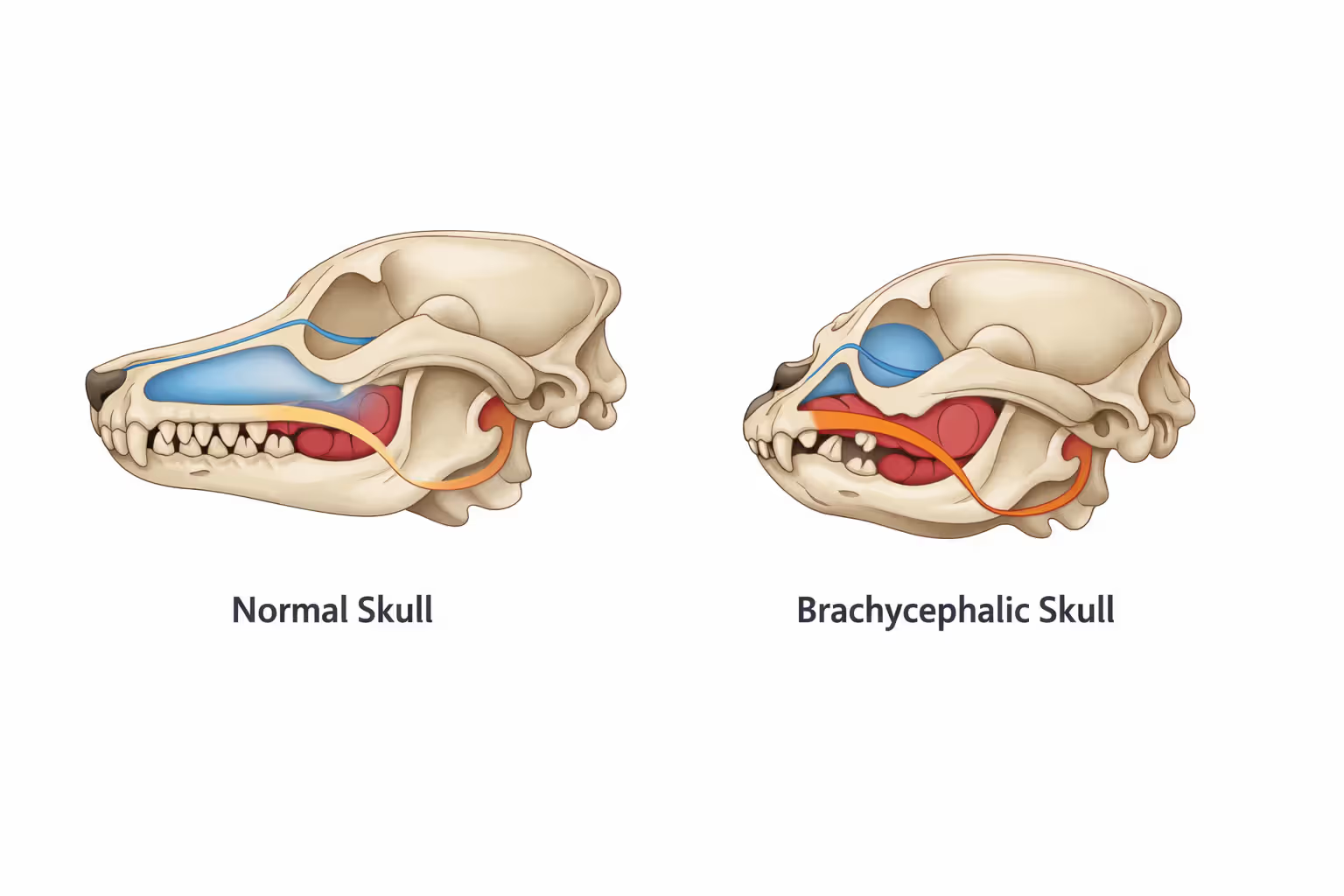
The word itself sounds medical and complicated. Break it down, though, and you get "brachy" (short) plus "cephalic" (head). Simple enough—these dogs have compressed, shortened skulls. But the reality inside that skull? That's where things get complicated.
Picture a normal dog skull—think German Shepherd or Golden Retriever. The muzzle extends forward, creating a tunnel for air to flow freely into the lungs. Now imagine taking that skull and pushing the face inward like an accordion. The skull bones compress, but all the soft tissue—the tongue, soft palate, nasal turbinates, airway tissue—stays the same size. You've got the same amount of stuff crammed into maybe 60% of the space.
That's not an exaggeration, either. Studies measuring skull proportions show modern English Bulldogs have muzzles half the length of Bulldogs photographed in 1900. The lower jaw hasn't changed much, creating a pronounced underbite in many breeds.
We created this problem ourselves. Nobody bred working farm dogs and accidentally ended up with flat faces. Victorian-era dog fanciers looked at moderately short-nosed dogs and thought, "You know what would be cuter? Even shorter." Then twentieth-century breeders said, "Hold my beer" and pushed it even further. Kennel club standards rewarded extreme features. Buyers paid premium prices for the flattest faces. And the dogs? They paid the price in compressed airways and struggling lungs.
Here's the kicker: those puppy-like features—big eyes, round heads, tiny noses—they trigger the same nurturing response in our brains as human babies. We're literally hardwired to find these proportions adorable. Evolution played a trick on us, and dogs are living with the consequences.
12 Most Popular Flat-Faced Dog Breeds in America
Breed Name
Size Category
Average Weight
Energy Level
Grooming Needs
Typical Health Costs (Annual)
English Bulldog
Medium
40-50 lbs
Low
Moderate
$1,500-$3,000+
French Bulldog
Small-Medium
16-28 lbs
Moderate
Low
$1,200-$2,500+
Pug
Small
14-18 lbs
Moderate
Moderate
$800-$2,000
Boston Terrier
Small
12-25 lbs
Moderate-High
Low
$700-$1,500
Boxer
Large
50-80 lbs
High
Low
$800-$1,800
Shih Tzu
Small
9-16 lbs
Low-Moderate
High
$600-$1,400
Pekingese
Small
7-14 lbs
Low
High
$700-$1,500
Cavalier King Charles Spaniel
Small
13-18 lbs
Moderate
Moderate
$800-$2,000
Brussels Griffon
Small
8-10 lbs
Moderate
Moderate-High
$700-$1,600
Japanese Chin
Small
7-11 lbs
Low-Moderate
Moderate
$600-$1,300
Author: Lucas Fairmont;
Source: alwaysonsalepetsupplies.com
Bulldogs (English, French, American)
English Bulldogs represent ground zero for flat-face extremes. Their heads are so massive and their bodies so oddly proportioned that over 80% can't reproduce naturally—neither mating nor giving birth. Think about that for a second. A breed so altered by human intervention that it can't perpetuate itself without veterinarians performing artificial insemination and C-sections.
Despite this—or maybe because of their helplessness—they're incredibly popular. They waddle more than walk. They snore like chainsaws. Five minutes of fetch in 70-degree weather can send them into respiratory distress. Yet they're gentle, affectionate couch buddies who bond intensely with their families. Expect to pay $3,000-$5,000 for a puppy, then budget another $2,000-$4,000 yearly for their medical needs.
French Bulldogs became Manhattan's most registered breed in 2022. They're like English Bulldogs shrunk down for apartment living, with those distinctive satellite-dish ears adding personality. More playful and energetic than their English cousins, Frenchies still overheat easily and struggle with the same airway problems. Their small size makes them portable, which owners love. Their inability to swim (those big heads sink like stones) and sensitivity to anesthesia? Not mentioned in the breeder's Instagram posts.
American Bulldogs are the least extreme of the three. Originally bred for farm work in the South, they kept more moderate proportions. Longer noses, leaner builds, athletic capabilities. They're still flat-faced compared to normal dogs, but most can actually exercise without collapsing.
Pugs
Pack 10 pounds of personality into a 15-pound dog and you get a Pug. They're shadows who follow you from room to room, comedians who'll make you laugh daily, and snuggle experts who want nothing more than to be on your lap or in your bed.
They're also chronic noisemakers. Not barkers—snorters, snufflers, wheezers, and world-champion snorers. That's not personality quirks; it's respiratory obstruction. Those adorable wrinkles across their faces? They need cleaning every single day or they develop yeast infections that smell like corn chips and Fritos. Not exaggerating—ask any Pug owner.
Their eyes bulge so far forward they're vulnerable to scratches, ulcers, and even popping out of the socket if the dog gets in a scuffle or pulls too hard on a leash. Proptosis, it's called, and it's exactly as horrifying as it sounds. Their curled tails indicate spinal abnormalities that sometimes extend throughout their backs. But they're so darn lovable that owners forgive all of it.
Boston Terriers and Boxers
Boston Terriers got nicknamed "American Gentlemen" for their tuxedo markings, but they're more class clowns than formal guests. They're smarter and more trainable than most flat-faced breeds, energetic enough for games of fetch (brief ones, in cool weather), and generally healthier than Bulldogs or Pugs.
Their faces are still flat enough to cause problems, though. They snort, they overheat, their eyes are vulnerable. But you'll find more Boston Terriers at dog sports classes than other brachycephalic breeds because their moderately shortened faces allow better breathing than the extreme examples.
Boxers are the athletes of this group. Muscular, energetic, and bred for guarding work, they need more exercise than companion breeds. They'll go for longer walks and play harder, though even Boxers have limits compared to normal-nosed breeds. Their shortened muzzles become problems during intense activity or hot weather, and they're prone to heart conditions and cancers that shorten their average lifespan to 10-12 years.
Asian Breeds (Shih Tzus, Pekingese, Japanese Chin)
Shih Tzus spent centuries in Chinese palaces, bred exclusively as companions for royalty. They've never had jobs beyond "look pretty and be affectionate." That pedigree shows—they're adaptable, friendly little dogs who get along with everyone from toddlers to seniors. Their flowing coats need daily brushing or you'll face mats that require shaving. Most pet owners keep them in "puppy cuts" that need professional grooming every 6-8 weeks.
Their flat faces create heat sensitivity and breathing issues, though usually less severe than Bulldogs. Still, don't expect a Shih Tzu to be your hiking companion. Short walks in air-conditioned comfort are more their speed.
Pekingese take "flat face" to another level. Their noses are practically between their eyes. Originally bred for Chinese emperors—commoners weren't allowed to own them—they carry themselves with corresponding dignity. Independent, sometimes aloof with strangers, surprisingly stubborn during training. That luxurious coat requires serious commitment, and their extremely compressed airways make them high-risk anesthesia candidates.
Japanese Chin are the quieter, more elegant cousins in the toy breed category. They groom themselves like cats, act more reserved than in-your-face Pugs, and adapt well to calm households. Their moderate flat faces usually mean fewer extreme problems, though they still overheat and have vulnerable eyes.
Other Brachycephalic Breeds
Cavalier King Charles Spaniels barely qualify as flat-faced—their muzzles are just slightly shortened. These gentle, affectionate dogs make wonderful family pets but face serious heart disease risks that kill many before age 10. Their breathing issues are usually mild compared to Bulldogs.
Brussels Griffons look like little bearded old men with underbites. They come in smooth or wiry coats, both sporting those expressive, almost-human faces. Smart, sensitive, and prone to bonding with one person intensely, they're less social butterflies than breeds like Pugs.
The giant flat-faced breeds—Dogue de Bordeaux, Bullmastiffs, Cane Corsos—combine breathing problems with massive size. Physics isn't kind to 100-pound dogs with compromised airways. Their lifespans reflect it, rarely exceeding 8-10 years.
Common Health Problems in Short-Nosed Dogs
Let's talk about BOAS—Brachycephalic Obstructive Airway Syndrome. Sounds clinical, right? Here's what it actually means: your dog is slowly suffocating every moment of every day.
Not one single problem causes this. It's a perfect storm of anatomical disasters. Pinched nostrils that barely open when the dog inhales. Soft palates that are way too long and dangle into the airway opening. Laryngeal tissue that gets sucked into the breathing passage. Windpipes narrower than they should be for the dog's body size. Sometimes all of these at once.
Watch a severely affected Bulldog try to breathe after walking 50 feet. The gasping. The blue-tinged tongue. The panicked look. That's not a dog being lazy or out of shape. That's a dog fighting to get enough oxygen to stay conscious.
Brachycephalic dogs are not just dogs with flat faces — they are dogs in chronic respiratory distress. What owners interpret as personality, veterinarians recognize as pathology
— Dr. Rowena Packer
Those snorting and honking sounds owners think are cute? That's turbulent airflow through partially blocked passages. The snoring that shakes the walls? Sleep apnea. Many of these dogs never get truly restful sleep because they periodically stop breathing.
Exercise intolerance isn't about motivation. A normal dog can walk for miles, run, play fetch until you're exhausted. A flat-faced dog might handle one lap around the block before they're done. Not because they're lazy—because they literally can't breathe well enough to continue.
Heat regulation in dogs happens primarily through panting. Rapid airflow over moist mouth and throat tissues creates evaporative cooling—their version of sweating. Compromise those airways and you destroy the cooling system. That's why 75-degree weather—pleasant for you—can be deadly for a Pug. By the time it hits 85 degrees, you're playing Russian roulette every time your Bulldog goes outside.
Heatstroke in flat-faced breeds doesn't develop gradually. These dogs go from "seems okay" to collapsed and dying within minutes. Once their body temperature climbs above 105°F, organ damage starts. Above 108°F, survival becomes unlikely even with emergency veterinary intervention costing thousands of dollars.
Author: Lucas Fairmont;
Source: alwaysonsalepetsupplies.com
Shallow eye sockets create vulnerability most owners never consider. A normal dog's eyes sit protected in bony sockets. Brachycephalic breeds' eyes bulge forward, exposed. A minor scratch becomes a corneal ulcer requiring medication and sometimes surgery. Rough play with other dogs risks serious injury. Proptosis—the eyeball literally coming out of the socket—happens often enough that every veterinarian with brachycephalic clients has treated it.
Cherry eye, where the third eyelid gland prolapses and looks like a red blob in the corner of the eye, affects many flat-faced dogs. Surgery fixes it, but you're looking at $500-$1,500 per eye.
Dental problems are guaranteed when you've got 42 adult teeth trying to fit into a jaw 40% shorter than normal. Teeth crowd, overlap, grow sideways. Food packs between them. Periodontal disease starts young, often requiring dental cleanings under anesthesia by age three. And remember—anesthesia carries extra risk for breeds with compromised airways.
Those adorable wrinkles on Bulldogs and Pugs? They're folds of skin creating warm, moist pockets perfect for bacterial and yeast infections. Daily cleaning is non-negotiable. Even then, many dogs develop chronic skin problems requiring ongoing medication. The deep rope wrinkle over an English Bulldog's nose can become so infected it requires surgical removal.
Reproductive problems reach absurdist levels in some breeds. English Bulldogs have cesarean rates exceeding 80%. Most can't breed naturally—artificial insemination is standard. Think about the ethics here. We've created animals so deformed they can't perform the basic biological functions that define a species.
French Bulldogs aren't much better. Their narrow hips and large puppy heads make natural birth dangerous or impossible. Emergency C-sections at 2 AM cost $2,000-$4,000, and breeders build this into their pricing, which is why Frenchie puppies cost $4,000-$8,000.
Spinal issues plague breeds with screw tails. That curled tail? It indicates vertebral abnormalities. French Bulldogs particularly suffer intervertebral disc disease that can cause paralysis. Surgery to fix it costs $3,000-$7,000 per disc, and some dogs need multiple surgeries.
Daily Care Requirements for Brachycephalic Breeds
Forget spontaneous adventures. Owning a flat-faced dog means constant calculation and vigilance.
Exercise timing becomes critical. Summer means waking at 5:30 AM for walks before temperatures climb. Not "early morning"—dawn specifically. By 8 AM it's already too hot in many climates. Evening walks wait until after 8 PM when things cool down. Miss these windows and your dog stays inside all day.
Walk duration? Forget the "tired dog is a happy dog" advice. Ten minutes might be maximum safe exercise for a severely affected Bulldog. Fifteen for a Frenchie. You're watching constantly for signs—excessive panting, slowing pace, reluctance to continue. Carrying water isn't optional. Being prepared to carry a 40-pound dog back home isn't paranoia—it's planning.
Swimming? Not happening. Their heavy heads and short legs create terrible buoyancy. Bulldogs sink. Period. Life jackets help but don't eliminate drowning risk. Some dog activities simply aren't options.
Climate control isn't about comfort—it's about survival. Your house needs to stay below 72°F. Air conditioning is mandatory medical equipment, not a luxury. Before putting your dog in the car, start it and run the AC for five minutes. Never, ever leave a brachycephalic dog in a parked vehicle. Not for two minutes while you run inside. Not with windows cracked. Other breeds might survive; flat-faced dogs won't.
Winter brings opposite challenges. French Bulldogs with their short coats chill quickly. Their compromised breathing means cold air is harder to warm as they inhale. Below 40°F, they need sweaters or coats. Below 20°F, bathroom breaks should be measured in seconds, not minutes.
Grooming varies wildly. Pugs shed like they're trying to create new puppies from loose fur. Weekly brushing is minimum. Their wrinkles need daily cleaning—pet-safe wipes followed by thorough drying. Miss a day and you'll smell the funk developing. The rope wrinkle over a Bulldog's nose can become so disgusting that cleaning it becomes a two-person job.
Shih Tzus and Pekingese require daily brushing to prevent mats. Skip it for three days and you're facing hours of painful mat removal or complete shaving. Professional grooming every 6-8 weeks adds $50-$80 per visit to your budget.
Veterinary monitoring needs to be aggressive. Annual exams are bare minimum. Twice yearly is smarter because problems progress fast. Finding a vet experienced with brachycephalic breeds matters—you want someone who won't dismiss breathing struggles as "normal for the breed." Keep emergency vet contact info programmed in your phone. Respiratory crises happen suddenly, often at night, and minutes matter.
Weight management is absolutely critical. Every extra pound makes breathing harder. Free-feeding is out—measure portions precisely. It's cruel kindness to let these dogs get chubby when their airways are already compromised. Using raised food bowls can ease eating for dogs with airway issues, but monitor them during meals because some can still struggle.
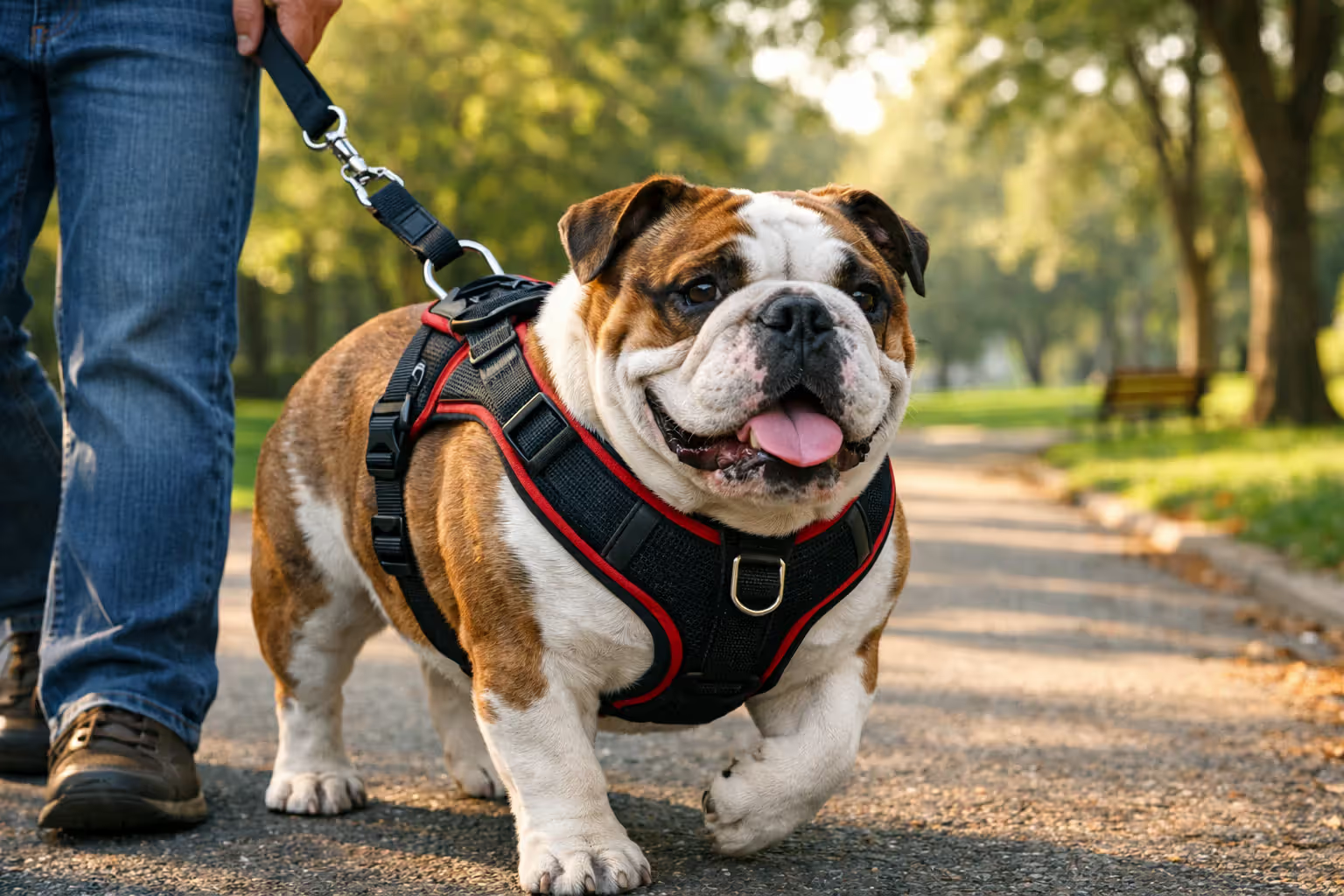
Harnesses are mandatory. Collars are dangerous. Period. A collar puts pressure directly on an already-narrowed trachea. A properly fitted harness spreads pressure across the chest. This isn't optional equipment—it's basic safety.
Author: Lucas Fairmont;
Source: alwaysonsalepetsupplies.com
Airline Restrictions and Travel Challenges with Flat-Faced Dogs
Planning a cross-country move or distant vacation? Your flat-faced dog just made it exponentially more complicated.
United, American, Delta, Alaska Airlines—basically every major U.S. carrier—bans brachycephalic breeds from cargo holds. Why? Because too many died. Not occasionally—frequently enough that liability concerns and bad publicity forced policy changes. Heat stress, breathing failure, and panic attacks in cargo killed dogs at rates airlines couldn't ignore.
Temperature-controlled cargo areas didn't solve the problem. These dogs can't cool themselves effectively even in climate control. Add altitude, stress, and the inability to monitor them, and you've got a recipe for tragedy.
Some airlines allow small flat-faced dogs in cabin if they fit in carriers under the seat. That limits you to dogs under 15-20 pounds depending on carrier weight. Your English Bulldog? Not flying legally. Your Frenchie might squeak by if they're small.
Author: Lucas Fairmont;
Source: alwaysonsalepetsupplies.com
Airlines that do accept these breeds demand veterinary health certificates issued within 10 days of travel. The vet must explicitly state the dog is fit to fly—which many responsible vets refuse to do because they know the risks. Some airlines want acclimation certificates confirming the dog tolerates specific temperature ranges. These documents don't make it safe. They just shift blame when something goes wrong.
Safe alternatives? Drive if remotely possible. Road trips let you control temperature, stop frequently, monitor your dog constantly, and respond immediately if problems develop. It takes longer and costs more in gas and hotels, but your dog arrives alive.
Professional pet transport services specializing in brachycephalic breeds exist. They use climate-controlled vans, employ trained handlers, and travel ground routes exclusively. Expect to pay $500-$2,000 depending on distance. It's expensive. So are emergency vet bills and funeral costs.
For unavoidable flights, in-cabin is your only option. Book direct flights—connections multiply risk. Choose morning flights before heat builds up. Avoid summer travel completely if you can. Research airport layouts beforehand so you're not dragging your dog through long, overheated terminals.
International travel? Research destination countries months ahead. Some nations restrict or ban brachycephalic breed imports due to welfare concerns. Quarantine requirements, health certificates, microchipping, rabies titers—it's complicated for any dog but worse for breeds with health issues.
Should You Get a Brachycephalic Breed? Honest Considerations
Let's talk money first because it shocks people.
That $3,000 English Bulldog puppy? That's just the entry fee. Annual costs for a healthy flat-faced dog run $2,000-$4,000 minimum. Food, routine vet visits, insurance, grooming, supplies—it adds up fast. Dogs with health problems? You're looking at $5,000-$10,000 annually. Easily.
BOAS surgery costs $2,000-$5,000. Many dogs need it. Some need it twice when initial surgery doesn't provide enough improvement. Emergency vet visits for heatstroke or respiratory crises run $1,000-$3,000 each. Spinal surgery for disc disease? $3,000-$7,000 per disc.
Pet insurance is essential, but insurers aren't stupid. They know these breeds are expensive. Premiums run $80-$150 monthly with higher deductibles than other breeds. Many policies cap payouts for respiratory issues or exclude breed-specific conditions entirely. Read the fine print carefully or you'll discover your $10,000 surgery isn't covered.
Set aside $3,000-$5,000 in emergency savings before bringing home a brachycephalic dog. Not eventually—before. Because emergencies don't wait for your next tax refund.
Time commitment exceeds normal dog ownership. You can't sleep in on summer weekends and walk your dog at noon. Early morning is the only safe option. You can't decide spontaneously to visit a friend—you need to calculate whether their house is cool enough. You can't leave your dog in the car while you run into a store. Every decision requires considering your dog's limitations.
Those wrinkles need daily cleaning. No exceptions. Skip it and infections develop. Temperature monitoring becomes obsessive—checking weather apps multiple times daily, adjusting indoor thermostats, planning routes with air-conditioned stops.
Ethical concerns are legitimate and growing. We created these health problems through selective breeding for appearance. Demand for extreme features drives breeders to produce increasingly deformed dogs. When people pay $8,000 for Frenchies with the flattest faces, breeders breed for flatter. Market forces are making things worse, not better.
Some breeders prioritize health, actively selecting for longer muzzles, wider nostrils, and better structure. They exist. They're just drowned out by puppy mills and profit-driven breeders chasing trends. Finding ethical breeders requires research, patience, and paying premium prices, but you're supporting better practices.
The deeper ethical question: should we keep breeding dogs that can't breathe, birth, or breed naturally? Veterinary associations in several countries say no. Animal welfare organizations increasingly advocate for ending brachycephalic breeding entirely or drastically reforming breed standards.
The most loving thing a dog owner can do is to make an informed choice before acquisition — not after the first emergency vet bill arrives at midnight
— Dr. Stanley Coren
Others argue for moderate reform—shifting breed standards toward health rather than eliminating breeds. Retro breeding programs cross flat-faced breeds back to longer-nosed dogs, selecting for moderate features. It's controversial in purebred circles but gaining traction among people who want these breeds' temperaments without the extreme health problems.
Lifestyle compatibility is crucial. These breeds suit people who:
Work from home or have schedules flexible enough for temperature-dependent care
Live in climate-controlled environments they control completely
Prefer Netflix marathons over mountain hiking
Have disposable income for substantial veterinary expenses
Accept that their dog's lifespan may be shortened despite best efforts
Poor matches include:
Outdoor enthusiasts wanting trail running or hiking partners
People in hot climates without reliable AC
Anyone on tight budgets with limited emergency savings
Those expecting a low-maintenance "easy" dog
Families wanting a dog that can keep up with active kids playing outside in summer
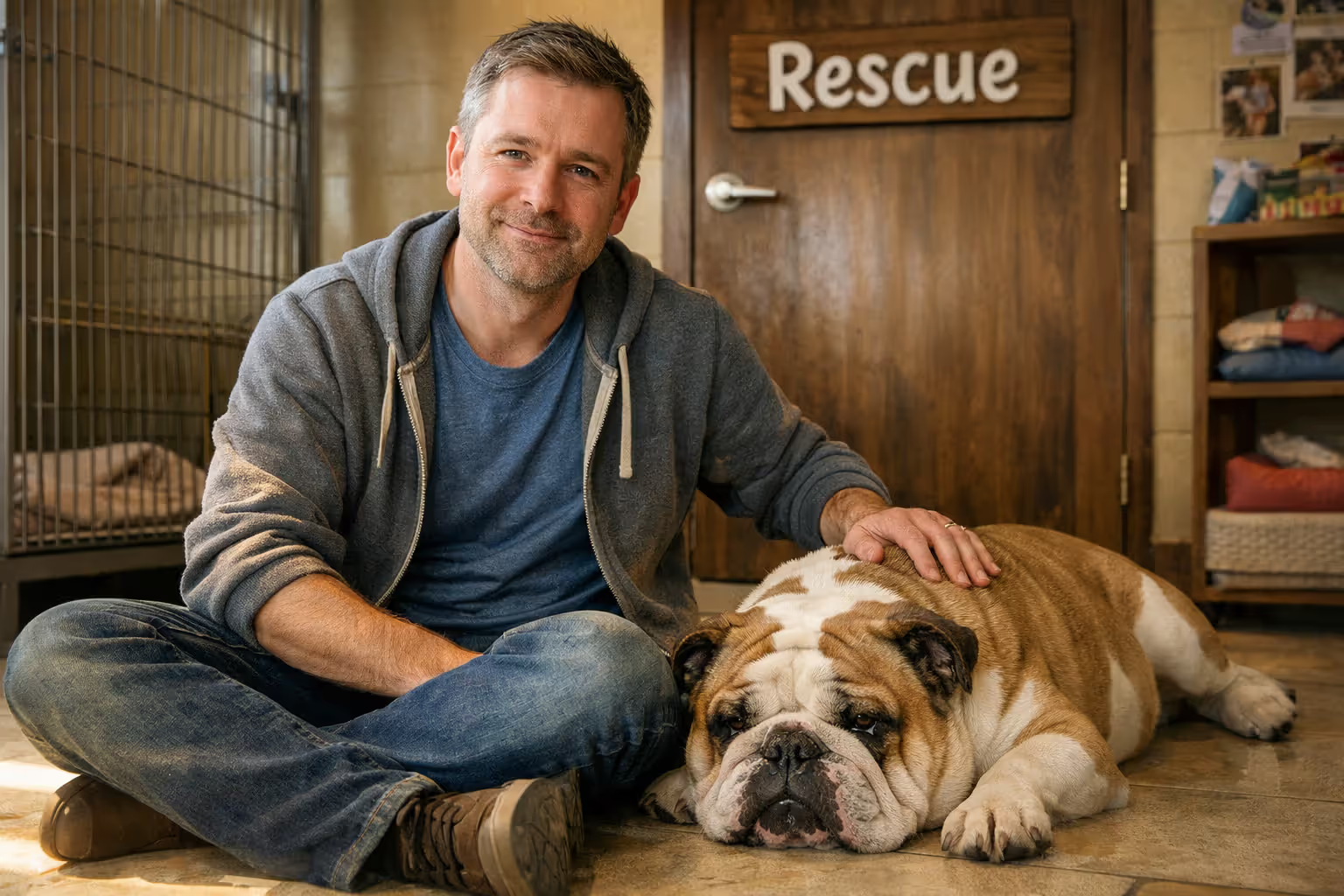
Rescue adoption deserves consideration. Flat-faced breed rescues are full of dogs whose owners couldn't handle their needs or afford their care. Adopting an adult reveals its specific health status and temperament upfront. No surprises about personality. Medical issues are known quantities. Adoption fees run $200-$500 versus $3,000-$8,000 for puppies, though annual veterinary costs remain high.
Some rescues have dogs returned by overwhelmed owners within months. Others have seniors needing hospice homes. Some have perfectly healthy young adults whose owners moved or had life changes. You might find your perfect match while giving a second chance to a dog who needs one.
Frequently Asked Questions About Flat-Faced Dog Breeds
Are brachycephalic dogs banned in any countries?
No outright bans exist yet, but regulations are tightening worldwide. The Netherlands passed legislation in 2019 prohibiting breeding dogs with features causing demonstrable suffering—flat faces qualify. Breeders must prove health improvements before breeding is allowed. Norway implemented similar restrictions. Germany's Animal Welfare Act forbids breeding that causes suffering, and courts have applied this to extreme brachycephalic traits in multiple rulings. The UK Kennel Club revised breed standards in 2009 to discourage exaggeration, though enforcement remains inconsistent and controversial. These regulations aim to shift breeding practices toward healthier dogs rather than eliminating breeds completely. Expect more countries to follow this trend as public awareness grows and veterinary associations apply pressure.
How much does it cost to own a flat-faced dog annually?
Budget $2,000-$4,000 minimum for healthy brachycephalic dogs. That covers quality food ($400-$600 yearly), routine veterinary care including annual exams and vaccines ($500-$800), pet insurance premiums ($800-$1,500 annually), grooming ($200-$600 for short-coated breeds, $600-$1,200 for high-maintenance coats), and basic supplies. Dogs with health problems easily hit $5,000-$10,000 yearly. Factor in emergency surgeries, specialist consultations, chronic medications, and therapeutic diets. BOAS surgery costs $2,000-$5,000. Spinal surgery reaches $3,000-$7,000 per disc. Heatstroke emergency treatment runs $1,000-$3,000 per incident. Setting aside $3,000-$5,000 in emergency savings before acquiring one of these breeds isn't overly cautious—it's necessary financial planning. Many owners report lifetime veterinary expenses exceeding $30,000-$50,000 for their flat-faced dogs.
Can pugs and bulldogs live in hot climates?
Technically yes, but quality of life suffers dramatically. Living in Phoenix, Houston, Miami, or similar climates requires constant air conditioning—not optional, not "turn it off during the day," but 24/7 cooling. Outdoor time shrinks to brief bathroom breaks during early morning and late evening hours. Even then, temperatures above 75°F create risk. From May through September in hot regions, these dogs essentially become prisoners in their own homes. A five-minute walk at 9 AM in summer might trigger heat stress. Yards become unusable during daylight hours. Many owners in hot climates report their flat-faced dogs spend 90% of time indoors, which raises questions about whether that's fair to the animal. If you live in a hot climate and want a brachycephalic breed, ensure you have reliable AC with backup plans for power outages, substantial emergency funds for heat-related crises, and acceptance that your dog's outdoor life will be severely restricted.
Do all brachycephalic breeds need surgery to breathe properly?
Not all, but many benefit significantly. Severity varies wildly even within the same breed and litter. Some dogs have mild symptoms managed through weight control, limited exercise, and environmental management. Others struggle from eight weeks old and need surgical intervention for acceptable quality of life. Stenotic nares (nostril widening) and soft palate resection are most common, frequently performed together. Some dogs need additional procedures—removing everted laryngeal saccules, widening tracheal openings. Surgery doesn't cure brachycephalic anatomy—it improves airflow within the constraints of shortened skulls. Earlier surgery typically produces better outcomes because secondary changes from chronic obstruction haven't yet developed. Veterinarians assess individual dogs through physical exams, watching them breathe during exercise, and sometimes advanced imaging. Even post-surgery, most dogs still have exercise limitations and heat sensitivity compared to normal-nosed breeds. Surgery improves life quality significantly but doesn't make a Bulldog breathe like a Labrador.
What is the average lifespan of short-nosed dog breeds?
Lifespans vary by breed and health severity. English Bulldogs average just 8-10 years—among the shortest of any breed their size. French Bulldogs typically reach 10-12 years. Pugs generally live 12-15 years. Boston Terriers often make it to 11-13 years, while Boxers average 10-12 years despite their larger size. Smaller Asian breeds like Shih Tzus and Pekingese may reach 12-16 years. Compare these to similarly-sized dogs with normal anatomy—Beagles, Cocker Spaniels, Australian Shepherds—that routinely live 14-18 years. The difference isn't minor. Individual longevity depends heavily on breeding quality, specific health issues, weight management, and care quality. Dogs from health-focused breeders who screen for genetic problems and select for moderate features tend to outlive those from puppy mills or appearance-focused breeders. But even the best-bred brachycephalic dog faces structural challenges that normal-nosed dogs don't.
Are there healthier alternatives to traditional brachycephalic breeds?
Several options exist for people drawn to flat-faced breeds but concerned about health. Retro breeding programs cross brachycephalic breeds back to longer-nosed breeds, then selectively breed for moderate features over generations. Retro Pugs (Pug crossed with Jack Russell Terrier) and Olde English Bulldogges represent this approach. They're not recognized by major kennel clubs, and results vary, but many dogs have significantly better breathing than purebred versions. Boston Terriers and Boxers are less extreme than Bulldogs or Pugs while maintaining some flat-faced characteristics and similar temperaments. Consider what attracts you to brachycephalic breeds specifically. Compact size? Cavalier King Charles Spaniels or Havanese fit the bill with fewer health issues. Affectionate temperament? Cocker Spaniels, Bichon Frises. Low exercise needs? Senior rescues of many breeds. Sometimes the features you want exist in healthier packages if you're willing to be flexible about specific appearance. Prioritizing health over looks leads to happier outcomes for both dogs and their families.
Bringing home a flat-faced dog means accepting responsibility for vulnerabilities we created through generations of breeding for appearance over function. These dogs didn't choose their compressed skulls and struggling airways—we chose it for them because we liked how it looked. If you decide one of these companions belongs in your life, commit fully to providing the specialized care they require. Support breeders actively working toward healthier standards rather than those chasing extreme features and premium prices. Be honest with friends considering these breeds about the challenges involved—those snorts and snores that sound charming are actually symptoms of obstructed airways. Understanding the reality before bringing home a brachycephalic dog ensures you can provide everything they need to live the fullest life their anatomy allows. They deserve that much from us.
Discover 25+ white dog breeds ranging from tiny apartment companions to powerful livestock guardians. Explore the genetics behind white coats, compare grooming demands across coat types, understand breed-specific health risks, and find the perfect snow-coated match for your actual lifestyle, family size, and daily routine
Searching for the perfect small dog breed that truly fits your daily routine? This detailed guide breaks down 15 popular tiny breeds by temperament, grooming demands, health risks, and annual costs. Whether you rent a studio apartment, raise young kids, or own a dog for the first time, find your match here
Complete guide to service dog requirements under the ADA, including legal rights for handlers, public access rules, housing and air travel regulations, training costs and timelines, task examples by disability type, best breeds for service work, and key differences between service dogs, emotional support animals, and therapy dogs under United States law
Explore the top 15 smartest dog breeds ranked by science-backed criteria, learn how canine intelligence is truly measured across three distinct categories, and get proven training strategies for brainy dogs. Find expert insights on matching a breed’s cognitive style to your lifestyle for a perfect fit
The content on this website is provided for general informational and educational purposes only. It is intended to offer guidance on dog breeds, behavior, health, care, and lifestyle, and should not be considered a substitute for professional veterinary advice, diagnosis, or treatment.
All information published on this site is based on general knowledge, widely accepted research, and practical experience, but individual dogs may differ in behavior, health conditions, and needs. Results and outcomes may vary depending on the dog, environment, and circumstances.
The website is not responsible for any errors or omissions, or for actions taken based on the information provided. For specific concerns regarding your dog’s health or behavior, always consult a qualified veterinarian or professional dog specialist.