Three weeks ago, my neighbor Sarah texted me at 2 AM. Her new Husky puppy—the one with the striking blue eyes she'd been posting on Instagram—had somehow climbed their six-foot fence. Again. She found him two blocks away, digging holes in someone's garden. The shredded couch cushions from the previous week? Still not replaced. Her exact words: "I thought he'd just look cool and be friendly. Nobody told me I'd adopted a furry escape artist on steroids."
Animal shelters across the country take in roughly 3.3 million dogs every year. A huge chunk arrive because their owners never asked whether the dog's natural behavior aligned with their actual daily routine. You're gone from 7 AM to 6 PM working in a 600-square-foot apartment? That Border Collie will systematically destroy everything you own.
This guide evaluates 15 breeds based on how they perform in real American homes—the space you actually have, your genuine activity level (not your aspirational one), your training experience, and your household composition. Think of this less as rankings and more as matchmaking.
How We Ranked the Top Dog Breeds
We evaluated five equally important factors:
Temperament stability: I'll take a slightly reserved dog that behaves identically every single day over an enthusiastic one that's unpredictable. When you've got kids grabbing fistfuls of fur or elderly relatives visiting, consistency matters more than exuberance. A dog that occasionally gets snappy creates serious liability, even if it's friendly 95% of the time.
Trainability: Intelligence doesn't equal trainability. Huskies are smart—they just don't care about your commands. Labrador Retrievers are moderately intelligent but live to make you happy. Guess which one learns "drop it" faster and actually follows through when it counts? We prioritized breeds that both understand commands quickly and execute them reliably.
Health profile: Selective breeding has given some dogs beautiful appearances and devastating genetic problems. Breeds that routinely rack up $3,000+ in vet bills before age three earned penalties in our system. We favored dogs with longer lifespans and fewer inherited conditions that require expensive ongoing management.
Family compatibility: Can this breed coexist peacefully with a grabby toddler? Will it accept your existing cat as a housemate instead of prey? How does it react when strangers approach your kids at the park? We examined documented behavioral data across thousands of individual dogs.
Maintenance requirements: This encompasses everything from coat care to exercise demands to food consumption. A dog needing 90-minute runs twice daily counts as high-maintenance regardless of grooming needs. We calculated the total time and money investment each breed demands.
Our data came from American Kennel Club health statistics, veterinary medical databases, and professional dog trainers with 10+ years of hands-on experience. Current popularity didn't factor into our methodology—we only measured whether a breed genuinely works for typical households.
The better I get to know men, the more I find myself loving dogs
— Charles de Gaulle
Top-Ranked Dog Breeds by Family Type and Living Situation
Best for Families with Young Children
Labrador Retrievers dominate here, and five minutes of observation reveals why. Last summer, I watched a Lab at a park let three kids under age five use him as a combination pillow-climbing structure-blanket. The dog's tail never stopped wagging. These animals typically weigh 55-80 pounds—substantial enough that an unsteady toddler won't injure them by falling against them, yet they move deliberately enough around small humans to prevent accidental knockdowns.
Golden Retrievers capture second position with slightly more emotional sensitivity than Labs but equivalent patience reserves. A dog trainer I spoke with described them as having "supernatural tolerance for chaos." That doesn't mean kids should mistreat them—it means they handle the sudden movements, loud noises, and unpredictable energy bursts that define childhood without becoming stressed or reactive.
Author: Hannah Bloomfield;
Source: alwaysonsalepetsupplies.com
Beagles deliver similar temperaments in a more compact 20-30 pound frame for families wanting something smaller. Their pack-dog genetics mean they instinctively treat children as fellow pack members rather than potential threats. The downside? They're extraordinarily vocal. Every emotion gets expressed through barking or howling. Your apartment neighbors will have opinions.
Cavalier King Charles Spaniels excel with gentler kids. These 13-18 pound dogs bring affection without hyperactivity. They're equally happy playing gently for 20 minutes or lounging on the couch during homework sessions. Ideal if you work from home and need quiet during video calls.
I'd avoid German Shepherds and Rottweilers with young children despite their fierce loyalty. Their protective instincts sometimes misinterpret rough play—your kid's friend running up enthusiastically might trigger a guarding response nobody wanted.
Best for Apartment Living
A dog doesn’t care if you’re rich or poor, educated or illiterate, clever or dull. Give him your heart and he will give you his.
— John Grogan, Marley & Me
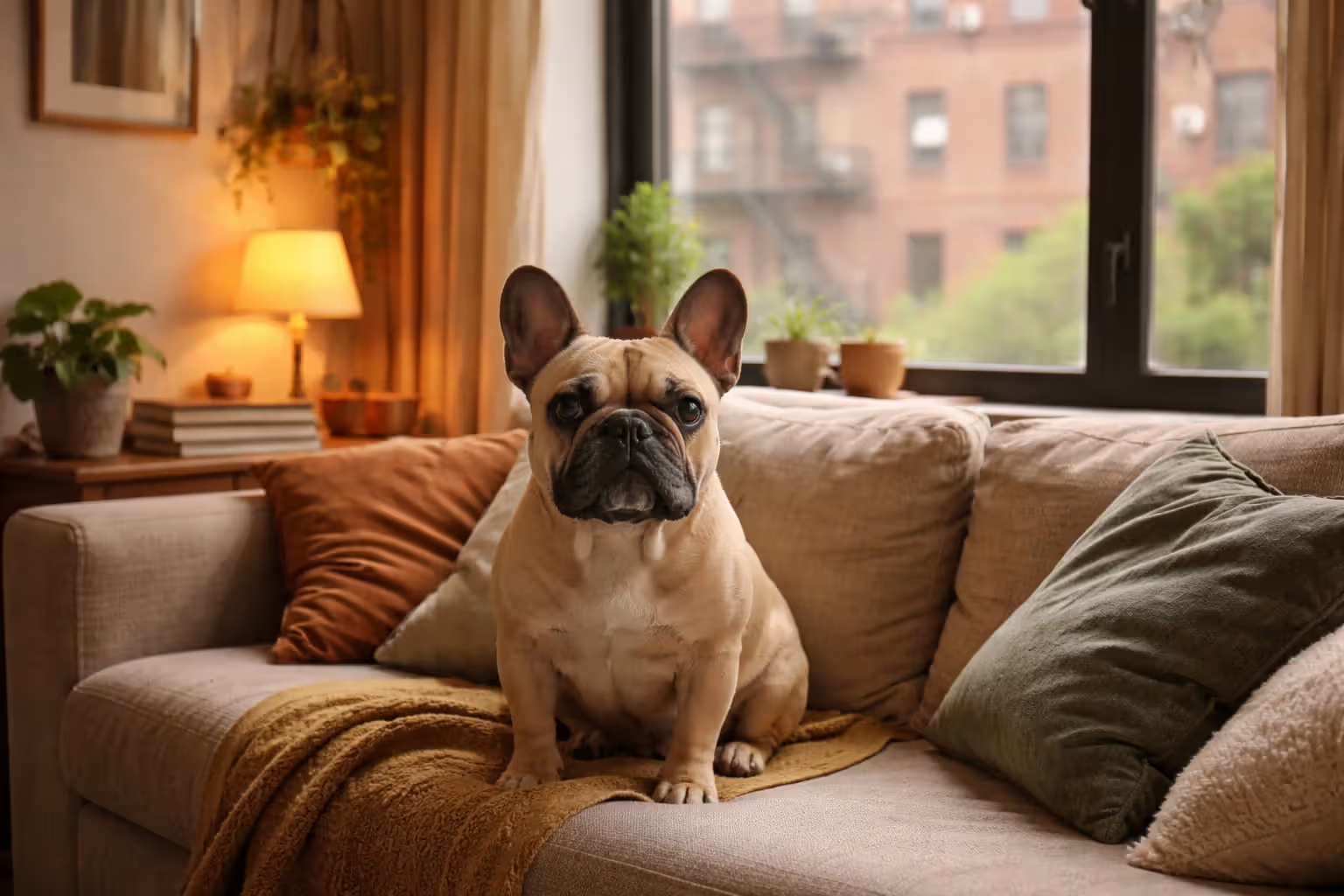
French Bulldogs require one 20-minute walk daily and call it good—less exercise than most people get themselves. Their compact 16-28 pound bodies fit easily in tight quarters. They rarely bark without legitimate cause. The critical caveat everyone undersells: heat sensitivity. Their flat faces prevent efficient cooling. If your building's air conditioning fails during summer, your dog faces genuine danger from overheating.
Cavalier King Charles Spaniels transition seamlessly to apartment environments. They're remarkably quiet and genuinely don't require yard access. These dogs bond so intensely that your location becomes irrelevant—they're content anywhere you are, whether that's 500 square feet or 5,000.
Boston Terriers offer more playful energy than Frenchies while managing limited space beautifully. They'll entertain themselves with chew toys when you're working. At 12-25 pounds, they won't overwhelm a studio apartment. Bonus advantage: they're robust little dogs, not fragile.
Shih Tzus were purpose-bred centuries ago for Chinese palace living. They need outdoor trips solely for bathroom purposes and rarely vocalize without reason. You'll trade this convenience for grooming commitments—budget for professional appointments every six to eight weeks at $75-120 each.
Watch this trap: small size doesn't automatically translate to apartment-friendly. Jack Russell Terriers weigh 13-17 pounds but demand more daily exercise than Golden Retrievers. A bored Jack Russell becomes a barking, destructive nightmare.
Author: Hannah Bloomfield;
Source: alwaysonsalepetsupplies.com
Best for Active Owners and Outdoor Enthusiasts
Australian Shepherds need owners who hike, trail run, or bike multiple times weekly year-round. These dogs demand 90 minutes minimum of genuine physical exertion daily—actual cardio, not casual strolls around the block. Without adequate outlets, they'll excavate your yard and dismantle your furniture with frightening efficiency.
Border Collies possess extraordinary intelligence, which sounds fantastic until you realize it creates constant demands for mental stimulation. They thrive on agility courses, advanced trick training, and competitive dog sports. Your standard evening walk leaves them understimulated and anxious. Unless you're genuinely committed to ongoing training challenges, choose another breed.
Vizslas function as clingy athletes—they want constant companionship during all activities. They make phenomenal running partners, easily handling 10-mile runs without fatigue. They're powerful swimmers too. Important note: their thin coats require dog jackets in cold climates for winter outdoor activities.
Labrador Retrievers deserve another mention here because of their remarkable adaptability. They'll enthusiastically tackle a five-mile mountain hike but won't destroy your home if weather forces an indoor day. That flexibility matters for actual life rather than idealized scenarios.
Reality check: "active owner" means consistent daily activity, not just enthusiastic weekends. A Border Collie getting intense exercise only Saturdays and Sundays will still demolish things Monday through Friday.
Best for First-Time Dog Owners
Golden Retrievers forgive the training mistakes you'll inevitably make. Accidentally rewarded jumping behavior when guests arrive? They'll unlearn it without developing confusing behavioral issues. Their forgiving temperaments give novice owners breathing room to figure things out through trial and error.
Labrador Retrievers operate on straightforward motivations. Food drives them, exercise satisfies them, and affection fulfills them. That's essentially the complete list. Their uncomplicated needs make training intuitive even without prior dog ownership experience.
Poodles (both Standard and Miniature varieties) get unfairly dismissed by first-time owners who assume they're high-maintenance show dogs. Completely inaccurate. They're enthusiastic learners responding beautifully to positive reinforcement methods. The non-shedding coat provides major advantages if you're uncertain about managing dog hair throughout your home.
Author: Hannah Bloomfield;
Source: alwaysonsalepetsupplies.com
Papillons serve as excellent starter small dogs. Unlike many toy breeds prone to neurotic yapping, they're stable and trainable. They adapt smoothly to varying situations and typically maintain good health.
Breeds to avoid as first dogs: Huskies (stubborn independence, extreme energy, genius-level escape abilities), Dalmatians (hyperactivity requiring experienced handling), and Chow Chows (aloof independence, potential stranger aggression).
What Makes a Dog Breed "Family-Friendly"? 5 Essential Traits
Predictable temperament outranks enthusiasm. A dog displaying wild friendliness 90% of the time but occasionally snapping without clear warning signs creates serious liability and stress. Consistent moderate friendliness beats unpredictable intense affection every single time.
Trainability determines whether you can establish and maintain household rules effectively. Family-appropriate dogs must reliably master concepts like "no jumping on grandma," "gentle interactions with the baby," and "leave the cat alone." Breeds exhibiting excessive independence (like Basenjis) or notable stubborn streaks (like Bulldogs) struggle with consistent rule-following, creating problems when children enter the equation.
Appropriate energy levels prevent accidental injuries during normal interactions. Overly energetic dogs knock small children over during regular play. Extremely low-energy dogs might react negatively when disturbed during rest periods. Moderate energy—playful enthusiasm without mania—creates the safest dynamic.
Size considerations extend beyond available square footage. Dogs under 10 pounds face genuine fragility—toddlers can cause serious injuries through accidental stepping or overly tight hugging. Dogs exceeding 90 pounds can injure children unintentionally through momentum and mass alone during ordinary play. The 25-75 pound range balances sturdiness against safety concerns.
Grooming needs impact family life more than most anticipate before ownership. Dogs requiring daily brushing become chores falling on parents after kids inevitably lose interest within weeks. Breeds needing professional grooming every six to eight weeks add $500-800 to annual budgets. Short-coated breeds like Labs or Beagles need weekly brushing sessions and occasional baths—manageable for busy families.
Author: Hannah Bloomfield;
Source: alwaysonsalepetsupplies.com
Most Popular Dog Breeds in America: AKC Registration Data vs. Real-World Fit
American Kennel Club's 2024 registration statistics show French Bulldogs, Labrador Retrievers, and Golden Retrievers dominating. But registration numbers reflect marketing power and celebrity influence rather than practical household matches.
French Bulldogs lead registrations partly because Instagram influencers showcase them relentlessly. They genuinely work for apartment dwellers, but their health complications are severe. Breathing difficulties, spinal problems, and chronic skin infections appear frequently. Many owners encounter $2,000+ in veterinary bills during year one beyond standard preventive care.
Labrador Retrievers earned widespread popularity through proven performance. They authentically suit most American lifestyles—active families, suburban homes with yards, households containing children. The gap between owner expectations and actual experience remains minimal. Their popularity reflects genuine suitability.
Golden Retrievers similarly deliver on their established reputation. Expectations align with reality—you get friendly, patient, trainable dogs integrating seamlessly into family environments.
German Shepherds claim fourth place in registrations but demand more expertise than typical owners possess. These are working animals requiring structure, assigned tasks, and ongoing mental challenges. Without those elements, they develop anxiety manifesting as destruction. Shelters report substantial German Shepherd surrenders from first-time owners within two years.
Poodles (all size categories combined) rank fifth but remain significantly underrated. People assume they're prissy show animals because of elaborate exhibition haircuts. Reality? They're athletic, intelligent, highly adaptable dogs. Those fancy clips are entirely optional—most pet owners maintain simple short cuts requiring minimal upkeep.
The pandemic puppy boom spanning 2020-2021 created ongoing problems. Overbreeding to satisfy explosive demand produced dogs with poor temperaments and inadequate socialization windows. Many popular breeds from that period now display behavioral issues traced directly to rushed, profit-focused breeding practices.
Common Mistakes When Choosing Your Next Dog
Choosing based on appearance causes more rehoming situations than all other factors combined. Huskies possess striking blue eyes and wolf-like features explaining their Instagram popularity. But they're infamous escape artists needing two-plus hours of daily intensive exercise with strong prey drives toward small animals. That gorgeous dog becomes a neighborhood liability after it jumps your fence and terrorizes local cats.
Underestimating exercise requirements creates destructive behaviors. One Border Collie owner told me their dog chewed completely through drywall, exposing the wooden studs underneath. That dog received one 30-minute walk daily—roughly one-third of its actual minimum need. The destruction wasn't spite or misbehavior. It was accumulated energy demanding an outlet.
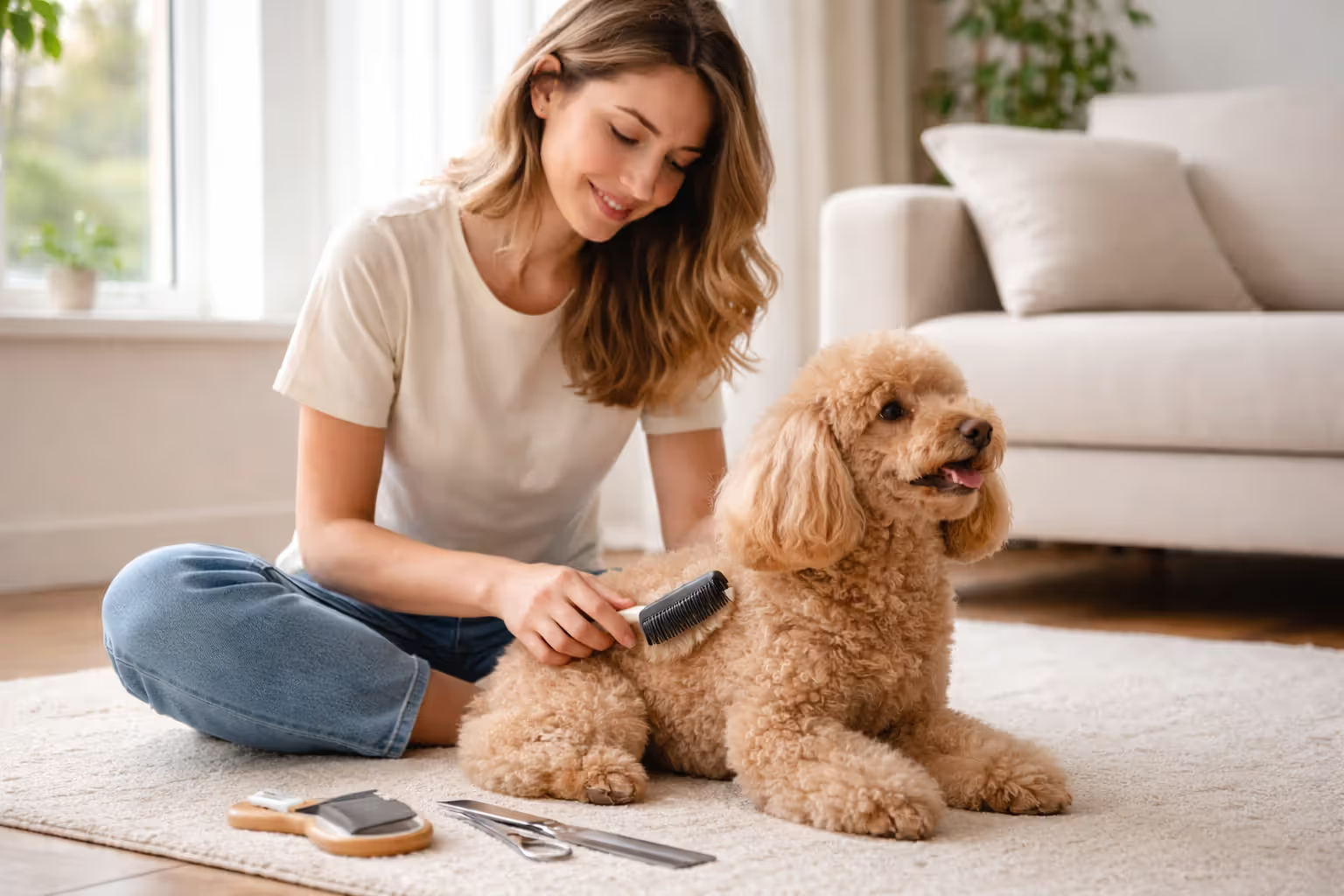
Ignoring grooming costs derails household budgets rapidly. Doodle breeds (Goldendoodles, Labradoodles, Bernedoodles) get marketed as low-maintenance. Their coats mat easily without consistent brushing and regular professional attention. Grooming appointments cost $75-120 each, required every six to eight weeks. Calculate $600-960 annually, plus home brushes and maintenance tools.
Overlooking breed-specific health issues produces shocking veterinary bills. Bulldogs, Pugs, and French Bulldogs have brachycephalic syndrome—their compressed facial structure creates breathing complications, overheating risks, and frequently requires surgical intervention costing thousands. Great Danes and other giant breeds commonly develop hip dysplasia and bloat, a life-threatening stomach condition demanding emergency surgery running $3,000-5,000.
Mismatching energy levels frustrates all parties involved. A retired couple adopting an Australian Shepherd puppy because "it looked adorable" will face immense challenges. The dog requires intense daily activity; the owners wanted a calm companion. Everyone ends up miserable.
Skipping the "adult dog" option eliminates fantastic candidates unnecessarily. Puppies bring adorable appeal but require house-training, constant supervision, and extensive socialization efforts. Adult dogs aged 2-5 years from reputable rescues often arrive house-trained, past destructive chewing phases, with established temperaments you can evaluate before committing.
You can usually tell that a man is good if he has a dog who loves him
— W. Bruce Cameron
Cost Breakdown: What to Expect in the First Year with Popular Breeds
First-year expenses dramatically exceed ongoing annual costs because of one-time setup purchases and initial medical procedures.
Adoption or purchase costs range from $50 (municipal shelter adoption) to $3,000 or higher (purebred from reputable breeder). Never purchase from puppy mills or retail pet stores—they're cheaper initially but generate substantially higher veterinary bills due to poor breeding practices producing genetic problems.
Initial veterinary care ($300-800) covers first comprehensive examination, vaccination series (typically three to four rounds spaced weeks apart), deworming treatments, and fecal parasite testing. Spaying or neutering adds $200-500 depending on dog size and your geographic location.
Supplies ($300-600) include a crate ($50-150), comfortable dog bed ($30-80), food and water bowls ($20-40), leash and collar ($30-60), variety of toys ($50-100), grooming tools ($30-80), and cleaning supplies for accidents ($40-90). Don't cheap out on the crate—it functions as both a training tool and a safe personal space for your dog throughout its life, not a temporary item.
Food costs ($300-800 first year) fluctuate based on size and quality level. Large breeds like Labs consume 3-4 cups daily; premium dog food costs $60-80 per 30-pound bag lasting approximately three to four weeks. Small breeds like Cavaliers eat roughly one cup daily; that same bag lasts three months or longer.
Training ($150-500) is absolutely non-negotiable. Group puppy classes ($150-250 for six to eight week programs) teach fundamental obedience while providing critical socialization opportunities. Private training ($75-150 per hour-long session) addresses specific behavioral concerns. Skipping training costs substantially more long-term through destroyed property and escalating behavioral problems.
Preventive medications ($200-400 first year) include monthly heartworm prevention pills ($10-20 monthly based on weight) and flea/tick prevention ($15-30 monthly). These aren't optional extras—heartworm treatment costs $1,000-1,800 and places significant physiological stress on the dog's cardiovascular system.
Grooming expenses vary wildly by breed characteristics. Labs need occasional baths and nail trims ($0-200 annually if you handle it yourself). Poodles and Shih Tzus require professional grooming appointments every six to eight weeks (calculate $600-960 yearly).
Emergency fund: Set aside minimum $1,000-2,000 for unexpected medical issues. Puppies ingest inappropriate objects, triggering emergency veterinary visits costing $500 to $2,000 depending on severity. Surgical procedures removing foreign objects from the digestive tract easily run $2,000-4,000.
Breed Name
Size Category
Energy Level
Grooming Demands
Child-Friendly
Trainability Rating (1-5)
Typical Lifespan
Labrador Retriever
Large
High
Minimal
Yes
5
10-12 years
Golden Retriever
Large
High
Moderate
Yes
5
10-12 years
French Bulldog
Small
Low
Minimal
Yes
3
10-12 years
German Shepherd
Large
Very High
Moderate
With Training
5
9-13 years
Poodle (Standard)
Medium-Large
Moderate-High
High
Yes
5
12-15 years
Beagle
Small-Medium
Moderate
Minimal
Yes
3
12-15 years
Australian Shepherd
Medium
Very High
Moderate
Yes
5
12-15 years
Cavalier King Charles Spaniel
Small
Low-Moderate
Moderate
Yes
4
9-14 years
Boston Terrier
Small
Moderate
Minimal
Yes
4
13-15 years
Shih Tzu
Small
Low
High
Yes
3
10-16 years
Frequently Asked Questions About Selecting the Right Dog Breed
What is the most family-friendly dog breed in America?
Labrador Retrievers consistently win this category. They show exceptional patience with children's unpredictable behavior, train easily without resistant attitudes, and adapt to various living situations without displaying stress. Their typical weight of 55-80 pounds means they're durable enough for energetic play while remaining controllable. Golden Retrievers follow as close seconds, bringing slightly heightened emotional sensitivity but matching patience levels. Both breeds handle family life's inherent unpredictability—sudden loud noises, irregular daily schedules, enthusiastic children—without becoming reactive or developing anxiety.
Which popular dog breeds require the least grooming?
Beagles, Labrador Retrievers, and Boston Terriers demand minimal grooming investment. Beagles need weekly brushing and occasional baths; their short coats shed moderately without forming mats. Labs experience heavy shedding twice yearly during seasonal coat changes, but weekly brushing handles typical maintenance between those periods. Boston Terriers have short, smooth coats needing quick weekly brushing and monthly bathing. None require expensive professional grooming like Poodles, Shih Tzus, and Doodle breeds demanding appointments every four to eight weeks.
Are the most popular dogs always the best choice for first-time owners?
Definitely not. Popularity reflects current trends and celebrity ownership patterns, not beginner suitability. French Bulldogs currently dominate AKC registrations despite having substantial health complications requiring experienced owners who can rapidly identify breathing distress and manage frequent veterinary appointments. German Shepherds rank highly in popularity but need structured training routines and mental challenges preventing anxiety-driven behavioral problems. Huskies trend on social media because of striking appearance but prove notoriously challenging for beginners—they're independent-minded, extremely high-energy escape artists. First-time owners should focus on Golden Retrievers, Labs, or Cavalier King Charles Spaniels instead.
What size dog is best for families with small children?
Dogs weighing 25-75 pounds offer the best balance. Dogs under 20 pounds present genuine fragility concerns—toddlers can seriously injure a Chihuahua or Yorkshire Terrier through accidental stepping or overly enthusiastic squeezing during hugs. Dogs exceeding 80 pounds can accidentally bowl over small children during normal play through sheer momentum and mass. Breeds like Beagles (20-30 pounds), Cocker Spaniels (25-30 pounds), Labs (55-80 pounds), and Golden Retrievers (55-75 pounds) can tolerate energetic rough play without sustaining injuries while remaining safe around unpredictable toddlers.
How much does it cost to own one of the top-ranked dog breeds annually?
Plan for $1,500-3,000 annually after the expensive initial year. This covers food ($300-600), routine veterinary examinations and vaccinations ($300-500), preventive medications for heartworm and flea/tick control ($200-300), grooming ($0-800 varying dramatically by breed), and supplies like toys and replacements ($200-300). Breeds with documented health complications cost considerably more—French Bulldogs frequently exceed $3,000 yearly due to breathing issues and skin infections requiring ongoing treatment. Large breeds like Golden Retrievers cost more for food and medications since dosages scale with body weight.
Which favorite dog breeds are best for allergy sufferers?
Poodles (all size varieties), Portuguese Water Dogs, and Bichon Frises trigger fewer allergic reactions. They grow hair instead of fur, which sheds minimally and produces less dander. "Hypoallergenic" is somewhat misleading terminology—no dog breed is completely allergen-free—but these breeds provoke fewer symptoms in most people. Spend extended time around the specific breed before committing since individual allergic reactions vary dramatically person-to-person. Avoid heavily marketed "hypoallergenic" Doodle mixes; their coat genetics are unpredictable, and many shed substantially despite marketing claims suggesting otherwise.
Making the Right Choice for Your Household
The dog that genuinely fits your household rarely ends up being the most popular or the cutest—it's the one matching your actual daily lifestyle, not your aspirational one. Border Collies are objectively outstanding dogs. But if you're working 50-hour weeks and prefer Netflix to hiking trails on evenings and weekends, that particular breed will experience profound unhappiness and express it through destructive boredom.
Be ruthlessly honest during self-assessment: How much time can you realistically dedicate to exercise daily, not just weekends when you're feeling motivated? What's your actual grooming budget—not what you'd theoretically spend in a perfect world, but what you'll genuinely allocate? Do you have young children requiring an extraordinarily patient dog? Are you experienced enough handling strong-willed breeds that constantly test boundaries?
Visit local animal shelters and breed-specific rescue organizations. Many purebred dogs enter rescue systems because of owner lifestyle changes like job relocations or relationship breakups, not because of behavioral defects. Adult dogs between ages 2-5 offer substantial advantages—you can assess their established temperaments, they typically arrive house-trained, and they're past the destructive puppy phase.
Consider fostering before permanent adoption. Many rescue organizations run foster-to-adopt programs, allowing you to test compatibility in your actual home environment before making final commitments. This approach prevents mismatches creating heartbreaking rehoming situations down the road.
Research breeders exhaustively if purchasing a puppy. Reputable breeders conduct comprehensive health testing on parent dogs, provide complete transparent medical records, and carefully interview potential owners ensuring appropriate matches. They cost more upfront but save substantial money on veterinary expenses throughout the dog's lifetime. Avoid anyone selling multiple different breeds simultaneously, shipping puppies without meeting buyers face-to-face, or refusing to show you the mother dog and her living conditions.
You're selecting a family member who'll share your home for 10-15 years, not purchasing furniture. Investing extra time in research now prevents heartbreak and frustration later. Choose based on genuine lifestyle compatibility rather than impulse or appearance, and you'll gain a companion that authentically enhances your daily life instead of complicating it with unanticipated problems you didn't see coming.
Discover 25+ white dog breeds ranging from tiny apartment companions to powerful livestock guardians. Explore the genetics behind white coats, compare grooming demands across coat types, understand breed-specific health risks, and find the perfect snow-coated match for your actual lifestyle, family size, and daily routine
Searching for the perfect small dog breed that truly fits your daily routine? This detailed guide breaks down 15 popular tiny breeds by temperament, grooming demands, health risks, and annual costs. Whether you rent a studio apartment, raise young kids, or own a dog for the first time, find your match here
Complete guide to service dog requirements under the ADA, including legal rights for handlers, public access rules, housing and air travel regulations, training costs and timelines, task examples by disability type, best breeds for service work, and key differences between service dogs, emotional support animals, and therapy dogs under United States law
Explore the top 15 smartest dog breeds ranked by science-backed criteria, learn how canine intelligence is truly measured across three distinct categories, and get proven training strategies for brainy dogs. Find expert insights on matching a breed’s cognitive style to your lifestyle for a perfect fit
The content on this website is provided for general informational and educational purposes only. It is intended to offer guidance on dog breeds, behavior, health, care, and lifestyle, and should not be considered a substitute for professional veterinary advice, diagnosis, or treatment.
All information published on this site is based on general knowledge, widely accepted research, and practical experience, but individual dogs may differ in behavior, health conditions, and needs. Results and outcomes may vary depending on the dog, environment, and circumstances.
The website is not responsible for any errors or omissions, or for actions taken based on the information provided. For specific concerns regarding your dog’s health or behavior, always consult a qualified veterinarian or professional dog specialist.