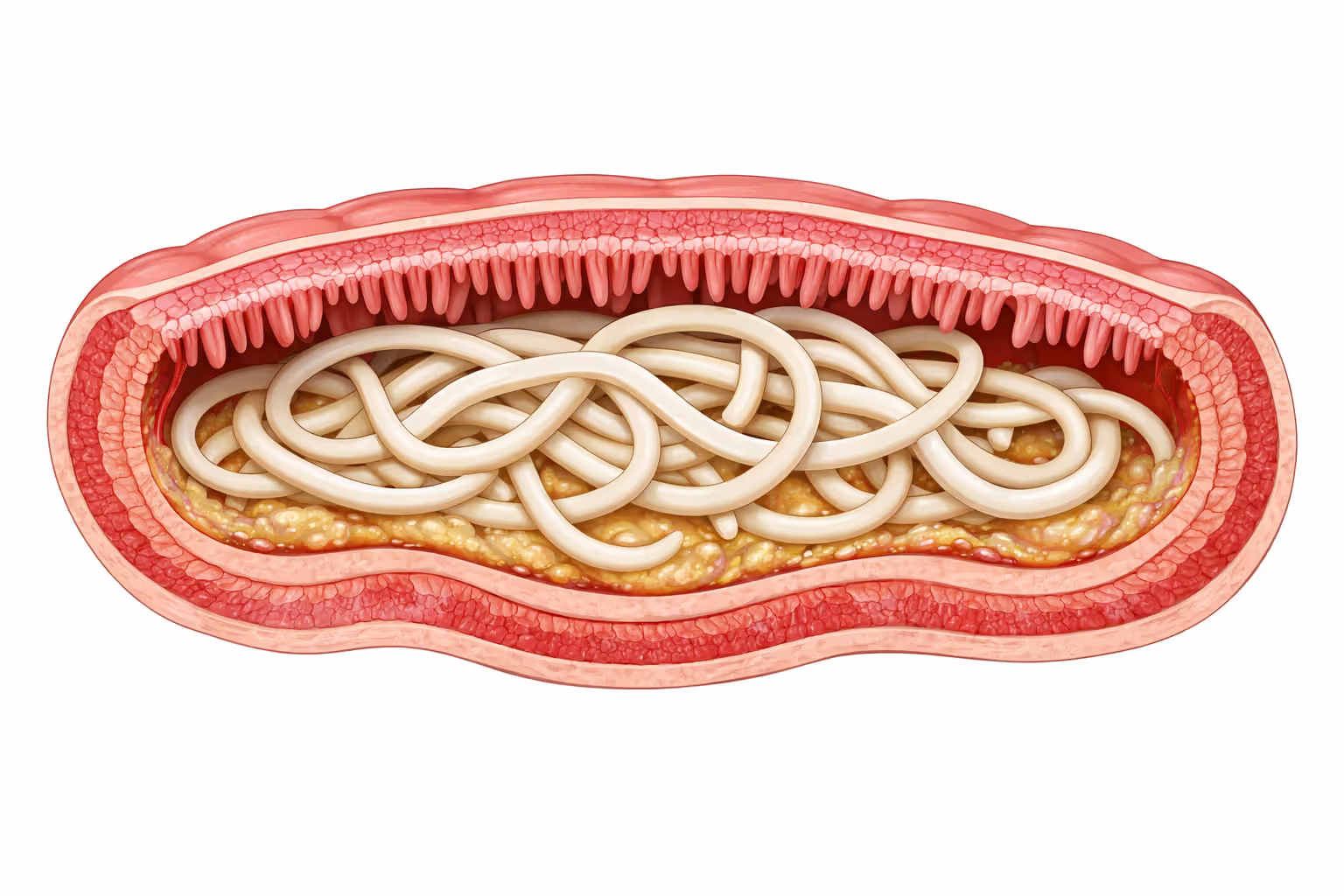
My neighbor Jessica called me panicked last Tuesday morning. Her eight-week-old Golden Retriever had just vomited up what looked like moving spaghetti noodles onto her kitchen floor. "Is this normal?" she asked, her voice shaking. Those weren't noodles—they were adult roundworms, and they'd been quietly multiplying inside her puppy for weeks while she had no idea anything was wrong. Here's the unsettling reality: veterinary records show that roughly one in seven dogs tests positive for intestinal worms each year. For puppies younger than six months, that number jumps to one in three. Your healthy-looking dog could be harboring these parasites right now, shedding microscopic eggs across your yard with every bathroom trip.
How Dogs Contract Worm Infections
Your meticulously maintained yard with its fresh-cut grass and six-foot privacy fence? It's not the parasite-proof sanctuary you think it is.
Common transmission routes (contaminated soil, infected prey, fleas, mother-to-puppy)
Picture this common scenario: Twenty-one days ago, an infected stray dog wandered through your local park and defecated near the drinking fountain. Rain washed through the area. Kids played soccer there. The grass grew taller. Life went on as usual. Meanwhile, those microscopic parasite eggs—invisible to anyone walking past—remained embedded in that soil, staying infectious and dangerous. Today, your dog sniffs around that same spot during your afternoon walk, touches their nose to the grass investigating an interesting scent, then licks their nose seconds later. Infection accomplished. The timeframe doesn't matter much because roundworm eggs can maintain their infectious capability for seven full years when conditions stay right—adequate moisture and comfortable temperatures do the trick.
Tapeworms work differently, requiring a middleman to complete their lifecycle. Your dog can't acquire tapeworms by simply sniffing contaminated ground or eating grass. These parasites need an intermediate host, and fleas fill that role perfectly. During a typical grooming session, your dog notices an itch on their hip, nibbles at the spot, accidentally crushes and swallows a flea, and consumes tapeworm larvae packaged inside that flea's body. Just one flea creates infection potential. Hunting breeds face additional transmission routes—wild rabbits, mice, squirrels, and other prey animals carry their own tapeworm varieties. A Terrier that catches and eats a single field mouse can end up infected with multiple parasite species simultaneously.
The mother-to-puppy transmission route surprises many experienced breeders. Female dogs sometimes carry dormant roundworm larvae encysted in their muscle tissue for years—completely inactive, never showing up on any fecal test, creating zero symptoms in the mother. Pregnancy hormones trigger these sleeping larvae to wake up. They migrate across the placental barrier into developing puppies or concentrate in mammary glands. Newborn puppies arrive already infected even when their mother tested negative throughout her entire life and never displayed symptoms. This explains why veterinarians deworm puppies starting at just two weeks of age, before they've ever stepped outside or contacted contaminated soil.
Whipworms spread exclusively when dogs ingest contaminated dirt. Unlike roundworms, freshly deposited whipworm eggs won't immediately infect the next dog that comes along. They need 10-14 days sitting in the environment, undergoing maturation before they become capable of causing infection. The frustrating tradeoff? Once they reach that infectious stage, they persist in outdoor environments for five years. Dog parks, boarding kennels, doggy daycare facilities, and training schools accumulate layers of contamination that's essentially impossible to eliminate completely.
Prevention is the best treatment. A parasite you never get is one you never have to cure.
— Dr. Dwight Bowman
Risk factors that increase exposure
Geography plays a massive role in your dog's parasite risk profile. Dogs living in Houston face wildly different parasite threats compared to dogs in Denver. Warm, humid climates provide ideal conditions for parasite egg development and larval survival outdoors. Research published in 2022 by veterinary parasitology experts documented that dogs in Gulf Coast states tested positive for hookworms 3.7 times more frequently than dogs living in Rocky Mountain regions. Climate creates this dramatic difference.
Age determines vulnerability in predictable patterns. Puppies younger than six months haven't developed fully functional immune defenses against parasitic invaders. They also use their mouths to explore absolutely everything—your shoes, random rocks, sticks, dirt clumps—multiplying their exposure opportunities with every investigation. Senior dogs over ten years face the opposite problem. Their aging immune systems struggle to control parasite populations effectively, allowing manageable light infections to spiral into heavy, dangerous infestations.
Your dog's social calendar significantly compounds their risk exposure. Does your Border Collie attend daycare three mornings every week? Visit the crowded dog beach every Saturday morning? Compete in agility trials twice monthly at different locations across the state? Every single venue adds exposure opportunities. When researchers tested soil samples from Chicago dog parks, they found at least one parasite species present in 85% of locations examined. More dogs congregating in shared spaces equals progressively heavier environmental contamination.
Multi-dog households create frustrating reinfection cycles that feel impossible to break. You successfully treat dog number one, but dog number two harbors an undiagnosed infection and sheds millions of eggs daily into your shared backyard. Dog number one gets reinfected within days after finishing treatment. Unless you treat every dog in your household simultaneously and tackle environmental contamination, you'll fight recurring battles indefinitely without ever winning.
Author: Emily Crosswell;
Source: alwaysonsalepetsupplies.com
The Four Most Common Types of Worms That Infect Dogs
Walk into any veterinary clinic and ask which intestinal parasites they diagnose most frequently. These four species account for roughly 95% of canine worm cases they encounter weekly.
Roundworms
Toxocara canis and Toxascaris leonina look remarkably similar to cooked spaghetti noodles that somehow decided your dog's small intestine makes an excellent long-term residence. Adult females stretch three to five inches long and produce eggs at truly astonishing rates—a single female worm releases roughly 200,000 eggs every single day. Do the math on a dog carrying 20 adult females, and your yard transforms into a contaminated minefield within days.
Their lifecycle follows bizarre pathways through the body. Ingested eggs hatch in the stomach, releasing larvae that refuse to simply mature in place like sensible parasites. Instead, these larvae embark on a strange journey—burrowing through intestinal walls, entering the bloodstream, migrating through liver tissue, traveling upward to lung tissue, getting coughed up into the throat, swallowed again, and finally settling back in intestines to reach adulthood. This entire migration circuit takes roughly four weeks from start to finish.
Roundworms impact puppies far more severely than adults because of basic size ratios. Twenty adult worms living inside a 60-pound Labrador might cause minimal noticeable problems. Those same twenty worms packed inside a five-pound Chihuahua puppy create a genuine medical crisis requiring immediate veterinary intervention.
Author: Emily Crosswell;
Source: alwaysonsalepetsupplies.com
Hookworms
These half-inch parasites punch way above their weight class in terms of damage potential. Ancylostoma caninum latches onto intestinal walls using actual hook-shaped tooth structures—curved hooks they literally sink deep into living tissue. Then they start feeding directly on blood, consuming roughly 0.1 milliliters daily per individual worm. That sounds insignificant until you calculate heavy infections involving hundreds of worms creating genuinely dangerous blood loss. Puppies can literally hemorrhage internally from hookworm feeding activity, potentially bleeding to death without prompt treatment intervention.
Hookworms possess a genuinely disturbing ability: direct skin penetration. Dogs lying on contaminated grass can become infected without eating anything questionable. Larvae tunnel directly through paw pad skin or exposed belly skin, access the bloodstream, and migrate to intestines to mature. Even fastidiously clean dogs who never mouth questionable objects remain vulnerable through skin contact alone.
Southern states are currently battling increasingly resistant hookworm strains that don't respond to standard treatments. Veterinarians in Florida, Texas, and Louisiana report growing numbers of treatment failures with conventional deworming protocols. If your dog's symptoms persist after receiving appropriate treatment, drug-resistant hookworms may explain the ongoing problem.
Tapeworms
Dipylidium caninum constructs itself like a segmented chain—a microscopic head (called the scolex) attaches to intestinal walls using hooks and suckers while a segmented body grows continuously behind it, sometimes extending several feet in total length inside your dog. Those segments aren't merely body parts; they're essentially mobile egg packets. Mature segments break off from the end and either pass in stool or actively crawl out through your dog's anus on their own.
Most dog owners discover tapeworms by spotting segments rather than ever seeing complete worms. Fresh segments look like small grains of white rice that actually move near your dog's rear end. Dried segments resemble sesame seeds stuck to fur or bedding. Each individual segment packages 20-30 egg capsules, with each capsule containing multiple individual eggs. When segments rupture outdoors, released eggs get consumed by developing flea larvae feeding in your environment, perpetuating the transmission cycle.
Breaking this cycle demands attacking both ends of the problem simultaneously. Kill tapeworms living inside your dog using praziquantel medication. Kill fleas on your dog and throughout your home environment using appropriate insecticides. Skip either component, and you'll see those distinctive rice-grain segments reappearing within weeks.
Whipworms
Trichuris vulpis genuinely resembles the object it's named after—picture a whip with a thick handle gradually tapering to a long, thin lash. Adults measure two to three inches total length, with the threadlike anterior end embedded deep in large intestine wall tissue and the thick posterior end hanging free in the intestinal space.
Whipworms frustrate veterinarians because they hide incredibly effectively during testing. Roundworms flood feces with thousands of visible eggs daily. Whipworms produce relatively few eggs released intermittently rather than continuously. Monday's fecal sample collected from your dog might show absolutely nothing. Thursday's sample from that same dog could suddenly reveal dozens of characteristic barrel-shaped eggs. This intermittent shedding pattern means negative fecal test results don't reliably exclude whipworm infection—veterinarians sometimes examine three or four different samples collected on separate days before finally detecting these parasites.
Environmental persistence makes whipworms the frustrating comeback parasite everyone hates. Infected dogs contaminate yards and kennel runs with eggs that remain viable for five years minimum. You can successfully treat your dog today, but reinfection happens the next time they venture outside to urinate unless you somehow sterilize your entire property (spoiler: current technology makes this impossible for practical purposes).
Parasite Species
What They Look Like
Primary Health Problems
Transmission Method
Human Health Risk
Roundworms
White, resembling spaghetti noodles, 3-5 inches in length
Young dogs develop swollen pot-bellies, lose coat shine, vomit up worms, produce soft stools
Swallowing eggs present in contaminated dirt; transmission occurs during pregnancy or nursing
Significant risk—larvae migrate through human organs causing visceral larva migrans; can damage eyes causing ocular larva migrans; children face highest danger
Hookworms
Extremely small (under half-inch), possess curved hook-shaped teeth
Blood loss causes anemia, gums turn pale, dogs become tired, feces turn dark and tarry, puppies fail to grow properly
Swallowing infectious larvae; larvae can tunnel directly through exposed paw pad or belly skin
Moderate risk—larvae burrow beneath human skin creating cutaneous larva migrans with characteristic itchy red serpentine tracks
Tapeworms
Body divided into ribbon-like segments, individual segments look like rice grains or sesame seeds
Dogs drag their rear ends across floors, rice-like segments appear near anus or in feces, gradual weight loss occurs
Swallowing infected fleas during grooming; eating infected prey animals including rodents
Minimal risk—transmission requires accidentally swallowing an infected flea, which rarely happens to humans
Whipworms
Whip-shaped appearance, 2-3 inches long, almost never visible in stool
Chronic diarrhea containing mucus and blood, weight loss despite normal appetite, coat deteriorates progressively
Swallowing embryonated eggs contaminating soil
Extremely minimal risk—human whipworm infections occasionally documented but remain very rare
Physical and Behavioral Symptoms Your Dog May Display
Plenty of dogs carry intestinal parasites without showing any obvious warning signs—healthy adult dogs with light infections particularly. But as worm populations multiply or in vulnerable animals like young puppies, specific telltale symptoms start emerging.
The classic pot-bellied puppy presentation serves as roundworms' calling card. You'll notice a puppy sporting a swollen, distended, hard abdomen that looks completely out of proportion to their thin legs, visible rib outline, and prominent spine bumps. This distension comes from multiple sources: intestinal gas production, inflammatory swelling, and the actual physical mass of worms coiled inside. I've personally witnessed puppies expel 20-30 roundworms immediately following their first deworming dose—imagine that volume packed inside a tiny digestive tract.
Progressive weight loss despite maintaining or even increasing food intake signals parasite nutrient theft. Worms are consuming partially digested food before your dog's intestines can absorb those nutrients. Dogs feel genuinely hungry because they're receiving inadequate nutrition from their meals, so they eat more enthusiastically, which just provides additional food for parasites. The cycle feeds itself endlessly. Watch for coat changes too: healthy shine disappears gradually, individual hairs become brittle and snap easily under gentle pressure, and severe cases show developing bald patches or generalized hair thinning.
Hookworm anemia produces distinctive visual warning signs—check inside your dog's mouth at their gums. Healthy gum tissue displays vibrant bubble-gum pink coloration. Anemic dogs show pale pink, whitish, or grayish gum tissue instead. Press your finger firmly against the gum; when you release that pressure, pink color should flood back within two seconds maximum. Delayed color return indicates poor blood circulation from anemia. Severely anemic puppies sometimes collapse after brief gentle play sessions because their blood can't transport adequate oxygen to working muscles.
The absence of symptoms does not mean the absence of disease. Many parasitized dogs appear perfectly healthy while shedding thousands of eggs into the environment daily.
— Dr. Susan Little
Digestive symptoms (vomiting, diarrhea, changes in appetite)
Vomiting up live roundworms ranks among the most disturbing experiences dog owners encounter. You're cleaning up typical vomit when you suddenly realize those aren't green bean pieces—they're moving independently. Dogs vomit worms when infections reach heavy enough levels to irritate stomach tissue significantly or when migrating larvae tickle and trigger the gag reflex during their body journey. Either situation demands immediate veterinary attention that same day.
Diarrhea appearance varies dramatically depending on which parasite species is causing the problem. Roundworms typically produce soft, unformed, mushy stools without visible blood content. Hookworms cause distinctive dark, sticky, tar-like diarrhea (veterinarians call this melena) because you're actually seeing digested blood from intestinal hemorrhaging. Whipworms trigger classic large-bowel diarrhea—frequent urgent squatting producing small volumes mixed with visible mucus strands and bright red blood streaks coating the surface. Tapeworms rarely trigger diarrhea at all, though occasional soft stools can occur with heavy infections.
Appetite fluctuations swing unpredictably in either direction depending on the individual dog. Some parasitized dogs become ravenously hungry—finishing meals instantly and constantly begging for additional food because worms are stealing their calories. Others completely lose food interest from persistent nausea and abdominal discomfort. Puppies sometimes abruptly stop nursing eagerly or refuse their kibble after eating normally for weeks. Any significant appetite change warrants veterinary investigation.
Author: Emily Crosswell;
Source: alwaysonsalepetsupplies.com
Behavioral changes (lethargy, scooting, coughing)
Energy level declines often go completely unnoticed initially because they develop gradually over weeks rather than overnight. Your typically enthusiastic Golden Retriever starts sleeping longer hours, plays for progressively shorter periods, or stops rushing to the door with their usual excitement when you grab the leash. Puppies might lack that expected boundless puppy energy—they're quieter than littermates, less curious about exploring new environments, and tire quickly during normal play sessions.
Scooting—dragging their rear end across your carpet—makes most people immediately suspect anal gland problems. Sometimes that diagnosis is correct. But if you notice scooting combined with visible rice-like segments near your dog's rear end or stuck to their bedding, tapeworms become the prime suspect instead. Those segments create irritation and tickling sensations during emergence, driving dogs to drag themselves seeking relief from the discomfort.
Coughing in puppies aged two to four weeks raises immediate roundworm suspicion among experienced veterinarians. Remember that bizarre larval migration pattern through body tissues? When larvae travel through delicate lung tissue, they trigger significant irritation and inflammatory responses. Puppies develop dry, hacking coughs that sound like they're trying to clear their throat repeatedly. Some produce nasal discharge during this active migration phase. The cough typically resolves spontaneously once larvae complete their journey back to intestines, even without any treatment—though the worms continue maturing and causing other problems.
What Worms Look Like in Your Dog's Stool
Finding actual visible worms in your dog's bowel movement removes all diagnostic uncertainty, though many infected dogs shed only microscopic eggs requiring laboratory magnification for detection.
Identifying roundworms in feces
Adult roundworms look remarkably similar to cooked spaghetti noodles that somehow ended up in your dog's feces. They measure three to five inches in length, appear white or cream colored, and may be coiled into tangled loops or stretched relatively straight. Fresh specimens sometimes writhe and move, which proves deeply unsettling for unprepared owners. Dead worms appear stiff and straight. Occasionally you'll encounter dozens tangled together in a single bowel movement, forming what looks like a moving ball of spaghetti.
Most roundworm sightings occur immediately after deworming medications kill the parasites living inside. Dead or dying worms lose their grip on intestinal walls and get expelled naturally through the digestive tract. You might discover them in vomit as well as stool. Puppies suffering truly overwhelming infections occasionally pass live, moving worms during regular bowel movements without receiving any treatment—a clear sign infection severity has reached critical levels.
Don't expect to see roundworm eggs without laboratory microscope magnification. They're completely microscopic. Even dogs shedding millions of eggs daily typically produce normal-appearing feces without any visible worms present most of the time. This invisibility explains exactly why microscopic fecal examination matters so much for accurate diagnosis.
Author: Emily Crosswell;
Source: alwaysonsalepetsupplies.com
Spotting tapeworm segments (rice-like pieces)
Tapeworm segments (veterinarians call them proglottids) provide the easiest parasite evidence for owners to recognize without any training. Fresh segments attached to stool surface or stuck in fur resemble individual grains of white or cream rice, measuring roughly a quarter-inch in length. Watch carefully for several seconds and you might observe them contracting rhythmically and moving independently—that distinctive motion definitively separates them from actual food particles that passed through undigested.
After drying for several hours exposed to air, segments shrink noticeably and darken to golden brown or tan colors, resembling sesame seeds at that stage. These dried segments frequently stick to hair surrounding your dog's anus or scatter across their favorite sleeping locations. Many owners first discover tapeworms while grooming or petting their dog's rear end, feeling what initially seems like stuck debris or dirt.
You'll never encounter an intact complete tapeworm expelled in feces. The microscopic scolex (head) attaches permanently to intestinal walls using specialized hooks and sucker structures. The segmented body continuously generates new proglottids that mature, fill with developing eggs, detach from the posterior end, and pass out of the body. Meanwhile, the firmly anchored head simultaneously grows replacement segments to continue the cycle indefinitely. Each shed segment contains hundreds of eggs packaged in protective capsules.
When worms aren't visible but infection is present
Hookworms and whipworms almost never appear visible in stool even during severe heavy infections. They're either too physically small for easy visual detection or they remain firmly attached to intestinal walls instead of passing with fecal material. Visual stool inspection alone can't rule these parasites out reliably.
Microscopic egg detection through proper fecal flotation testing becomes the only reliable diagnostic method for these particular parasites. Dogs can harbor substantial worm burdens while producing completely normal-appearing stools. No diarrhea, no visible parasites, no obvious blood—yet microscopic fecal examination reveals dozens or hundreds of characteristic eggs.
Some dogs display concerning symptoms like chronic diarrhea, progressive weight loss, or coat deterioration without any visible parasites in their stool. This scenario applies particularly to hookworms and whipworms causing problems. Never assume your dog is parasite-free based solely on normal-looking feces. Trust proper laboratory testing results, not visual appearance alone.
Veterinary Diagnosis and Deworming Protocols
Professional veterinary care eliminates guesswork completely, ensuring accurate diagnosis and appropriate treatment targeting your specific dog's actual parasite situation.
Fecal examination process
Veterinarians identify intestinal parasites through specialized fecal flotation testing procedures performed in-clinic. The veterinary technician combines a fresh stool sample (ideally collected within the past 24 hours) with specialized flotation solution designed specifically for this purpose. Parasite eggs have different specific gravity compared to normal fecal debris—eggs float upward to the surface while everything else sinks to the bottom. A glass coverslip captures the floating material, which then gets examined under microscope magnification at 100-400x power.
Different parasite species produce distinctively shaped eggs that trained veterinary technicians recognize instantly under magnification. Roundworm eggs appear roughly circular with thick, bumpy outer shells. Hookworm eggs look oval-shaped with smooth, thin walls. Whipworm eggs display that characteristic football or barrel shape with distinctive plugs visible at each end. Tapeworm eggs rarely appear in standard fecal flotations because they remain sealed inside segments that don't rupture during normal testing procedures.
Fecal testing isn't perfectly foolproof. Parasites shed eggs intermittently rather than continuously throughout every day. Your dog's Monday morning sample might contain absolutely zero eggs despite them harboring hundreds of adult worms actively reproducing. Thursday afternoon's sample from that same dog could suddenly reveal massive egg counts. This frustrating inconsistency explains why veterinarians frequently recommend examining multiple samples collected on different days, or scheduling retesting in two weeks if symptoms persist despite initially negative results.
Deworming without diagnosis is like shooting in the dark. Fecal testing tells us exactly which parasite we’re fighting and which weapon to use.
— Dr. Michael Lappin
Prescription deworming medications vs. over-the-counter options
Prescription dewormers deliver targeted, highly effective treatment based on actual laboratory diagnosis rather than guessing games. Your veterinarian reviews fecal examination results, identifies exactly which parasite species your dog is actively fighting, and selects medications with proven effectiveness against those specific organisms. Common prescription choices include pyrantel pamoate (highly effective against roundworms and hookworms), fenbendazole (broad-spectrum coverage including roundworms, hookworms, whipworms, and certain tapeworm species), and praziquantel (specifically targets tapeworms).
Over-the-counter dewormers purchased from pet stores come with significant limitations worth understanding. Many formulations contain only pyrantel as the active ingredient, which successfully addresses roundworms and hookworms but completely misses tapeworms and whipworms. Dosing instructions based on estimated weight rather than accurate scale measurements can lead to underdosing (resulting in treatment failure) or overdosing (increasing side effect risks). Some products use less effective active ingredients requiring multiple repeated treatments or delivering lower overall cure rates.
Monthly heartworm preventatives frequently provide bonus intestinal parasite coverage as secondary benefits. Products combining ivermectin plus pyrantel prevent roundworms and hookworms continuously with monthly dosing. Formulations containing milbemycin oxime add whipworm protection to the coverage spectrum. Certain newer products now include praziquantel for comprehensive tapeworm prevention as well. These monthly medications work most effectively when given year-round without any missed doses, preventing infections before establishment rather than treating existing established problems.
Treatment schedules and follow-up testing
Deworming schedules vary considerably based on which specific parasite you're targeting and infection severity levels. Roundworm and hookworm treatment protocols generally require at minimum two separate treatments spaced 2-3 weeks apart. The first dose kills all adult worms currently inhabiting intestines at that moment. During the following 2-3 week interval, any larvae that were actively migrating through body tissues during that first dose gradually mature into egg-laying adults. The second dose eliminates this newly matured generation before they begin reproducing and contaminating the environment.
Whipworms demand aggressive, persistent, lengthy treatment protocols. Standard approaches involve daily medication administration for 3-5 consecutive days, then repeating that entire cycle monthly for three solid consecutive months. Even this intensive treatment approach doesn't guarantee permanent success—whipworms have earned their notorious reputation for recurring repeatedly. Environmental contamination with incredibly long-lived eggs means reinfection occurs constantly unless you somehow sterilize your entire yard (you can't, not with current available technology).
Tapeworms usually respond well to single-dose treatment, but simultaneous comprehensive flea control remains absolutely mandatory or you're completely wasting time, effort and money. Killing tapeworms currently living inside your dog while fleas continue infecting them daily means you'll observe those distinctive rice-grain segments reappearing within two weeks. Comprehensive flea control on all household pets plus thorough environmental treatment throughout your home breaks the transmission cycle effectively.
Follow-up fecal testing confirms actual treatment success rather than just assuming medications worked effectively. Most veterinarians recommend retesting 2-4 weeks after completing the full treatment course. This timing allows any eggs that were present in intestines during active treatment to fully clear out naturally, preventing false positive results that create confusion. Dogs living in heavily contaminated environments or those experiencing recurring persistent infections might need quarterly monitoring on an ongoing basis.
Puppies require intensive early deworming protocols regardless of symptoms or fecal examination results. Standard veterinary protocols begin deworming treatment at just two weeks of age, repeat treatments every two weeks until puppies reach twelve weeks, then continue monthly treatments until they reach six months of age. This aggressive schedule acknowledges that most puppies inherit roundworm infections from their mothers and require early treatment before infections cause serious developmental damage.
Author: Emily Crosswell;
Source: alwaysonsalepetsupplies.com
Prevention Strategies to Keep Your Dog Worm-Free
Preventing parasite infections costs significantly less money and causes far fewer health problems than treating heavy established infestations. Smart, consistent prevention strategies dramatically reduce your dog's ongoing infection risk.
Monthly preventatives
Year-round heartworm prevention products that simultaneously target common intestinal parasites provide your single strongest defense against infection. These medications kill parasites continuously before infections become established, preventing the health consequences and environmental contamination that inevitably occur when dogs harbor reproducing adult worms for weeks or months.
Consistency matters far more than specific brand selection in determining success. Missing even a single monthly dose creates an opportunity window for parasites to mature completely and begin reproducing. Set a recurring phone alarm for the identical date each month—first of the month, fifteenth, whatever schedule works reliably for your routine. Some veterinary clinics offer helpful text message reminders or convenient auto-ship programs automatically delivering preventatives to your doorstep monthly.
Different commercial products target different parasite species in their formulations. Verify your chosen preventative specifically covers parasites commonly found in your geographic region. Dogs living in whipworm-prevalent areas need products that specifically target this notoriously difficult parasite—not all heartworm preventatives include whipworm coverage in their formulation. Your veterinarian can recommend appropriate products based on known local parasite prevalence patterns.
Pick up all feces from your yard daily, not weekly during weekend cleanup sessions. Every additional day feces sits there allows parasite eggs valuable time to embryonate and become infectious to other dogs. Some species need only 24 hours to develop fully infectious larvae. Waiting until Saturday for cleanup gives parasites nearly a full week to contaminate your soil progressively.
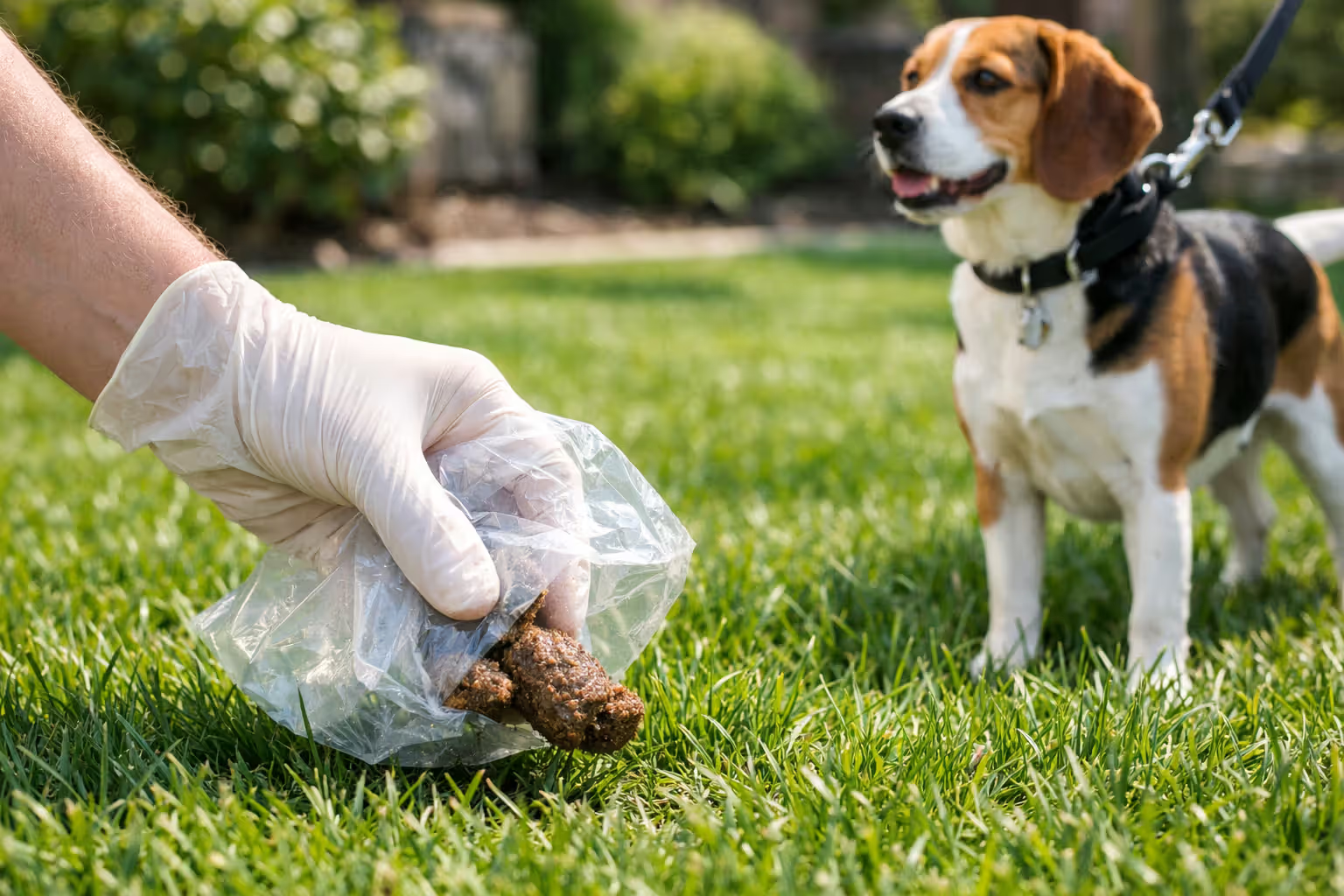
Dispose of all collected feces in sealed plastic bags placed directly in your trash, never in backyard compost bins. Parasite eggs successfully survive typical backyard composting temperatures and can thoroughly contaminate the finished compost you later spread in vegetable gardens. If your dog defecates during neighborhood walks, bag it immediately and carry it home for proper disposal. Never leave it "to decompose naturally"—those microscopic eggs persist and heavily contaminate the environment for other dogs using that area.
In multi-dog households, assume if one dog tests positive, all dogs have been exposed even if their individual tests came back negative. Treat all household dogs simultaneously using appropriate medications. This approach prevents treated dogs from getting immediately reinfected by still-infected housemates shedding eggs continuously.
Prevent coprophagia (feces eating behavior) aggressively. This disgusting behavior directly transmits parasites whether your dog eats their own stool, other dogs' stool, or wildlife droppings they find. Supervise all outdoor time closely, keep the yard meticulously cleaned, and work with a qualified trainer if your dog has developed an established feces-eating habit.
Control intermediate hosts aggressively throughout the year. Maintain consistent year-round flea prevention to eliminate the primary tapeworm transmission route completely. In rural or suburban areas, prevent your dog from hunting or eating dead wild animals that might carry various parasite species.
Author: Emily Crosswell;
Source: alwaysonsalepetsupplies.com
Regular veterinary check-ups
Annual fecal examinations should be standard procedure for all dogs, even those receiving monthly preventatives consistently. Breakthrough infections occasionally occur, particularly in geographic regions where drug-resistant parasite strains are emerging. Dogs with extensive outdoor lifestyles or those in high-risk environments benefit significantly from testing twice yearly—spring and fall represent common timing choices.
Newly adopted dogs need immediate veterinary attention including thorough fecal testing regardless of any health certificates or deworming records provided by shelters or rescue organizations. These organizations do genuinely excellent work with severely limited resources, but parasites remain extremely common in shelter populations due to crowding and stress. Test and treat before introducing your new dog to existing household pets, protecting your established animals from preventable infections.
Pregnant dogs require special customized protocols. Discuss comprehensive deworming strategies with your veterinarian before breeding occurs. Treating the mother during late pregnancy and immediately after whelping reduces transmission to vulnerable puppies, though it cannot completely eliminate risk due to dormant larvae reactivating in maternal tissues triggered by pregnancy hormones.
Frequently Asked Questions About Worms in Dogs
Can humans catch worms from dogs?
Yes, certain dog parasites can definitely infect people, particularly young children playing outdoors. Roundworms create the highest human health concern overall. When people accidentally ingest microscopic roundworm eggs from contaminated dirt, unwashed hands, or contaminated surfaces, larvae hatch inside human intestines and begin migrating through human tissues. This causes visceral larva migrans (larvae wandering through internal organs like liver and lungs) or ocular larva migrans (larvae migrating into the eye, potentially causing permanent partial or complete vision loss). Children who regularly play in sandboxes, dirt piles, or yards where infected dogs have defecated face the highest exposure risk. Research published by the CDC in 2019 discovered roundworm eggs present in roughly 14% of public playgrounds they surveyed.
Hookworm larvae possess the ability to tunnel directly through intact human skin, causing cutaneous larva migrans. This condition produces intensely itchy, raised red serpentine tracks visible on skin where larvae are actively migrating just beneath the surface. It typically happens when people walk barefoot on contaminated sandy beaches or lie directly on contaminated grass without protective barriers.
Tapeworms rarely infect humans because transmission requires accidentally swallowing an infected flea whole—theoretically possible but genuinely uncommon. Practicing good basic hygiene dramatically reduces human health risks: wash hands thoroughly after handling dogs or working in yards, teach children never to put dirty hands or objects in their mouths, and keep dogs on appropriate preventatives to reduce overall parasite transmission potential.
What's the right deworming frequency for my dog?
Treatment frequency depends heavily on your individual dog's age, lifestyle patterns, and specific exposure risks. Young puppies require treatment every two weeks starting at just two weeks of age, continuing until they reach twelve weeks old, then switching to monthly treatments until six months. This aggressive early schedule addresses the extremely high infection rates documented in young dogs and prevents the serious health consequences parasites cause in developing puppies.
Adult dogs receiving year-round heartworm preventatives that simultaneously target common intestinal parasites typically don't require any additional routine deworming beyond their monthly preventatives. These products provide continuous protection preventing infections from ever establishing initially. If a routine fecal examination reveals parasites despite consistent monthly preventatives, your veterinarian will prescribe additional targeted treatment.
Dogs not receiving monthly preventatives year-round require annual fecal testing at minimum, with appropriate deworming performed whenever testing reveals active infection. High-risk dogs—those who hunt regularly, frequent dog parks extensively, or live in areas with documented heavy parasite contamination—benefit from testing three to four times yearly rather than annually.
Never establish a rigid deworming schedule without obtaining veterinary guidance and actual fecal testing results. Over-treating without proper diagnosis contributes to developing drug resistance in parasite populations. Under-treating allows infections to persist and progressively worsen over time. Base all decisions on actual laboratory test results combined with your veterinarian's professional assessment of your individual dog's specific risk factors.
Do certain dog breeds have higher worm susceptibility?
No dog breed possesses any genetic immunity to intestinal parasites. All breeds can become infected when exposed to parasites. However, certain breeds face statistically higher exposure risks based on their typical activities and living situations. Hunting breeds like Beagles, Coonhounds, Foxhounds, and Treeing Walker Coonhounds encounter parasites more frequently through regular contact with infected wildlife and contaminated hunting grounds.
Breeds commonly used in large-scale breeding operations may demonstrate higher infection rates if facilities don't maintain rigorous, consistent parasite control programs. Puppies originating from puppy mills or casual backyard breeders often harbor heavy parasite burdens because of overcrowded conditions, poor sanitation practices, and lack of preventative veterinary care.
Working dogs who spend substantial time outdoors—livestock guardian breeds like Great Pyrenees and Anatolian Shepherds, herding dogs like Border Collies and Australian Shepherds, and sled dogs—face constant environmental exposure to contaminated soil and feces from infected animals.
Age and overall immune system health affect infection susceptibility far more than breed genetics. Puppies under six months, elderly dogs over ten years, and dogs with compromised immune systems from illness, chronic stress, or immunosuppressive medications are significantly more likely to develop heavy infections and display severe clinical symptoms. Maintaining excellent overall health through proper balanced nutrition, regular appropriate exercise, stress reduction, and consistent preventative veterinary care supports immune function, helping dogs control parasite burdens more effectively.
What do tapeworms look like when you find them in dog poop?
Tapeworm segments (the medical term is proglottids) regularly appear in fresh feces and around the anal area, making them the most readily recognizable parasite evidence owners typically encounter. Fresh segments resemble individual grains of white or cream-colored rice, measuring approximately a quarter-inch in length. Observe carefully for several seconds and you might see them rhythmically contracting and moving independently—that characteristic motion definitively distinguishes them from undigested food particles that might look similar initially.
As segments dry over the following few hours exposed to air, they shrink noticeably and darken to golden brown or tan colors, at which point they resemble sesame seeds more than rice. These dried segments frequently stick stubbornly to fur surrounding your dog's anus or scatter across bedding where the dog regularly sleeps. The segments cause significant itching and tickling sensations as they emerge, triggering that characteristic scooting behavior across floors.
You'll never encounter the complete intact tapeworm body expelled in your dog's stool because that's simply not how these particular parasites function biologically. The microscopic scolex (head portion) remains permanently anchored to intestinal walls using specialized hooks and powerful sucker structures. The segmented body continuously produces new proglottids that mature progressively, fill completely with developing eggs, detach from the posterior end, and pass out of the body. Meanwhile, the firmly anchored head simultaneously grows replacement segments to continue the reproductive cycle indefinitely.
Do symptoms appear immediately after my dog gets worms?
No, dogs almost never display any symptoms immediately following initial parasite exposure. Parasites require substantial time to mature fully, reproduce, and build populations large enough to cause noticeable health problems. Roundworms require 3-4 weeks minimum to develop from ingested eggs into reproducing adult worms producing their own eggs. Hookworms take 2-3 weeks to complete maturation. Whipworms need a lengthy 2-3 months before reaching reproductive adulthood.
Light parasite burdens may never trigger any obvious symptoms whatsoever, especially in healthy adult dogs with robust immune systems. These dogs can harbor and actively shed parasites into the environment while appearing perfectly healthy and normal. This symptom-free carrier state explains exactly why routine annual fecal testing matters even for dogs that seem completely healthy and show no problems.
Puppies develop obvious symptoms much faster than healthy adults because they possess less developed immune defenses and much smaller body mass. A worm burden barely affecting a 70-pound Labrador adult can cause life-threatening illness in a five-pound puppy. Additionally, puppies infected before birth or through nursing may begin displaying symptoms within their first few weeks of life as inherited larvae rapidly mature.
Sometimes symptom onset appears sudden when a dog's immune system becomes compromised by significant stress (boarding kennels, moving to new homes, new baby arriving in household), concurrent illness, or other immune-challenging factors. Dormant larvae can suddenly activate and mature rapidly under these conditions, causing symptoms to seemingly appear overnight even though infection has actually been present much longer.
Do dogs living primarily indoors need deworming?
Absolutely yes, indoor dogs require parasite prevention and periodic fecal testing just like outdoor dogs. While indoor dogs face somewhat lower exposure compared to outdoor dogs, they're not completely protected from infection. Parasite eggs easily hitchhike into homes on shoes, clothing, bags, and other items that contacted contaminated soil or grass outdoors. Dogs who venture outside even briefly for bathroom breaks can encounter and ingest infectious parasite eggs.
Fleas enter homes on people, other pets, or through tiny gaps around doors and windows. Once inside your home, fleas can successfully transmit tapeworms to indoor dogs. Rodents that enter homes carry parasites that dogs contract by catching and eating them or investigating their droppings.
Many newly adopted dogs arrive already infected from shelter or rescue exposure. Indoor dogs absolutely need thorough fecal testing and appropriate treatment when first acquired, regardless of any deworming history provided by the previous owner or rescue organization.
The indoor versus outdoor distinction rarely holds up under close scrutiny. Most "indoor" dogs actually spend some time outside, visit grooming salons, stay at boarding facilities occasionally, or interact with other dogs at veterinary clinics. These activities create exposure windows for infection. Year-round heartworm preventatives that include intestinal parasite protection provide practical, highly effective protection for all dogs regardless of lifestyle classification—indoor, outdoor, or somewhere between those extremes.
Intestinal parasites challenge dog owners throughout the country, but they represent manageable problems when you have proper knowledge and implement consistent preventative strategies. Year-round preventatives, regular veterinary check-ups including annual fecal testing, and good basic sanitation practices create a solid foundation for effective long-term parasite control. Recognizing the early warning signs allows for prompt treatment before infections cause serious health complications or contaminate your home environment extensively. Discovering worms in your dog's stool or vomit naturally alarms any owner, but remember that intestinal parasites respond well to appropriate treatment—they represent temporary conditions, not permanent lifelong health problems. Work closely with your veterinarian to develop a customized monitoring and prevention plan tailored for your dog's individual risk factors, lifestyle patterns, and geographic location. The investment in preventative care pays substantial dividends through your dog's improved long-term health outcomes while simultaneously protecting your family from zoonotic parasite transmission risks.
Learn to recognize the key signs a dog is in heat, understand all 4 stages of the canine heat cycle, manage sudden behavior changes, and provide proper care during estrus. This guide covers discharge, swelling, cycle timing, fertility windows, safety tips, and answers common owner questions
Learn why your dog farts so much, what causes smelly dog gas, when it signals health problems, and proven ways to reduce flatulence through diet changes. From food triggers and speed-eating habits to gut conditions, discover exactly what makes your pup gassy and simple steps to fix it for good
Wondering why your dog wakes up with crusty or colored eye discharge? This guide breaks down every type of dog eye booger by color and texture, explains seven common causes from allergies to dry eye, walks you through safe at-home cleaning steps, and highlights the red flags that signal an urgent vet visit
Learn effective dog constipation treatment options, from pumpkin remedies and hydration tricks to knowing exactly when to see a vet. Discover safe home solutions, proper fiber dosages, quick relief methods, warning signs that demand urgent professional care, and proven tips for lasting comfort
The content on this website is provided for general informational and educational purposes only. It is intended to offer guidance on dog breeds, behavior, health, care, and lifestyle, and should not be considered a substitute for professional veterinary advice, diagnosis, or treatment.
All information published on this site is based on general knowledge, widely accepted research, and practical experience, but individual dogs may differ in behavior, health conditions, and needs. Results and outcomes may vary depending on the dog, environment, and circumstances.
The website is not responsible for any errors or omissions, or for actions taken based on the information provided. For specific concerns regarding your dog’s health or behavior, always consult a qualified veterinarian or professional dog specialist.