Deciding whether to euthanize your dog—there's honestly nothing harder. I've watched friends agonize over this for weeks, and maybe you're in that awful space right now where every day feels like a question mark.
Here's what makes it so brutal: Your dog can't tell you "I'm ready" or "I need more time." You're reading body language, tracking symptoms, and wrestling with guilt no matter which direction you lean.
This isn't going to be one of those articles that gives you a magic formula. What it will do is show you the specific signs veterinarians look for, walk you through assessment methods that remove some of the guesswork, and explain exactly what happens during the process so at least one layer of fear gets peeled away.
You won't wake up one morning to a clear, obvious sign that says "today's the day." More likely, you're watching a slow slide—some days your dog seems almost normal, other days they can barely lift their head. That inconsistency is part of what makes this so hard.
Physical and Behavioral Signs Your Dog May Be Suffering
Dogs are frustratingly good at hiding when they hurt. It's hardwired from thousands of years of evolution—show weakness, become prey. So you've got to watch for patterns, not just one-off incidents.
Pain that won't quit looks different from the yelp they let out when they step on something sharp. We're talking about the dog who pants heavily while lying completely still at 2 AM. The one who used to love belly rubs but now flinches when you reach toward their hindquarters. You might notice they're holding one of their back legs at a weird angle, or their tail doesn't wag the same way anymore—it's just kind of... there.
And here's the real kicker: When the pain meds that worked for months suddenly don't anymore. Your vet keeps increasing the dose, adding new medications to the mix, and your dog still spends most of the day looking miserable.
Mobility problems sneak up gradually. First, your dog takes an extra second or two to stand up after a nap. Then it's three attempts before their back legs cooperate. Within weeks, they're doing this awful scramble where their rear end slides out from under them.
Author: Hannah Bloomfield;
Source: alwaysonsalepetsupplies.com
I'm thinking specifically of larger breeds here—German Shepherds, Labs, Golden Retrievers. Once they hit 70+ pounds and can't support their own weight, you're looking at a quality of life crisis. Can they walk to their water bowl? Can they get outside to go to the bathroom, or are you carrying them? When you're carrying a 90-pound dog outside four times a day and they still can't hold their bladder, that's not sustainable for anyone.
Food refusal tells you volumes. Not "I'm being picky about kibble," but "I won't touch the rotisserie chicken you bought specifically because I used to go crazy for it." Dogs live for food—it's one of their core joys. When a dog turns their head away from treats, something's seriously wrong.
Watch the weight fall off, too. If your dog's dropped 10-15% of their body weight in three to four weeks, their body's shutting down systems. Maybe it's kidney failure making them nauseous. Maybe it's cancer. Either way, the scale doesn't lie.
Bathroom accidents in a housetrained dog mean one of two things: They physically can't control it anymore, or they're so mentally checked out they don't remember where they are.
Dogs are clean by nature. My friend's 13-year-old Corgi started urinating in her sleep—she'd wake up lying in it and look absolutely devastated. That emotional distress matters as much as the physical symptom. If your dog's having constant diarrhea, vomiting daily, or developing sores that won't heal, their body's failing them.
Trouble breathing is terrifying to witness. Count breaths sometime when your dog's resting: 15-25 per minute is normal. If you're counting 45, 50, 60 breaths and they're not even moving? That's respiratory crisis. Some dogs with heart failure literally cannot lie down because fluid backs up into their lungs. They sleep sitting up, propped against the couch, gasping.
Blue-tinged gums or tongue—that means oxygen deprivation. At that point, you're watching your dog slowly suffocate.
Mental checkout shows up as a dog who used to follow you room-to-room but now just... stays under the bed. They don't come when called. They stare at the wall for 20 minutes straight. The spark behind their eyes is gone.
Some dogs get aggressive from confusion and fear, especially with dementia. Others just vanish into themselves. When your dog doesn't recognize you anymore, or seems afraid of their own home, they're suffering in a way that's harder to quantify but no less real.
Track good days versus bad ones. Bad day: refused breakfast, didn't get up except to pee (once, on the floor), slept 20+ hours, whimpered when shifting position. If you're logging more bad than good for two solid weeks and treatment isn't turning it around, the math is telling you something.
Using a Quality of Life Scale to Assess Your Dog's Wellbeing
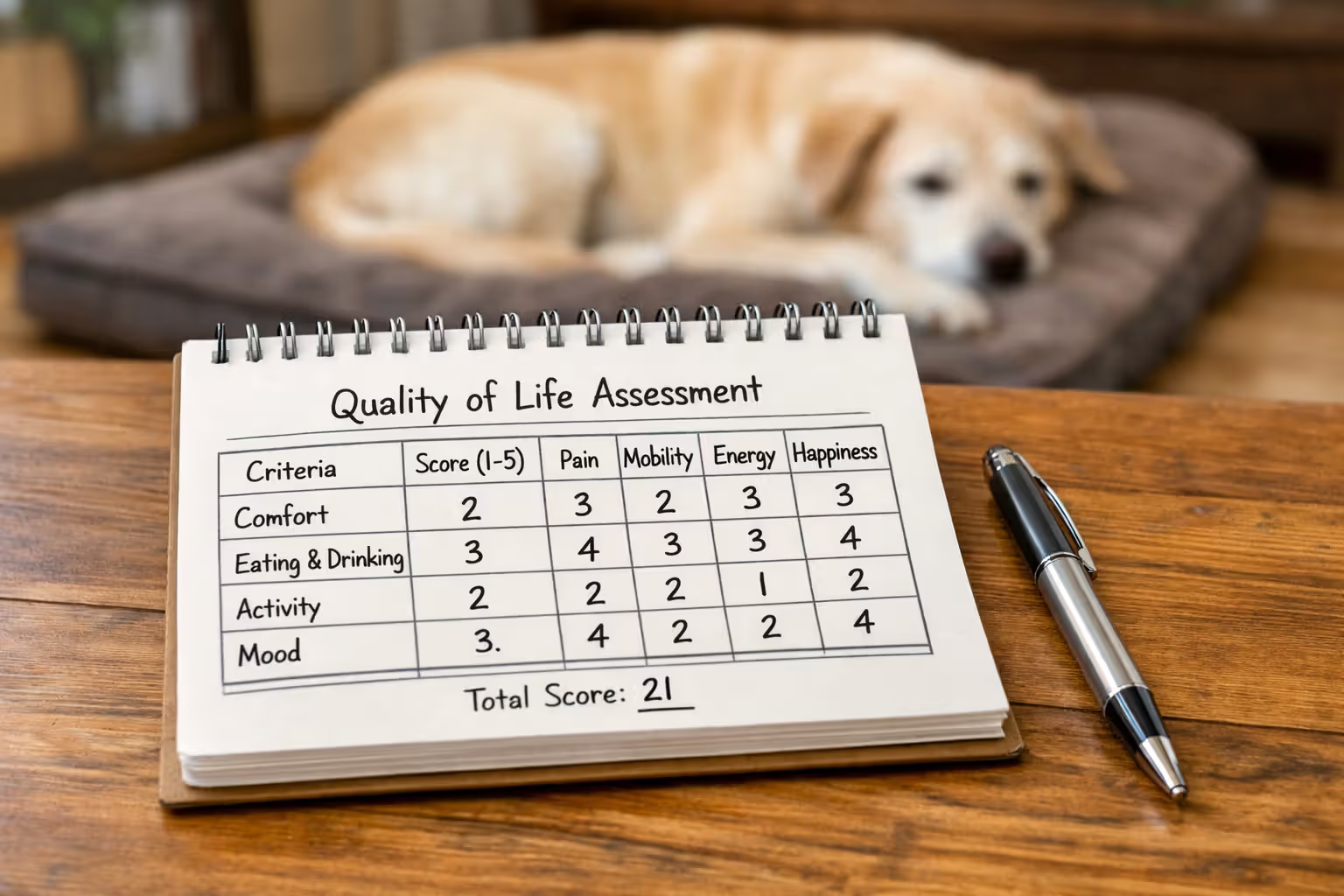
Your emotions are going to mess with your judgment—that's just how brains work when we love someone. A structured scoring system gives you something objective to hold onto.
The HHHHHMM Scale Explained
Author: Hannah Bloomfield;
Source: alwaysonsalepetsupplies.com
Dr. Alice Villalobos (a veterinary oncologist) developed what's become the go-to framework: seven categories abbreviated as HHHHHMM. Those letters represent Hurt, Hunger, Hydration, Hygiene, Happiness, Mobility, and More good days than bad days.
You assign 0-10 points per category. Zero means worst-case scenario, ten means your dog's doing great in that area. Add everything up. Scores consistently landing below 35 out of 70 total points suggest your dog's quality of life has degraded past the acceptable threshold.
This isn't some magic number that makes the decision for you—nothing can do that. What it does is force you to look at specific, measurable criteria instead of just feeling your way through the fog.
How to Score Each Category
Score weekly and write it down. Seriously, keep a notebook or use your phone. When you document decline over time, patterns emerge that your brain would otherwise rationalize away.
Category
0-3 Points
4-7 Points
8-10 Points
What You're Evaluating
Hurt
Pain is uncontrolled even with maximum drugs; constant crying or whimpering
Medication helps but your dog still can't move comfortably or do normal activities
Minor discomfort at most; maybe stiff in mornings but loosens up
Is medication actually working? Can they rest without obvious distress? Have you maxed out pain management options?
Hunger
Won't eat anything, even hand-fed
Only eats special foods with lots of encouragement; needs hand-feeding for every meal
Eats normally; shows excitement at meal times
Will they eat their absolute favorite thing? Can they physically swallow? Do they show any interest when you open the food container?
Hydration
Refuses water; requires vet to give subcutaneous fluids
Drinks very little; you're constantly trying to get them to the bowl
Drinks on their own without problems
Check gums—are they tacky/sticky (dehydrated)? Can they physically reach the water? Will they drink if you bring it to them?
Hygiene
Constantly lying in urine/feces; open wounds or infections that won't heal
Accidents happen multiple times daily; extensive cleaning needed
Controls elimination normally; stays clean
Can they hold their bladder/bowels at all? Are they aware they've had an accident? Can you keep infected areas clean despite efforts?
Happiness
Completely withdrawn; no response to family, toys, or activities they used to love
Occasional tail wag or brief interest, then back to lethargy
Still responds to you; shows joy; engages with household
Does anything make their tail wag? Do they look at you when you talk to them? Any play behavior or curiosity left?
Mobility
Cannot stand or move without complete human assistance; totally immobile
Can walk a few steps with major difficulty or needs sling support throughout
Gets around independently; might be slower or stiffer but functional
Can they reach food/water on their own? Go outside without being carried? Stand up without falling over?
More good days than bad
Every single day is a struggle with suffering
Good days and bad days run about 50/50
Most days are comfortable with minimal symptoms
At the end of each day, honestly ask: Was today good or bad overall? Track this daily.
Don't score hopefully—score honestly. If your dog had ten decent minutes this morning but the other 23 hours and 50 minutes were miserable, that's not a 5 or 6 day. That's a 1 or 2.
Get someone else to score independently. Your sister, your neighbor, your adult kid—whoever's seen your dog recently but isn't the primary caretaker. Compare scores. The outside perspective often sees what you're too close to recognize.
Re-score every 3-5 days when dealing with chronic illness. If scores drop 10+ points within a week, that's rapid deterioration. If scores hover between 20-30 despite treatment, you're not maintaining quality of life—you're extending dying.
Medical Conditions That May Lead to Euthanasia Decisions
Some diagnoses come with clearer timelines. Others are unpredictable. Understanding where your dog's disease typically leads helps you see when you've crossed from treatment into just postponing the inevitable.
Cancer trajectories vary wildly. Hemangiosarcoma—common in Goldens and German Shepherds—is brutal because dogs seem fine until they suddenly hemorrhage internally. You might see no symptoms, then your dog collapses from blood loss and dies within hours. Bone cancer (osteosarcoma) creates pain so severe that even veterinary-grade opioids barely touch it. Oral melanomas and nasal tumors bleed constantly, block airways, and make eating impossible.
When tumors spread to lungs, liver, or brain—or when the primary tumor grows so large it interferes with body functions—treatment options evaporate. Chemo might have bought six good months, but once that stops working, things often decline fast.
Kidney and liver failure follow more predictable progressions. Early kidney disease? You adjust diet, maybe give subcutaneous fluids at home. Advanced failure means toxins are building up in the bloodstream faster than treatment can clear them. Dogs vomit repeatedly, stop eating entirely, may have seizures from the toxin levels. Check bloodwork: creatinine above 5.0 mg/dL despite aggressive intervention means kidneys have about 10-15% function left.
Liver failure shows as yellow gums and eye whites (jaundice), fluid-filled abdomen, and this zombie-like mental state called hepatic encephalopathy. When bilirubin levels hit 10 mg/dL or higher and keep climbing, the liver's done.
Heart failure means the heart muscle can't pump efficiently anymore. Blood backs up, fluid seeps into the lungs. Your dog coughs constantly, can't walk across the room without gasping, sleeps sitting up because lying down feels like drowning.
Diuretics and heart meds (pimobendan, enalapril) work for a while—sometimes six months, sometimes a year. Then they stop working. Your dog's respiratory rate stays above 40 even at rest. They're essentially suffocating in slow motion. That's when you call the vet.
Degenerative myelopathy hits German Shepherds, Corgis, and Boxers particularly hard. It's a progressive spinal cord disease—starts with wobbly back legs, advances to dragging paws, then complete rear paralysis. Eventually front legs go too.
Here's the thing: It doesn't hurt. It's neurological, not pain-based. But the inability to move, combined with pressure sores from lying in one position and constant UTIs from incontinence, absolutely creates suffering. Most people choose euthanasia when their dog can't stand up anymore or has completely lost bladder and bowel control.
Dementia (cognitive dysfunction syndrome) ranges from "where's my food bowl?" confusion to "who are you and why am I in this house?" terror. Severe cases involve 24/7 pacing, getting stuck in corners, aggressive behavior from fear, vocalizing all night long.
Medications like selegiline help early stages. Advanced dementia? There's not much that works. When your dog is constantly anxious, doesn't know where they are, and can't recognize family members, they're living in a state of perpetual fear.
Epilepsy that medication can't control is heartbreaking. You're giving phenobarbital, maybe potassium bromide, adjusting doses... and your dog still seizes three times a week. Cluster seizures (multiple episodes within 24 hours) or status epilepticus (seizures lasting 5+ minutes) cause permanent brain damage.
The post-seizure phase—called the "post-ictal" period—can last hours to days. Your dog's blind temporarily, completely disoriented, exhausted. If they're living in constant fear of the next seizure and medication can't prevent them, that's no quality of life.
Common thread through all of these: When medical management stops providing actual comfort—not just keeping them technically alive—and every day brings more suffering than moments of peace, you've reached the point where continuing treatment serves your emotional needs more than your dog's wellbeing.
Euthanasia is not a failure of medicine. It is medicine’s most compassionate tool — the ability to end suffering when all other options have been exhausted
— Bernard Rollin
How the Dog Euthanasia Process Works: What Pet Owners Should Expect
Knowing the mechanics ahead of time helps. Veterinarians do this as an act of medical compassion—they're trained specifically to make this as peaceful as possible.
At the Veterinary Clinic vs. At-Home Euthanasia
Clinic-based euthanasia typically runs $50-$300 depending on your dog's size and where you live. Urban areas cost more; rural areas less. The clinic has all equipment immediately available, experienced staff if things get complicated (sometimes anxious dogs require extra sedation), and private rooms in many practices. The downside: smells, sounds, other animals—all the things that stress dogs out. Some clinics offer after-hours appointments when the building's quiet, which helps.
Mobile/at-home euthanasia costs $200-$500 and requires finding a vet who does house calls. Your dog stays in their bed, surrounded by familiar smells and their favorite blanket. Many dogs are visibly calmer. The veterinarian brings everything needed.
Challenges: Mobile vets aren't available everywhere (especially rural areas), you might wait several days for an appointment, and if you have a 100-pound dog, transporting their body afterward requires planning. Some mobile services include body transport to cremation facilities; others don't.
Choose based on your specific situation. Anxious dog who hyperventilates at the vet? Home is better. Calm dog and you know having this happen in your living room will haunt you? Clinic is fine. Neither option is "better"—they're just different.
Author: Hannah Bloomfield;
Source: alwaysonsalepetsupplies.com
Step-by-Step: What Happens During the Procedure
First comes sedation—usually a combination injection given under the skin or into muscle. This takes 5-15 minutes to fully kick in. You'll watch your dog get drowsy, lie down, muscles relaxing. The sedation ensures they have zero anxiety or awareness during the final step. Stay with them during this phase—talk to them, pet them, let them hear your voice.
Once deeply sedated (eyes glaze over, breathing slows dramatically, they're essentially unconscious), the vet gives the euthanasia solution: concentrated pentobarbital, a barbiturate anesthetic. This goes directly into a vein, usually front leg. The vet might shave a small fur patch to find the vein easier.
Pentobarbital works in seconds. Brain function stops instantly, then heart and lungs follow. Your dog is unconscious before their heart stops beating. Ten to thirty seconds from injection to death.
What you might see: A deep breath or gasp—that's a reflex, not distress. Eyes stay open (dogs don't close their eyes when they die). Muscles release completely, which might mean urination or defecation. Legs might twitch briefly. All of this is normal physiology, not pain or awareness.
The vet confirms death by listening for a heartbeat with a stethoscope. They'll give you time alone with your dog's body—no rush.
What happens next:
Communal cremation ($50-$150): Your dog's cremated with other pets; you don't get ashes back
Private cremation ($150-$400+): Individual cremation; ashes returned in a basic or decorative urn
Home burial: Usually legal if you own property; check local laws first; dig deep enough that animals won't disturb it
Pet cemetery burial: $500-$2,000+ depending on location, casket type, and whether you want a marker
Most clinics partner with cremation services and handle the transport. If you want home burial, you'll need to transport the body yourself or hire a pet funeral service.
Questions to Ask Your Veterinarian Before Making the Decision
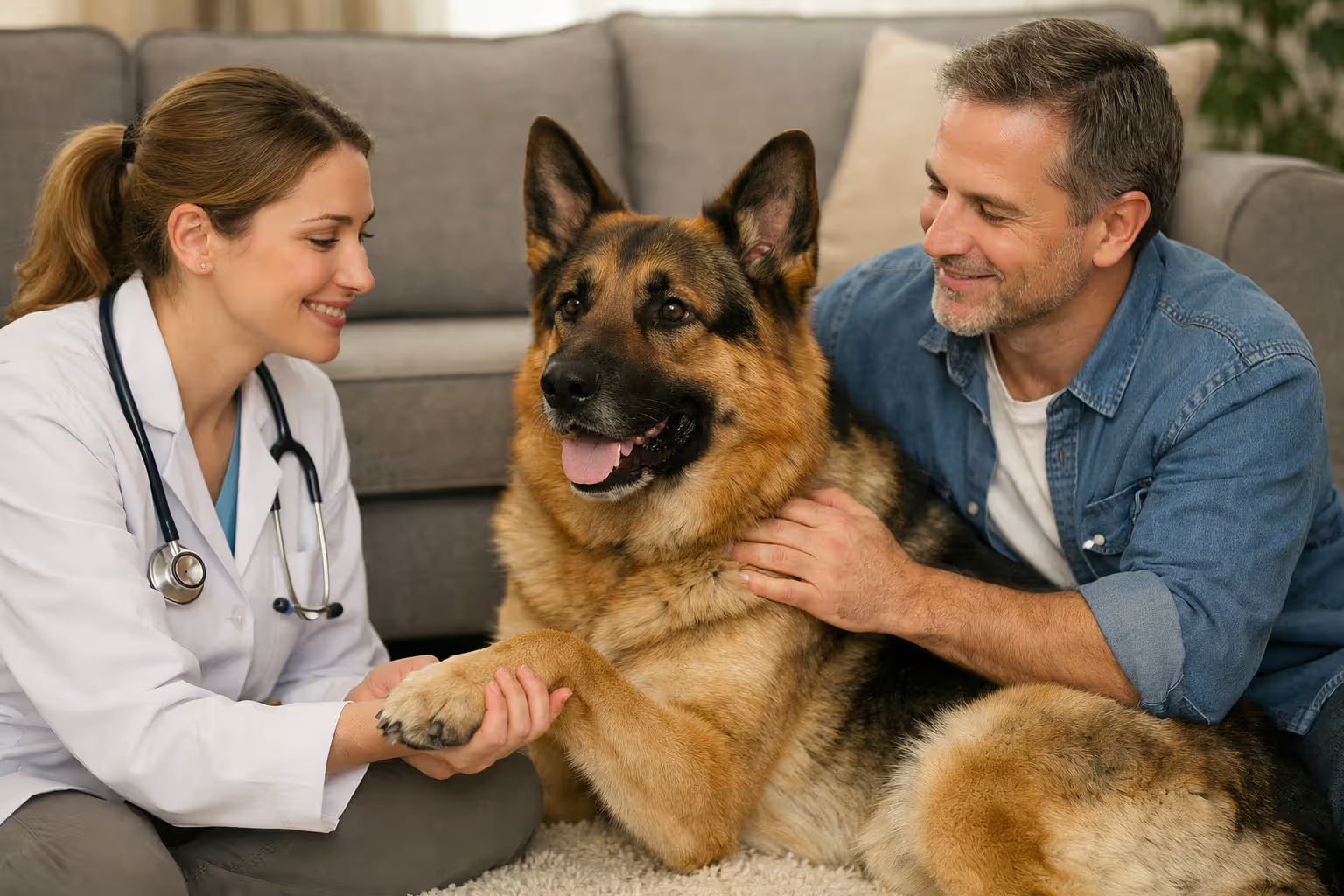
Your vet's seen hundreds of end-of-life cases. You haven't. Use their experience. Book a specific quality-of-life consultation—don't try to have this conversation during a regular checkup when the vet's already running behind.
"What's my dog's prognosis—with treatment versus without?" Get specific. "Are we talking weeks, months, or years?" Push past vague reassurances. Ask what their quality of life looks like during that time. Three more months sounds good until you learn those months involve constant vomiting and inability to walk.
"What treatment options are left, and what will they actually accomplish?" Some treatments genuinely improve quality of life. Others give marginal benefit with significant downsides. Chemotherapy for lymphoma might give 6-12 months of normal life with minimal side effects. For other cancers, you might get three weeks and your dog spends them nauseous and lethargic. Know the difference between curative treatment, life extension, and palliative care.
"Can we actually manage my dog's pain at this point?" If your dog's already taking gabapentin, carprofen, and tramadol but still yelping when they move, you've maxed out options. Ask directly: "Is there anything else we can try, or have we hit the ceiling?" Some vets dance around saying "there's nothing more," so be blunt in your question.
"What comes next with this disease?" Understanding the progression helps you set boundaries ahead of time. If your dog has degenerative myelopathy and they've lost rear leg function, you can say, "When the front legs go, that's my line." If they have heart failure, knowing the end stage is suffocation helps you avoid waiting until they reach that point.
"If this were your dog, what would you do?" Most vets avoid this because the decision's ultimately yours. But if you press and your vet says, "Honestly? If this were my dog, I'd have done this two weeks ago," that's critical information. They're telling you your dog's actively suffering.
"What specific signs mean we're out of time?" Get concrete red flags: "If he stops eating for 48 hours straight, or if he can't stand up anymore, call me immediately." Clear criteria cut through the paralysis of uncertainty.
"Can I schedule tentatively?" Some vets let you book an appointment for a week out with the understanding you'll cancel if your dog rallies. This removes the panic of trying to get a same-day appointment when your dog's actively dying. You can always cancel a premature appointment; you can't always get one when you need it urgently.
Bring someone with you to this appointment. You won't remember half of what's said. Have them take notes so you can review everything later when you're not crying in the exam room.
Supporting Your Dog Through End-of-Life Care at Home
The window between realizing things are bad and making the final decision might be days or weeks. Making your dog comfortable during this time matters just as much as the ultimate decision.
Pain control requires precision. Give medications exactly on schedule—if you skip doses or run late, pain breaks through and it's brutal to get back under control. If you're juggling five different medications, use a pill organizer or set alarms on your phone. Track everything in writing.
Watch for breakthrough pain: panting while resting, can't settle into one position, whining when they shift weight, not sleeping. Call your vet for adjustments immediately—don't wait for the next scheduled appointment.
Make the environment easier. Non-slip rugs or yoga mats on hardwood floors give traction. Ramps replace stairs, or block stairs entirely if they're dangerous now. Raise food and water bowls on a platform so they don't bend their neck awkwardly. Move their bed to wherever you spend time so they're not isolated in a back room.
Mobility help includes rear-end support harnesses, dog wheelcarts for paralyzed legs, or just carrying them outside. Here's where large dogs create real challenges. Carrying a 75-pound dog outside four times a day wrecks your back and stresses them out. When mobility aids stop working and moving them causes obvious distress, their quality of life's tanked.
Keeping them clean becomes a full-time job. Incontinent dogs need cleaning multiple times daily to prevent urine scald and skin infections. Waterproof pads under bedding help, but you'll still be bathing them constantly.
Dogs who can't stand get pressure sores on bony areas—elbows, hips, shoulders. Rotate their position every two hours. Use thick padding. If despite everything your dog develops infected sores or lies in their own waste because they can't move, they've lost all dignity.
Coaxing appetite works temporarily for some dogs. Warm the food to make it smell stronger. Offer chicken, beef, fish—high-value stuff they've always loved. Hand-feed. Some dogs will eat baby food or vanilla ice cream when everything else fails.
But if your dog actively turns their head away from all food, force-feeding creates more distress. A body that's shutting down rejects food—pushing them to eat when they're actively dying is cruel, not kind.
Just be there. Sit with them. Talk to them. Dogs are social—isolation makes everything worse. If they want solitude, respect that. Some dogs hide when they're dying. But most want you close.
The most important thing you can do for a dying animal is simply to be present — your calm, loving presence is the greatest comfort you can offer
— Dr. Ella Bittel
Know your own limits. If you're sleeping 90 minutes a night because your dog needs constant monitoring, if you haven't left the house in a week, if your whole family's life has stopped—evaluate honestly whether you're maintaining your dog's quality of life or just delaying a decision because you feel you haven't done enough. Burning yourself out while your dog suffers serves nobody.
Frequently Asked Questions About Dog Euthanasia
Will my dog be in pain during euthanasia?
No. The sedative injection comes first—that knocks them unconscious before the final drug. Your dog feels that initial needle poke (same as any injection), then nothing after that. The euthanasia drug stops brain activity instantly—there's no moment of awareness. Veterinarians consistently describe it as the most peaceful death possible. Any movements you see afterward are muscle reflexes, not consciousness.
How much does it cost to put a dog down in the US?
Vet clinic euthanasia: $50-$300 depending on your dog's size, your location, and timing (after-hours costs more). At-home mobile service: $200-$500. Then add aftercare—communal cremation runs $50-$150, private cremation with ashes back to you costs $150-$400, pet cemetery burial goes from $500 to well over $2,000 depending on what you choose. Some vets offer payment plans. Local humane societies sometimes provide low-cost euthanasia if finances are tight. Money shouldn't force you to let your dog suffer—talk to your vet about options if cost's a barrier.
Can I stay with my dog during euthanasia?
Yes, and most vets encourage this. Your dog finds comfort in your presence during their final minutes. That said, if you genuinely can't handle being there, that's okay too. Some people leave after saying goodbye but before the injections—they know witnessing it will traumatize them. Neither choice is wrong. Do what you can emotionally manage. For kids: teenagers often want to be present and benefit from it; young children might not understand and could be frightened. Use your judgment.
Is it better to euthanize my dog at home or at the vet?
Depends entirely on your dog and your family. Home works best for dogs who panic at the vet, for families who want total privacy, and when you want your dog in their familiar space. Clinic works for dogs who handle vet visits calmly, when you need it done today (mobile vets often book out several days), or if you can't emotionally handle it happening in your house. Both lead to the same peaceful passing. Pick whichever provides more comfort for your dog and more peace for you.
How do I know I'm not giving up too soon?
This question destroys people. Use objective measures: the quality of life scoring system, your vet's clinical perspective, the good-days-versus-bad-days ratio. Ask yourself with brutal honesty: "Am I keeping my dog alive for their sake or mine?" If they still have more good days than bad, enjoy eating, interact with family, and move around with manageable pain—it's not time. If they've checked out of life, won't eat, can't move without clear distress, and show multiple suffering signs despite maximum treatment, you're not giving up—you're preventing drawn-out suffering. Better to choose euthanasia one week "early" than wait one day "too late."
What happens to my dog's body after euthanasia?
You've got options. Communal cremation means your dog goes with other pets; you don't receive ashes back—most affordable choice. Private cremation means they're cremated alone and ashes come back to you in an urn (basic container or fancy decorative one). Home burial works if you own property and local laws allow it—check municipal codes and dig deep enough that wildlife can't reach the body. Pet cemetery burial provides a permanent memorial spot but costs significantly more. Your vet clinic usually works with cremation companies and handles transport. You can also take your dog's body with you to arrange private cremation or burial yourself.
Making Peace With Your Decision
Choosing euthanasia for your dog is love, not abandonment. You're shouldering the burden of this decision so your dog doesn't have to experience the natural death process, which often drags on for days or weeks of progressive suffering.
You'll second-guess yourself—everyone does. "Should I have waited longer?" Or conversely, "Did I wait too long?" Here's what most vets will tell you: The vast majority of owners wait longer than they should, not shorter. We delay because we can't bear to let go. Dogs can't tell us when they're ready. We read the signs and act for them.
Grief after losing a pet hits as hard as losing a human family member for many people. Your dog was part of your daily routine, a constant presence. The absence is a hole. Let yourself grieve without minimizing it. Pet loss support groups, grief counseling, memorial rituals like planting a tree or making a photo book—whatever helps.
There's no perfect moment to euthanize. You're choosing between imperfect options: ending life while some quality remains versus waiting until suffering becomes undeniable. Most vets and pet loss counselors say err on the side of "a week early rather than a day late." Your dog trusts you to make this choice when they cannot.
You gave your dog a good life. When you can't give them a good life anymore, giving them a peaceful death is the last act of love you have to offer.
Complete guide to puppy vaccination schedule: everything you need to know about core and non-core vaccines, exact shot timeline from 6 weeks to 16 months, detailed breakdown of costs at traditional and budget clinics, what reactions are normal after each appointment, and how to keep your puppy protected through every critical stage of early development.
Discover which dog breeds consistently live the longest, why small breeds almost always outlive their larger counterparts, and what science says about the size-lifespan connection. Learn how to maximize your dog’s years through smart nutrition, weight control, and preventive veterinary care
Every dog breed ages differently. Small dogs outlive giants, mixed breeds beat purebreds, and your daily choices matter more than genetics. Here’s what science reveals about canine lifespan — and how to add years to your dog’s life
Find out which temperatures put your dog at risk, how breed and body size change cold tolerance, what warning signs mean danger, and the exact steps to keep your pet safe and healthy throughout the winter season outdoors.
The content on this website is provided for general informational and educational purposes only. It is intended to offer guidance on dog breeds, behavior, health, care, and lifestyle, and should not be considered a substitute for professional veterinary advice, diagnosis, or treatment.
All information published on this site is based on general knowledge, widely accepted research, and practical experience, but individual dogs may differ in behavior, health conditions, and needs. Results and outcomes may vary depending on the dog, environment, and circumstances.
The website is not responsible for any errors or omissions, or for actions taken based on the information provided. For specific concerns regarding your dog’s health or behavior, always consult a qualified veterinarian or professional dog specialist.