When you bring a dog home, you're signing up for a relationship that'll span years—sometimes decades. Many people don't think about lifespan until they're already attached, but it's actually one of the smartest factors to consider upfront. Some breeds consistently make it past 15, even hitting 18 or 20 with the right care. Others? You're lucky to get eight good years.
Here's something that surprises people: a Great Dane's typical lifespan hovers around 7-10 years. Compare that to a Chihuahua, which frequently sees its 18th birthday and keeps going. We're not talking about isolated lucky dogs—this happens predictably enough that veterinary databases track it. If you want maximum time with your companion, certain breeds give you much better odds.
Why Small Breeds Typically Outlive Large Dogs
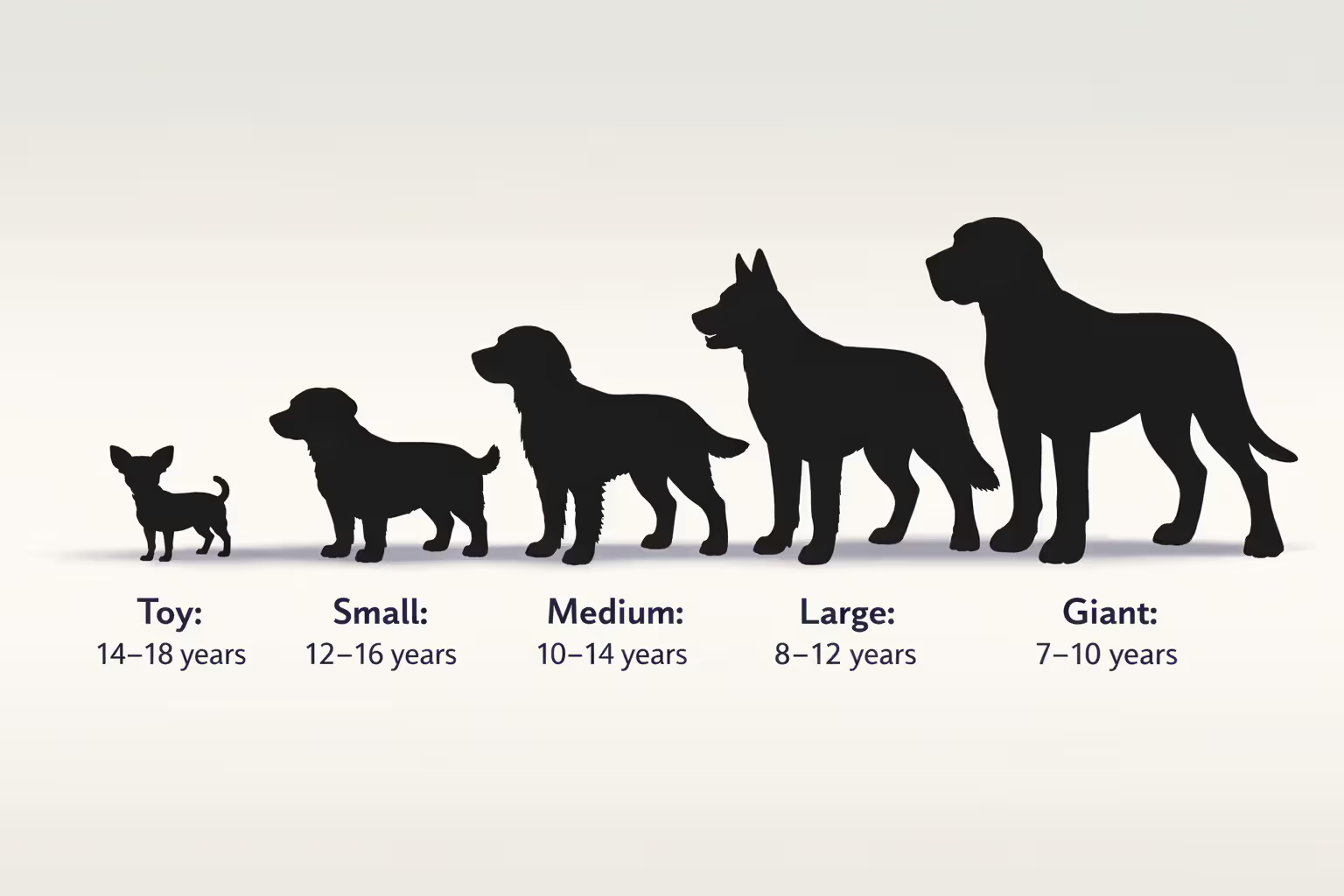
Small dogs live longer. Period. Most make it to 12-16 years. Giant breeds? They're old at 8. This seems backward compared to other animals—elephants outlive mice, after all—but dogs flip that script entirely.
The reason comes down to how fast they grow and how hard that growth hits them at the cellular level. Large breed puppies balloon from tiny newborns to 80, 100, even 150 pounds within their first year. That explosive growth requires constant cell division, and every time cells divide, there's opportunity for errors. Think of it like making photocopies of photocopies—quality degrades with each generation.
Scientists have measured this. Research in the American Naturalist showed large dogs age roughly 20% faster than small ones. Their bodies produce more growth hormone and insulin-like growth factor 1 (IGF-1) during that rapid puppy phase, and those elevated levels appear to accelerate aging throughout their lives.
Author: Emily Crosswell;
Source: alwaysonsalepetsupplies.com
There's also the mechanical reality of hauling around extra weight. A Mastiff's heart pumps blood through a body that weighs 15 times what a Toy Poodle's does. Every organ works harder. Joints bear more stress with every step. Over a decade, that accumulated wear adds up to earlier organ failure and more arthritis.
Smaller dogs run faster metabolisms per pound, but their total energy expenditure stays lower. They generate fewer free radicals—those cellular troublemakers that damage DNA and speed up aging. Less oxidative stress over a lifetime translates directly to slower aging and more birthdays.
12 Dog Breeds That Regularly Live Past 15 Years
Toy and Small Breeds (Under 20 lbs)
Tiny dogs dominate the longevity rankings, and it's not even close. These breeds weren't developed for physically demanding work like herding or guarding. People bred them for companionship, which meant selecting for health and temperament rather than extreme physical capabilities that often come with trade-offs.
Chihuahuas routinely hit 18-20 years. I've personally known three that made it past 20. Their miniature size means virtually no joint stress, though you'll spend money on dental work—those tiny jaws pack teeth together tightly. Toy Poodles similarly cruise to 15-18 years. They've got diverse genetics working in their favor and dodged most of the hereditary disasters that plague some breeds.
Yorkshire Terriers average 13-16, but many sail past that. They look fragile with all that silky hair, but they're actually tough little dogs underneath. Dachshunds—both mini and standard sizes—make it 12-16 years if you keep them lean. Yes, their long backs create vulnerability to disc problems, but catching those early means they don't necessarily shorten lifespan.
Shih Tzus and Lhasa Apsos both clock in around 12-15 years typically, with plenty reaching 18. These Tibetan breeds have centuries of refinement behind them. Careful breeding over that timescale produced generally sound dogs. Pomeranians live 12-16 years, though you need to watch them around larger dogs—their size makes them fragile to physical trauma. Jack Russell Terriers regularly hit 13-16 despite their manic energy levels. Their genetics stayed diverse because they were working dogs first, show dogs second.
Medium Breeds That Defy the Odds
Author: Emily Crosswell;
Source: alwaysonsalepetsupplies.com
Medium-sized dogs can't match small breeds biologically, but several consistently overperform. Australian Cattle Dogs actually hold the all-time canine longevity record. A dog named Bluey, born in 1910, worked sheep for nearly two decades and made it to 29 years and 5 months. That's the verified record. The breed typically lives 12-16 years, benefiting from working-dog genetics and relatively few genetic health disasters.
Beagles average 12-15 years with sturdy constitutions refined through centuries of hunting work. Their moderate size and solid build means fewer orthopedic nightmares. Miniature Schnauzers live 12-15 years, though they need monitoring for pancreatitis and bladder stones—conditions that are manageable, not necessarily life-shortening.
Eyes can deteriorate with age, hip joints sometimes problematic, seizures occur in some lines
Yorkshire Terrier
13-16 years
4-7 lbs
Teeth need professional cleaning frequently, windpipe can collapse, blood sugar crashes possible
Dachshund
12-16 years
11-32 lbs
Back problems are the big one, weight control is critical, dental work gets expensive
Shih Tzu
12-16 years
9-16 lbs
Flat face causes breathing issues, eyes prone to injury and disease, hip problems in some
Lhasa Apso
12-15 years
12-18 lbs
Cherry eye needs surgical correction, kneecaps can dislocate, kidney issues in older dogs
Pomeranian
12-16 years
3-7 lbs
Dental disease starts young, trachea can collapse, mysterious hair loss happens sometimes
Jack Russell Terrier
13-16 years
13-17 lbs
Eye lens can dislocate suddenly, deafness in some lines, hip joint sometimes degenerates
Australian Cattle Dog
12-16 years
35-50 lbs
Hip problems in some lines, eyes deteriorate gradually, hearing loss not uncommon
Beagle
12-15 years
20-30 lbs
They'll eat until they explode—weight control essential, seizures pop up, thyroid quits working, ear infections constant
Miniature Schnauzer
12-15 years
11-20 lbs
Pancreas inflammation is common, bladder stones form easily, cholesterol runs high
Maltese
12-15 years
4-7 lbs
Dental work needed constantly, kneecaps slip out of place, tremor syndrome affects white dogs
What Makes These Breeds Live Longer Than Others
Genetic diversity forms the foundation here. Breeds with broader gene pools develop fewer hereditary problems and show better overall health. Jack Russell Terriers and Beagles both have working backgrounds where function mattered more than appearance. Breeders working with hunting or herding dogs couldn't prioritize looks if the dogs couldn't actually do their jobs.
Compare that to breeds that exploded in popularity. When everyone suddenly wants Golden Retrievers or German Shepherds, puppy mills and backyard breeders flood the market. Quality control disappears. Those breeds are fantastic when bred responsibly, but they suffered genetic bottlenecks during their popularity peaks. That's partly why they face higher cancer rates and hip dysplasia now.
Physical structure matters enormously. Dogs built closest to moderate, balanced proportions typically stay healthier. Extreme features—ultra-short faces, extremely long backs, giant size, or extra-tiny size—create complications. Australian Cattle Dogs, Beagles, and Jack Russell Terriers all maintain proportions that don't fight against basic biology.
Breeding practices determine everything in the long run. Responsible breeders test parent dogs for breed-specific diseases and won't breed dogs carrying problematic genes. The Orthopedic Foundation for Animals maintains public databases showing which dogs passed health clearances. Breeds with active, transparent health-testing cultures consistently produce healthier puppies.
Genetic diversity is the cornerstone of canine health. Breeds that maintained functional selection pressure over centuries consistently show fewer hereditary diseases than those shaped primarily by aesthetics
— Mark Neff, geneticist
Flat faces cause problems that compound over time. While Shih Tzus have shortened muzzles, they don't approach the respiratory catastrophe you see in English Bulldogs or Pugs. Dogs that breathe efficiently put less stress on their hearts and get better oxygenation their entire lives. That adds up over 15 years.
Low-Maintenance Breeds With Exceptional Lifespans
Living a long time doesn't necessarily mean high maintenance. Several long-lived breeds work perfectly for people with limited time, money, or mobility.
Chihuahuas need almost no grooming if you get a smooth-coated one. Occasional brushing handles it. Exercise? A couple short walks and some indoor play satisfies them completely. They fit in apartments, travel in a purse, and adapt to almost anything. Your main expense is dental cleaning, which all small breeds need, but that's cheaper than the orthopedic surgeries large breeds require.
Author: Emily Crosswell;
Source: alwaysonsalepetsupplies.com
Miniature Pinschers make it 12-16 years without drama. Short coat means no grooming appointments. Moderate energy means daily walks suffice—nothing crazy. They're weirdly cat-like in keeping themselves clean.
Dachshunds, especially smooth-coated ones, combine longevity with convenience. Daily exercise prevents both obesity and back problems, but we're talking moderate walks, not marathons. They adapt to apartments or houses and don't need professional grooming. Their main requirement is strict weight control.
Beagles balance hardiness with ease of care. Short coats shed but never mat or need trimming. They're food-motivated, so training comes easier. The quirk? They'll follow scents obsessively, so you need secure fencing. Health-wise, they're economical compared to breeds requiring specialist visits every few months.
For genuinely minimal maintenance, mixed breeds with small-dog heritage often deliver longevity with hybrid vigor. A Chihuahua mix or Terrier mix from your local shelter might live just as long as purebreds while costing a fraction upfront. They typically need standard care without breed-specific complications.
How to Maximize Your Dog's Lifespan Regardless of Breed
Even breeds with natural longevity need proper care to hit their potential. The difference between a Chihuahua dying at 12 versus 18? Usually owner decisions.
Catching problems early transforms outcomes. Annual exams for young adults, twice-yearly for seniors (usually 7+ depending on breed) let vets spot subtle changes. Bloodwork establishes baselines and reveals kidney, liver, or thyroid issues before symptoms start. Dental cleanings prevent periodontal disease—and this isn't just about teeth. Bacteria from infected gums travel through the bloodstream and damage heart valves and kidneys.
Weight management might matter more than anything else you control. Studies prove dogs kept lean live approximately two years longer than overweight dogs. That Beagle making pitiful eyes while you eat dinner? He'll live longer if you stay strong. Use actual measuring cups for food instead of eyeballing. Most owners overfeed by 20-30% without realizing it.
The single most important thing an owner can do to extend their dog’s life is to keep them lean. Obesity is the most common preventable disease we see, and it takes years off a dog’s life
— Ernie Ward
Food quality matters, just not how marketing departments claim. You don't need boutique grain-free formulas—those have actually been linked to heart disease recently. Pick foods meeting AAFCO standards, formulated by actual veterinary nutritionists, from companies that have been around for decades. Adjust as your dog ages since seniors need different nutrition than puppies.
Exercise needs vary wildly, but every dog needs mental stimulation. Bored dogs experience chronic stress, and stress accelerates aging measurably. Puzzle feeders, short training sessions, new walking routes—these keep minds engaged. Australian Cattle Dogs need actual jobs. Chihuahuas need socialization. Match activities to breed tendencies.
Learn your breed's vulnerabilities and work around them. Dachshund owners should block furniture access to prevent jumping injuries. Brachycephalic breeds must avoid heat and overexertion. Large breed owners benefit from joint supplements and should watch for bloat. Your breeder or vet can outline breed-specific prevention.
Early detection changes everything. Learn what's normal for your specific dog—typical energy level, usual appetite, bathroom routine, how they move. When something shifts, investigate immediately. That slight limp could be a torn ligament that, untreated, leads to crippling arthritis. Increased thirst might signal diabetes or kidney disease—both far more manageable when caught early.
In dogs, large body size is associated with a shorter lifespan, and this relationship appears to be driven by the accelerated aging that accompanies rapid growth
— Cornelia Kraus,
Comparing Lifespan Across Dog Size Categories
The size-to-lifespan relationship follows a reliable gradient once you see enough dogs. Understanding where breeds land helps set realistic expectations from the start.
Size Category
Average Lifespan Range
Example Breeds
Common Longevity Factors
Toy (under 10 lbs)
14-18 years
Chihuahua, Toy Poodle, Pomeranian, Yorkshire Terrier
Joints experience minimal stress daily, total metabolic load stays manageable, rapid growth phase doesn't create as many cellular errors
Small (10-25 lbs)
12-16 years
Dachshund, Shih Tzu, Miniature Schnauzer, Boston Terrier
Size reduction eases organ workload significantly, exercise needs stay manageable for owners, weight control is physically easier
Medium (25-50 lbs)
10-14 years
Beagle, Cocker Spaniel, Australian Cattle Dog, Border Collie
Working heritage usually produced sound structure, proportions stay balanced without exaggeration, breeding emphasized function historically
Large (50-90 lbs)
9-12 years
Labrador Retriever, German Shepherd, Golden Retriever, Boxer
Cancer risk climbs substantially, joint problems become likely, aging accelerates measurably, organs work harder continuously
Giant (90+ lbs)
7-10 years
Great Dane, Mastiff, Saint Bernard, Irish Wolfhound
Explosive puppy growth creates cellular chaos, cancer rates are dramatically higher, organs strain constantly, orthopedic problems are virtually guaranteed
That ten-year gap between toy breeds and giant breeds reflects biology, not care quality. Giant breed puppies grow from newborn size to over 100 pounds within 12 months. That explosive growth demands constant cellular division—each division creating opportunities for DNA errors that lead to cancer down the road.
Giant breeds face mechanical realities too. Their hearts pump blood through bodies three or four times larger than medium breeds. Joints bear crushing weight with every single step. By age 7, a Great Dane's heart has worked as hard as a Chihuahua's heart at 14 in terms of total lifetime workload.
This correlation isn't absolute—individual dogs beat the averages constantly. Good care extends lifespans across every size category. A well-maintained Golden Retriever might reach 14. A neglected Chihuahua might die at 10. Still, size remains the single strongest lifespan predictor in dogs.
Anyone considering a giant breed should face this honestly. Falling in love with a Mastiff means accepting you'll probably get 8-10 years together. There's zero judgment in choosing them anyway—many people find the trade-off absolutely worthwhile. Just go in with clear expectations instead of unrealistic hopes that lead to preventable heartbreak.
Author: Emily Crosswell;
Source: alwaysonsalepetsupplies.com
Frequently Asked Questions About Dog Longevity
What is the longest living dog breed on record?
Bluey holds the verified record—an Australian Cattle Dog born in 1910 who worked sheep and cattle for almost two decades before dying in 1939 at 29 years and 5 months. More recently, a Beagle mix named Butch reportedly lived to 28. Among purebreds currently, Chihuahuas and Toy Poodles regularly make it to 20 years. But individual longevity depends on genetics, owner care, and plain luck. No breed guarantees you'll get an exceptionally old dog, though Australian Cattle Dogs, Chihuahuas, and Toy Poodles consistently produce dogs that see their late teens or early twenties.
Do mixed breed dogs live longer than purebreds?
Mixed breeds often benefit from what geneticists call hybrid vigor—diverse genetics that make it less likely they'll inherit two copies of damaging recessive genes. Research suggests mixed breeds outlive purebreds by roughly 1.2 years on average. But that advantage is modest and completely depends on which breeds contributed to the mix. A mixed breed with Great Dane ancestry probably won't outlive a purebred Chihuahua. Mixed breeds aren't magically immune to health problems—they just distribute risk differently across a broader genetic base. Both purebreds from health-tested parents and mixed breeds from shelters can live long, healthy lives with proper care. The difference matters less than individual care quality.
At what age is a dog considered a senior?
It varies dramatically by size. Small breeds enter senior status around 10-11 years old. Medium breeds around 8-9. Large breeds around 6-7. Giant breeds hit senior status at 5-6 years old. This reflects their vastly different aging rates. A 7-year-old Great Dane is proportionally much older than a 7-year-old Chihuahua in terms of biological aging. Senior status doesn't mean imminent decline—it signals when you should increase vet visits to twice yearly, consider adjusting their food, and start watching for age-related conditions. Plenty of senior dogs enjoy several more quality years with appropriate care adjustments.
Can diet really add years to my dog's life?
Quality nutrition supports longevity, but the effect is incremental rather than miraculous. Purina ran a landmark study that found dogs fed 25% fewer calories throughout their entire lives lived nearly two years longer than dogs fed freely. The critical factor was maintaining lean body condition—not the specific brand of food. Obesity shortens lifespans by stressing joints, overworking organs, and disrupting metabolism. On the flip side, nutritional deficiencies or imbalances create their own problems. Feed AAFCO-compliant food formulated for your dog's life stage, measure portions carefully instead of guessing, and resist the temptation to overfeed. Diet alone won't overcome terrible genetics, but combined with other factors, it contributes meaningfully to how long your dog lives.
Which large dog breeds have the longest lifespans?
Among true large breeds (50-90 pounds), Australian Shepherds average 12-15 years. Standard Poodles hit 12-15 years. Australian Cattle Dogs push 12-16 years. These breeds benefit from working heritage where function mattered more than ribbons at dog shows. Labrador Retrievers typically live 10-12 years, though obesity—incredibly common in Labs—often shortens that. Collies average 12-14 years. Large breeds will never biologically match small breed longevity, but these breeds offer your best shot within their size category. Get a large breed from health-tested parents, keep them lean their entire life, and you maximize their potential.
Are there warning signs that my dog's breed may have a shorter lifespan?
Breeds with extreme physical features face more health challenges that shorten lifespans. Ultra-short faces (brachycephaly), giant size, extremely long backs, or excessive wrinkled skin all create problems. Breeds with limited genetic diversity or those that experienced explosive popularity followed by irresponsible breeding show higher disease rates across the board. Research your breed's common problems through resources like the Orthopedic Foundation for Animals website. Talk to breeders about what health testing they perform on parent dogs. Breeds requiring extensive health testing—hip scores, elbow scores, cardiac clearances, eye exams, multiple genetic tests—usually face more hereditary issues. That doesn't mean avoid those breeds entirely, but understanding their needs helps you provide appropriate preventive care from day one.
Choosing a long-lived breed gives you more calendar time together, but quality beats quantity every time. A Chihuahua living 18 years in chronic pain from ignored dental disease hasn't really benefited from its genetic advantages. Meanwhile, a Great Dane enjoying 9 vibrant, healthy, pain-free years represents a life well-lived for everyone involved.
The breeds covered here offer realistic potential for 15+ years of companionship when you hold up your end of the bargain. Small breeds dominate longevity rankings because of biological factors nobody controls. Medium breeds like Australian Cattle Dogs and Beagles prove size isn't destiny, though—sound genetics and functional structure matter enormously.
Your role in your dog's actual lifespan can't be overstated. The exact same breed can live 12 years or 18 years depending on weight management, preventive veterinary care, and how quickly you address problems when they appear. Pick a breed that actually fits your lifestyle and commitment level, then invest consistently in their health throughout their life.
Longevity data provides useful guidance but zero guarantees. Every single dog is an individual. Some Chihuahuas die young from congenital heart defects. Some Bernese Mountain Dogs make it to 12. Focus on what you actually control: selecting a breed from health-tested parents, maintaining healthy weight throughout their life, providing appropriate exercise and mental engagement, and establishing a relationship with a veterinarian you trust to give straight answers.
Dogs that live longest share recognizable traits: moderate physical structure, decent genetic diversity, and dedicated owners who treat veterinary care as investment rather than expense. Whether you choose a 5-pound Chihuahua or a 50-pound Australian Cattle Dog, your commitment to their wellbeing largely determines whether they reach their breed's potential or fall short by years.
More years together means more walks, more quiet evenings on the couch, more opportunities to strengthen your bond. That's worth weighing carefully when you're choosing your next companion.
Discover the key signs that your dog may be suffering, explore veterinarian-approved quality of life assessment tools, and get a clear, step-by-step breakdown of the euthanasia process — so you can make this heartbreaking decision with clarity, compassion, and confidence
Complete guide to puppy vaccination schedule: everything you need to know about core and non-core vaccines, exact shot timeline from 6 weeks to 16 months, detailed breakdown of costs at traditional and budget clinics, what reactions are normal after each appointment, and how to keep your puppy protected through every critical stage of early development.
Every dog breed ages differently. Small dogs outlive giants, mixed breeds beat purebreds, and your daily choices matter more than genetics. Here’s what science reveals about canine lifespan — and how to add years to your dog’s life
Find out which temperatures put your dog at risk, how breed and body size change cold tolerance, what warning signs mean danger, and the exact steps to keep your pet safe and healthy throughout the winter season outdoors.
The content on this website is provided for general informational and educational purposes only. It is intended to offer guidance on dog breeds, behavior, health, care, and lifestyle, and should not be considered a substitute for professional veterinary advice, diagnosis, or treatment.
All information published on this site is based on general knowledge, widely accepted research, and practical experience, but individual dogs may differ in behavior, health conditions, and needs. Results and outcomes may vary depending on the dog, environment, and circumstances.
The website is not responsible for any errors or omissions, or for actions taken based on the information provided. For specific concerns regarding your dog’s health or behavior, always consult a qualified veterinarian or professional dog specialist.