


Shih Tzu Breed Guide for New Dog Owners
Discover everything about Shih Tzu dogs — from temperament and grooming to health issues and ownership costs. Find out if this charming breed suits your lifestyle.
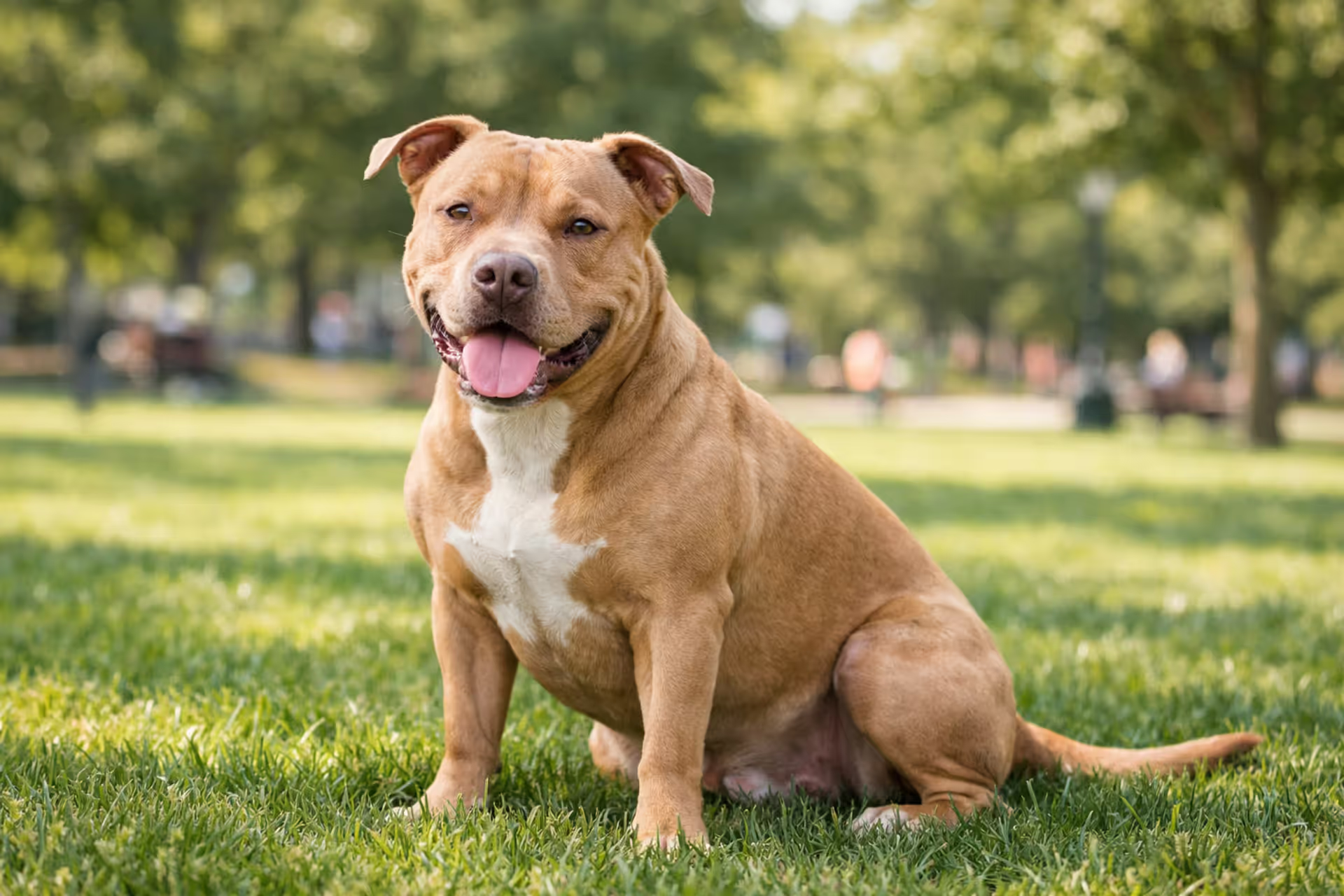
American Pit Bull Terrier sitting calmly in a park on a sunny day
Content
You've probably seen it happen. Maybe at your local park last weekend. Someone walking a pitbull approaches, and the person ahead suddenly finds urgent reasons to check their phone, cross the street, or turn around entirely. Meanwhile, that same dog is wagging so hard its whole back end wiggles, dying to say hello.
Here's what's wild: over 18,000 dogs labeled "pitbulls" currently sit in American shelters. That's not because they're dangerous. It's because reputation matters more than reality in most people's minds.
If you're reading this, you probably want facts instead of fear-mongering. Good. Because pitbull ownership isn't about proving people wrong—it's about understanding exactly what you're signing up for, from the 6 a.m. energy bursts to the potential insurance headaches.
Let's dig into what these dogs actually are, how they really behave, and whether your life has room for one.
Nobody can agree on what "pitbull" even means. That's problem number one.
Ask ten people to point out a pitbull at the dog park, and you'll get ten different answers. The stocky lab mix? The boxer blend? That muscular mystery mutt? All get called pitbulls by someone. This isn't just semantics—it drives policy decisions, insurance rates, and housing restrictions that affect actual families.
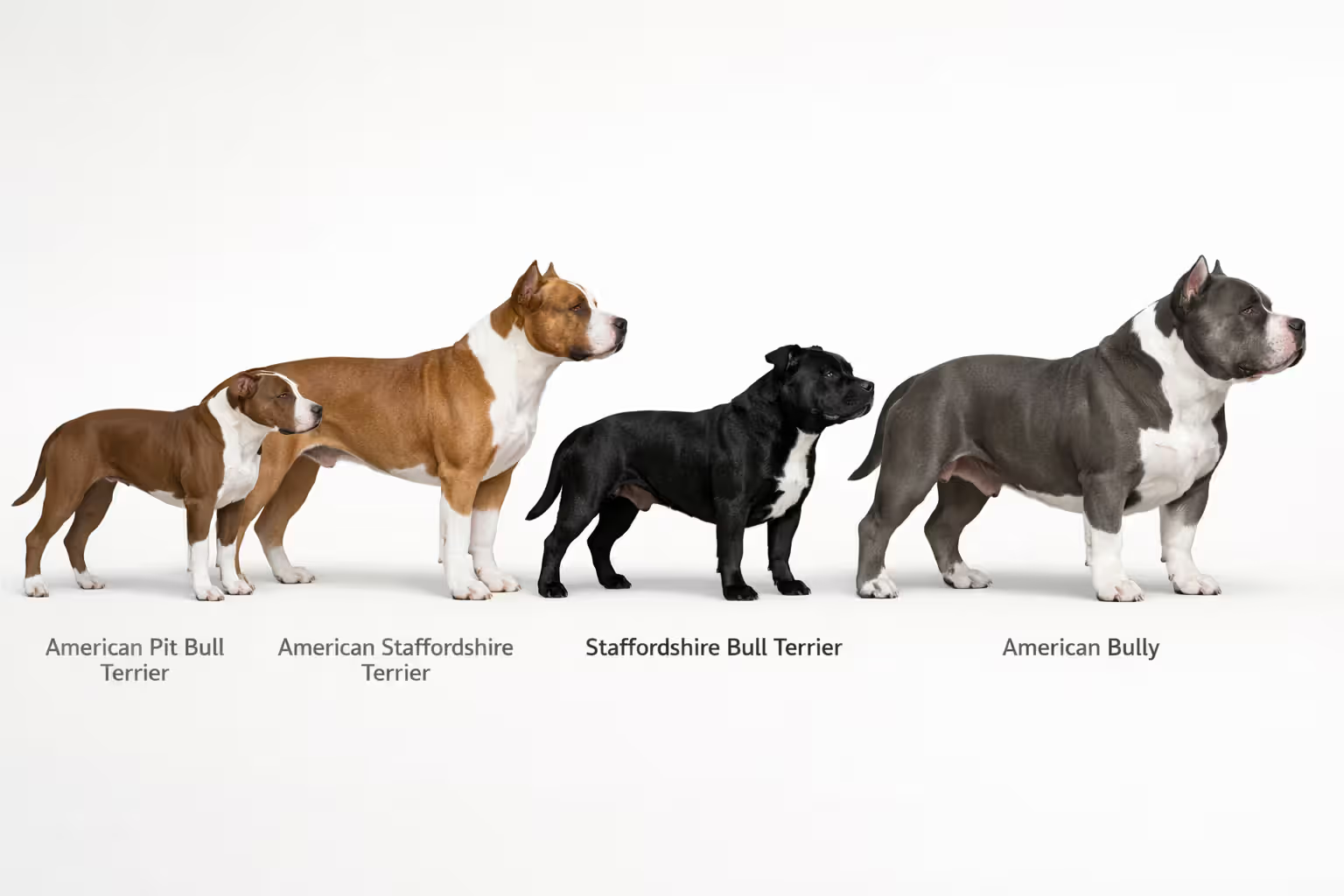
The confusion exists because "pitbull" functions as an umbrella description, not a precise breed name. People lump together American Pit Bull Terriers, American Staffordshire Terriers, Staffordshire Bull Terriers, and American Bullies under this label. Throw in any mixed breed with a square head and thick neck, and you've got yourself a "pitbull" according to public perception.
Genetic testing tells surprising stories. Dogs identified as pitbulls by shelter staff often come back with DNA showing completely different breed combinations. That supposed pitbull might be primarily boxer, American Bulldog, or a dozen other things.
Author: Hannah Bloomfield;
Source: alwaysonsalepetsupplies.com
Only one breed actually has "Pit Bull" stamped on its official papers: the American Pit Bull Terrier, recognized by the United Kennel Club since 1898. The American Kennel Club pretends this breed doesn't exist. Instead, they recognize the American Staffordshire Terrier—which basically split from the same genetic stock.
Here's where things get weird. You can take the same dog to both registries. Register as an American Staffordshire Terrier with the AKC, American Pit Bull Terrier with the UKC. Same dog, two names, different pedigrees. This happened frequently before the breeds diverged through selective breeding preferences.
The Staffordshire Bull Terrier comes from England and stands apart as its own thing. Smaller package—we're talking 24-38 pounds versus the 30-60 pound range typical for American Pit Bull Terriers. Different temperament too, generally calmer and bred down in size deliberately.
American Bullies emerged in the 1990s when breeders wanted that exaggerated, muscle-bound look without the high prey drive and intense energy. They crossed APBTs with American Bulldogs and other breeds. The result? Wider, shorter, stockier dogs with less terrier fire in their personality.
Throughout this article, we're focusing mainly on the American Pit Bull Terrier, though plenty of information applies across these related breeds.
American Pit Bull Terriers clock in as medium-sized athletes, not the monster dogs cable news wants you picturing. Males usually hit 35-60 pounds. Females run 30-50 pounds. Height sits around 17-21 inches at the shoulder.
The coat feels stiff to the touch, lies flat, and shines when healthy. Grooming needs? Almost none. These dogs come in practically every color imaginable: red nose with copper coats, blue (really gray), fawn, black, white, brindle patterns, patches, you name it. Only merle gets excluded from breed standards because it requires introducing other breeds.
Their heads feature broad skulls with prominent cheek muscles that give that classic "blocky" look. Natural ears either fold like roses or stand half-pricked. Some owners still crop ears for aesthetics, though more vets refuse to perform cosmetic surgeries nowadays.
Eyes range from round to almond-shaped, set wide with various colors except blue in show lines (though blue eyes happen in pet-quality dogs regularly).
Let's kill one myth right here: the "locking jaw" thing? Completely false. Veterinary research has dissected this claim thoroughly. Their jaw structure matches other dogs anatomically. Yes, they have strong jaw muscles relative to body size—but so do Rottweilers, Mastiffs, and German Shepherds. Nothing locks. They just hold on with determination when they bite something.

Author: Hannah Bloomfield;
Source: alwaysonsalepetsupplies.com
Confidence defines the American Pit Bull Terrier temperament more than any other trait. These dogs face new situations with curiosity rather than fear when properly raised. They're also desperate to please their people—sometimes annoyingly so.
People aggression? Actually uncharacteristic according to the UKC breed standard. Historically, these dogs needed to be completely trustworthy around humans because handlers had to safely separate them during dog competitions. Breeders culled human-aggressive dogs immediately. That legacy remains in well-bred lines today.
Your typical well-socialized pitbull thinks it weighs fifteen pounds and belongs in your lap. Right now. Forever. They'll follow you to the bathroom, lean their entire body weight against your legs, and express deep emotional distress if you close a door between you. This velcro-dog tendency makes them terrible choices for people who work long hours.
Energy? Picture a caffeinated toddler who lifts weights. These dogs need 60-90 minutes of hard exercise daily—running, fetch until they actually get tired, swimming, or vigorous play. Not a stroll around the block. That doesn't count. Without this outlet, you'll come home to destroyed furniture, excavated gardens, or a dog bouncing off walls. Literally bouncing.
The terrier genetics show up in their attitude toward rules. Smart enough to learn commands in a few repetitions, also smart enough to question why they should obey this time. Give in once when they push boundaries, and they've learned persistence works. Consistency isn't optional with this breed.
Now for the complicated part: dog aggression is separate from human aggression. Some pitbulls show same-sex aggression or high prey drive toward cats and small dogs. This traces back to breeding history. Not every individual acts this way, but the potential exists. The puppy who plays beautifully with all dogs at six months might become selective by age two. Maturity changes things.
Families with kids often find pitbulls patient and tolerant. Many put up with ear-pulling and tail-grabbing that would make a Chihuahua bite. But their strength creates problems during excited greetings—a 50-pound dog jumping up can knock over a toddler. Supervision always matters, regardless of how gentle your dog seems.
The biggest lie floating around: pitbulls are ticking time bombs waiting to attack. The American Temperament Test Society runs standardized behavior tests across breeds. Their 2021 data showed American Pit Bull Terriers passing at 87.4%. Golden Retrievers? 86.8%. Surprising, right?
The problem with pit bulls is the same problem we have with people — we judge them by the actions of the worst among them, not the best.
— Cesar Millan
What skews perception is consequences. When a 50-pound dog with strong jaws bites someone, injuries look worse than identical aggression from a smaller breed. The behavior might occur equally across breeds, but damage differs. Media reports "pitbull attack" while ignoring bites from other breeds, creating distorted public perception.
Start training the day you bring your pitbull home. That adorable eight-week-old puppy jumping for attention becomes a 50-pound teenager doing the same thing in six months. Problems that seem cute in puppies turn dangerous in adults with this breed's strength.
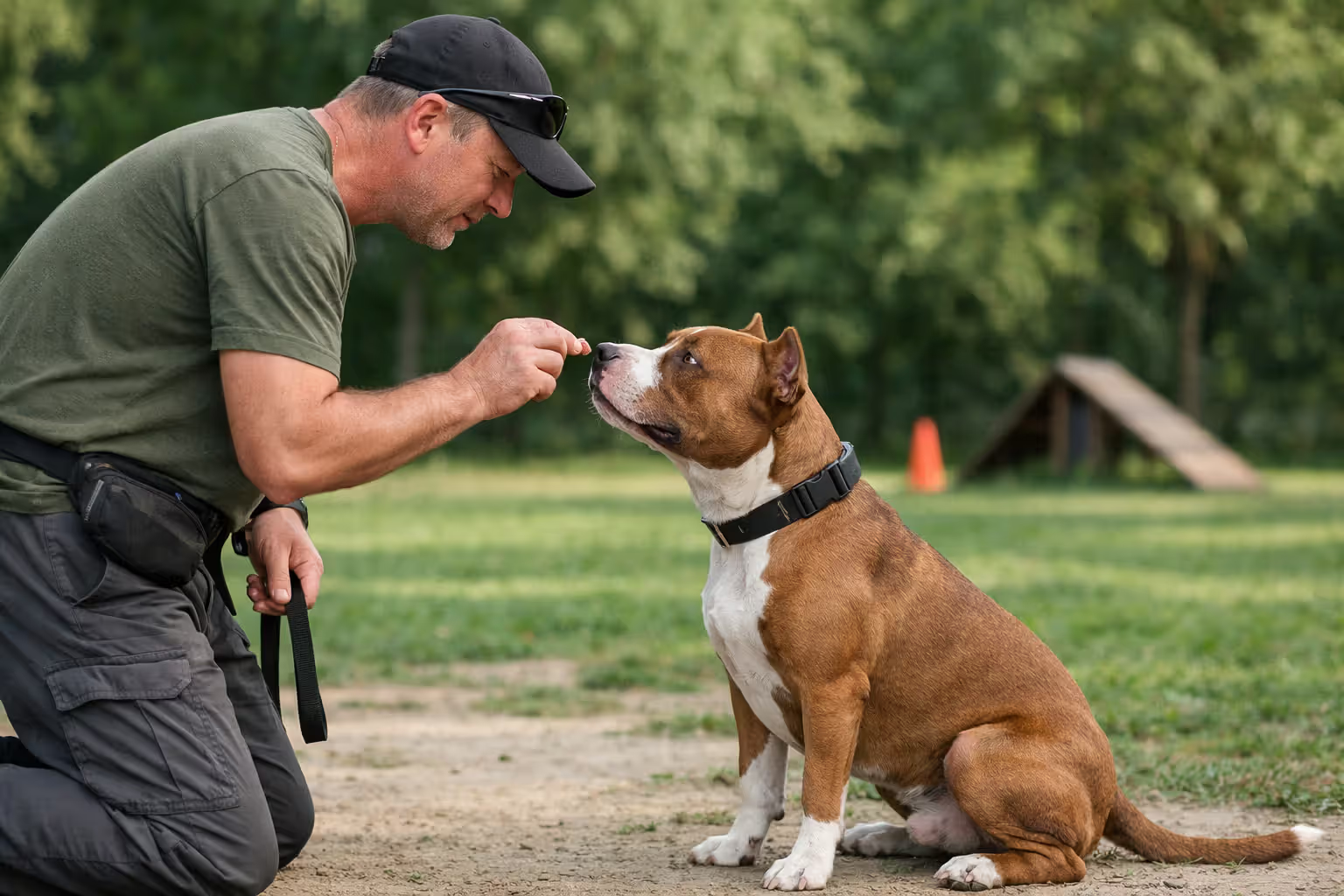
Reward-based methods work brilliantly. These dogs are food-obsessed and people-pleasing. Show them that cooperation earns treats, praise, and fun, and they'll work enthusiastically. Harsh corrections typically backfire—either shutting them down emotionally or triggering stubbornness. A pitbull who understands the reward system will try harder than one who's been jerked around on a choke chain.
The dog doesn’t care how much you know until he knows how much you care. Positive reinforcement isn’t just a technique — it’s a relationship.
— Ian Dunbar
You need consistency at a level most breeds don't require. If furniture access is prohibited, that means every single time, not just when you're wearing work clothes. Pitbulls are brilliant at learning "I can get away with this when Dad's home alone but not when Mom's here." Don't let them learn that loopholes exist.
Basic obedience forms your foundation: sit, stay, come, loose-leash walking, leave it. A solid recall prevents dog park disasters. Walking politely on leash saves your shoulder from injury. "Leave it" stops them from eating dead squirrels, trash, and random objects during walks.
Author: Hannah Bloomfield;
Source: alwaysonsalepetsupplies.com
Impulse control deserves extra attention. Teach waiting at doorways, sitting before meals, holding position while exciting things happen nearby. The dog who can hold a down-stay while a squirrel sprints past has better self-control than most humans. This discipline generalizes to other situations—the dog who can control themselves during high excitement handles other triggers better.
Puppies have a critical socialization window from roughly 3-14 weeks old. Miss this period, and you're fighting uphill battles forever. Everything they experience during these weeks shapes adult responses.
Puppy classes provide controlled exposure to other dogs and unfamiliar people. Find trainers experienced with bully breeds who won't allow rough play that rehearses problematic behaviors. The goal isn't just socialization through play—it's learning to remain calm and responsive despite distractions.
Expose your puppy to different surfaces—grass, concrete, gravel, those weird metal grates on sidewalks. Different sounds: traffic, children playing, construction noise, vacuum cleaners, thunderstorms on YouTube. Various situations: vet offices, car rides, grooming, crowds, quiet spaces. Each positive experience builds confidence and teaches them the world is safe.
Don't stop socializing after puppyhood. Many pitbulls develop dog-selectiveness between 18 months and three years as they mature. Regular positive interactions with compatible playmates help, but forcing contact with dogs they dislike creates worse problems. Quality beats quantity here.
Learn to read body language. Stiff posture, hard staring, raised hackles, or a high, stiff tail all signal discomfort. Remove your dog before situations escalate. The pitbull who learns you'll handle uncomfortable situations trusts you to manage social interactions, reducing their felt need to take charge themselves.
Biggest blunder? Assuming training ends after puppyhood. That sweet, compliant puppy transforms into a strong-willed teenager around 6-10 months. Owners who skip continued training because their puppy "gets it" suddenly have an unmanageable adolescent testing every boundary.
Undersocializing because of public perception creates exactly what owners fear. The pitbull who rarely encounters strangers or novel situations becomes anxious and reactive in new environments. Confident, well-adjusted dogs make better ambassadors for the breed than isolated, fearful ones.
Allowing rough play teaches the wrong lessons. Wrestling, hard mouthing, body-slamming—these might look fun, but your dog learns that physical intensity is how dogs should interact. When they try this approach with a dog who objects strongly, fights break out.
Inconsistent boundaries confuse any dog, but especially pitbulls who thrive on clear structure. Allowing jumping on family while correcting it with guests doesn't work—the dog just learns rules are arbitrary and confusing.
Physical corrections or dominance-based training often escalates badly. These dogs are tough enough that harsh methods turn into confrontations rather than compliance. You damage trust necessary for cooperation. The pitbull who fears their owner either shuts down completely or develops defensive aggression.
Neglecting mental stimulation leaves you with a physically tired but mentally bored dog. Puzzle toys, scent work, trick training, and food-dispensing toys engage their brains. Fifteen minutes of training can tire them as much as thirty minutes of fetch.
Pit Bull health concerns run moderate compared to many purebred dogs, but certain conditions show up more frequently. Knowing what to watch for helps you catch problems early.
Hip dysplasia affects medium and large breeds broadly, including pitbulls. The hip joint develops abnormally, eventually causing arthritis and pain. Responsible breeders screen their dogs before breeding, but adopted dogs from unknown backgrounds might carry these genes.
Skin allergies torture many pitbulls—constant itching, hot spots, chronic ear infections that never quite clear up. Environmental allergens, food proteins, or contact irritants all contribute. Some dogs need year-round management: special diets, medications, frequent medicated baths.
Hypothyroidism happens when the thyroid gland produces insufficient hormone, causing weight gain despite normal eating, lethargy, and coat problems. Daily medication manages it easily once diagnosed, but symptoms develop gradually, making them easy to dismiss initially.
Heart disease, especially aortic stenosis, appears in certain bloodlines. This congenital defect narrows the aortic valve, forcing the heart to pump harder. Severe cases cause sudden death in young dogs. Mild cases might not impact lifespan but require monitoring.
Cerebellar ataxia—a neurological condition affecting coordination—has been documented in some American Pit Bull Terrier lines. Puppies show symptoms early, and most don't survive past young adulthood.
Ichthyosis creates thick, flaky skin patches. It's genetic, incurable, but manageable through special shampoos and moisturizers. DNA tests identify carriers so breeders can make informed decisions.
Cataracts sometimes develop in young adult pitbulls, occasionally progressing to complete blindness. While not exclusive to this breed, some family lines show higher occurrence. Annual eye checks catch these developing.
Demodectic mange results from mites that normally inhabit dogs' skin in small numbers. Sometimes a pitbull's immune system fails to keep populations controlled, and mites overwhelm the skin. Localized cases often resolve without intervention. Generalized mange requires aggressive treatment and suggests immune system problems in certain bloodlines.
Luxating patella—when the kneecap pops out of its groove—causes intermittent limping. Mild versions need only observation. Severe cases need surgical correction.
Zinc-responsive dermatosis affects some pitbulls, causing crusty lesions that respond to zinc supplements. This suggests genetic issues with zinc absorption or metabolism.
Regular vet visits catch developing problems when they're most treatable. Here's what to expect for screening costs:
| Health Test | When to Start | How Often | What It Costs |
| Hip evaluation (X-ray) | 24 months | One time before breeding | $200-$500 |
| Heart screening | 12 months | Every 2-3 years unless issues arise | $300-$600 |
| Allergy testing panel | When symptoms appear | Once, then ongoing treatment | $250-$500 |
| Thyroid blood work | 12 months | Yearly if symptoms develop | $75-$150 |
| Complete wellness exam | 8 weeks, then annually | Once yearly; twice yearly for seniors | $50-$100 |
Beyond screening, you're looking at routine care expenses: yearly vaccinations run $75-$150, heartworm prevention (varies by dog weight) costs $50-$150 annually, flea and tick prevention runs $150-$300 per year, and dental cleanings every 1-3 years cost $300-$700.
Emergency care represents the financial wild card. Surgeries to remove foreign objects from intestines (because dogs eat stupid things) run $2,000-$5,000. Bloat treatment—a life-threatening emergency—costs $1,500-$7,500. Torn cruciate ligaments need surgery at $1,500-$4,000 per knee, and some dogs tear both eventually.
Pet insurance helps many pitbull owners sleep better, though policies often exclude breed-specific problems or charge extra premiums for "dangerous breeds." Read policy fine print carefully. Understand exactly what's covered before assuming you're protected.
Weight management prevents numerous health issues. Pitbulls love food and will become obese if you let them. You should feel ribs easily without pressing hard and see a visible waist from above. Extra pounds stress joints prone to dysplasia and overwork hearts already at risk for disease.

Author: Hannah Bloomfield;
Source: alwaysonsalepetsupplies.com
Choosing a pitbull dog means accepting challenges most breeds don't bring. Consider these factors honestly before committing.
Living space matters less than you'd think—access to exercise matters more. An apartment pitbull with an active owner who provides multiple daily workouts and training sessions will thrive compared to one in a house with a yard but stuck alone all day. That said, they're energetic indoors and appreciate space to move around without constantly bumping into furniture.
Experience level significantly influences outcomes. First-time owners absolutely can raise pitbulls successfully, but it's harder. These dogs need confident handling and consistent boundaries. They test limits constantly. If you've never worked a dog through adolescence, honestly assess whether you're ready for this level of intensity.
Time investment goes beyond the 60-90 minutes of daily exercise. Add training sessions, socialization outings, and companionship needs. They deteriorate emotionally when left alone for ten-hour workdays. Frequent travelers need reliable pet care—challenging given breed restrictions many boarding facilities impose.
Local laws create real roadblocks. Breed-specific legislation restricts or outright bans pitbulls in hundreds of American jurisdictions. Some cities prohibit ownership completely. Others demand special permits, mandatory liability insurance, or public muzzling. Military housing almost universally bans them. Research local ordinances before falling in love with a dog you can't legally keep.
Housing discrimination crushes renters. Countless landlords and property management companies prohibit pitbulls, slashing available rental options. Lying about breed risks eviction and makes finding emergency housing nearly impossible. I've seen families become homeless over this issue.
Breed-specific legislation is the equivalent of racial profiling. It punishes the deed of the owner, not the breed of the dog.
— Jane Berkey
Homeowners insurance creates another headache. Many companies outright refuse coverage for homes with pitbulls. Others charge significantly higher premiums or add breed exclusions—they'll cover everything except incidents involving your dog. Some companies don't discriminate by breed, but expect to shop around. Budget for higher insurance costs.
Financial resources need stretching beyond basic care. Emergency vet funds are essential—aim for $2,000-$5,000 in accessible savings minimum. Training classes, behaviorists if problems surface, higher insurance premiums—it adds up fast. Budget $1,500-$3,000 yearly for routine care alone, significantly more if health issues develop.
Other household pets complicate things. Some pitbulls coexist peacefully with cats and small dogs. Others have intense prey drive. Introducing an adult pitbull with unknown history to existing pets carries serious risks. If you have other animals, specifically seek out a pitbull tested as cat-friendly or small-dog-safe, and supervise all interactions indefinitely.
Kids in the home generally work well with pitbulls, but young children and large, energetic dogs always need supervision. Toddlers can't read canine body language or respect boundaries. Dogs can't distinguish between acceptable roughhousing and genuinely problematic behavior. Every dog, regardless of temperament, has breaking points.

Author: Hannah Bloomfield;
Source: alwaysonsalepetsupplies.com
Your personality matters here. Can you stay calm when strangers avoid you on sidewalks? Will you advocate for your dog while acknowledging legitimate concerns? Can you handle the responsibility of owning a dog whose mistakes carry serious consequences? Pitbull ownership demands thick skin and unwavering commitment to responsible management.
Pitbull dogs force owners to see past hype and commit to genuine responsibility. They're wrong for plenty of people—and that's okay. But for owners ready to provide consistent training, ongoing socialization, substantial exercise, and public advocacy, these dogs deliver loyalty and affection that borders on absurd. The canyon between reputation and reality remains vast, yet individual dogs keep proving that responsible breeding, thoughtful raising, and committed handling produce stable, loving companions. Making smart decisions means honestly evaluating your lifestyle, available resources, and willingness to navigate the unique challenges pitbull ownership presents. Then choose based on what works best for both you and the dog—not to prove a point to anyone.
Discover everything about Shih Tzu dogs — from temperament and grooming to health issues and ownership costs. Find out if this charming breed suits your lifestyle.

Complete Rottweiler guide for US owners covering temperament, training tips, guard dog traits, health concerns, and care essentials.

Complete Labrador Retriever guide covering training, health, exercise, and daily care tips. Find out if this friendly and loyal breed is the right fit for your family.

Discover everything about Golden Retrievers: their friendly temperament, training tips, health concerns, costs, and care needs. Find out if this beloved family dog is the perfect match for your lifestyle.
The content on this website is provided for general informational and educational purposes only. It is intended to offer guidance on dog breeds, behavior, health, care, and lifestyle, and should not be considered a substitute for professional veterinary advice, diagnosis, or treatment.
All information published on this site is based on general knowledge, widely accepted research, and practical experience, but individual dogs may differ in behavior, health conditions, and needs. Results and outcomes may vary depending on the dog, environment, and circumstances.
The website is not responsible for any errors or omissions, or for actions taken based on the information provided. For specific concerns regarding your dog’s health or behavior, always consult a qualified veterinarian or professional dog specialist.