

Shih Tzu Breed Guide for New Dog Owners
Discover everything about Shih Tzu dogs — from temperament and grooming to health issues and ownership costs. Find out if this charming breed suits your lifestyle.
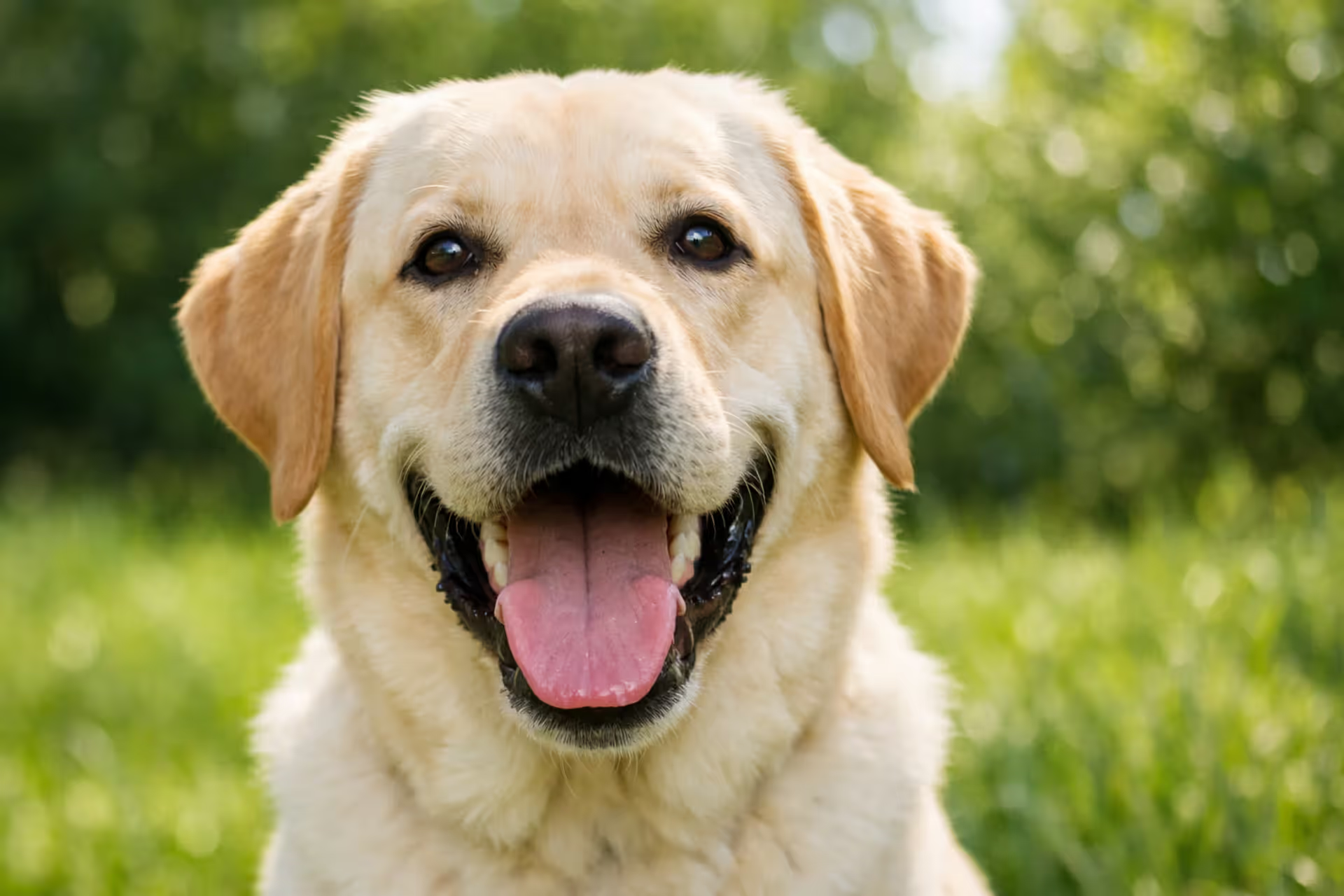
Yellow Labrador Retriever outdoors with happy expression
Content
For thirty-one consecutive years, the American Kennel Club has watched the same breed claim the top registration spot. Labs haven't held this position through marketing campaigns or celebrity endorsements—they've earned it by fitting seamlessly into how American families actually live.
Here's something most people get wrong: these dogs didn't originate in Labrador at all. They came from Newfoundland, where fishing crews relied on them daily. Picture a dog jumping into icy Atlantic waters to retrieve fish that escaped the nets, then hauling lines back to shore without complaint. That was their job description in the 1700s. When English aristocrats visited Canada's maritime provinces in the early 1800s, they immediately saw potential beyond fish retrieval. They brought these dogs home and refined them specifically for waterfowl hunting. What you get today is a breed built on centuries of cooperation with humans—not just trained, but bred at a genetic level to work alongside people.
What makes them exceptional family dogs? Start with their response to chaos. Toddlers grab ears. Teenagers forget feeding schedules. Visitors arrive unexpectedly. Labs handle all of it without getting rattled. I'm not talking about individual dogs with great temperaments—I'm talking about breed-wide behavioral testing that shows remarkably low anxiety responses compared to most breeds. They don't just tolerate family life; they genuinely seem to enjoy it.
You'll find Labs thriving in surprising places. Sure, they're perfect for suburban homes with yards. But I've seen them adjusted happily to farmland, downtown condos, and everything between. The apartment situation works only if you're committed to serious daily exercise—we're talking 90 minutes minimum, not a quick bathroom break. What they can't handle is isolation. Leaving a Lab alone for ten-hour workdays is asking for trouble. They need involvement in your routine, even if that means just lying near your desk while you work from home.
Their gregarious personality cuts both ways. They'll enthusiastically greet everyone—which is wonderful until you need an actual guard dog. More on that later.

Author: Lucas Fairmont;
Source: alwaysonsalepetsupplies.com
Males typically measure 22.5 to 24.5 inches at the shoulder, though you'll see variation. Weight runs 65 to 80 pounds when properly conditioned—emphasis on "properly conditioned," because most Labs you see at dog parks are carrying an extra 10-15 pounds. Females stand shorter at 21.5 to 23.5 inches, weighing somewhere in the 55 to 70-pound range. Good breeders aim for these proportions because they represent the sweet spot where dogs move comfortably without joint stress.
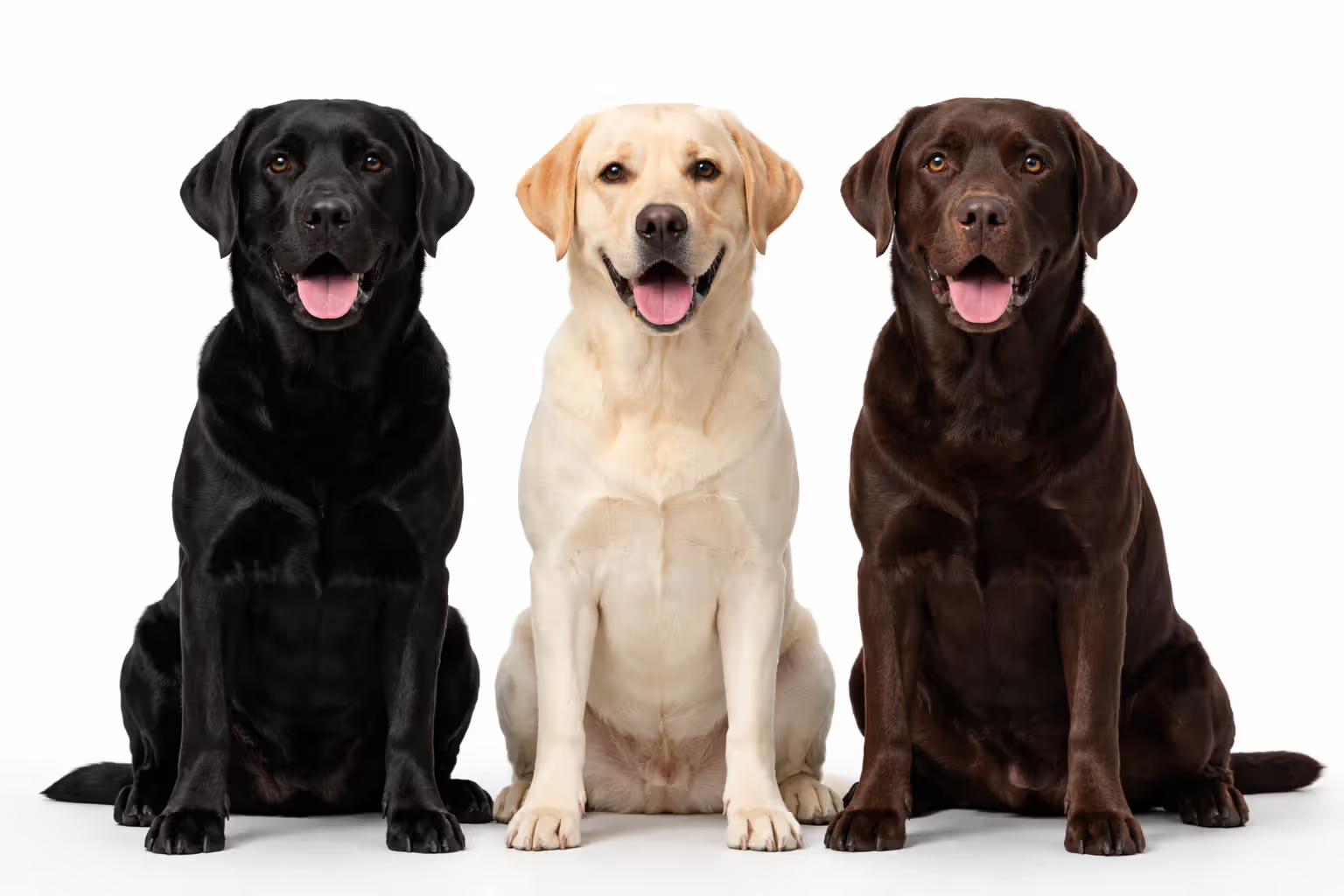
The three coat colors—yellow, black, and chocolate—trigger all sorts of myths. People swear chocolate Labs are hyper or that yellow Labs are calmer. Complete nonsense. When chocolate Labs show up in studies with shorter lifespans, researchers have traced it back to limited breeding pools and poor breeding practices, not the color itself. Your black Lab isn't automatically healthier than your neighbor's chocolate one.
Now, American versus English type—this distinction actually matters. American Labs (field-bred lines) are built like athletes: lean, leggy, and absolutely tireless. Breeders developed them for hunting trials and actual hunting work. English Labs (show-bred lines) carry blockier builds, broader heads, and noticeably calmer dispositions. Neither is inherently better, but you need to match the type to your lifestyle. Bringing an American-type Lab into a sedentary household is like adopting a marathon runner who lives in your living room. Meanwhile, serious hunters find English Labs too mellow for intensive field work.
Most Labs live 10 to 12 years, though plenty reach 13 or 14. The difference between a Lab dying at eight versus thriving at fourteen often comes down to weight management and joint care—both things you directly control.
That double coat everyone loves? It's engineering genius for cold-water retrieves—dense outer guard hairs over thick undercoat insulation. It's also a shedding machine. If finding dog hair in your coffee sounds like a dealbreaker, keep looking at other breeds.
| Life Stage | Typical Weight | Height at Shoulder | Daily Exercise Target | Daily Food Amount |
| Puppy (8 weeks-6 months) | 10 to 50 lbs | 10 to 20 inches | Four 15-minute sessions throughout the day | 2-3 cups divided into 3-4 meals |
| Adolescent (6-18 months) | 50 to 70 lbs | 20 to 23 inches | Two 45-minute sessions minimum | 3-4 cups divided into 2 meals |
| Adult (18 months-7 years) | 55 to 80 lbs | 21.5 to 24.5 inches | 60 to 90 minutes continuous or divided | 2.5-3.5 cups divided into 2 meals |
| Senior (7+ years) | 55 to 80 lbs (watch for weight creep) | 21.5 to 24.5 inches | 30 to 60 minutes, lower intensity | 2-3 cups divided into 2 meals |
Author: Lucas Fairmont;
Source: alwaysonsalepetsupplies.com
Hip dysplasia and elbow dysplasia sit at the top of the health concern list. These aren't injuries—they're developmental malformations where the joint never forms correctly from the start. Eventually arthritis sets in, bringing chronic pain with it. Before you hand over money for a puppy, demand to see OFA (Orthopedic Foundation for Animals) or PennHIP certification for both parents. Not just "the parents seem fine" or "they've never limped." Actual documentation with scores. Even certified parents can produce affected puppies, but your odds improve dramatically.
Obesity isn't just about appearance—it's the number one controllable health threat. Labs carry a mutation in their POMC gene that essentially breaks the "I'm full" signal in their brain. They're hard-wired to feel hungry constantly, regardless of how much they've eaten. Free-feeding a Lab ranks among the worst decisions you can make. You should feel ribs easily under light finger pressure without seeing them prominently visible. Most people think their overweight Lab looks "normal" because half the Labs they see are also overweight. A fit Lab looks surprisingly lean compared to public perception. Maintaining that lean physique can add two or three years to their life and keep them mobile into old age.
Progressive retinal atrophy causes progressive vision loss ending in blindness. Responsible breeders test for genetic markers before breeding. Cataracts show up in older Labs sometimes, though surgery often works well. Regular eye exams with a veterinary ophthalmologist catch these problems early enough to do something about them.
The greatest pleasure of a dog is that you may make a fool of yourself with him and not only will he not scold you, but he will make a fool of himself too.
— Samuel Butler
Exercise-induced collapse affects some lines. Dogs experience muscle weakness and collapse after intense activity. It sounds scary, but diagnosed dogs live normal lives by avoiding the extreme exertion levels that trigger episodes. Genetic testing identifies both carriers and affected dogs before breeding.
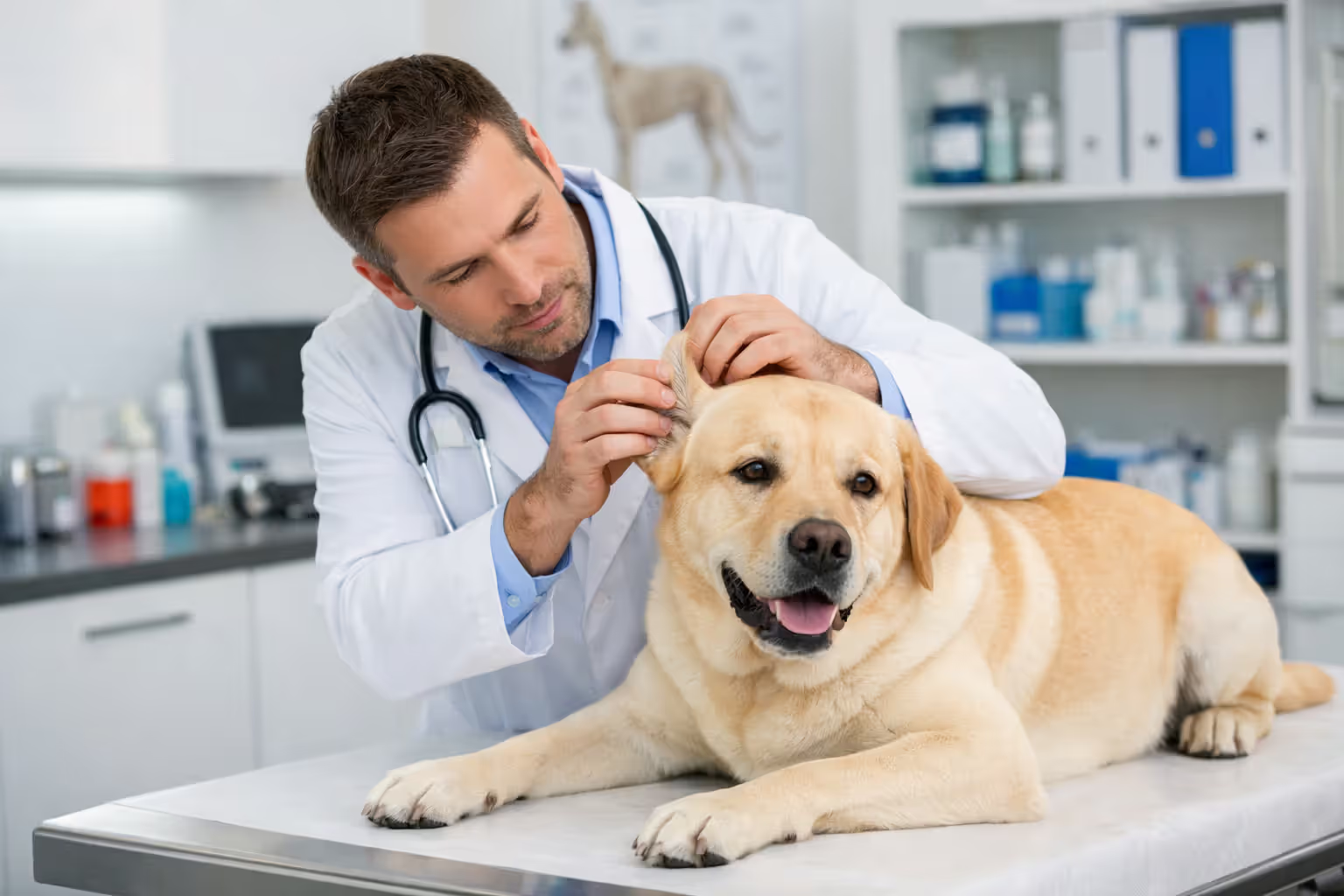
Here's your vet schedule: Puppy shots and checkups every 3-4 weeks until 16 weeks old. Then annual wellness visits until age seven. After that, switch to twice-yearly exams. Get baseline bloodwork done at five and seven years old—it gives vets reference points for kidney and liver function, making it easier to spot problems early.
Author: Lucas Fairmont;
Source: alwaysonsalepetsupplies.com
"A tired dog is a good dog" absolutely applies here, but you can't just throw exercise at the problem blindly. Ten-week-old puppies need short, frequent activity sessions—not three-mile hikes. Their growth plates won't fully close until 12-18 months, and excessive pounding on hard surfaces causes permanent damage. Here's a workable formula: five minutes of structured exercise per month of age, done twice daily, until they reach full skeletal maturity.
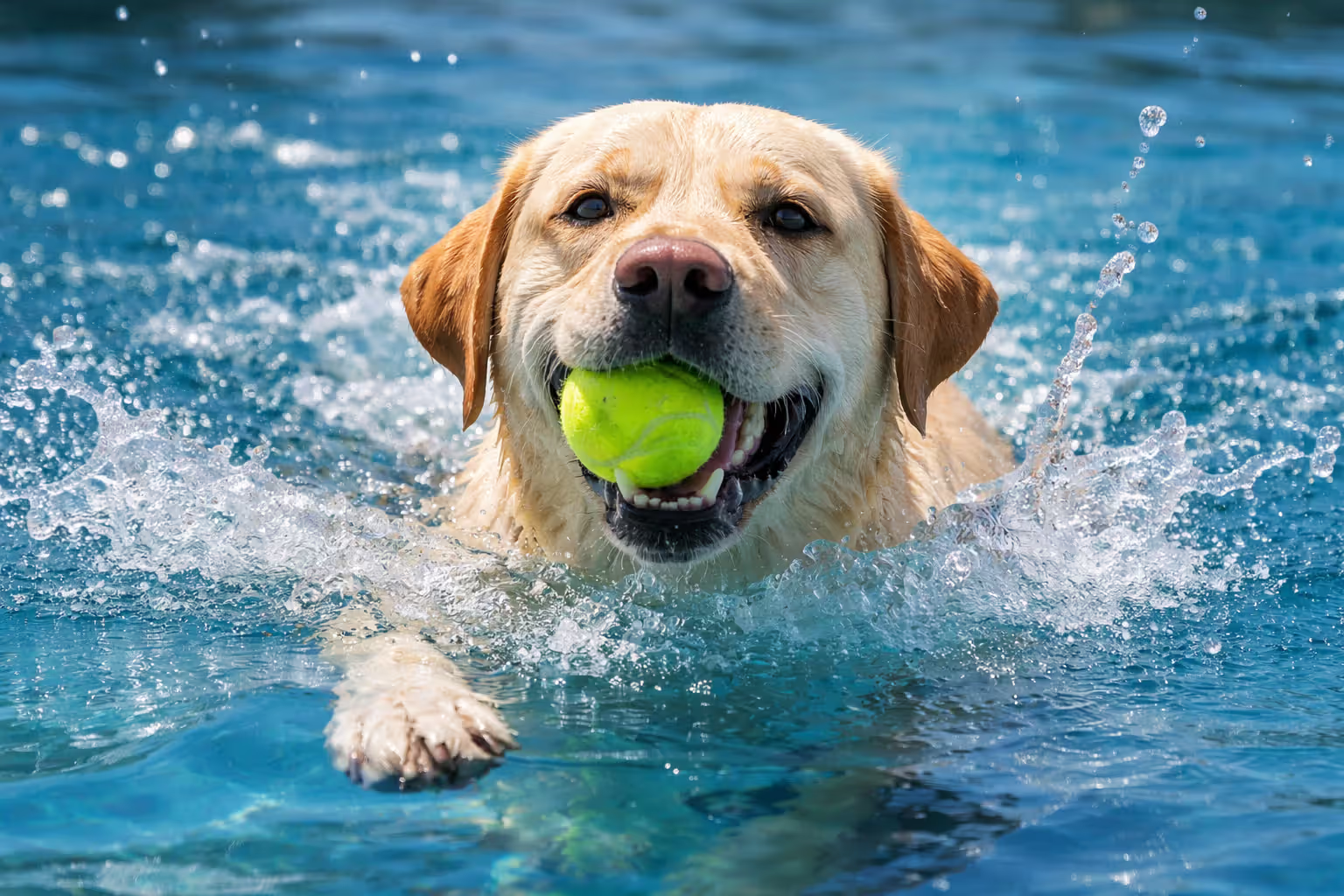
Adult Labs need legitimate exercise for 60-90 minutes every single day. Walking slowly around the block doesn't count. They need activities that genuinely raise their heart rate. Swimming delivers the best results—it's low-impact while burning massive energy. Fifteen minutes of swimming equals roughly forty-five minutes of walking in terms of energy expenditure.
Retrieving games tap directly into their genetic programming. Thirty focused minutes of fetch can tire out a Lab more completely than an hour-long walk because it engages both mind and body simultaneously. Rotate your toys to maintain interest—even Labs get bored fetching the same tennis ball for the hundredth time.
Mental challenges matter just as much as physical work. A Lab that runs five miles but gets zero mental stimulation will still destroy your couch cushions. Puzzle feeders, scent work, training sessions, and exposure to new environments all provide cognitive workout. Twenty minutes of focused training can exhaust a Lab as thoroughly as a long walk.
Under-exercised Labs show you immediately: chewed furniture, excavated yards, excessive barking, indoor zoomies. These aren't personality flaws—they're symptoms of unmet needs. On the flip side, over-exercising (especially puppies or during hot weather) causes limping, panting that continues hours after exercise, and reluctance to move the next day. Labs will push themselves past safe limits trying to please you, which means you need to enforce rest periods.
Author: Lucas Fairmont;
Source: alwaysonsalepetsupplies.com
Watch for limping, difficulty getting up after resting, or decreased enthusiasm for activities they normally love. These signal overuse injuries or developing arthritis. Adjust exercise as your Lab ages—a twelve-year-old still needs movement, just gentler swimming instead of intense fetch sessions.
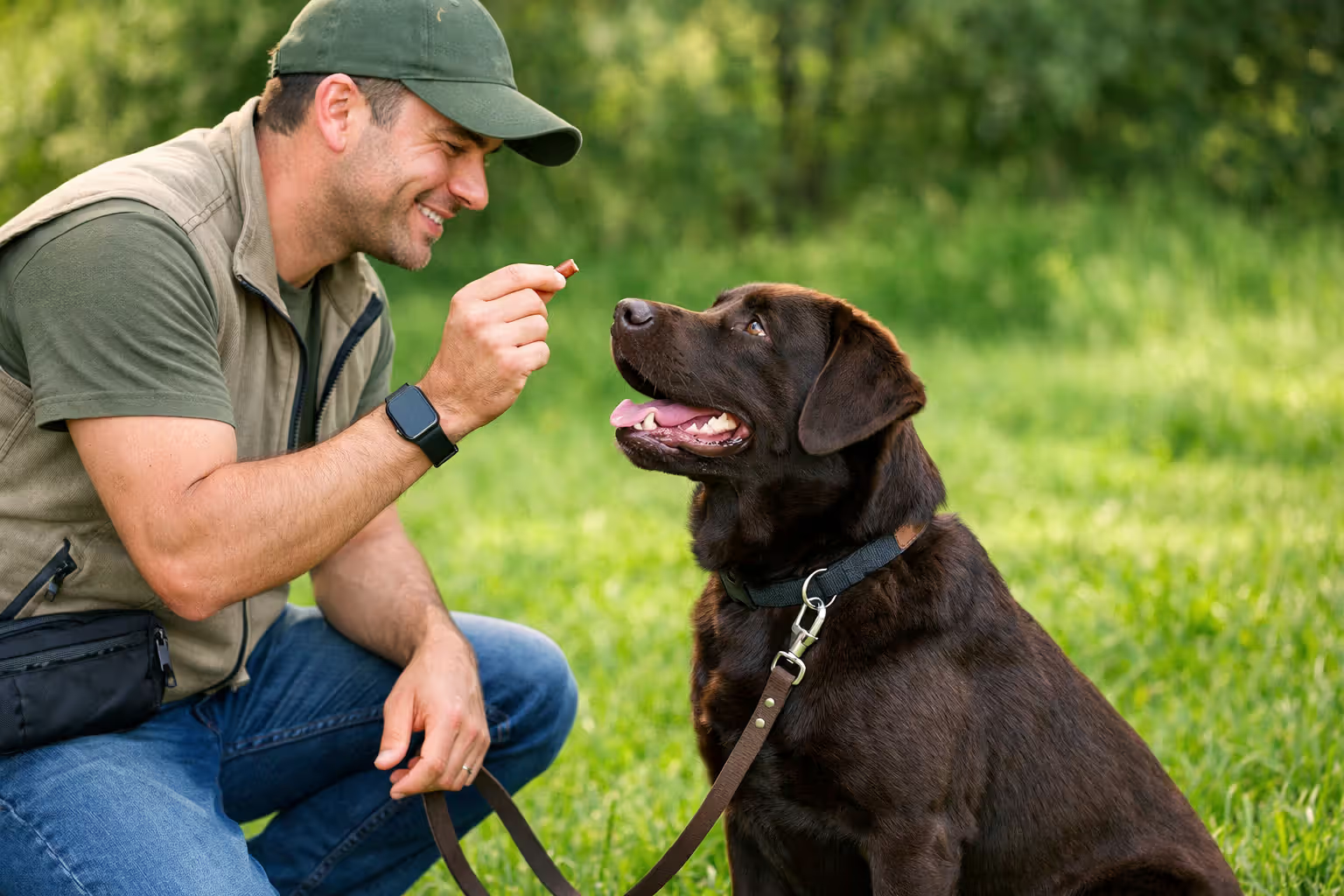
Labs rank among the easiest breeds to train for one simple reason: they're absolutely obsessed with food. This isn't just preference—it's a genuine training advantage. You can teach a Lab almost anything if you convince them it produces food. Their natural desire to please humans adds another layer of motivation, creating dogs that actively try to figure out what you want.
Start training the day your puppy comes home at eight weeks. That old "wait until they're older" advice wastes critical socialization windows. Focus initially on name recognition, crate comfort, and house training. Labs naturally prefer cleanliness—they instinctively avoid soiling their sleeping area, which makes crate training easier when you follow basic principles: the crate should allow standing, turning, and lying down comfortably, but not so much space they can eliminate in one corner and sleep in another.
House training works through proactive management, not hope. Take your puppy outside immediately after waking, after eating, after playing, and every 2-3 hours between these events. Go outside with them—opening the door and hoping for the best doesn't work. When they eliminate outside, reward immediately with treats and enthusiastic praise. Indoor accidents happen when you miss their signals or wait too long between bathroom trips.
| Age Range | Training Priorities | Expected Achievements | Typical Struggles |
| 8-12 weeks | Name response, crate acceptance, house training basics, handling comfort | Turns head reliably to name, tolerates collar and leash, eliminates outside 70% of the time | Constant mouthing, attention span measured in seconds, frequent indoor accidents |
| 3-6 months | Sit, down, stay commands, recall, leash walking, socialization experiences | House trained reliably, walks with less pulling, obeys basic commands in quiet settings | Jumping on people constantly, intense mouthing during teething, selective hearing outside |
| 6-12 months | Impulse control, off-leash reliability foundation, more complex commands | Holds stay despite distractions, reliable recall with moderate distractions, mouthing stops | Testing boundaries constantly, adolescent independence streak, energy levels peak |
| 12-24 months | Command refinement, real-world application, specialized skills | Consistent obedience in high-distraction environments, trustworthy off-leash in safe areas | Lingering adolescent behaviors, strong distraction around strange dogs |
Jumping on people tops the behavioral complaint list. Labs jump because it gets them closer to faces and typically generates attention (even negative attention often reinforces it). The solution: withdraw all attention during jumping. Turn away, cross your arms, look up at the ceiling. The instant all four paws hit the ground, reward with attention and treats. Consistency is everything—one family member who pets the jumping dog undermines everyone else's work.
Author: Lucas Fairmont;
Source: alwaysonsalepetsupplies.com
Mouthing and nipping intensify during teething (3-6 months). Labs explore their world with their mouths, so they need lessons in bite inhibition. When teeth touch skin, yelp sharply and immediately stop interaction for 30 seconds. This mimics how littermates teach each other limits during play. Provide appropriate chew outlets—frozen Kongs, bully sticks, durable rubber toys satisfy their need to gnaw.
Counter-surfing persists because it works. A Lab who successfully steals a sandwich learns that countertops contain food. Prevention means removing temptation during the learning phase. Teaching "leave it" and "off" helps, but environmental management shapes behavior more effectively. A hungry Lab has terrible impulse control.
Socialization between 8-16 weeks establishes lifelong confidence. Expose your puppy to different floor surfaces, various sounds, people of different ages and appearances, other vaccinated dogs, car rides, and unfamiliar locations. Positive experiences during this window prevent fear and reactivity later. Puppy kindergarten classes offer controlled socialization plus foundational training.
You can say any foolish thing to a dog, and the dog will give you a look that says, ‘Wow, you’re right. I never would’ve thought of that.’
— Dave Barry
Adult Labs eat 2.5-3.5 cups of quality dog food daily, split into two meals. "Quality" means animal protein listed first, minimal fillers, and appropriate fat content (12-15% for adults). Cheap food proves economically foolish when your dog needs twice as much to meet nutritional needs and develops health problems from inferior ingredients.
Puppies need large-breed-specific formulas—regular puppy food contains too much calcium and calories, encouraging rapid growth that damages developing bones. Feed three to four times daily until six months, then switch to twice-daily feeding.
Measure food with actual measuring cups, not eyeballing or random scoops. A Lab carrying ten extra pounds didn't gain it overnight—it accumulated through an extra quarter-cup daily over months. Training treats and food rewards shouldn't exceed 10% of total daily calories. Those little training treats add up faster than you think.
Labs shed year-round, with dramatic coat drops during spring and fall. Weekly brushing with an undercoat rake pulls loose hair before it migrates to your furniture. When heavy shedding hits, you'll need daily brushing sessions. Bathe every 6-8 weeks to maintain cleanliness without stripping the natural oils that weatherproof their coat. Labs have water-resistant coats—frequent bathing removes the oils providing this protection.
Nail trimming every 2-3 weeks prevents overgrowth that changes their gait. When you hear clicking on hard floors, the nails are too long. Most Labs tolerate rotary grinders better than clippers—the gradual filing feels less threatening than sudden clipper pressure.
Check and clean ears weekly. Those folded ear flaps trap moisture inside the canal, creating perfect conditions for infections. When ears smell yeasty or look red and inflamed, see your vet—ear infections cause serious pain and won't resolve without treatment. After swimming, dry ears thoroughly with soft cloth.
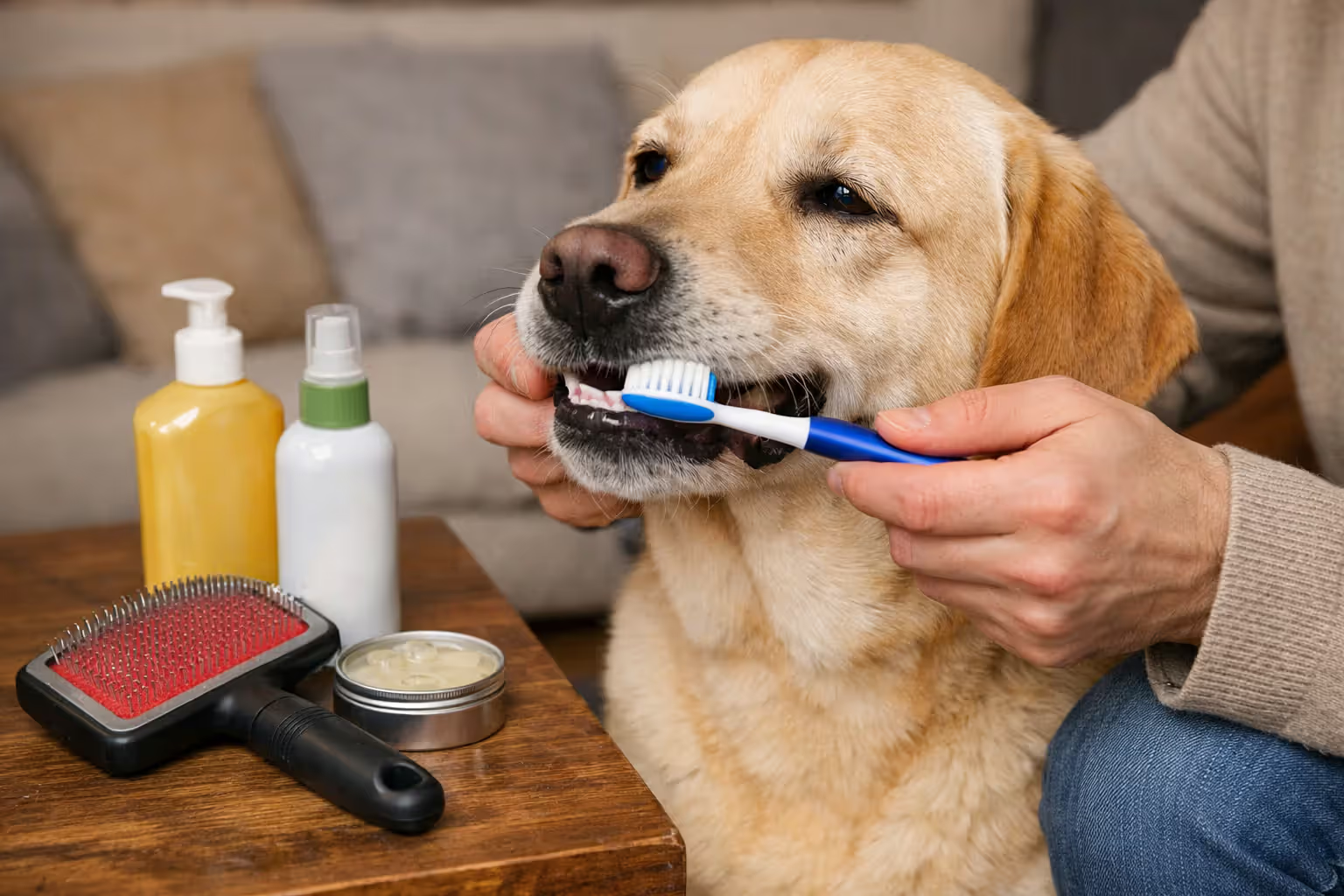
Dental care prevents periodontal disease that affects 80% of dogs by age three. Daily brushing with dog toothpaste works best; three times weekly is acceptable. Dental chews and water additives help but can't replace actual brushing. Professional cleanings every 1-2 years remove tartar buildup.
Annual costs for maintaining a healthy Lab typically run $1,500 to $2,500, covering food ($600-$800), routine vet care ($400-$600), flea/tick/heartworm prevention ($200-$300), grooming supplies ($100-$150), and toys plus accessories ($200-$300). Emergency vet visits, professional training, and boarding increase this baseline. Pet insurance ($30-$60 monthly) helps offset unexpected medical costs, though read policies carefully—many exclude hereditary conditions common in Labs.
Author: Lucas Fairmont;
Source: alwaysonsalepetsupplies.com
Choosing a Labrador Retriever means committing to a decade or longer with an energetic, social, food-obsessed companion. They aren't low-maintenance dogs—the exercise requirements, constant shedding, and training demands require significant time and consistency. But for families wanting a patient, adaptable dog that genuinely enjoys participating in daily life, few breeds perform as reliably as a properly-bred, correctly-raised Lab. The breed's three-decade reign as America's favorite didn't happen by accident. It happened because Labs consistently show up as the dogs families actually want sharing their homes, not just admire from a distance.
Discover everything about Shih Tzu dogs — from temperament and grooming to health issues and ownership costs. Find out if this charming breed suits your lifestyle.
Complete Rottweiler guide for US owners covering temperament, training tips, guard dog traits, health concerns, and care essentials.
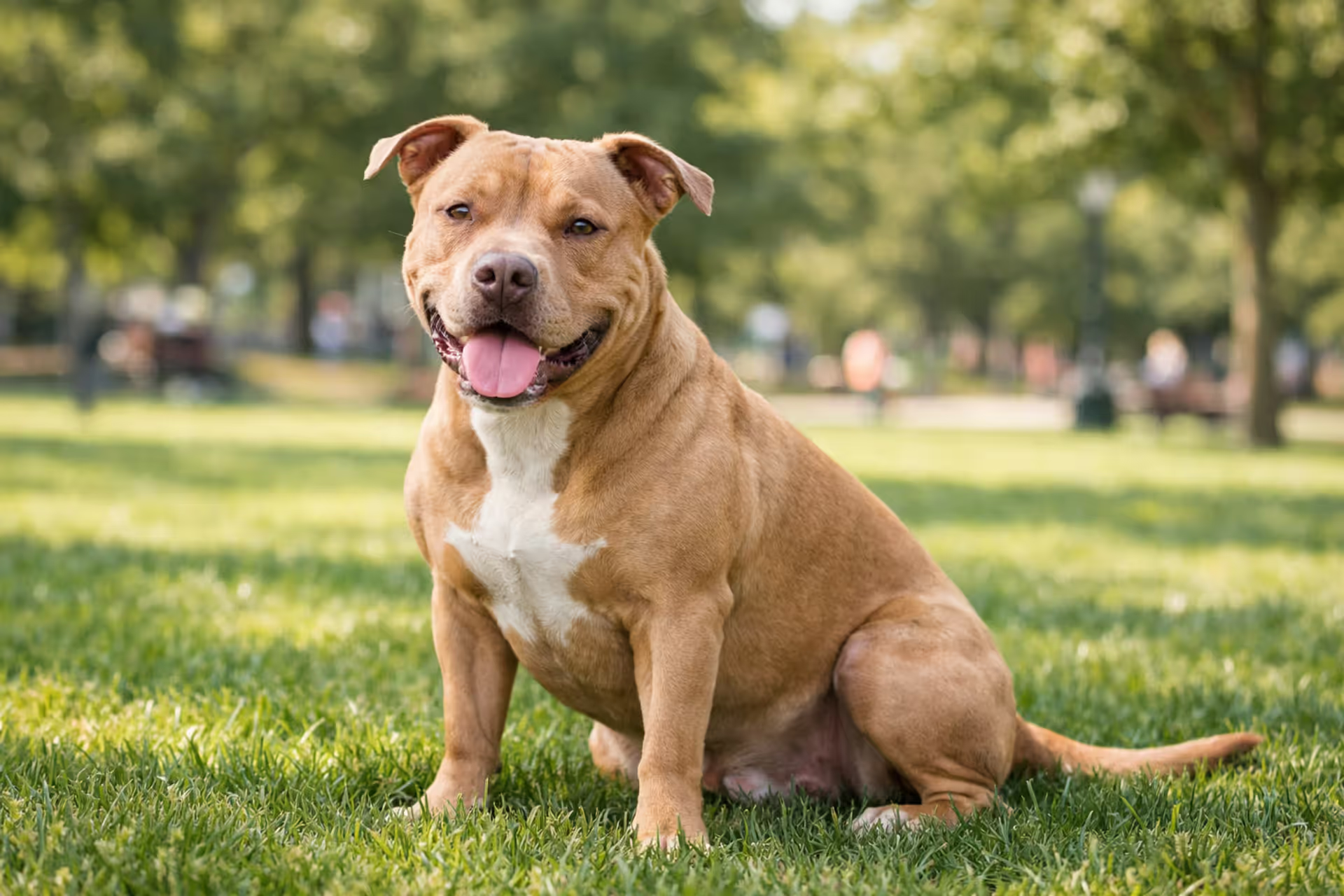
Learn key pitbull breed facts, temperament traits, training tips, and health concerns to decide if this loyal and energetic dog is the right fit for your home.
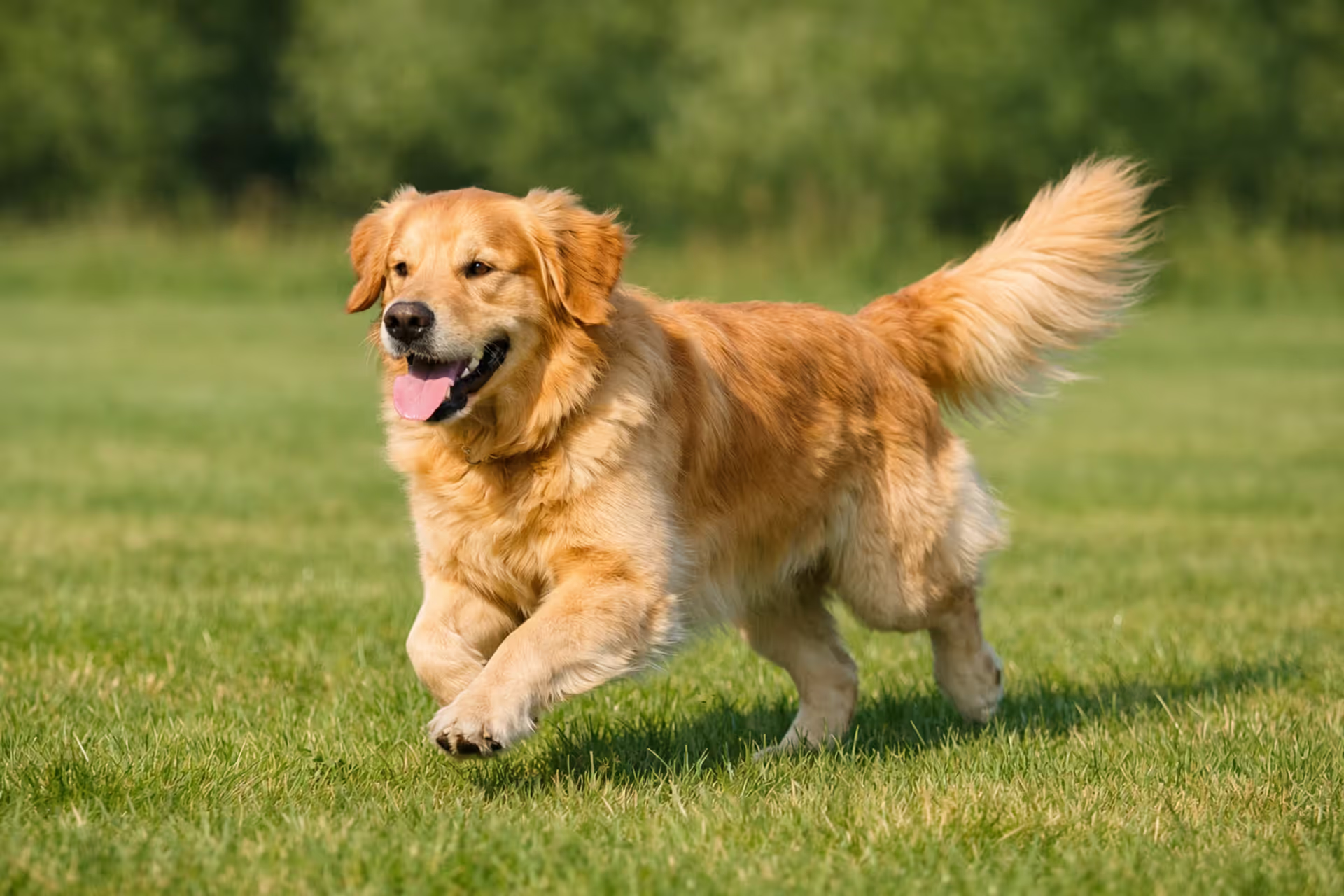
Discover everything about Golden Retrievers: their friendly temperament, training tips, health concerns, costs, and care needs. Find out if this beloved family dog is the perfect match for your lifestyle.
The content on this website is provided for general informational and educational purposes only. It is intended to offer guidance on dog breeds, behavior, health, care, and lifestyle, and should not be considered a substitute for professional veterinary advice, diagnosis, or treatment.
All information published on this site is based on general knowledge, widely accepted research, and practical experience, but individual dogs may differ in behavior, health conditions, and needs. Results and outcomes may vary depending on the dog, environment, and circumstances.
The website is not responsible for any errors or omissions, or for actions taken based on the information provided. For specific concerns regarding your dog’s health or behavior, always consult a qualified veterinarian or professional dog specialist.