

Shih Tzu Breed Guide for New Dog Owners
Discover everything about Shih Tzu dogs — from temperament and grooming to health issues and ownership costs. Find out if this charming breed suits your lifestyle.
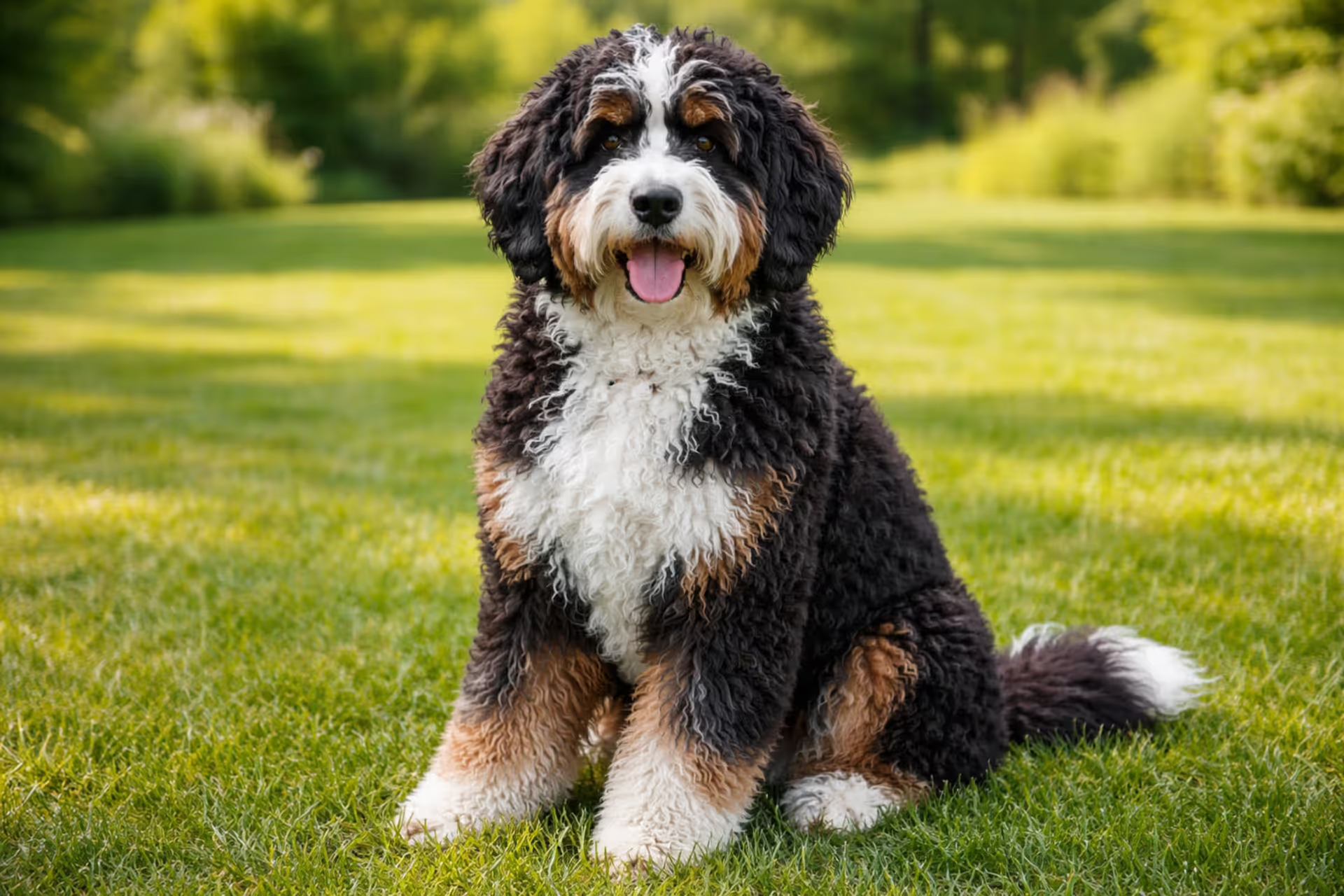
Adult tricolor Bernedoodle sitting on green grass in sunlight
Content
Picture a dog with the Bernese Mountain Dog's teddy-bear appearance and the Poodle's brains—that's what drew thousands of families to Bernedoodles over the past decade. But here's what nobody mentions in those Instagram posts: you'll spend more time brushing this dog than you ever imagined, and your grooming bills might rival your car payment. Let's cut through the hype and talk about what living with bernedoodles actually looks like.
Around 2003, a Canadian breeder named Sherry Rupke started deliberately crossing Bernese Mountain Dogs with Poodles. Her goal? Create a family dog that wouldn't coat your furniture in hair the way purebred Bernese do. The Bernedoodle breed wasn't an accidental "oops" litter—breeders specifically wanted the Bernese personality in a package that wouldn't trigger allergies (or at least, not as badly).
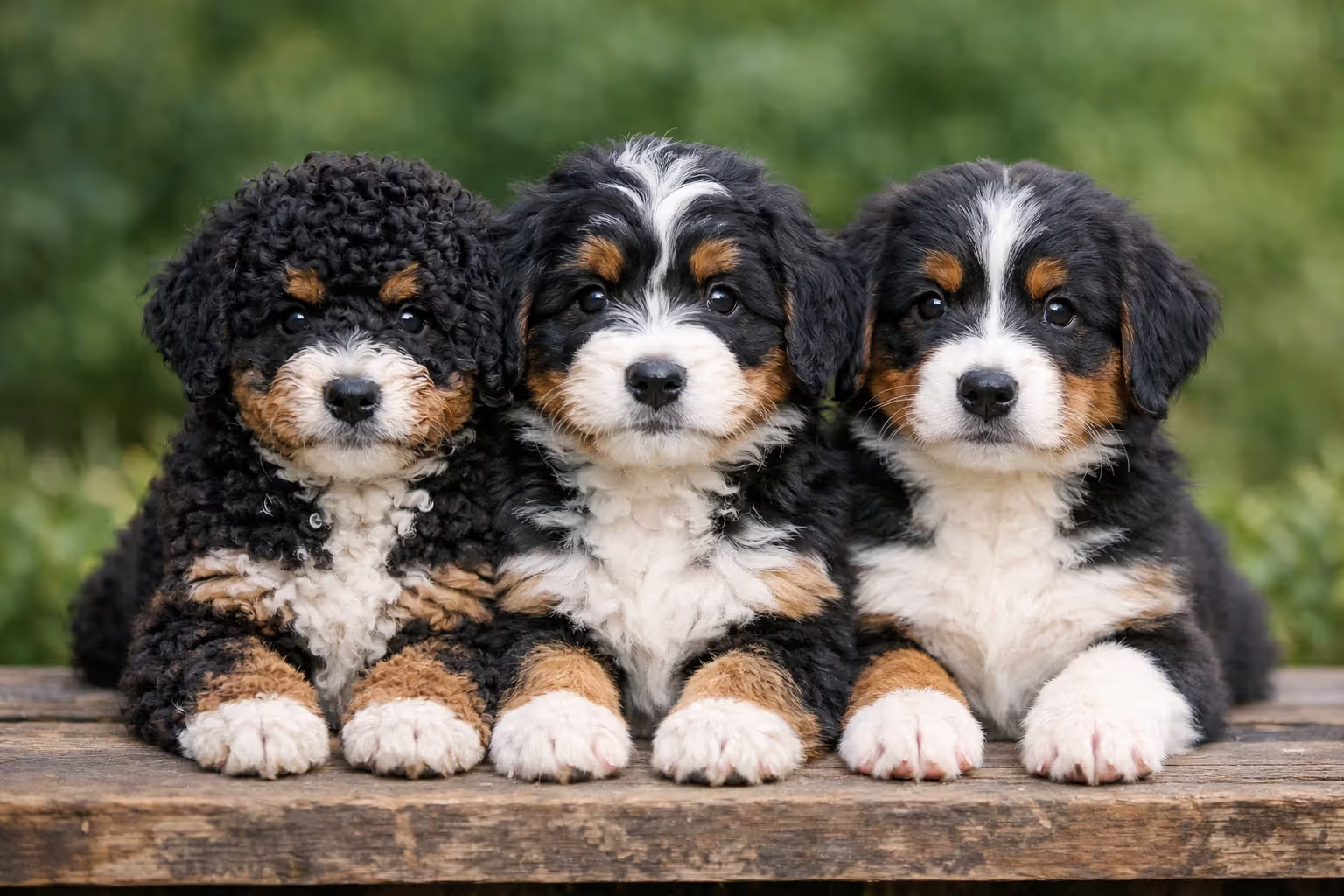
Here's where genetics gets interesting. When breeders talk about F1, F1B, or F2, they're describing how far removed the puppy is from the original purebred parents. An F1 Bernedoodle has one parent of each breed—50% Bernese, 50% Poodle. Open a litter of F1 puppies and you'll see wild variation. One might have tight curls, another could have an almost-straight coat, and they're siblings.
Want more predictable coat genetics? That's where F1B comes in. Breeders take an F1 Bernedoodle and cross it back with a purebred Poodle. Now you've got roughly three-quarters Poodle genetics, one-quarter Bernese. These dogs usually curl more, shed less, but they also look less like the stocky Bernese that many buyers fell in love with in the first place.
F2 Bernedoodles throw a curveball. Breeding two F1 Bernedoodles together should theoretically give you 50/50 genetics, but individual puppies can inherit wildly different combinations. You might get a pup that's genetically 70% Bernese or one that's 80% Poodle, all from the same litter. It's a genetic lottery.
What matters for your daily life? F1 dogs bring stronger genetics from mixing two distinct breeds—sometimes this means better health. Their coats range from wavy to straight, which changes how much hair ends up on your couch. F1B dogs work better if someone in your house sneezes around dogs, but you'll pay a groomer every six weeks for the rest of the dog's life. Ask yourself what you value more: predictability or variety.
Author: Lucas Fairmont;
Source: alwaysonsalepetsupplies.com
The Bernedoodle temperament skews toward velcro-dog territory. Get up to grab a drink, and your dog will follow. Move to another room, they're right behind you. This comes from the Bernese side—they're companion animals who genuinely can't understand why you'd want to be anywhere they're not. The Poodle genetics add a goofy, playful energy that persists long after puppyhood ends.
Most bernedoodles treat kids like their personal pack. They'll tolerate a toddler using them as a pillow and seem genuinely happy about it. One warning, though: Standard Bernedoodle puppies go through a clumsy phase between four and eight months where they haven't figured out their body yet. A 50-pound puppy bouncing toward your three-year-old in excitement can end with someone crying—and it won't be the dog.
Energy-wise, expect moderate to high demands. An hour of exercise daily is the baseline, not the goal. This can't just be a slow stroll where the dog sniffs every mailbox. We're talking activities that actually tire them out: fetch until they pant, swimming at the lake, hiking steep trails, or agility training. Skip this, and you'll come home to chewed baseboards or a hole in your yard. Smart dogs with pent-up energy get creative, and you won't like their ideas.
That intelligence cuts both ways. Teaching basic commands takes maybe two weeks if you're consistent. But they also learn the stuff you didn't mean to teach. Leave pizza on the coffee table once while you answer the door, and your Bernedoodle now knows that unattended food is fair game. They'll test that hypothesis every single time you're not watching.
You'll need to socialize these dogs early. The Bernese side can make them wary of strangers—not aggressive, just reserved. A puppy who meets dozens of different people, dogs, and situations before sixteen weeks typically grows into a confident adult. Wait too long, and you might have a dog who barks at everyone who visits or hides behind your legs at the vet.
Separation anxiety shows up often enough to plan for it. These aren't independent dogs who'll happily nap for eight hours while you're at work. Left alone too long, they'll howl, destroy things, or develop stress behaviors. Crate training helps, but it's not magic. If your household is empty from 8 AM to 6 PM five days a week, seriously consider whether you can meet this breed's need for companionship.
The dog was created specially for human beings in order that there should be somebody who loves us unconditionally.
— Thornton Wilder
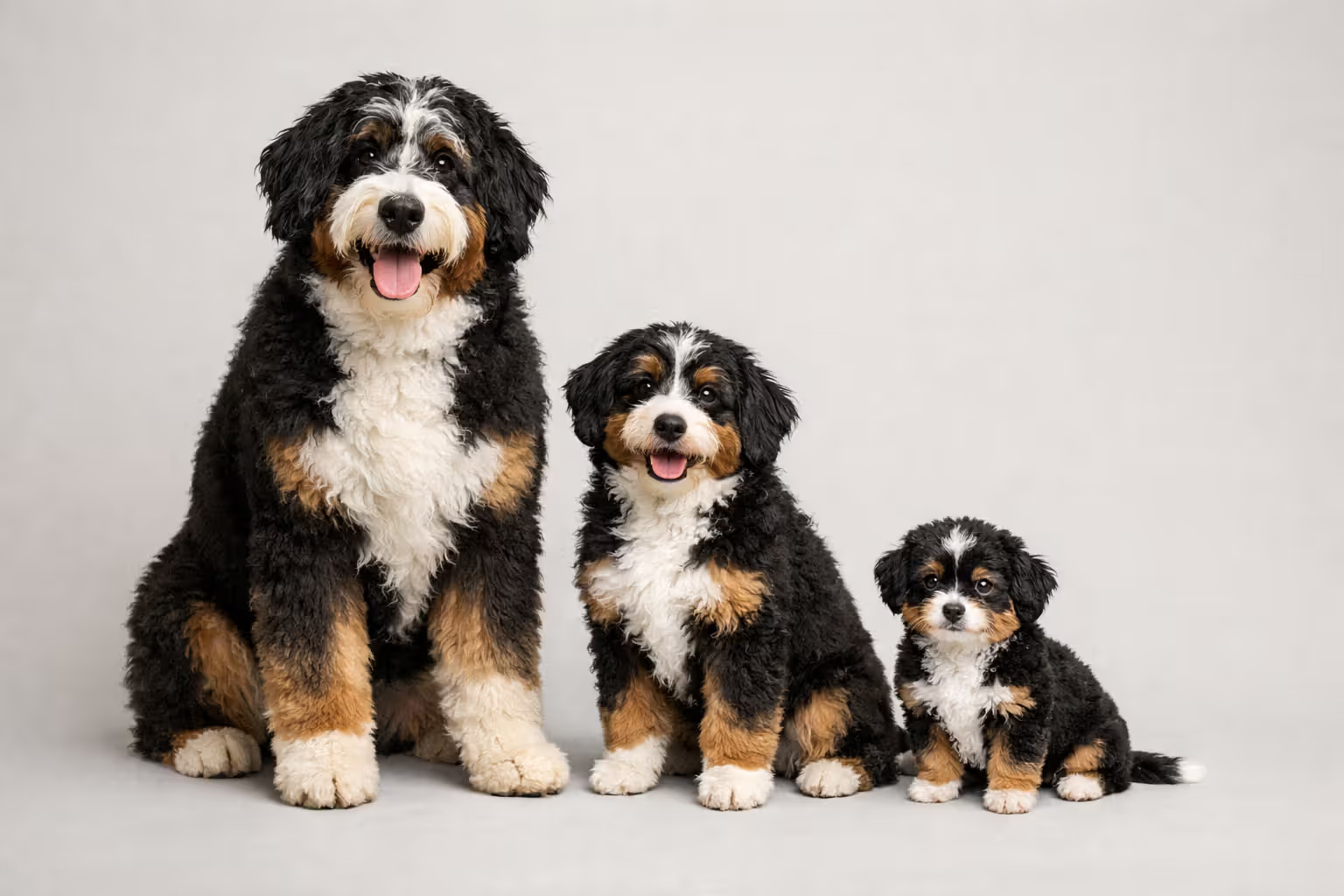
The Bernedoodle size question has a simple answer: whichever Poodle variety the breeder used determines the size you'll get. Cross a Bernese with a Standard Poodle, you're looking at a large dog. Use a Miniature Poodle, the offspring shrinks. Toy Poodles produce the smallest version, sometimes called Tiny Bernedoodles, though naming conventions vary by breeder.
Predicting exact adult size means consulting a crystal ball—genetics don't follow a simple formula. Take an F1 puppy whose parents weigh 90 and 60 pounds respectively. That pup might mature anywhere in that 30-pound range, or even outside it. Breeders make educated guesses based on previous litters and parent sizes, but surprises happen. Males usually outgrow their sisters by 10 to 20 pounds.
| Type | Weight Range | Height (at shoulder) | Poodle Parent Size | Best For |
| Standard Bernedoodle | 60–90 lbs | 23–29 inches | Standard Poodle | Families with houses and yards; hiking enthusiasts; people comfortable handling large, strong dogs |
| Miniature Bernedoodle | 25–50 lbs | 18–22 inches | Miniature Poodle | Condo or townhouse living; households with younger kids; owners wanting moderate exercise commitments |
| Toy Bernedoodle | 10–24 lbs | 12–17 inches | Toy Poodle | Apartment dwellers; retirees; travelers who want a dog they can carry; first-time owners intimidated by large breeds |
Author: Lucas Fairmont;
Source: alwaysonsalepetsupplies.com
Growth timelines shift based on size. Toy versions hit their full height around eight to ten months, then just add a bit more bulk until their first birthday. Miniatures take twelve to fourteen months. Standards? They keep growing until eighteen months minimum, sometimes stretching to two full years. Some males add muscle definition into year three. Don't overfeed during this phase—forcing rapid growth can damage developing joints, particularly in Standards where hip dysplasia is already a concern. Your vet will recommend portion sizes; follow them instead of keeping the bowl constantly full.
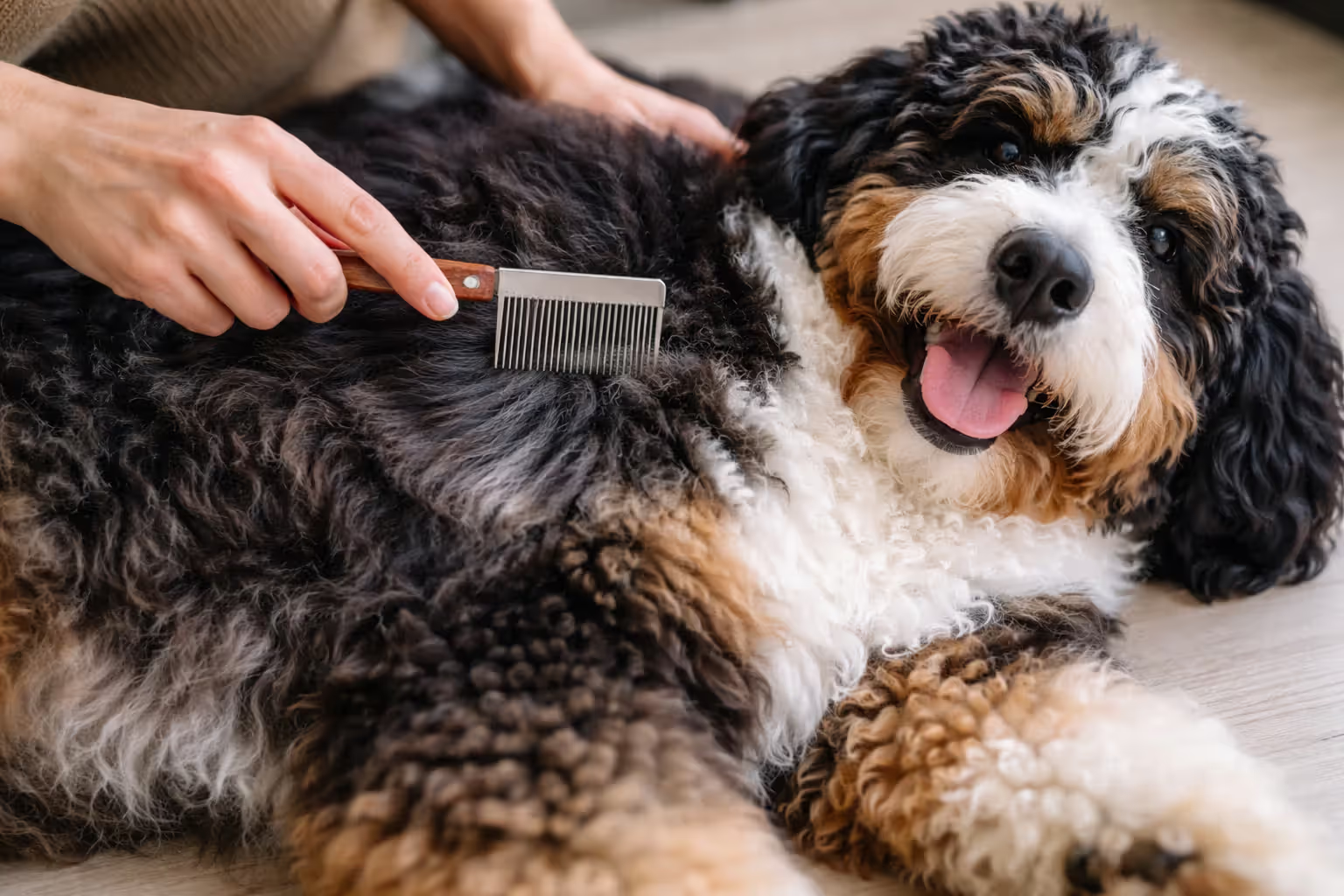
Let's be blunt: Bernedoodle grooming needs will consume more of your time and budget than you're imagining right now. Even low-shedding coats demand serious work. The exact time commitment depends on whether your dog got wavy, curly, or straight hair—curls need the most maintenance, straight coats shed more but tangle less.
You'll brush your Bernedoodle three to four times weekly at minimum. During spring and fall coat changes, make it daily. Get a slicker brush and a metal comb, and work in layers starting from the skin outward. Focus extra time on friction zones: behind the ears, under the collar, armpits, and the rear end where poop can get caught in the fur. Mats form fast in these spots, and once they're tight against skin, removing them hurts.
Some owners swear by five minutes of brushing daily instead of longer sessions twice a week. The logic makes sense—stay ahead of tangles rather than fighting established mats. Try both approaches and see which your dog tolerates better. Some Bernedoodles love being brushed and will bring you the brush; others act like you're torturing them.
Author: Lucas Fairmont;
Source: alwaysonsalepetsupplies.com
Calling any dog "hypoallergenic" is marketing, not science. Every dog produces dander, saliva proteins, and urine proteins that trigger allergies. What changes is how much fur gets scattered around your home. F1B Bernedoodles with tight Poodle curls drop minimal hair—it stays trapped in their coat, which is exactly why brushing matters so much. F1 dogs with wavier coats shed moderately. The ones with straighter coats approaching the Bernese look shed heavily twice yearly.
Got allergies? Spend real time with the actual dog you're considering, not just the breed in general. One person might react to a specific Bernedoodle while being fine with its littermate. Breeders promising "100% hypoallergenic" are either clueless or lying to make a sale.
Most owners split responsibilities: handle daily brushing at home, outsource everything else to professionals every six to eight weeks. Groomers manage coat trimming, nail clipping, ear cleaning, and sanitary trims around the rear that most owners would rather pay someone else to handle. Budget $80 to $150 per session for a Standard Bernedoodle, less for smaller sizes. In places like San Francisco or New York, expect $200 or more.
Between grooming appointments, you're on duty for brushing, wiping tear stains (common in lighter-colored dogs), and checking ears for redness or funky smells that signal infection. Here's something many buyers don't know: Poodle heritage means hair grows inside the ear canal, trapping moisture and creating a perfect environment for yeast or bacteria. Groomers should pluck or trim this hair—if yours doesn't, find a new groomer.
Some owners invest in clippers and learn to groom at home. You'll save thousands over the dog's lifetime, but there's a learning curve. Mistakes are obvious, and DIY grooming takes hours per session once you factor in prep, the actual trimming, cleanup, and bathing. If you're not confident or don't have time, stick with professionals for major grooming and handle maintenance brushing yourself.
Neglect isn't an option. Skipped grooming leads to painful mats that pull skin with every movement. Severe matting restricts circulation, traps moisture causing hot spots, and can hide injuries or parasites. When groomers encounter heavily matted dogs, they often have no choice but to shave down to skin—a drastic change if you loved your dog's fluffy look.
A dog doesn’t care if you’re rich or poor, educated or illiterate, clever or dull. Give him your heart and he will give you his.
— John Grogan
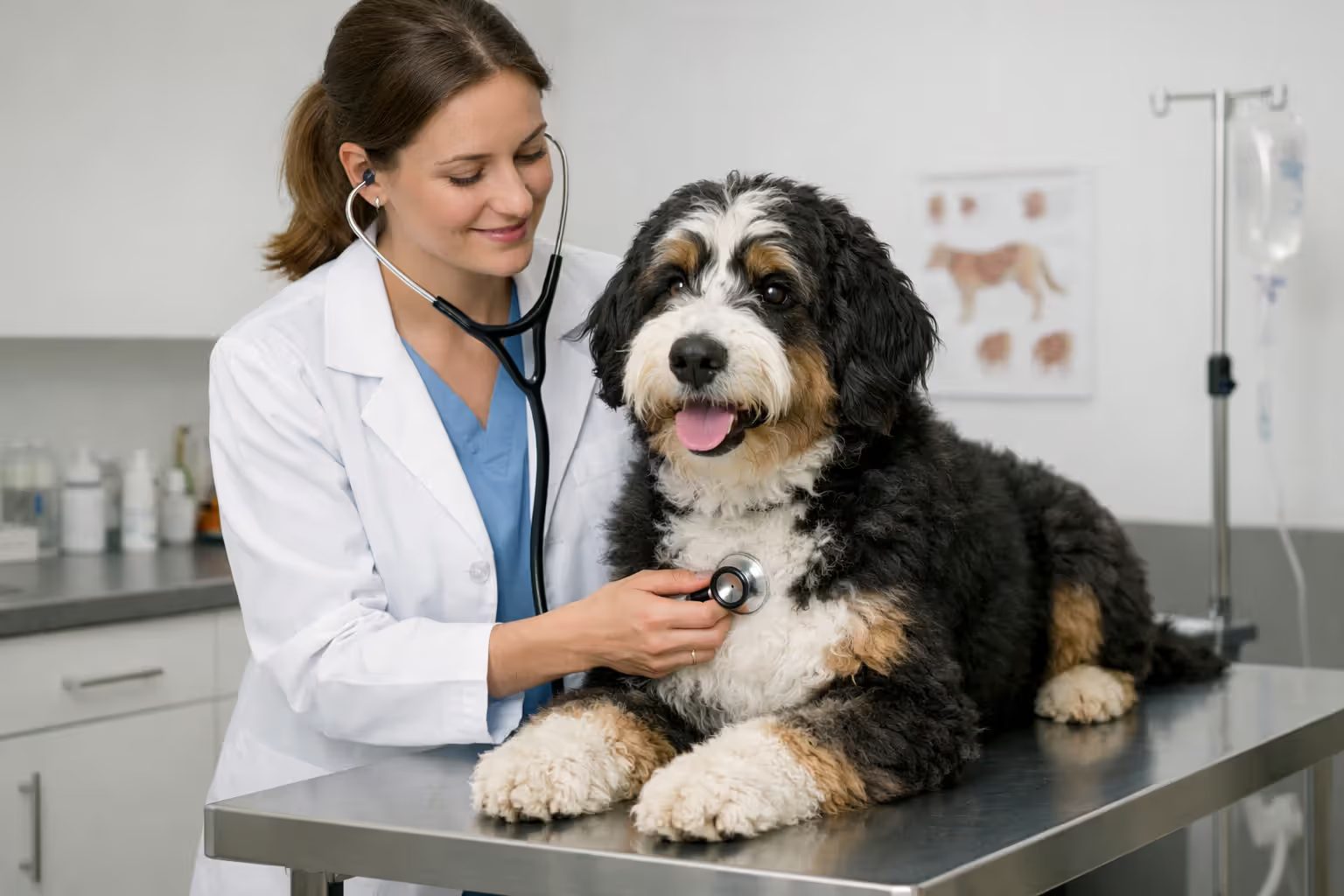
Bernedoodle health issues mirror problems from both parent breeds. Responsible breeders run genetic tests before breeding, but mixing breeds doesn't eliminate medical risks—it just changes which problems you might face.
Hip dysplasia ranks as the biggest concern. The hip joint forms improperly during growth, leading to arthritis, pain, and eventually mobility problems. Bernese Mountain Dogs have terrible hip dysplasia rates, and while Poodles do better, they're not immune. Breeders should show you OFA or PennHIP evaluations for both parents. "Good" scores are acceptable; "Excellent" scores reduce your risk. Elbow dysplasia follows similar patterns and deserves equal scrutiny.
Eye problems appear in both parent breeds. One condition causes gradual vision loss over time, eventually leading to total blindness—there's no cure, though dogs adapt surprisingly well. Cataracts cloud the lens, also impairing sight. Veterinary ophthalmologists can examine breeding dogs and issue clearance certificates. These tests don't guarantee your puppy's eyes will be perfect, but they dramatically improve the odds.
Bloat represents a medical emergency, not a chronic condition. The stomach fills with gas and can rotate, cutting off its own blood supply. Deep-chested dogs like Standard Bernedoodles face higher risk. Warning signs include trying to vomit but nothing coming up, restlessness, and a distended belly. Bloat demands immediate surgery or the dog dies. Reduce risk by feeding smaller meals twice daily instead of one large meal, using slow-feeder bowls, and keeping activity calm for an hour after eating.
Cancer kills Bernese Mountain Dogs at heartbreaking rates—many die before age eight from various cancers. Whether Bernedoodles inherit this predisposition remains unclear. The breed hasn't existed long enough for comprehensive studies. Some breeders believe mixing with Poodles offers protection through genetic diversity; others are more cautious. Anecdotal evidence suggests Bernedoodles might outlive purebred Bernese, but we don't have hard data yet.
Author: Lucas Fairmont;
Source: alwaysonsalepetsupplies.com
The hybrid vigor debate deserves mention without overselling it. When you mix breeds, you reduce chances of recessive diseases that need two copies of a bad gene to cause problems. But this doesn't protect against dominant genetic conditions, and it doesn't help when both parent breeds share the same issue—like hip dysplasia appearing in both Bernese and Poodles. Later generations lose most hybrid vigor advantages anyway.
Bernedoodles typically live twelve to eighteen years. Smaller sizes generally outlive larger ones—Standards might hit ten to twelve years, while Toys could reach fifteen. Compare this to purebred Bernese Mountain Dogs averaging seven to ten years, and the longevity difference becomes significant.
The average dog is a nicer person than the average person.
— Andy Rooney
Reputable breeders charge $2,500 to $5,000 for Bernedoodle puppies, with exceptional lines or unusual colors pushing prices even higher. F1B puppies often cost more because their coats are more predictable. Toy and Mini sizes sometimes exceed Standard prices due to breeding complications. Tri-color markings resembling the Bernese look command premium prices.
Puppies under $1,500 should raise red flags. Legitimate breeding costs serious money: health testing both parents runs $500 to $1,000 minimum, proper vet care for the litter adds hundreds more, quality food isn't cheap, and maintaining clean facilities with proper socialization takes time and resources. Cheap puppies mean corners were cut—skipped health tests, poor socialization, or outright puppy mill conditions. You'll pay the difference later in vet bills and behavior problems.
Author: Lucas Fairmont;
Source: alwaysonsalepetsupplies.com
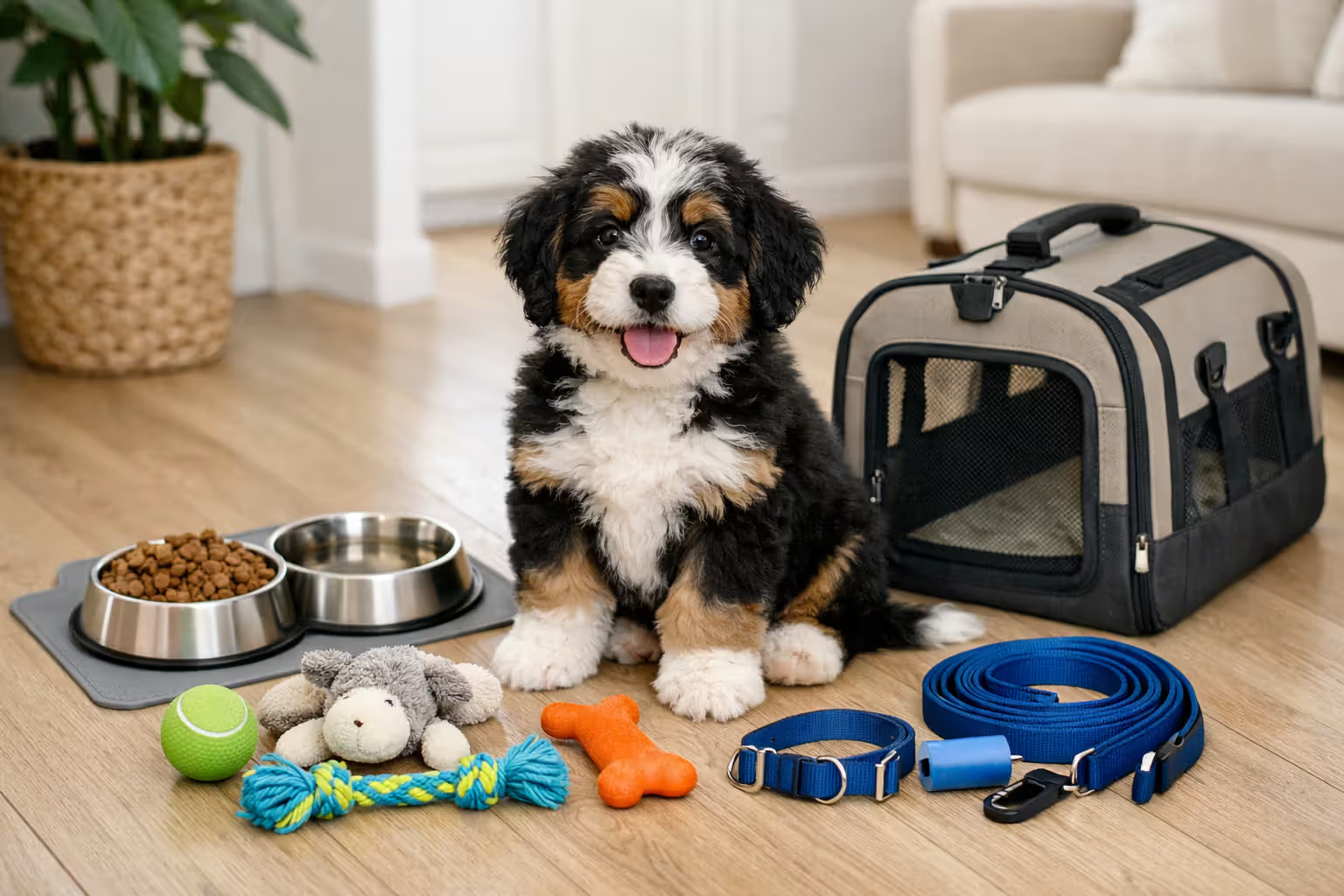
First-year expenses beyond the purchase price hit $2,000 to $3,500. Spaying or neutering costs $300 to $600. Initial vaccines and wellness visits run $200 to $300. You'll need supplies: crate, bed, leash, collar, bowls, toys—budget $300 to $500. Training classes add $150 to $300. Professional grooming every six to eight weeks totals $500 to $800 for the first year. Food varies by size; expect $400 to $800 annually for quality kibble.
Annual costs after year one settle around $1,500 to $2,500. Routine vet care including exams, vaccines, and heartworm prevention runs $400 to $600. Grooming remains constant at $800 to $1,500 yearly. Food continues at $400 to $800. Many Bernedoodle owners carry pet insurance given potential health issues—premiums run $400 to $800 annually depending on coverage and deductible.
Emergency vet care obliterates these estimates. Surgery for bloat costs $3,000 to $7,000. Hip replacement for severe dysplasia runs $5,000 to $8,000 per hip. Cancer treatment easily exceeds $10,000. Pet insurance or a dedicated savings account cushions these financial shocks, but you need to plan for them.
Bernedoodles work brilliantly for active households that can commit to consistent training, daily exercise, and serious grooming. Families with children, outdoor enthusiasts, and people wanting a devoted shadow often find these dogs match their lifestyle perfectly. The combination of affectionate temperament, impressive intelligence, and multiple size options creates flexibility that few other breeds offer.
But plenty of households should look elsewhere. The grooming demands alone—both time investment and financial cost—eliminate them for many people. Long work hours that leave the dog alone most days will likely trigger separation anxiety issues. Anyone seeking a low-maintenance or independent dog should cross Bernedoodles off their list immediately. First-time owners can absolutely succeed with this breed, but only if they're willing to invest in training classes and learn proper care techniques.
Health considerations require honest self-assessment. While Bernedoodles likely outlive purebred Bernese Mountain Dogs, they're not immune to serious conditions. Hip dysplasia, eye problems, and potential cancer risk mean you should prepare for veterinary expenses. Pet insurance or a dedicated emergency fund provides peace of mind when medical bills arrive.
Breeder selection matters more than almost any other decision in this process. Look for breeders who health-test both parents with documentation you can verify, raise puppies inside their homes with family interaction, provide extensive socialization experiences, and offer ongoing support after you take your puppy home. They should interrogate you as thoroughly as you question them—quality breeders care where their puppies go and will refuse homes that aren't suitable. Run from breeders who always have puppies available, produce multiple designer breeds, or can't produce health clearances on demand.
The breed continues evolving. As more multi-generational lines mature, we'll gather better data on health patterns and temperament consistency. Right now, expect variation and be ready to love the individual dog you get, even if they don't perfectly match every expectation you had. With appropriate care, training, and attention to their substantial needs, a Bernedoodle can become a cherished family member for many years.
Discover everything about Shih Tzu dogs — from temperament and grooming to health issues and ownership costs. Find out if this charming breed suits your lifestyle.
Complete Rottweiler guide for US owners covering temperament, training tips, guard dog traits, health concerns, and care essentials.
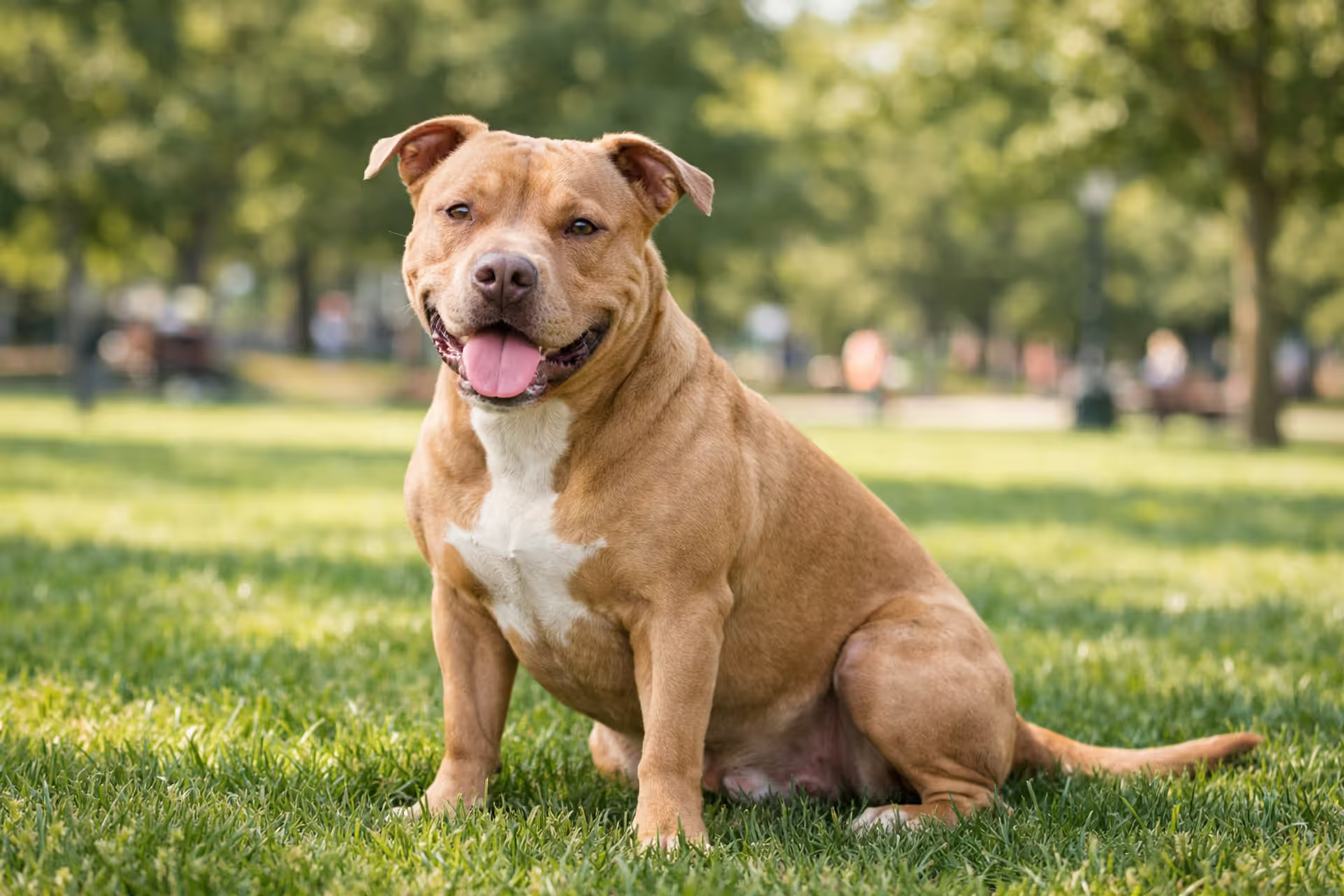
Learn key pitbull breed facts, temperament traits, training tips, and health concerns to decide if this loyal and energetic dog is the right fit for your home.
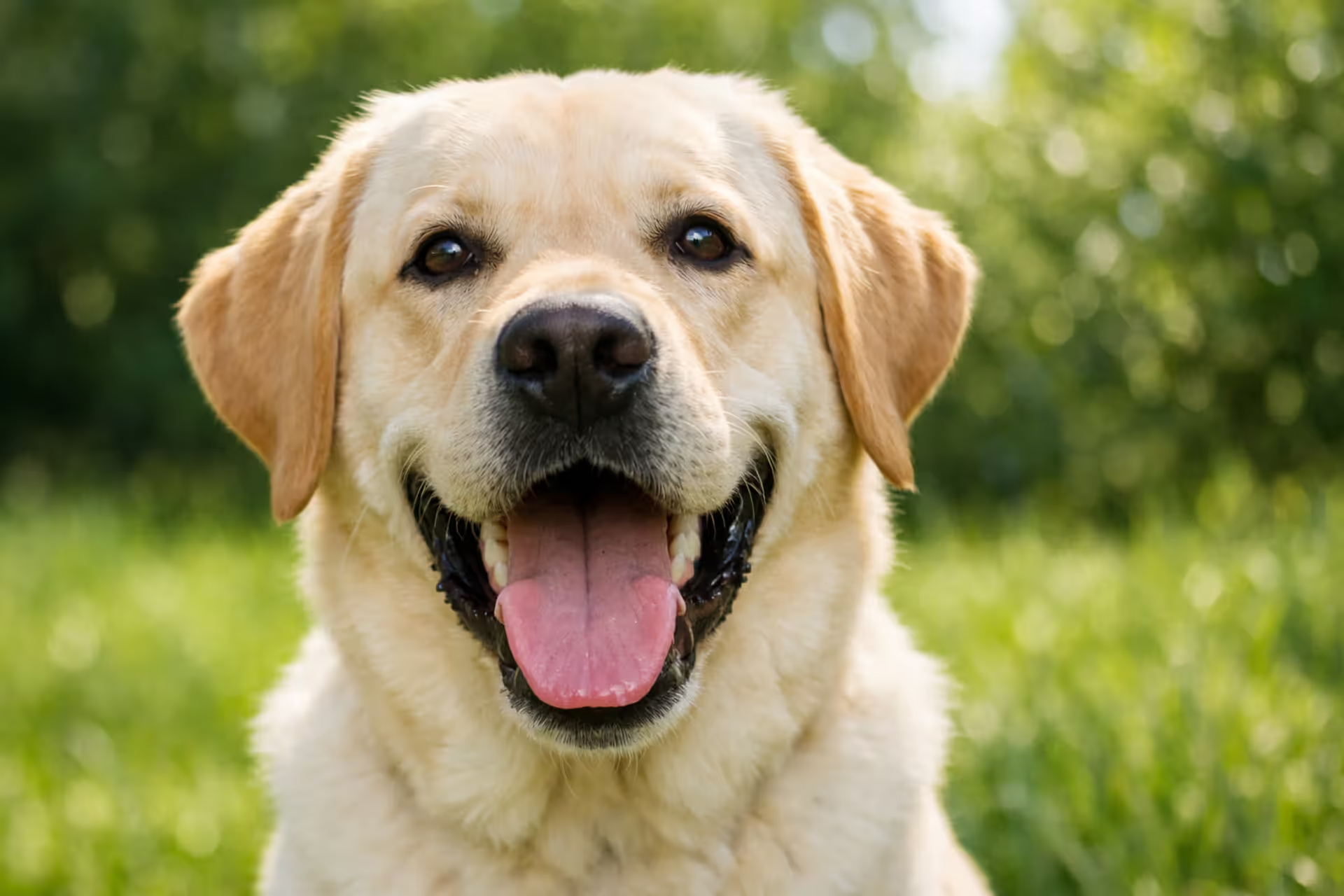
Complete Labrador Retriever guide covering training, health, exercise, and daily care tips. Find out if this friendly and loyal breed is the right fit for your family.
The content on this website is provided for general informational and educational purposes only. It is intended to offer guidance on dog breeds, behavior, health, care, and lifestyle, and should not be considered a substitute for professional veterinary advice, diagnosis, or treatment.
All information published on this site is based on general knowledge, widely accepted research, and practical experience, but individual dogs may differ in behavior, health conditions, and needs. Results and outcomes may vary depending on the dog, environment, and circumstances.
The website is not responsible for any errors or omissions, or for actions taken based on the information provided. For specific concerns regarding your dog’s health or behavior, always consult a qualified veterinarian or professional dog specialist.