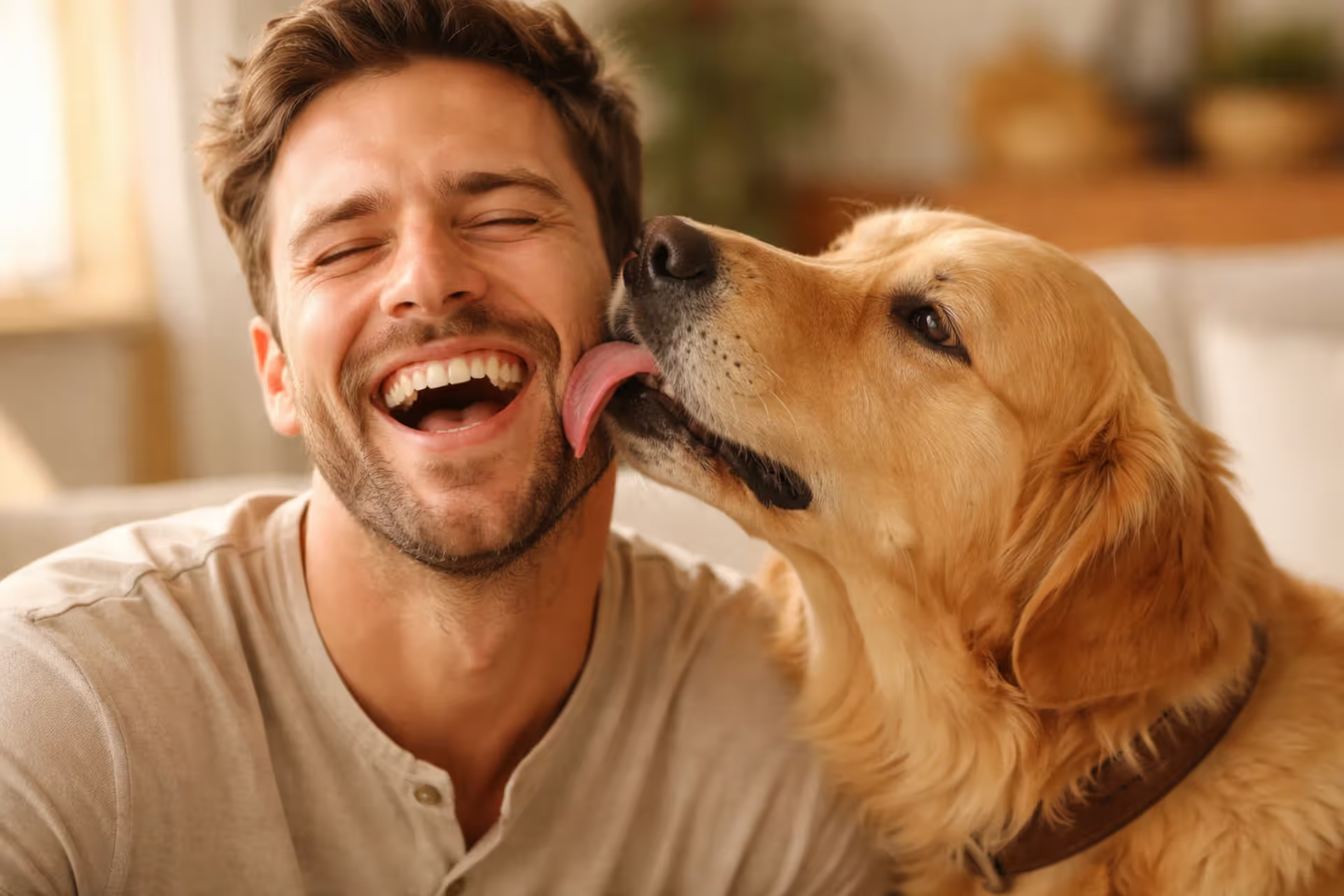
That wet tongue hits your cheek before you've even set down your keys. Or maybe you're lying in bed, trying to sleep in on Saturday, when—surprise—your dog's decided your nose needs a thorough cleaning. If you've ever wondered what's actually going through your dog's mind during these slobbery encounters, you're not alone. Most dog owners tolerate face licking without really understanding it. But here's the thing: this behavior tells you a lot about what your dog's feeling, what they need, and sometimes whether there's a health concern you shouldn't ignore.
The Science Behind Face Licking in Dogs
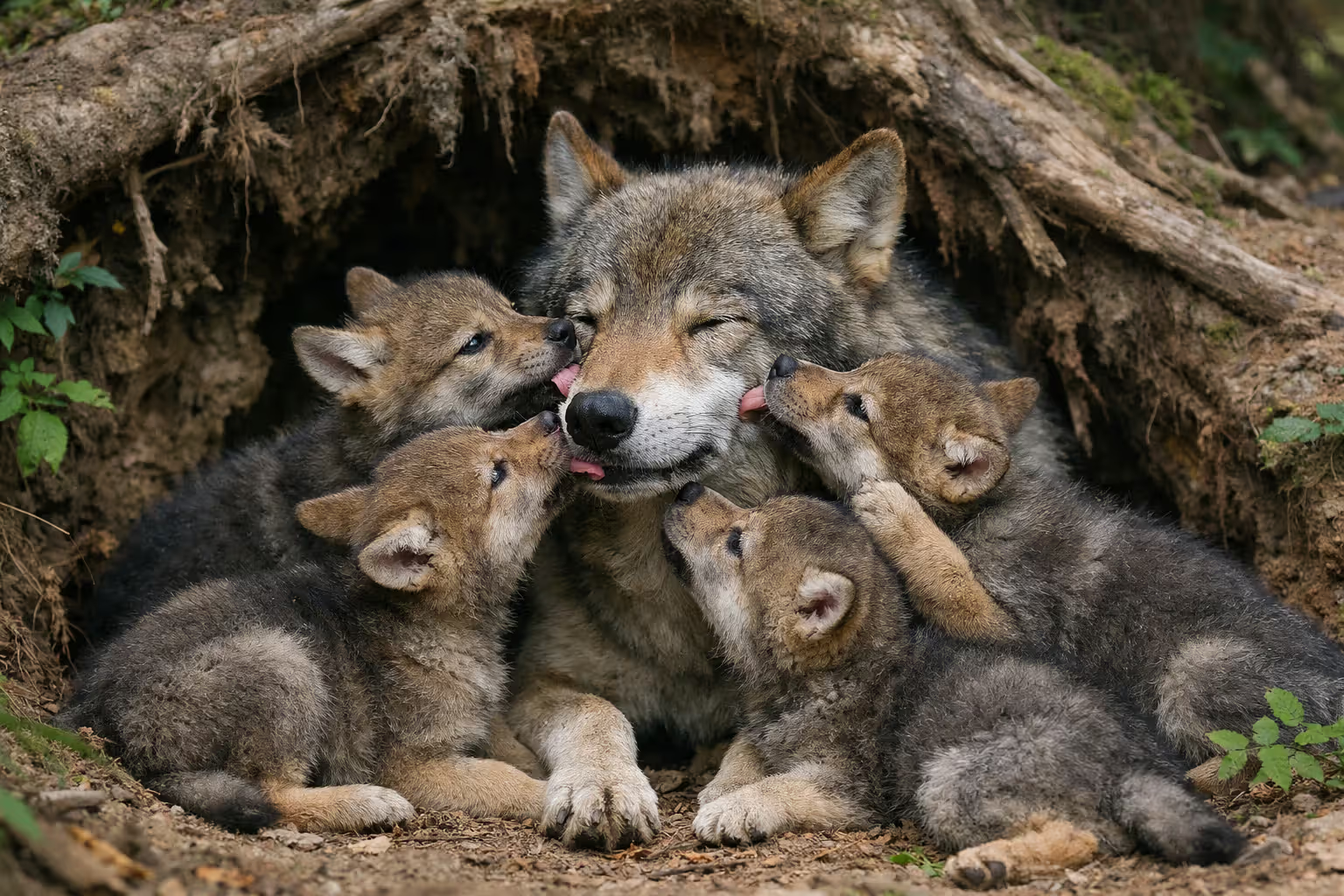
Look back at wolves, and you'll find the blueprint for this behavior. When wolf pups spot adults returning from a hunt, they frantically lick at the older wolves' mouths. This isn't just a greeting—it actually makes the adults regurgitate meat they've carried back. Gross for us, but for wolf pups too young to join the hunt, it's dinner. Your Labradoodle obviously doesn't need you to regurgitate your lunch, but that ancient wiring still exists in their brain.
Watch a litter of puppies, and you'll notice they start licking their mom's face within the first week of life. During weaning, this licking prompts the mother dog to bring up partially digested food for them. Beyond the practical feeding aspect, puppies learn that licking equals safety, comfort, and connection with the most important figure in their world. Fast forward to adulthood, and your dog applies that same association to you. They're essentially treating you like pack family.
Here's where biology gets interesting. Dogs have about 220 million scent receptors packed into their noses—we humans have roughly 5 million. Their taste and smell systems work together in ways ours don't. When your dog licks your face, they're not just tasting yesterday's pizza. They're analyzing the salt concentration in your sweat, detecting stress hormones in your skin secretions, and reading chemical signals that tell them about your emotional state and physical health.
Author: Lucas Fairmont;
Source: alwaysonsalepetsupplies.com
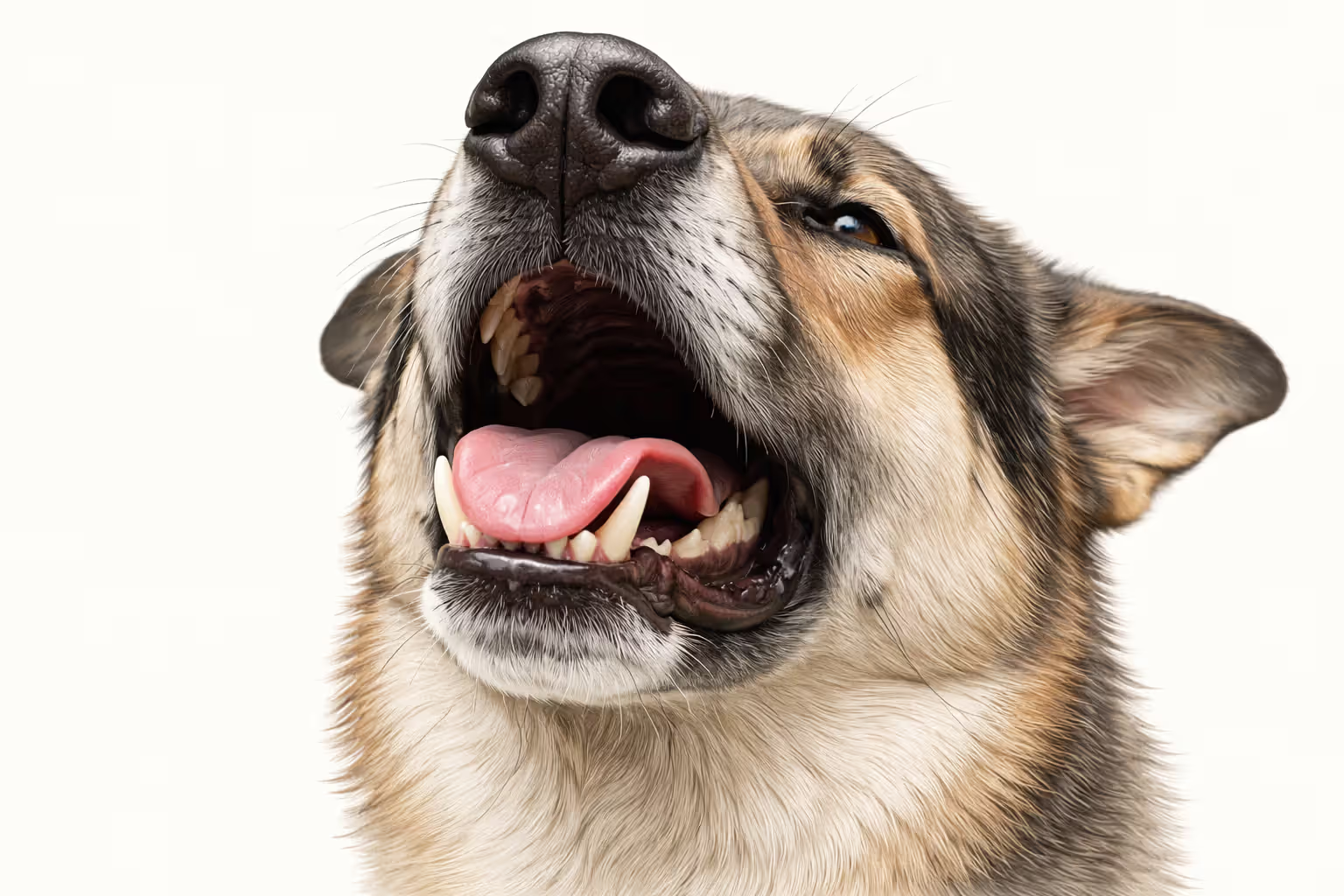
Dogs also have this specialized organ called the vomeronasal organ (you might see it called Jacobson's organ). It sits in the roof of their mouth and processes chemical information that regular smelling can't detect. Licking transfers these chemical compounds directly to this organ. That's why dogs sometimes lick, then pull back with their mouth slightly open—they're processing the data. It's like they're running a diagnostic test on you every time they get their tongue on your face.
The dog has got more fun out of Man than Man has got out of the dog, for the clearly demonstrable reason that Man is the more laughable of the two animals
— James Thurber
6 Reasons Dogs Lick Human Faces
Showing Affection and Bonding
When dogs lick your face, both of you experience an oxytocin surge. That's the same hormone that floods new mothers' brains when they look at their babies, or that makes you feel all warm and fuzzy when you hug someone you love. This chemical reaction actually strengthens the bond between you and your dog, creating a reinforcing cycle. Your dog licks you, feels good, notices you respond positively, and wants to do it again.
You can usually tell affection-motivated licking from other types by reading your dog's body language. Their whole body looks relaxed—soft eyes, gently wagging tail (not that frantic, high-speed wag), maybe leaning against you. The licking itself tends to be slower and gentler. These dogs often combine face licking with other bonding behaviors: they'll follow you from room to room, rest their head on your knee, or position themselves where they can maintain physical contact with you.
The world would be a nicer place if everyone had the ability to love as unconditionally as a dog
— M.K. Clinton
Seeking Attention or Food
Let's be honest: dogs are smart, and they've figured out that licking your face gets results. Whether you laugh, say "no" in that high-pitched voice, physically push them away, or just look at them—congratulations, you've given them attention. Even negative attention counts as a win for many dogs. They're not thinking "oh, my human doesn't like this." They're thinking "great, I did a thing and got a response."
Food-seeking licking amps up after meals—yours, not theirs. Your dog can smell that burger you ate three hours ago. There's microscopic food residue around your mouth that you can't see or feel, but their nose knows it's there. Dogs who specifically target your face right after you eat or drink aren't necessarily showering you with love. They're investigating whether you've got anything worth sharing, and tapping into that ancestral instinct where licking an adult's muzzle meant "hey, I'm hungry, got any food for me?"
Gathering Information Through Taste and Smell
Your face functions as a chemical information billboard for your dog. The sweat glands concentrated on your forehead and around your mouth produce salt that dogs genuinely enjoy the taste of. But beyond the salty snack aspect, your skin secretions contain readable data about your stress levels, recent activities, hormonal changes, and general health status.
Some dogs increase face licking when their owners are pregnant—they're responding to hormonal shifts they can detect through taste and smell. Others lick more when you're sick, anxious, or going through major life changes like a new job or relationship. I've heard from numerous owners whose dogs started obsessively licking their faces or hands, only to discover later they had diabetes, infections, or other medical conditions. The dogs were picking up on biochemical changes.
Author: Lucas Fairmont;
Source: alwaysonsalepetsupplies.com
Stress Relief and Self-Soothing
Licking triggers endorphin release in dogs' brains—it literally makes them feel calmer. Think about humans who bite their nails, twirl their hair, or pace when nervous. Dogs lick. During thunderstorms, fireworks, or stressful vet visits, face licking often shifts from social behavior to coping mechanism. Your dog isn't necessarily seeking connection in that moment; they're trying to regulate their own anxiety.
Watch a stressed dog, and you'll often notice they lick whatever's available. If you're there, they'll lick your face or hands. If you're not around, they'll lick their paws, furniture, or even the floor. The repetitive motion combined with the familiar taste and smell of their favorite person provides comfort. It's essentially their version of stress fidgeting.
Learned Behavior From Positive Reinforcement
Every time face licking produces something your dog wants, you've just trained them to do it more. Puppies who get enthusiastic responses ("Oh, puppy kisses!") quickly learn this behavior works brilliantly for getting attention. The reinforcement doesn't have to be intentional on your part—it just has to be consistent from your dog's perspective.
Here's the tricky part: even pushing your dog away counts as reinforcement for many dogs. You touched them, made eye contact, and acknowledged their existence. Dogs who don't get enough attention throughout the day often prefer negative attention to being ignored. Laughing at persistent licking? That's approval in your dog's mind. Scolding them? Still interaction, still better than nothing. You might think you're discouraging the behavior, but your dog's getting exactly what they wanted.
Medical or Compulsive Reasons
Sometimes excessive face licking points to health problems. Dogs with gastrointestinal issues, nausea, dental disease, or oral pain may increase licking behaviors. It's like how humans with upset stomachs might pace or fidget—dogs lick. I've seen cases where dogs with mouth ulcers, broken teeth, or objects stuck in their gums developed sudden face-licking obsessions as they tried to find relief.
Compulsive disorders in dogs mirror human OCD. These dogs develop repetitive licking patterns that serve no obvious purpose and actually interfere with their quality of life. They'll lick faces, floors, walls, or their own bodies to the point where they can't engage in normal dog activities. The licking becomes the activity. These dogs often appear unable to stop even when redirected, and they may seem distressed if prevented from licking. This level of compulsive behavior needs veterinary evaluation—there might be a treatable medical cause, or your dog might benefit from anti-anxiety medication combined with behavior modification.
Should You Let Dogs Lick Your Face? The Real Health Story
Let's clear up a persistent myth: dog mouths aren't cleaner than human mouths. That's complete fiction. Dogs carry entirely different bacterial populations, some of which can cause infections in humans. Now, before you panic—the actual risk level depends heavily on your immune system, your dog's health, and where exactly the licking occurs.
If you're a healthy adult with unbroken skin, occasional dog face licking probably won't hurt you. Your skin acts as a pretty solid barrier against bacteria. But (and this is important) dogs' mouths can harbor some genuinely concerning pathogens: Capnocytophaga canimorsus, various Pasteurella species, Salmonella, certain E. coli strains, and parasites like Giardia. In healthy people with good immune systems, these rarely cause problems. But for vulnerable populations, the risk jumps significantly.
Small children under five, pregnant women, elderly folks, and anyone whose immune system isn't functioning normally should skip the face licks. Any break in your skin barrier—cuts, scrapes, eczema, acne, surgical wounds—creates an entry point for bacteria. Location matters too. Getting licked on your cheek is different from getting licked near your eyes, nose, or mouth. Mucous membranes absorb bacteria much more readily than intact skin on your face.
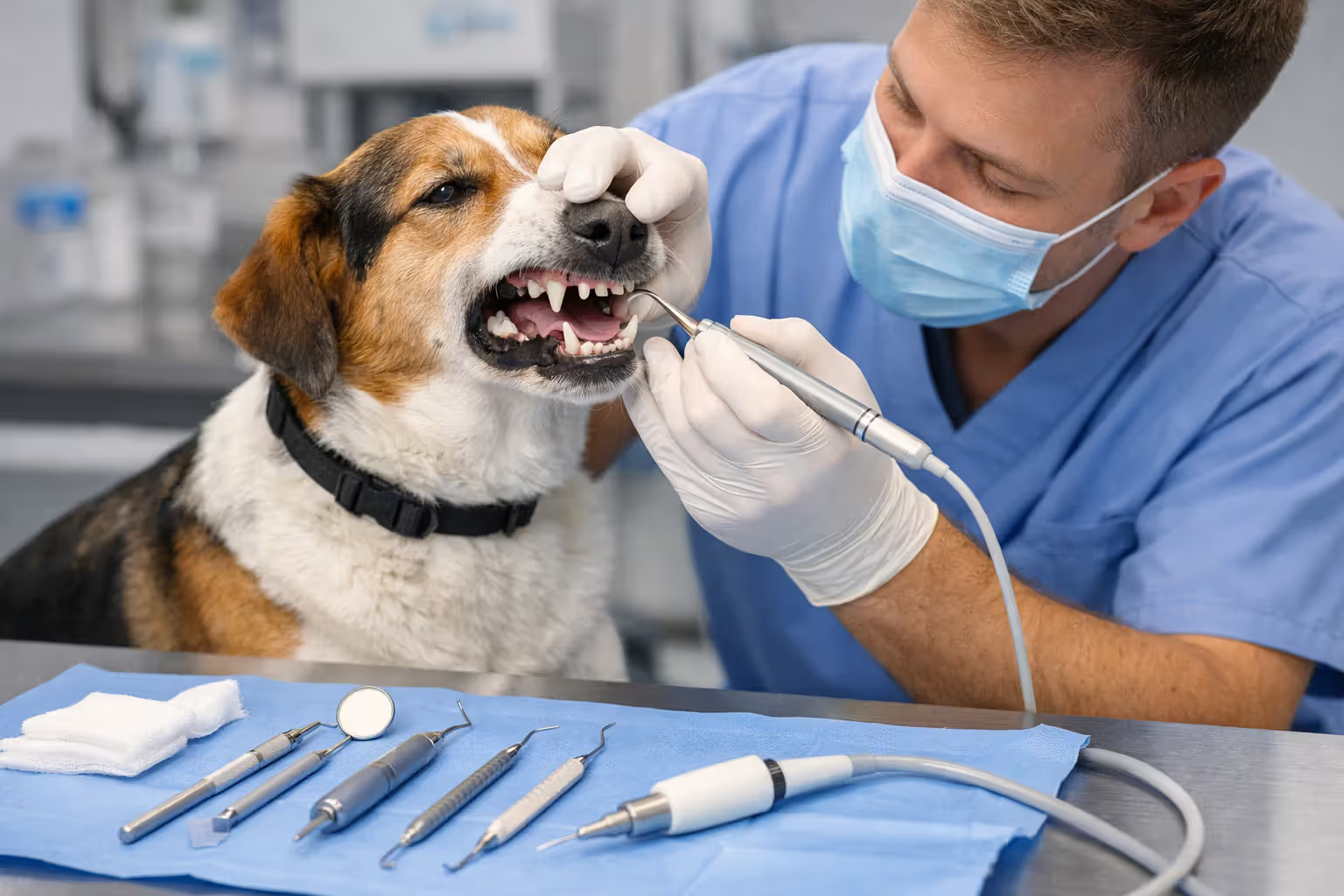
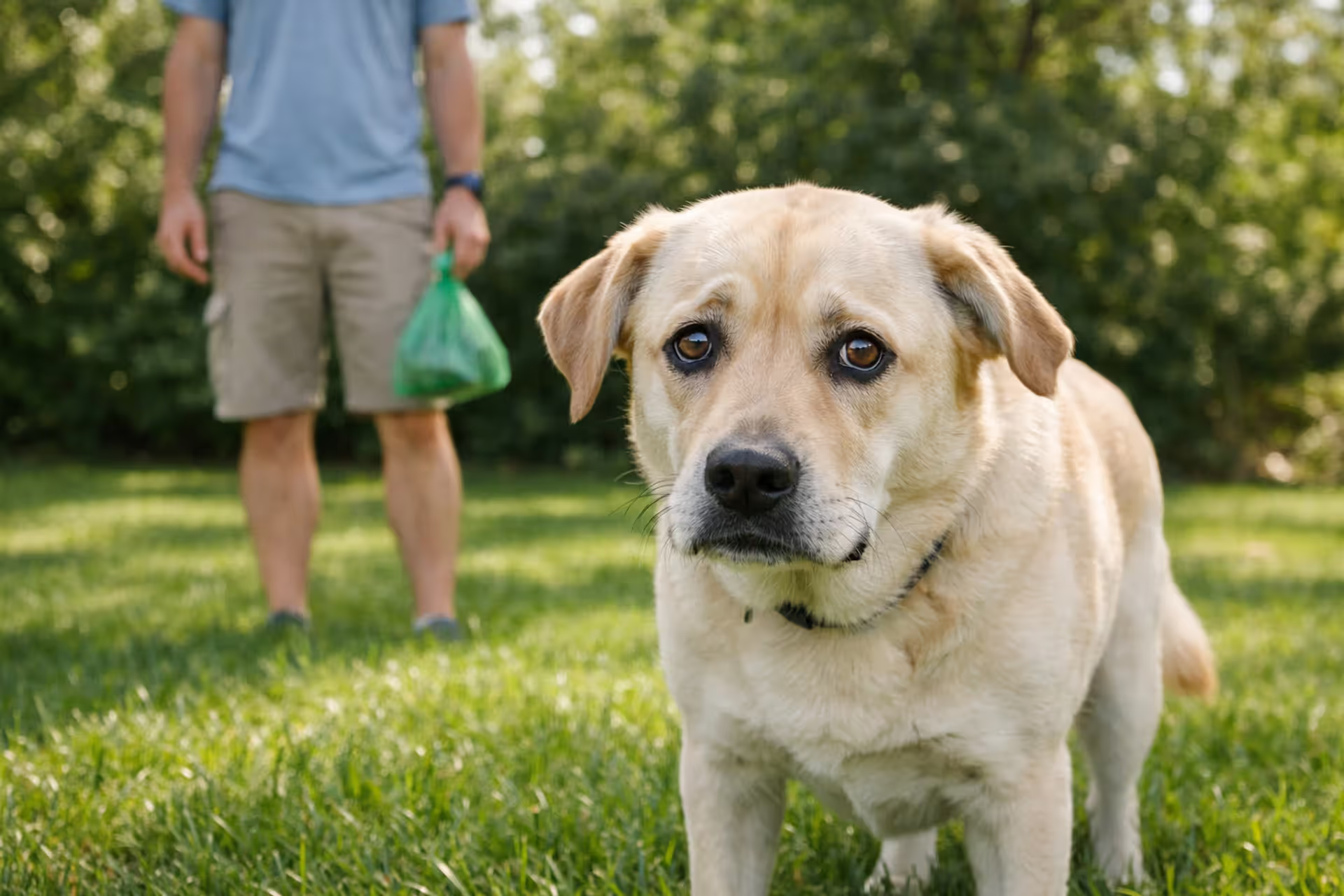
You can reduce risks through regular vet care. Dogs who receive routine deworming, stay current on vaccinations, and get professional dental cleanings carry fewer dangerous pathogens. Also—and I can't stress this enough—dogs who eat feces (their own or other animals'), scavenge dead animals, or get into garbage are walking petri dishes. If your dog has any of those habits, face licking should be off the table until you address the behavior.
Author: Lucas Fairmont;
Source: alwaysonsalepetsupplies.com
What Excessive Face Licking Really Means
Normal face licking happens during hellos, after you've been apart, or following meals. It lasts maybe 30 seconds to a minute, stops when you redirect your dog's attention, and doesn't prevent your dog from doing other activities. Excessive licking looks completely different: it continues despite repeated redirection attempts, goes on for many minutes at a time, or becomes so consuming that your dog can't eat, play, or rest normally.
Anxiety-driven licking typically comes packaged with other stress signals. The dog might be panting heavily (when they're not hot or exercised), pacing, whining, showing whale eye (where you can see the whites of their eyes), or displaying dilated pupils. Dogs with separation anxiety often engage in frantic face licking when owners come home, sometimes continuing until they've worked themselves into an almost frenzied state. These dogs struggle to self-regulate emotionally, and licking has become their primary—sometimes their only—coping tool.
Medical problems can also drive excessive licking. Nausea from gastrointestinal disease makes many dogs lick obsessively—not just faces, but floors, walls, furniture, basically any surface. This behavior might happen right before vomiting or persist as an ongoing symptom of chronic digestive issues. Neurological conditions sometimes create abnormal sensations that dogs try to relieve through repetitive licking. Senior dogs with cognitive dysfunction (basically doggy dementia) may develop licking compulsions as their brain function declines.
Watch for these red flags: licking that steadily increases in frequency over weeks or months, licking that happens regardless of situation or audience, and licking combined with self-injury (licking paws until they're raw and bleeding, creating hot spots on their body, or removing patches of fur). These patterns suggest a compulsive disorder that won't resolve without intervention. If your dog seems genuinely distressed when you prevent them from licking, or if they lick until they're physically exhausted, you need a veterinary behavioral assessment.
How to Manage or Redirect Face Licking Behavior
Training away unwanted face licking requires two things: consistency and an understanding of what's actually motivating your dog. Start by playing detective. Does your dog lick faces mainly when greeting you? After you eat? When storms are approaching? During stressful situations? Identifying the context helps you address the root cause instead of just trying to suppress the symptom.
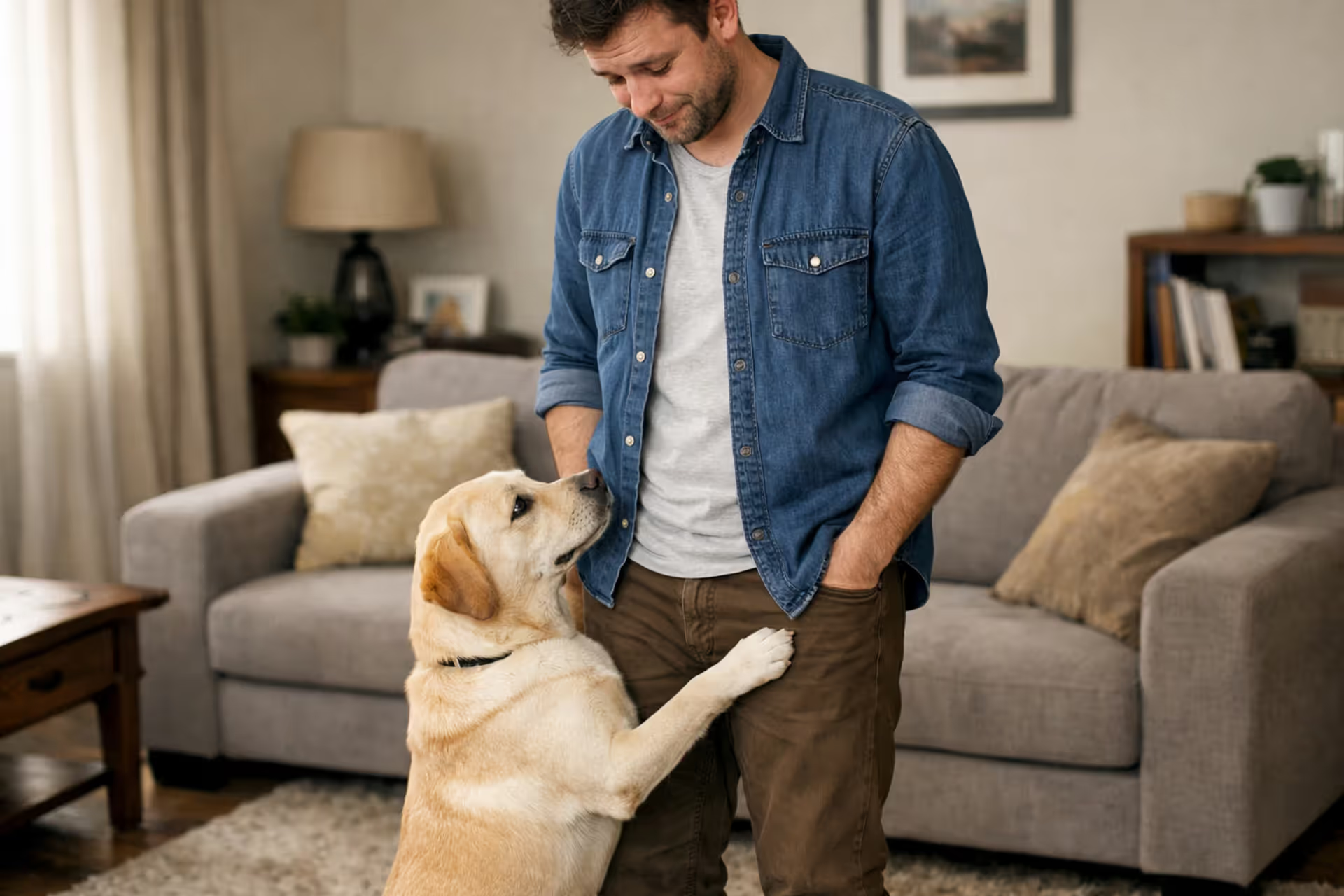
Teach a replacement greeting behavior. Instead of letting face licking be your dog's default greeting, train them to sit, offer a paw, grab a toy, or go to a mat when people arrive. Reward this new behavior immediately and generously. The key is catching your dog before the face licking starts. When your dog approaches you for a greeting, cue the alternative behavior first. You're essentially giving them a different "job" to do that's incompatible with jumping up and licking.
Author: Lucas Fairmont;
Source: alwaysonsalepetsupplies.com
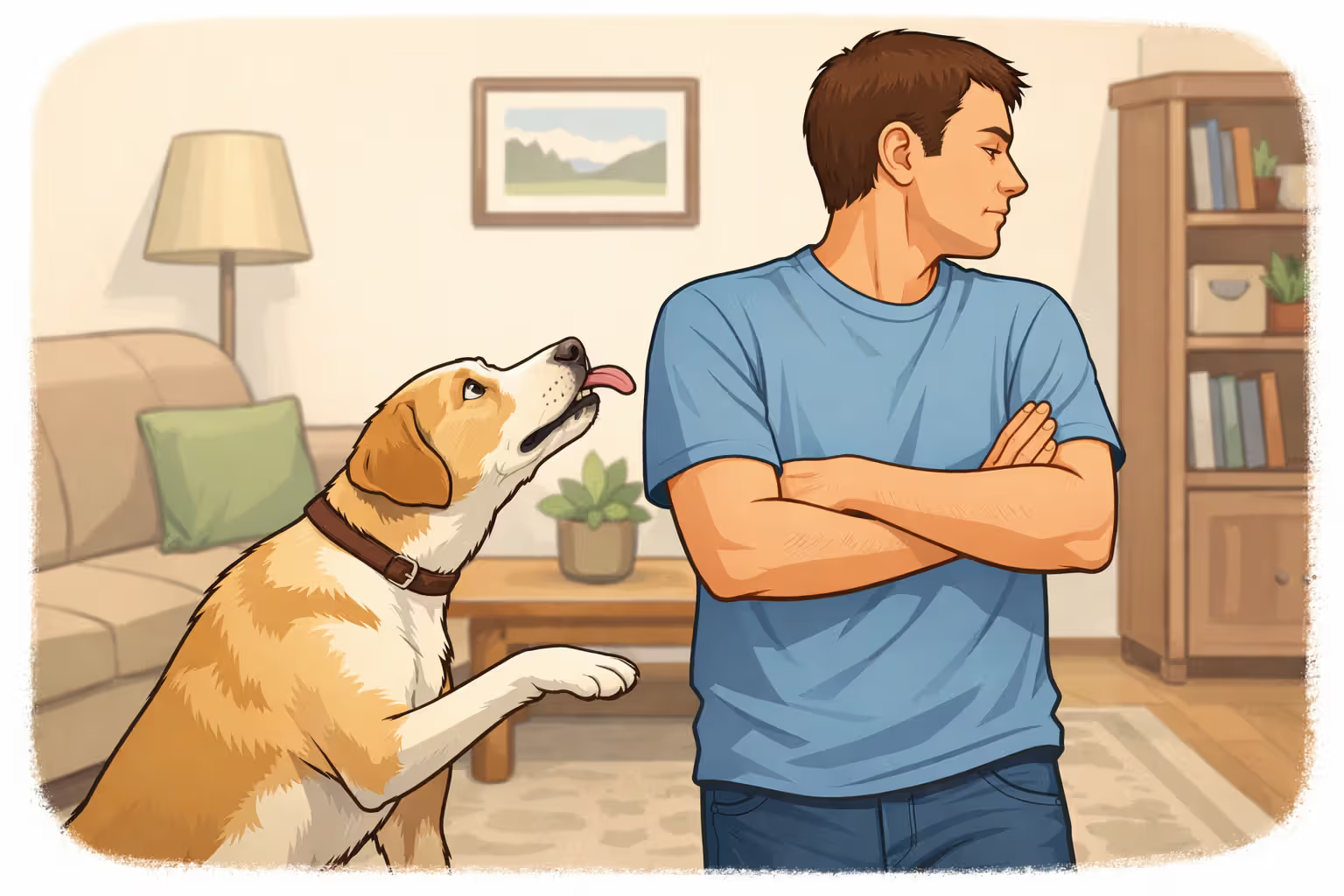
Stop reinforcing face licking altogether. This is harder than it sounds because you have to be consistent 100% of the time. The moment licking starts, turn your head away, stand up, or leave the room. Don't speak, don't push, don't make eye contact—all of those count as attention. Wait until your dog has been calm and lick-free for at least 10-15 seconds, then return and engage normally. What you're teaching: calm behavior gets attention, licking makes attention disappear.
Increase your dog's physical exercise and mental challenges. A border collie who's walked for 15 minutes once a day has tons of excess mental and physical energy with nowhere to go. That energy often channels into attention-seeking behaviors like excessive licking. Most dogs need at least 30-60 minutes of physical exercise daily, plus mental stimulation through training, puzzle toys, sniffing activities, or interactive games. Genuinely tired dogs don't have the energy to pester you constantly.
If anxiety drives the licking, you need to address the underlying emotional state. Create predictable daily routines—dogs find comfort in knowing what to expect. Provide a safe retreat space where your dog can decompress without demands or stimulation. Consider tools like ThunderShirts (pressure wraps), Adaptil diffusers (synthetic calming pheromones), or calming supplements. For severe anxiety, you might need desensitization training with a professional, possibly combined with anti-anxiety medication prescribed by a veterinary behaviorist.
Maintain your dog's dental health. Regular toothbrushing (ideally daily), dental chews, and annual professional cleanings reduce bacterial loads in your dog's mouth. This doesn't eliminate health risks, but it helps minimize pathogen levels. For households that choose to allow some face licking, this at least reduces the concentration of potentially harmful bacteria.
Set clear, consistent boundaries across your household. If you decide face licking is okay during morning greetings but not during dinner, you need to communicate that clearly through your responses. But here's the challenge: everyone living in your home must enforce identical rules. If you redirect face licking but your partner laughs and allows it, you're sending mixed messages that confuse your dog and undermine training. Get everyone on the same page before you start.
Bring in professional help if you're not seeing improvement after several weeks of consistent effort. Certified professional dog trainers (CPDT-KA certified), veterinary behaviorists (board-certified specialists), or certified applied animal behaviorists can assess your specific situation and create customized protocols. Compulsive licking, severe anxiety, and medically-driven licking all require expert evaluation. Don't struggle alone if the behavior is impacting your quality of life or your dog's wellbeing.
Dogs do speak, but only to those who know how to listen
— Orhan Pamuk
Frequently Asked Questions About Dogs Licking Faces
Why does my dog lick my face in the morning?
Morning face licking combines multiple motivations into one enthusiastic greeting. Your dog's been separated from you for six to eight hours—that's longer than they prefer. The reunion triggers bonding rituals and greeting behaviors that have been building all night. Meanwhile, your face has accumulated sweat, natural skin oils, and other secretions during sleep that create interesting flavors and concentrated scents. Your morning breath carries particularly strong odor molecules about your health and recent meals. Dogs also develop associations between morning face licking and getting what they need. If licking usually prompts you to get up and let them outside to pee, they've learned it's an effective wake-up strategy.
Do dogs lick faces to show dominance?
Actually, face licking usually signals the opposite of dominance—it's more of a submissive or appeasement gesture. In both wolf packs and dog social groups, lower-ranking members lick the faces of higher-status individuals as a way of acknowledging rank. Truly dominant dogs rarely lick faces; instead, they'll stand over other dogs, place paws on backs, control access to resources, or claim high resting spots. When your dog licks your face, they're more likely acknowledging that you're the leader. The whole dominance-based training philosophy has largely been debunked by modern animal behavior science anyway. Current understanding focuses on positive reinforcement and the social bonding aspects of the human-dog relationship rather than trying to "dominate" your dog.
Why does my dog lick my face after I eat?
Your dog's nose can detect food particles you'll never see, feel, or taste yourself. Even after thoroughly washing your face and brushing your teeth, microscopic food residue clings to the area around your mouth. Your breath continues carrying food scent molecules for hours after eating. Dogs learn through experience that post-meal interactions sometimes lead to food opportunities—maybe you've occasionally shared bites, or you're predictable about dropping crumbs. This behavior taps directly into ancestral food-begging patterns where wolf pups licked adult wolves' muzzles to trigger food regurgitation. Your Golden Retriever obviously doesn't expect you to regurgitate your pasta, but that ancient instinct still drives them to investigate your mouth area for potential food access.
Can dog saliva cause infections in humans?
Yes, though serious infections remain uncommon in people with healthy immune systems. Dog saliva contains bacterial species that can trigger infections when introduced into the bloodstream through broken skin, mucous membranes, or compromised skin barriers. Capnocytophaga canimorsus has caused sepsis, meningitis, gangrene, and even fatalities in immunocompromised people. Pasteurella species commonly infect wounds and soft tissues when dogs lick cuts or surgical sites. Parasites like roundworm eggs can transfer if dogs lick their rear end or consume feces, then lick human faces. Risk escalates dramatically for immunocompromised individuals, young children, elderly people, pregnant women, and anyone with open wounds, active skin conditions, or recent surgeries. The location of licking matters too—licks on intact skin pose less risk than licks near eyes, nose, mouth, or broken skin.
How do I stop my dog from licking my face without hurting their feelings?
Dogs don't process "hurt feelings" the way humans experience emotional wounds, but they definitely notice routine changes and can feel confused by inconsistent responses. Rather than just saying "no" to face licking, redirect the behavior toward an acceptable alternative. Train your dog to lick your hand instead, or establish a completely different greeting ritual like sitting for pets or retrieving a specific toy. When your dog moves in for a face lick, immediately cue your chosen alternative behavior and reward it enthusiastically—treats, praise, petting, whatever your dog values most. If licking continues despite redirection, turn away or stand up, removing access to your face. Resume interaction only after your dog has remained calm for 15-20 seconds. The most critical factor isn't which technique you choose—it's consistency. Every person in your household must respond identically every single time, or the training won't stick.
Is face licking the same as kissing for dogs?
Dogs don't conceptualize "kissing" with the romantic or affectionate meaning humans assign it, but face licking does fulfill similar social purposes: strengthening bonds, expressing affection, and initiating interaction. Research shows that face licking triggers oxytocin release in both dogs and humans, creating the same neurochemical bonding effect that human kissing produces. That said, dogs lick faces for numerous reasons beyond affection—information gathering, food seeking, stress relief, compulsive behavior, or simply because past licking got reinforced with attention. Reading context and body language reveals the true motivation. A dog who licks gently while displaying relaxed posture, soft eyes, and a loose wagging tail is expressing affection comparable to kissing. A dog who licks frantically, compulsively, or with tense body language might be signaling anxiety, seeking attention, or responding to a medical problem rather than simply demonstrating love.
Understanding face licking changes how you interpret this everyday behavior. Instead of just a quirky dog habit, it becomes a communication window into your pet's emotional state, health status, and needs. Most face licking stems from normal bonding instincts inherited from wolves and reinforced throughout puppyhood. Dogs lick faces to express affection, collect information about your wellbeing, request attention, and calm themselves during stressful moments.
Health concerns exist but remain manageable for most people. Immunocompromised individuals, people with broken skin, and young children should avoid face licking, while healthy adults with intact skin face relatively low risk from occasional licks. Keeping your dog's veterinary care current—vaccines, deworming, dental cleanings—reduces transmission risks substantially.
Pay attention when licking becomes excessive. If face licking turns compulsive, prevents normal activities, or accompanies obvious distress signals, schedule a veterinary appointment to eliminate medical causes and evaluate potential anxiety disorders. Behavior modification through consistent training, environmental enrichment, and professional guidance when needed can successfully redirect problematic licking without damaging your bond.
Whether you embrace face licking as endearing affection or prefer redirecting it toward other behaviors, understanding the motivations helps you respond appropriately. The decision to allow or discourage face licking remains entirely personal, shaped by household preferences, individual health factors, and your dog's unique personality. What matters most is recognizing that face licking is communication—your dog's method of interacting using the evolutionary and learned social tools available to them.
Wondering why your dog humps people, other dogs, or random objects? You’re not alone. Discover the real triggers behind mounting behavior, find out when it’s completely normal, and learn 5 proven training methods that actually work to stop it for good
Discover why dogs eat poop, what health risks coprophagia carries, and 7 proven methods to stop this behavior fast. Vet-backed solutions that actually work — for puppies and adult dogs alike. Your clean, stress-free walks start right here
Discover why dogs eat grass, what it means for their health, and when to take action. Learn the science behind this common behavior, its link to vomiting, and how to keep your dog safe while grazing. Find out which signs are normal, which are red flags, and what vets recommend
Discover why dogs eat dirt — from boredom and nutritional gaps to pica and hidden illness. Understand the real health risks, spot the warning signs early, and apply 7 vet-approved methods to stop this behavior for good
The content on this website is provided for general informational and educational purposes only. It is intended to offer guidance on dog breeds, behavior, health, care, and lifestyle, and should not be considered a substitute for professional veterinary advice, diagnosis, or treatment.
All information published on this site is based on general knowledge, widely accepted research, and practical experience, but individual dogs may differ in behavior, health conditions, and needs. Results and outcomes may vary depending on the dog, environment, and circumstances.
The website is not responsible for any errors or omissions, or for actions taken based on the information provided. For specific concerns regarding your dog’s health or behavior, always consult a qualified veterinarian or professional dog specialist.