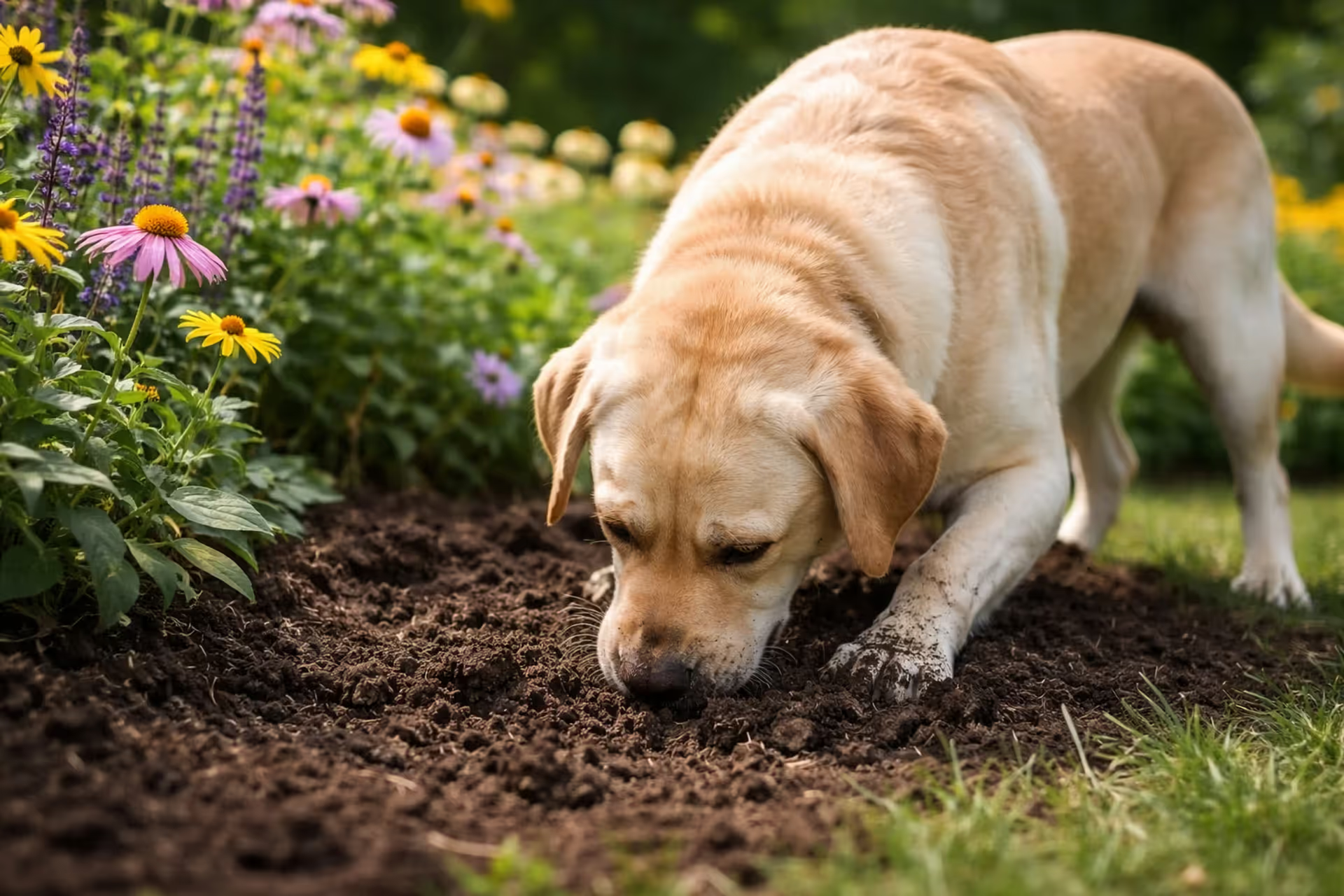
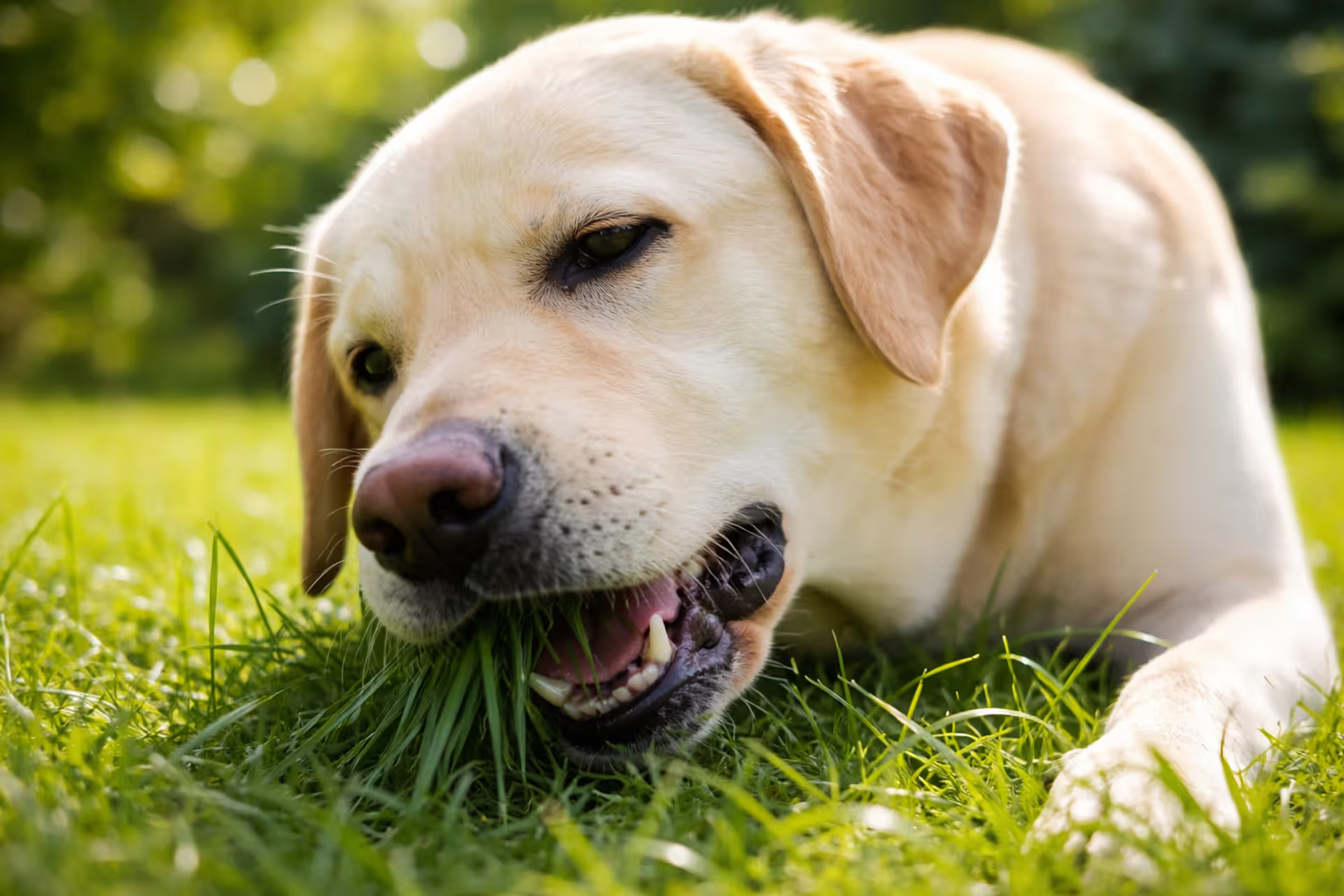
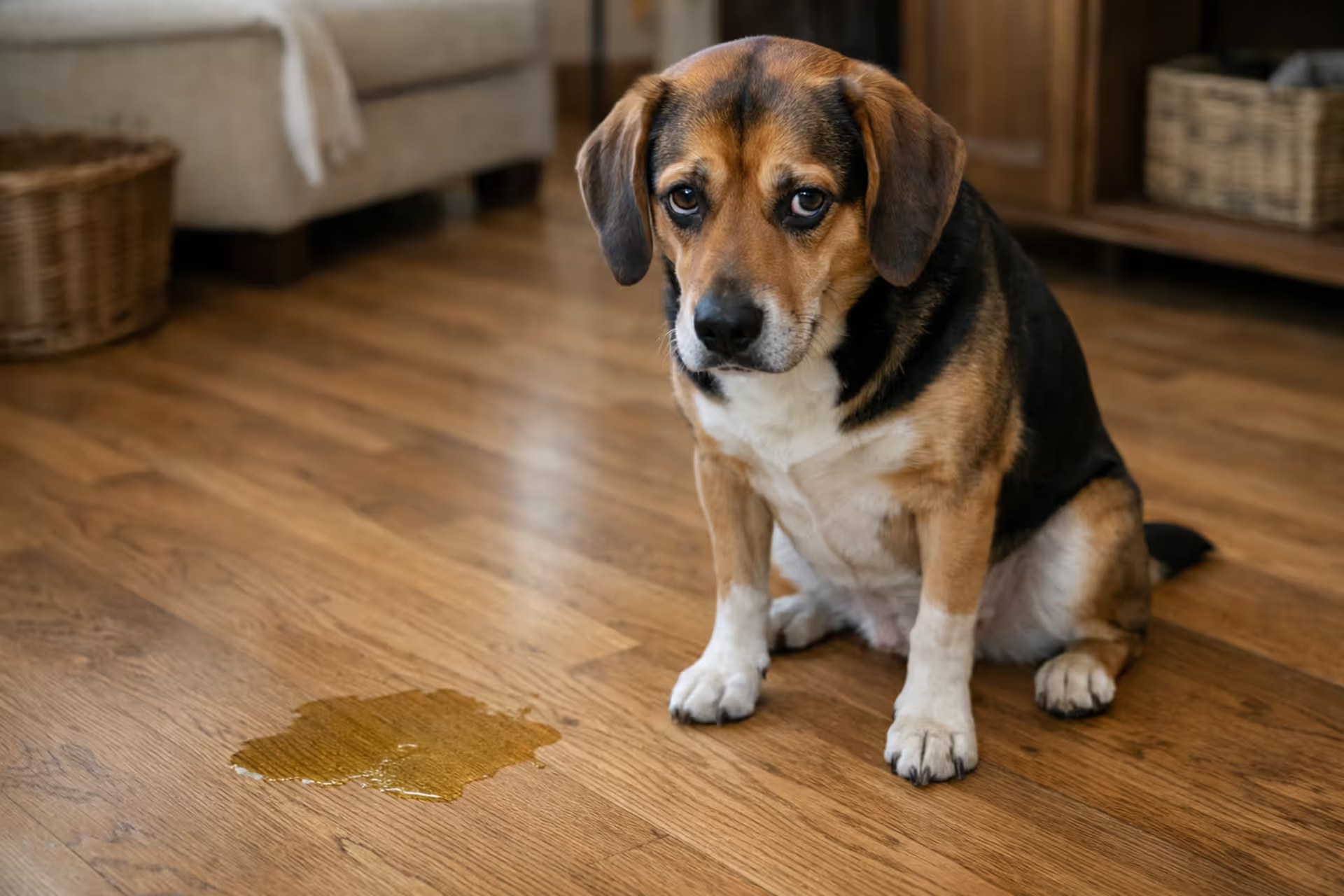
Picture this: you're watching your dog through the kitchen window, and instead of sniffing around the perimeter like usual, she's got her snout buried in your flower bed, actively munching on soil. Not just sniffing—actually eating it.
Dirt consumption happens more often than you'd think. According to veterinary behaviorists, somewhere between 10-20% of dog owners report catching their pets eating soil at least occasionally. Some dogs grab a quick taste during playtime, while others make deliberate trips to specific spots in the yard for regular dirt snacks.
Here's the thing about this behavior: there's rarely just one explanation. Your dog might be bored out of his mind. He could be missing key nutrients. There might be an underlying health problem. Or maybe he just really likes the way your garden soil smells after you fertilized last week. The trick is figuring out whether you're dealing with a harmless quirk or something that needs veterinary attention.
Common Reasons Dogs Eat Dirt
Let's start with the behavioral stuff, because honestly, that's the culprit most of the time.
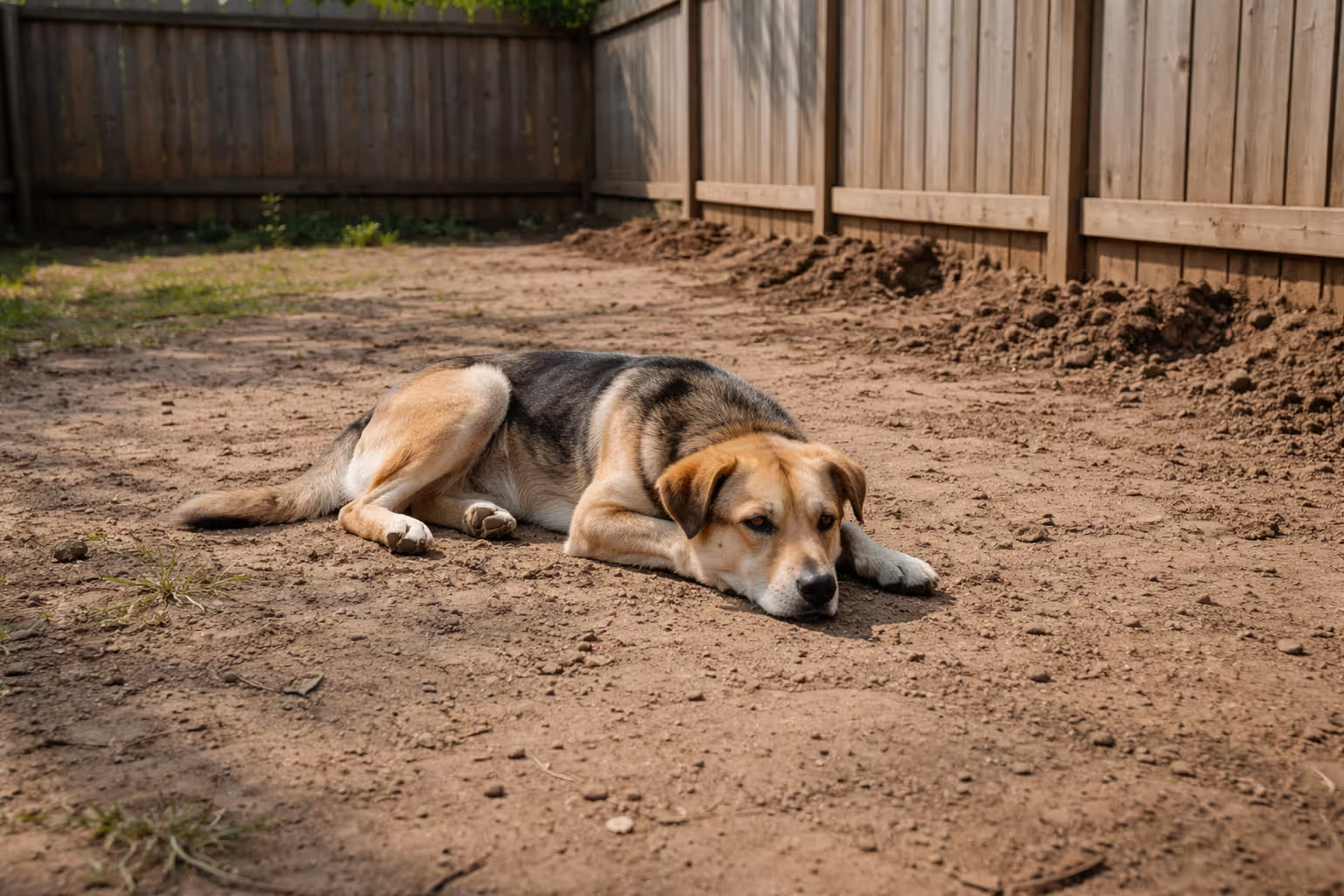
Boredom is huge. Think about a dog stuck in the backyard for six hours while you're at work. No toys, no stimulation, nobody to interact with. That dog's going to find entertainment somehow. Digging feels good. Tasting the soil? Why not. The gritty texture between their teeth provides sensory input. The earthy smell offers something to investigate. Before long, you've got a habit.
Now, here's what surprises most people: dirt actually smells amazing to dogs. We're talking about noses that are 10,000 to 100,000 times more sensitive than ours. That patch of soil where the neighbor's cat did its business last month? Your dog knows. The spot where you dumped compost two weeks ago? Detected. Ground where rodents have tunneled? Fascinating. Decomposing leaves, insect larvae, microscopic fungi—all of this creates a scent profile that reads like a buffet menu to a dog's brain.
Author: Matthew Ridgeway;
Source: alwaysonsalepetsupplies.com
Weather changes everything. After rainfall, soil releases compounds called geosmin and petrichor (yes, that "after rain" smell has a name). Moisture also alters texture—making dirt easier to lick, more moldable, more interesting to mouth. Earthworms surface during rain, adding protein-rich temptation. I've seen dogs who ignore dry dirt completely but make a beeline for muddy spots every single time it drizzles.
Dogs are, in many ways, a sensory apparatus we can barely imagine. Their world is built from smells the way ours is built from sights
— Alexandra Horowitz
Then there's the anxiety angle. Dogs experiencing stress—maybe you recently moved, brought home a new baby, changed your work schedule—sometimes develop repetitive behaviors as coping mechanisms. Paw licking, tail chasing, and yes, dirt eating. The behavior becomes self-soothing, almost meditative. They're not thinking "I want nutrients." They're thinking "this repetitive action calms my nervous system."
Occasionally, stomach issues trigger dirt consumption. A dog dealing with nausea, acid reflux, or general digestive discomfort might instinctively seek out soil. The theory is they're trying to settle their stomach, similar to grass-eating behavior (which around 68% of dogs do regularly, according to a UC Davis study). Whether dirt actually helps or they just think it will help remains unclear.
Pica in Dogs: When Dirt Eating Signals a Medical Issue
Pica is different from regular dirt tasting. We're talking compulsion here.
Author: Matthew Ridgeway;
Source: alwaysonsalepetsupplies.com
The textbook definition describes pica as persistent consumption of non-nutritive substances. But here's what that looks like in real life: a dog who digs specifically to reach soil, ignores her favorite treats when dirt is available, becomes genuinely agitated when you block access to her preferred dirt-eating spot, and keeps doing it day after day despite your best efforts at redirection.
I once worked with a Labrador whose owner initially thought "oh, Labs put everything in their mouths." But this dog was eating roughly a cup of soil daily. When offered food, toys, or a walk, she'd still circle back to the same corner of the yard to consume dirt. That's pica. That's obsession-level behavior.
The concerning part? Pica frequently points to underlying medical conditions. Gastrointestinal disorders like inflammatory bowel disease prevent proper nutrient absorption—the dog eats quality food, but her body can't extract the minerals, so she seeks them elsewhere. Exocrine pancreatic insufficiency (where the pancreas doesn't produce enough digestive enzymes) creates similar issues. Liver disease, diabetes, and hyperthyroidism can all trigger pica as the body tries compensating for metabolic chaos.
Behavioral problems in dogs are rarely about disobedience. They are almost always about unmet needs — physical, emotional, or medical
— Karen Overall
Watch for these red flags: consuming dirt in substantial quantities (not just a lick here and there), vomiting or diarrhea following dirt consumption, weight loss even though food intake seems normal, lethargy that wasn't present before, and behavioral shifts like increased anxiety or aggression. If your dog shows this level of fixation—choosing dirt over literally everything else—get blood work done. A complete chemistry panel and CBC can reveal anemia, liver enzyme elevation, kidney dysfunction, or electrolyte imbalances driving the behavior.
Even when medical tests come back clean, severe behavioral pica warrants help from a board-certified veterinary behaviorist. These specialists (there are only about 80 in the entire US) create individualized treatment protocols. Sometimes that involves environmental changes, sometimes structured training, sometimes medications like fluoxetine to manage obsessive-compulsive tendencies.
Nutritional Deficiencies That Trigger Dirt Consumption
Here's something most people don't realize: dirt contains minerals. Iron, calcium, sodium, zinc—they're all present in soil to varying degrees. When a dog's body craves specific nutrients it's not getting from food, instinct sometimes drives them to seek alternative sources. Scientists call this geophagia, and it happens across species (pregnant women, elephants, parrots—loads of animals do it).
Deficiency Type
Physical Signs You Might Notice
Which Dogs Are Most Vulnerable
How to Fix It Through Diet
Iron
Pale-colored gums, extreme tiredness, eating dirt or ice cubes
Dogs with internal bleeding, heavy parasite loads, or eating bargain-brand kibble
Add liver or red meat to meals; your vet might prescribe iron supplements
Calcium
Painful joints, muscle twitching, weak teeth, seeking out dirt
Female dogs during pregnancy/nursing, puppies fed unbalanced homemade meals
Vet-approved calcium supplements; switch to AAFCO-complete formulas
Sodium
Drinking excessive water, wobbliness, confusion, licking or eating salty substances including dirt
Dogs on ultra-low-sodium diets, certain kidney conditions
Feed properly formulated dog food (human low-sodium foods don't work for dogs)
Zinc
Crusty skin lesions, patchy hair loss, wounds that heal slowly, consuming soil or feces
Siberian Huskies, Alaskan Malamutes, dogs with intestinal malabsorption
Zinc supplementation (only under vet supervision), high-quality animal proteins
Dogs eating grain-free diets or poorly balanced foods
Switch to meat-based formulas; B-complex vitamins if recommended by your vet
Cheap dog food creates problems even when dogs eat enough calories. Here's why: low-quality ingredients don't absorb well. A bag of kibble might list "crude protein: 22%" on the label, but if that protein comes from feathers, hooves, or non-specific "meat by-products," your dog's digestive system can't extract much usable nutrition. It passes through largely undigested. Your dog eats a full bowl but still experiences deficiencies at the cellular level.
The nutritional adequacy of a diet cannot be judged by its ingredient list alone. Bioavailability — how much the body actually absorbs — is what ultimately determines whether a dog thrives or merely survives
— Joseph Wakshlag
Homemade diets sound wonderful in theory. You control every ingredient, choose high-quality meats, add fresh vegetables. But (and this is a big but) properly balancing a homemade diet requires veterinary nutritionist expertise. Dogs need calcium-to-phosphorus ratios around 1.2:1. They need adequate taurine for heart health. They need specific vitamin D3 levels. Eyeballing these requirements leads to trouble. I've seen well-meaning owners create severe calcium deficiencies by feeding muscle meat without appropriate bone meal supplementation.
Life stage matters enormously. A pregnant dog needs roughly 50% more calcium than normal. Lactating dogs need even more—sometimes double or triple normal amounts depending on litter size. Large-breed puppies require carefully controlled calcium levels (too much causes skeletal problems, too little causes deficiencies). When these heightened needs aren't met, dogs may instinctively seek minerals wherever they can find them, including your backyard.
Don't forget parasites. Hookworms attach to intestinal walls and literally drink blood—a dog with a heavy hookworm burden can lose enough blood to become severely anemic. Roundworms consume nutrients meant for your dog. Whipworms damage intestinal lining, reducing absorption efficiency. Even dogs eating premium food develop deficiencies when parasites steal their nutrition.
Author: Matthew Ridgeway;
Source: alwaysonsalepetsupplies.com
Health Risks: Is It Bad If Your Dog Eats Dirt?
Alright, let's talk danger levels, because not all dirt consumption carries equal risk.
Small amounts of clean soil, eaten occasionally by a healthy adult dog? Probably fine. I'm not recommending it, but your dog's digestive system can likely handle it without drama.
The risks escalate fast when we're talking regular consumption or contaminated soil. Here's what worries veterinarians:
Parasites are the most common threat. Soil contaminated by infected animal feces becomes a parasite incubator. Roundworm eggs survive in dirt for literally years—one study found viable eggs in soil samples three years after initial contamination. Hookworm larvae actively move through moist soil. Giardia cysts wait patiently for a new host. When your dog eats this contaminated dirt, those parasites get a free ride into a nice warm digestive tract. Result? Diarrhea, vomiting, weight loss, anemia in severe cases. Puppies and immunocompromised dogs face the highest danger.
Bacterial contamination comes next. Salmonella from bird droppings, E. coli from various animal waste, Clostridium from decomposing matter—all can colonize soil. Dogs have tougher stomachs than humans (their stomach pH is around 1-2, more acidic than ours), but overwhelming bacterial loads still cause gastroenteritis. You'll know because your dog will have explosive diarrhea, possibly bloody, along with vomiting and lethargy.
Chemical toxins scare me the most, honestly. That lawn treatment company that services your neighbor's yard? Their products drift. That weed killer you sprayed two weeks ago? Still present in the soil. Fertilizers containing bone meal or blood meal smell incredibly appealing to dogs, but consuming them causes toxicity. And cocoa mulch—incredibly popular for landscaping because it smells nice and looks attractive—contains theobromine, the same compound that makes chocolate toxic to dogs. A dog eating cocoa-mulch-contaminated dirt can develop chocolate poisoning symptoms: vomiting, diarrhea, rapid heart rate, seizures.
Heavy metals accumulate in urban and industrial-area soils. Houses built before 1978 likely have lead paint chips in the surrounding dirt. Industrial sites leak arsenic, mercury, cadmium. Heavy traffic areas accumulate lead from decades of leaded gasoline use. Dogs who regularly consume dirt in these locations risk chronic heavy metal poisoning—symptoms include neurological damage, kidney failure, and liver dysfunction. This develops slowly, over months, making it hard to identify until serious damage occurs.
Gastrointestinal blockages happen when dogs eat dirt mixed with rocks, sticks, or dense clay. I've personally seen X-rays showing stomachs packed solid with dirt and debris requiring surgical removal. Small dogs and puppies face higher risk because their intestinal diameter is narrower—less room for material to pass through. Signs include vomiting, loss of appetite, abdominal pain, and inability to poop. This is an emergency requiring immediate veterinary care.
Dental damage is the "minor" concern (minor being relative). Chewing dirt containing pebbles wears down tooth enamel. Hard particles can crack teeth. Grit works between teeth and gums, causing irritation and infection. A cracked tooth in a dog means either a $1,500-$2,500 root canal or extraction, plus your dog's in pain until it's treated.
Author: Matthew Ridgeway;
Source: alwaysonsalepetsupplies.com
So when is dirt eating truly harmless? When it happens rarely (like a couple licks during a play session), involves clean soil free from chemicals and animal waste, doesn't become obsessive, and occurs in a dog with regular vet checkups confirming no parasites or deficiencies. Even then, I'd work on stopping it—why risk exposure to contaminants you can't see?
Why Puppies Eat Dirt More Than Adult Dogs
Puppies are basically little vacuum cleaners with legs.
Between 3 and 6 months old, puppies explore primarily through their mouths. Everything goes in. Leaves? Check. Sticks? You bet. Rocks? Unfortunately, yes. Dirt? Absolutely. This is completely normal developmental behavior. They're learning about their environment, figuring out what's food and what isn't through direct experience.
From an evolutionary standpoint, this makes sense. Wild canid puppies needed to learn which items were edible and which weren't. There was no puppy food in a bowl twice daily. They investigated everything, and trial-and-error taught them the difference between prey, plants, and inedible objects. Your domesticated puppy doesn't need this skill for survival, but the instinct remains hardwired into her brain.
Teething amplifies the problem significantly. Adult teeth pushing through gums between 3 and 7 months creates constant discomfort. Puppies seek relief through chewing anything and everything available. Cool, slightly gritty dirt probably feels soothing on irritated gums—similar to how the cold texture of ice cubes helps. They're not thinking "I want to eat dirt." They're thinking "my mouth hurts and this texture feels good."
Author: Matthew Ridgeway;
Source: alwaysonsalepetsupplies.com
Impulse control (or lack thereof) plays a major role. Adult dogs learn through experience and training to ignore interesting smells. Puppies haven't developed that self-restraint yet. When their nose detects something fascinating in the dirt—maybe a bone fragment buried by another dog, maybe earthworm trails, maybe decomposed food scraps—they investigate immediately with their mouths. There's no pause to consider whether it's a good idea.
Rapid growth creates higher nutritional demands. Puppies need roughly twice the calories per pound compared to adult dogs. They require specific calcium and phosphorus levels to build healthy bones. When fed adult dog food (which doesn't meet these requirements) or low-quality puppy formulas, deficiencies can develop quickly. A calcium-deficient puppy might instinctively seek minerals in soil, even at 4-5 months old.
The encouraging news: most puppies naturally outgrow dirt eating. By 12-18 months, when adult teeth are fully in, developmental exploration is complete, and training has taken hold, the behavior typically vanishes. Persistent dirt consumption beyond puppyhood—say, a 2-year-old dog still regularly eating soil—warrants veterinary evaluation for pica or nutritional problems.
How to Stop Your Dog From Eating Dirt: 7 Proven Methods
Improve Your Dog's Diet
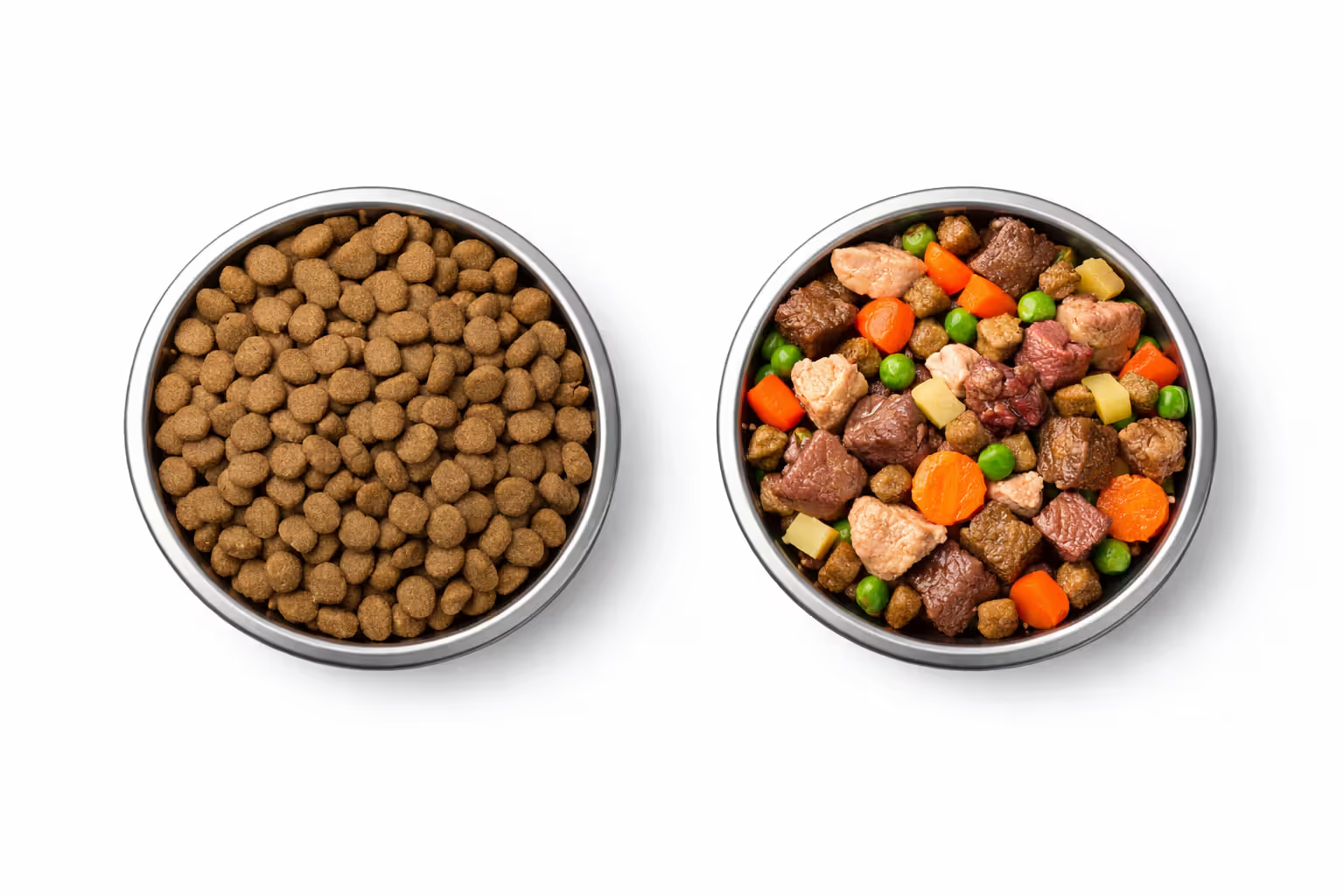
Start by examining your current dog food bag. Flip it over and look at the ingredient list. Are the first three ingredients recognizable animal proteins (chicken, beef, salmon)? Or do you see vague terms like "meat by-products," "animal digest," or fillers like corn and wheat dominating the list?
AAFCO (Association of American Feed Control Officials) compliance is your baseline. Look for the statement "formulated to meet AAFCO Dog Food Nutrient Profiles." This confirms the food contains minimum required nutrients. But honestly? Meeting minimums isn't always enough, especially for dogs with higher needs.
Premium brands cost more for a reason—higher-quality protein sources, better mineral bioavailability, fewer fillers. Orijen, Acana, Wellness Core, Taste of the Wild—these brands use named meat sources and skip the junk. Your dog actually absorbs more nutrition per cup, meaning you often feed less and the higher price evens out.
Some dogs need specialized formulas. Sensitive stomachs? Look for limited-ingredient diets with easily digestible proteins like lamb or fish. Suspected food allergies? Try novel protein sources (venison, duck, kangaroo) your dog hasn't eaten before. Malabsorption issues? Prescription diets like Hill's i/d or Royal Canin Digestive Care might be necessary.
Here's the critical part: get blood work before randomly supplementing. A comprehensive chemistry panel and CBC cost around $150-250 and reveal exactly what your dog needs. Anemic? Iron supplementation makes sense. Deficient in B vitamins? Add a veterinary B-complex. But supplementing blindly causes problems—excess calcium interferes with zinc absorption, too much iron damages organs. Work with your vet on this.
Exercise needs vary wildly by breed. A Border Collie needs 90-120 minutes of vigorous activity daily—I'm talking running, herding, intense fetch, not a casual stroll. A Cavalier King Charles Spaniel might be satisfied with 30-40 minutes of moderate walking. A Basset Hound? Maybe 45 minutes of sniffing-heavy exploration. Research your breed's typical requirements and adjust based on your individual dog's energy level.
Mental stimulation tires dogs faster than physical exercise in many cases. Fifteen minutes of intensive training (learning new tricks, practicing complex commands, working through behavior problems) can exhaust a dog as thoroughly as a 45-minute run. The brain burns massive amounts of energy when actively problem-solving.
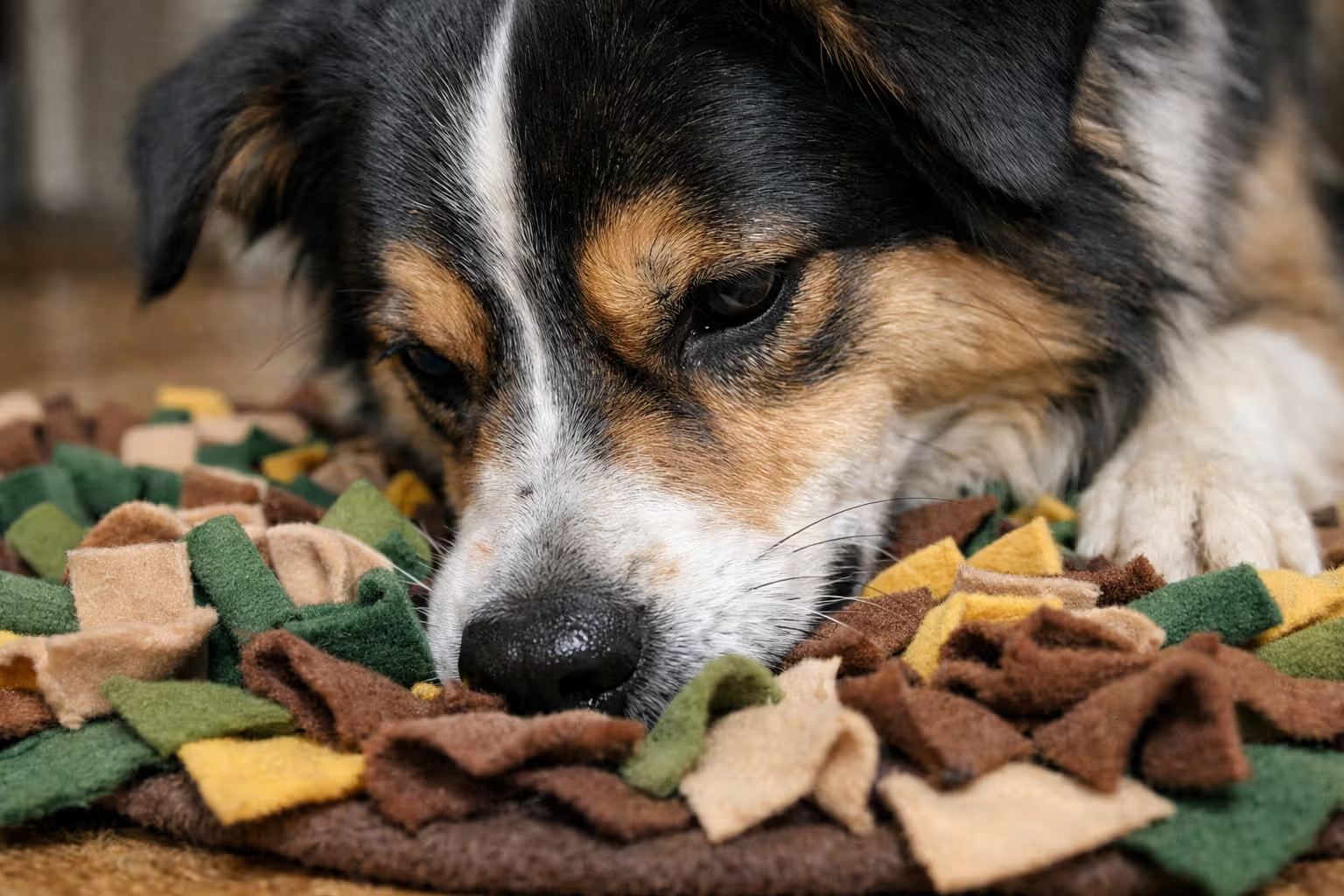
Puzzle feeders transform mealtime into a 20-minute mental workout. Instead of inhaling food in 30 seconds, your dog has to figure out how to release kibble from compartments. Snuffle mats (those fabric mats with tons of fleece strips) hide treats that dogs must sniff out. Interactive toys like the Nina Ottosson puzzle line require dogs to slide pieces, lift flaps, and spin layers to reach rewards.
Rotate toys to maintain novelty. Here's what I do: keep two-thirds of my dog's toys in a closet. Every Sunday, I swap out the available toys for different ones from storage. Suddenly, that rope toy she ignored last week becomes exciting again because it's been "gone" and now it's "back."
Nose work and scent games tap into your dog's strongest sense. Hide treats around your house or yard and let your dog search. Start easy (treats in obvious spots) and gradually increase difficulty. This engages their brain intensely—20 minutes of scent work can leave a dog happily exhausted.
Author: Matthew Ridgeway;
Source: alwaysonsalepetsupplies.com
Supervise Outdoor Time and Redirect Behavior
You can't fix what you don't see happening. Direct supervision is non-negotiable during the training phase.
When your dog approaches dirt with that "I'm about to eat this" posture—lowered head, focused attention, tongue starting to extend—interrupt immediately. Use whatever verbal marker you've established ("leave it," "no," "eh-eh"). The interruption breaks the behavior chain before it completes.
Immediately redirect to something appropriate. Pull out a toy. Start a training session. Initiate a game of fetch. The key is offering an alternative behavior that's more rewarding than dirt consumption. If your dog leaves the dirt and engages with the alternative, praise enthusiastically and reward with high-value treats (real chicken, cheese, hot dogs—something better than dirt could ever be).
Using a long line (15-30 feet) in your own fenced yard gives you control while allowing freedom. Attach the line to your dog's harness and let them wander, but keep hold of the end. When they head toward dirt, you can gently reel them in and redirect without having to chase them down.
Environmental management removes temptation. Cover problem areas with options like decorative river rock, rubber playground tiles, artificial turf sections, or landscape fabric topped with mulch. Can't eat what isn't accessible.
Address Underlying Anxiety or Stress
Dogs don't stress about mortgage payments or work deadlines, but they absolutely experience anxiety.
Common triggers include: separation (you leave for work and they panic), noise phobias (thunderstorms, fireworks, construction), changes in routine (you used to be home all day, now you're gone 8 hours), new additions (baby, puppy, roommate), insufficient socialization (they're scared of novel experiences), or past trauma (rescue dogs with unknown histories).
Identify what's causing anxiety in your specific dog. Keep a log for two weeks noting when dirt eating occurs and what happened beforehand. Patterns usually emerge—maybe it's always after you leave the house, or only during thunderstorms, or primarily on days when you skip the morning walk.
Create predictability through rigid routines. Feed at the exact same times daily. Walk the same route at the same time. Establish a bedtime routine. Dogs find comfort in knowing what comes next. Unpredictability breeds anxiety.
Calming tools can help while you work on the root cause. Thundershirts ($30-45) provide gentle pressure that soothes some anxious dogs. Adaptil diffusers and collars release synthetic dog-appeasing pheromones (around $25-40). Calming chews containing L-theanine, melatonin, or chamomile run $15-30 per bag. For severe anxiety, prescription medications like fluoxetine, trazodone, or clonidine might be necessary—discuss with your vet.
Sometimes professional help is needed. A certified veterinary behaviorist or certified applied animal behaviorist (CAAB) can develop comprehensive treatment plans for complex anxiety cases. Fees run $300-600 for initial consultations, but they can solve problems regular trainers can't touch.
Provide Safe Chewing Alternatives
If your dog craves the sensation of chomping on something, give them appropriate options.
Rubber toys offer satisfying resistance. Kong Extremes (black rubber) are virtually indestructible. West Paw Zogoflex toys are tough and dishwasher-safe. Benebone flavored chews last weeks even with aggressive chewers.
Edible chews satisfy the urge to gnaw while being fully digestible. Bully sticks, beef trachea, dehydrated sweet potato slices, dried fish skins—all provide long-lasting entertainment. Avoid rawhide (choking hazard) and cooked bones (splinter danger).
For dogs seeking the grittiness of dirt specifically, try frozen treats with texture. Freeze low-sodium broth in silicone molds. Mix wet dog food with a bit of water, spread it inside a Kong, and freeze overnight. Offer frozen carrot sticks or ice cubes made with bone broth.
Make toys more valuable than dirt through strategic stuffing. Peanut butter (xylitol-free only), canned pumpkin, mashed banana, cream cheese, or canned dog food smeared inside hollow toys creates hours of entertainment.
Keep several options available simultaneously. Some days your dog wants something to rip apart (rope toys), other days they want something to chew intensely (rubber toys), sometimes they want to lick (frozen Kongs). Variety prevents boredom.
Train the "Leave It" Command
"Leave it" becomes your most valuable tool. It works for dirt, dropped medications, chicken bones on sidewalks, dead animals—anything you need your dog to ignore.
Start indoors with low-stakes items. Place a piece of kibble on the floor and cover it with your hand. Say "leave it" once. Your dog will probably try to get it—sniffing, pawing, licking your hand. Ignore all attempts. The instant your dog backs away or looks away from your hand, immediately say "yes!" and reward with a different treat from your other hand (never let them have the original covered treat, or you're teaching "be persistent and you'll get it").
Repeat until your dog hears "leave it" and immediately backs away from your covered hand. This might take 10 repetitions or 100—depends on the dog.
Progress gradually to harder scenarios: uncovered treats on the floor, treats tossed past your dog, toys instead of treats, eventually outdoor practice with actual dirt. Each time, reward heavily for ignoring the forbidden item.
Practice in short bursts—five minutes, three times daily beats one exhausting 30-minute session. Keep it fun. If your dog gets frustrated, you're progressing too quickly.
Make it a family project. Every person in your household should practice the same way, using identical words and hand signals. Inconsistency confuses dogs and slows training dramatically.
Author: Matthew Ridgeway;
Source: alwaysonsalepetsupplies.com
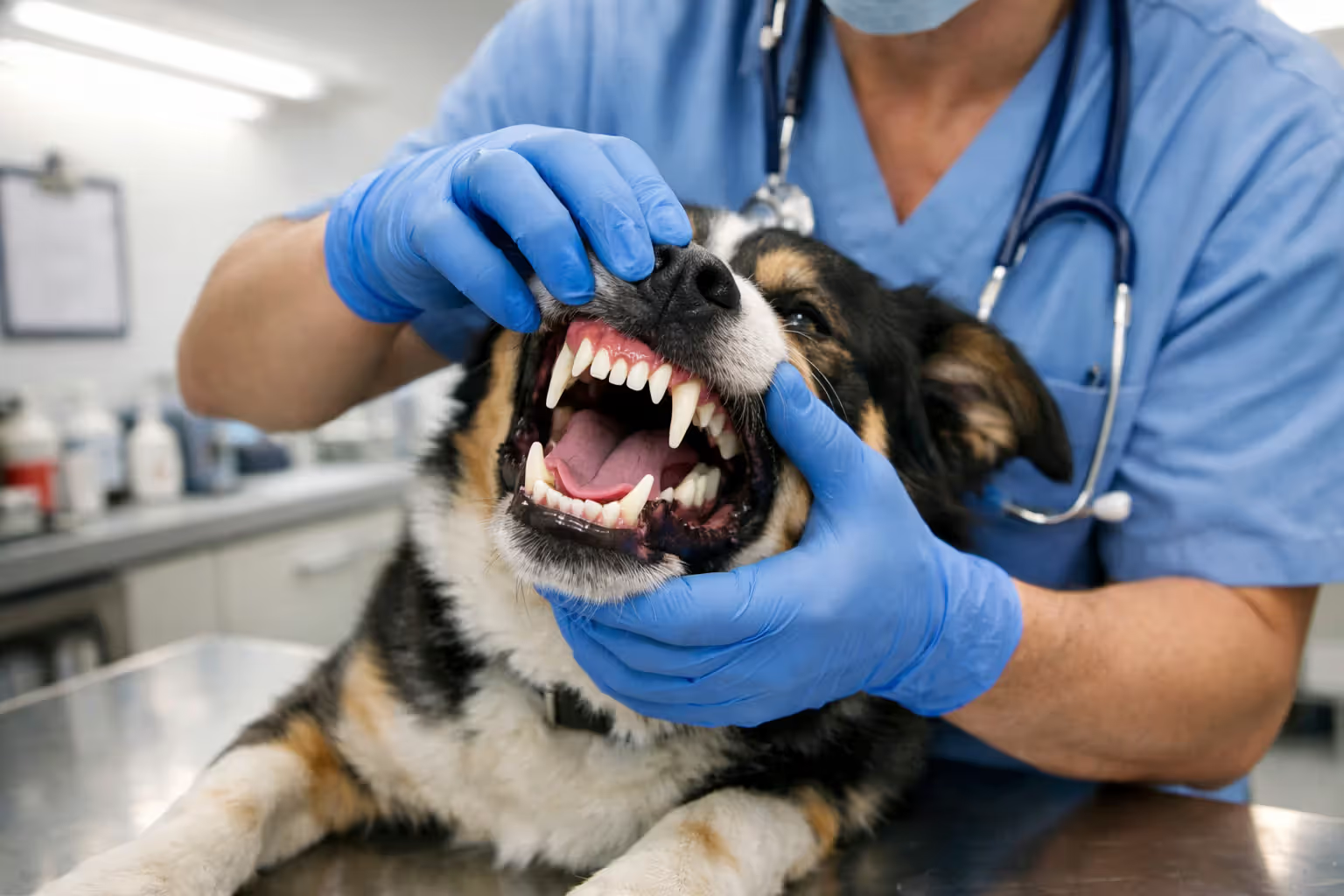
Consult Your Veterinarian for Medical Causes
Sometimes training and environmental changes aren't enough because the root cause is medical.
Schedule a vet appointment if: - Dirt eating happens compulsively (multiple times daily, seeking it out obsessively) - Other symptoms appear (vomiting, diarrhea, weight loss despite eating, lethargy, changes in water consumption) - The behavior started suddenly in an adult dog who never did this before - Your dog consumes large quantities (more than a few licks—we're talking mouthfuls) - Training and dietary improvements haven't helped after 4-6 weeks - Your dog seems driven to eat dirt, choosing it over food, toys, or social interaction
Request comprehensive diagnostics: complete blood count (checks for anemia), chemistry panel (evaluates organ function and electrolytes), and fecal examination (identifies parasites). These tests cost $200-400 total but provide concrete answers.
Additional testing might include thyroid panels (hypothyroidism affects around 10% of dogs and can alter behavior), bile acid tests (assess liver function), abdominal X-rays or ultrasound (check for masses or organ abnormalities), or specific vitamin/mineral level testing.
If medical tests return normal but pica persists, ask about referral to a veterinary behaviorist. These specialists hold board certification through the American College of Veterinary Behaviorists (only about 80 exist nationwide). They handle complex cases regular vets and trainers can't solve. Initial consultations run $400-600, follow-ups $150-300, but they can identify obscure triggers and develop pharmaceutical intervention plans when needed.
Frequently Asked Questions About Dogs Eating Dirt
Why does my dog eat dirt after it rains?
Rain changes everything about soil from a dog's perspective. Moisture releases geosmin and petrichor—organic compounds that create that distinctive "earthy" smell humans enjoy but dogs find absolutely intoxicating. The texture transforms too; dry dirt is dusty and less appealing, while damp soil molds easily and feels different on the tongue. Earthworms surface during and after rain, adding protein-rich temptation. Rain also concentrates mineral salts as water percolates through soil layers, essentially creating a more "flavorful" dirt. If your dog specifically targets wet dirt, boost dietary minerals (have your vet check iron and sodium levels) and supervise extra carefully during rainy periods.
Can eating dirt make my dog sick?
Absolutely, though the severity depends on quantity and contamination level. Dirt harbors parasites (roundworm eggs survive in soil for years), bacteria like Salmonella and E. coli, chemical pesticides and fertilizers, and potentially heavy metals in urban areas. Large quantities of dirt can cause gastrointestinal blockages requiring surgical removal—I've seen this firsthand on X-rays. Watch for vomiting, diarrhea (especially if bloody), decreased appetite, lethargy, or abdominal pain after dirt consumption. These symptoms warrant immediate veterinary attention. Small amounts of uncontaminated dirt rarely cause issues in healthy dogs, but why take chances?
What vitamin deficiency causes dogs to eat dirt?
There's no single vitamin culprit, but several nutritional gaps commonly contribute. Iron deficiency (causing anemia) frequently triggers dirt consumption—dogs instinctively seek iron present in soil. This shows up on blood work as low red blood cell counts and pale gums. Calcium shortfalls, especially in pregnant or lactating females, can drive geophagia. Sodium deficiency occasionally prompts dirt eating in dogs on extremely restricted diets. B-vitamin deficiencies sometimes trigger pica behaviors including soil consumption. Zinc deficiency (particularly in Arctic breeds like Huskies and Malamutes) also correlates with eating dirt or feces. Blood work identifies specific deficiencies requiring targeted supplementation—never guess and supplement blindly because mineral imbalances cause serious problems.
How do I know if my dog has pica?
True pica goes way beyond curious tasting. Look for these signs: your dog actively seeks out dirt even when toys, food, and attention are available; consumes substantial quantities daily (not just a lick); becomes genuinely anxious or agitated when prevented from accessing dirt; eats other non-food items too (rocks, fabric, plastic, paper); chooses dirt over favorite treats; and persists despite consistent redirection. I worked with one Lab who dug specifically to reach deeper soil layers and ate roughly one cup daily—that's pica. If your dog displays this level of compulsion, especially alongside weight loss, vomiting, or behavioral changes, schedule a vet appointment for blood work and fecal examination.
Should I let my puppy eat a little dirt?
Small amounts during supervised play won't typically harm a healthy puppy, and honestly, some exploratory tasting is developmentally normal between 3-6 months. That said, minimize it whenever possible because even "clean" dirt can harbor parasites, bacteria, or chemical residue. Redirect to appropriate chew toys immediately when you catch your puppy going for dirt. Maintain strict deworming schedules (every 2-4 weeks until 12 weeks old, then as your vet recommends). Feed high-quality puppy food meeting AAFCO growth standards to prevent nutritional deficiencies that might drive the behavior. If dirt eating becomes frequent or compulsive rather than occasional taste-testing, address it now before it becomes an established habit that persists into adulthood.
When should I take my dog to the vet for eating dirt?
Book an appointment if your dog eats dirt obsessively or daily, shows symptoms like vomiting/diarrhea/weight loss/lethargy, suddenly started this behavior as an adult after years of never doing it, consumes large quantities (mouthfuls rather than licks), or continues despite 4-6 weeks of training and dietary improvements. Also call your vet if you suspect contaminated soil exposure—maybe your dog ate dirt from a lawn recently treated with pesticides, or from an area with known chemical spills. Same goes if dirt eating accompanies other behavioral changes like increased anxiety, aggression, or compulsive behaviors (excessive licking, tail chasing). Bring your dog in urgently if you see symptoms of blockage: repeated vomiting, inability to keep water down, painful abdomen, or no bowel movements for 24+ hours.
Dirt eating in dogs exists on a spectrum. On one end: harmless puppy exploration that resolves naturally with age and training. On the other end: serious medical conditions like anemia, organ dysfunction, or obsessive-compulsive disorder requiring veterinary intervention.
Most cases fall somewhere in the middle and respond well to practical solutions—upgrading food quality, increasing exercise, teaching "leave it," and supervising outdoor time. These straightforward changes eliminate dirt eating in probably 60-70% of dogs within a month or two.
When simple fixes don't work, don't ignore the problem. Persistent dirt consumption often signals something deeper: nutritional deficiencies your current food isn't addressing, anxiety requiring behavioral support, or medical issues detectable through blood work. A $200 vet visit revealing anemia or organ problems could literally save your dog's life.
The timeline for fixing this varies wildly. Some dogs respond within days. Others need months of consistent training and environmental management. One thing I can promise: yelling at your dog for eating dirt won't help. Your dog isn't doing this to annoy you—they're responding to instinct, physical need, or emotional distress. Figure out the "why," address that root cause, and the behavior resolves naturally.
Wondering why your dog humps people, other dogs, or random objects? You’re not alone. Discover the real triggers behind mounting behavior, find out when it’s completely normal, and learn 5 proven training methods that actually work to stop it for good
Discover why dogs eat poop, what health risks coprophagia carries, and 7 proven methods to stop this behavior fast. Vet-backed solutions that actually work — for puppies and adult dogs alike. Your clean, stress-free walks start right here
Discover why dogs eat grass, what it means for their health, and when to take action. Learn the science behind this common behavior, its link to vomiting, and how to keep your dog safe while grazing. Find out which signs are normal, which are red flags, and what vets recommend
Why is your dog pooping in the house? Discover the real reasons — from hidden medical conditions to behavioral triggers — and get proven, vet-approved solutions to stop indoor accidents for good, whether you have a puppy or a senior dog
The content on this website is provided for general informational and educational purposes only. It is intended to offer guidance on dog breeds, behavior, health, care, and lifestyle, and should not be considered a substitute for professional veterinary advice, diagnosis, or treatment.
All information published on this site is based on general knowledge, widely accepted research, and practical experience, but individual dogs may differ in behavior, health conditions, and needs. Results and outcomes may vary depending on the dog, environment, and circumstances.
The website is not responsible for any errors or omissions, or for actions taken based on the information provided. For specific concerns regarding your dog’s health or behavior, always consult a qualified veterinarian or professional dog specialist.