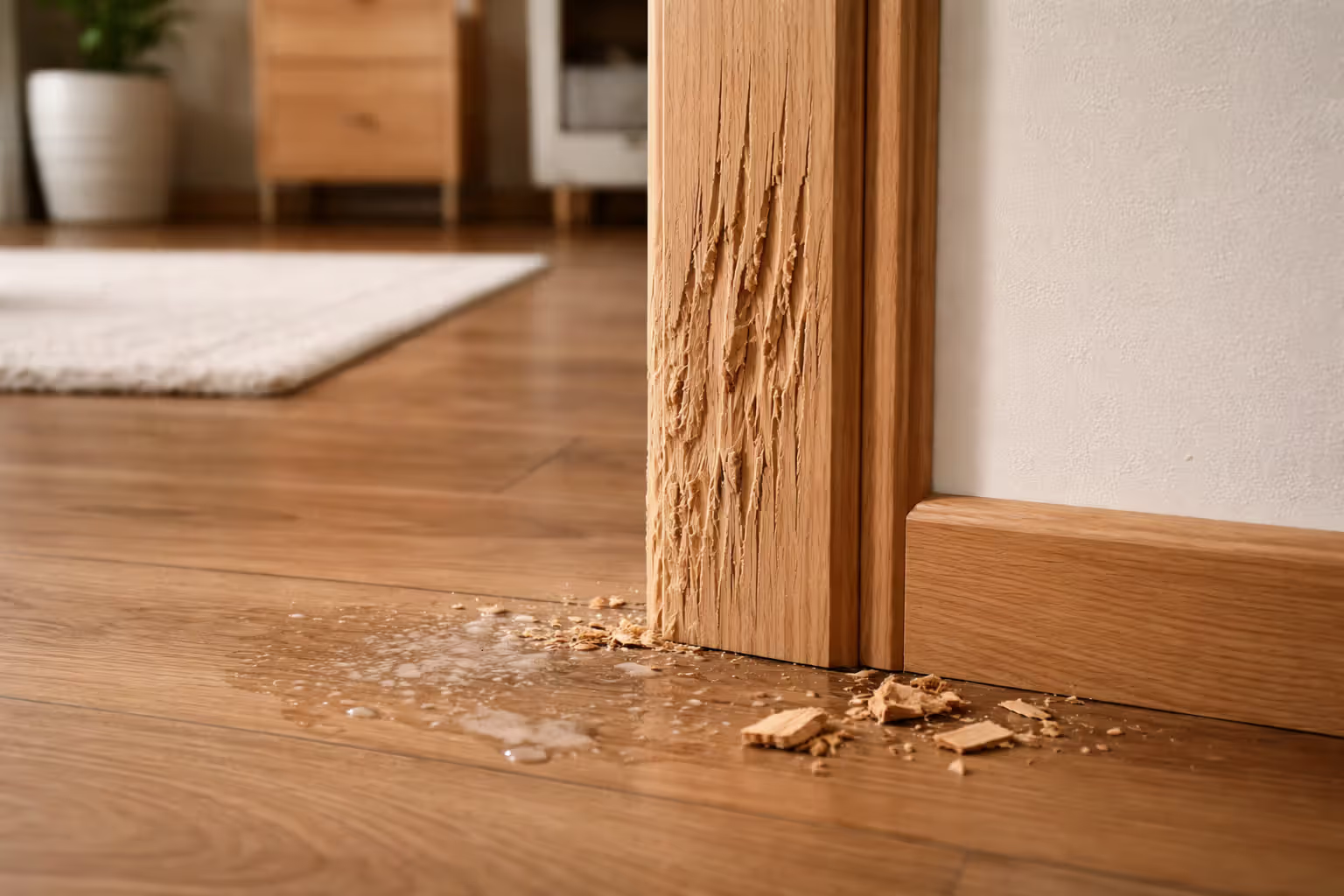
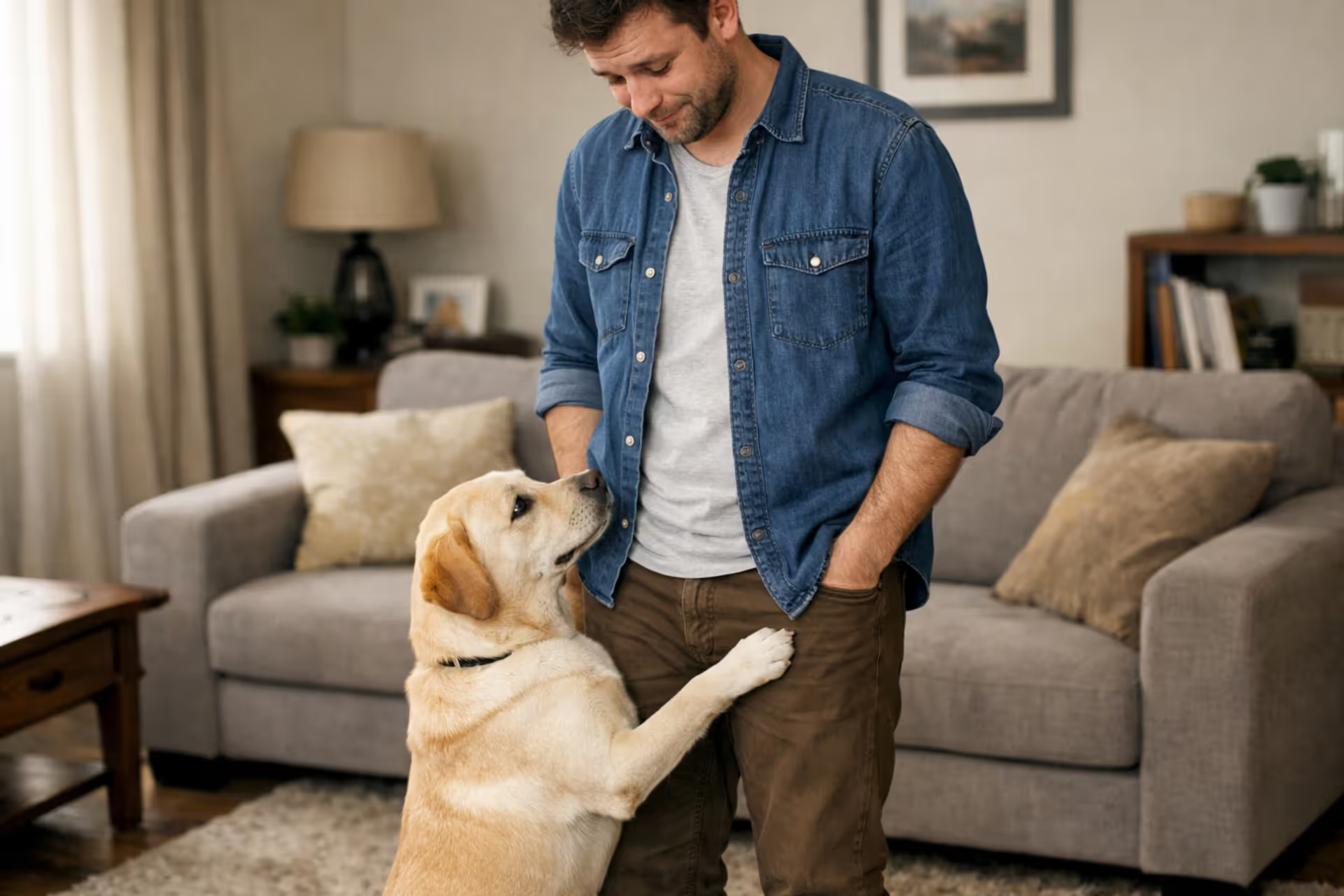
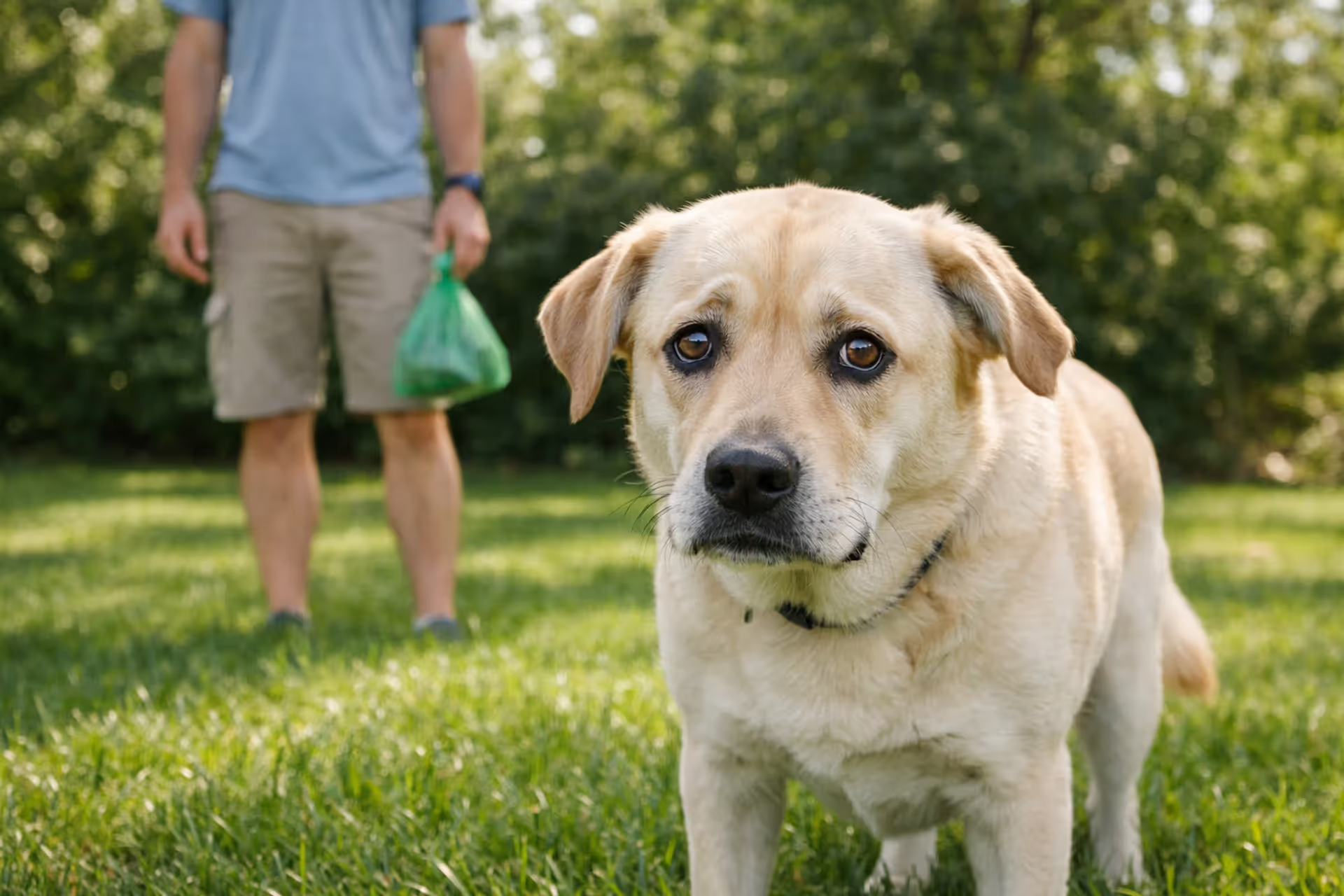
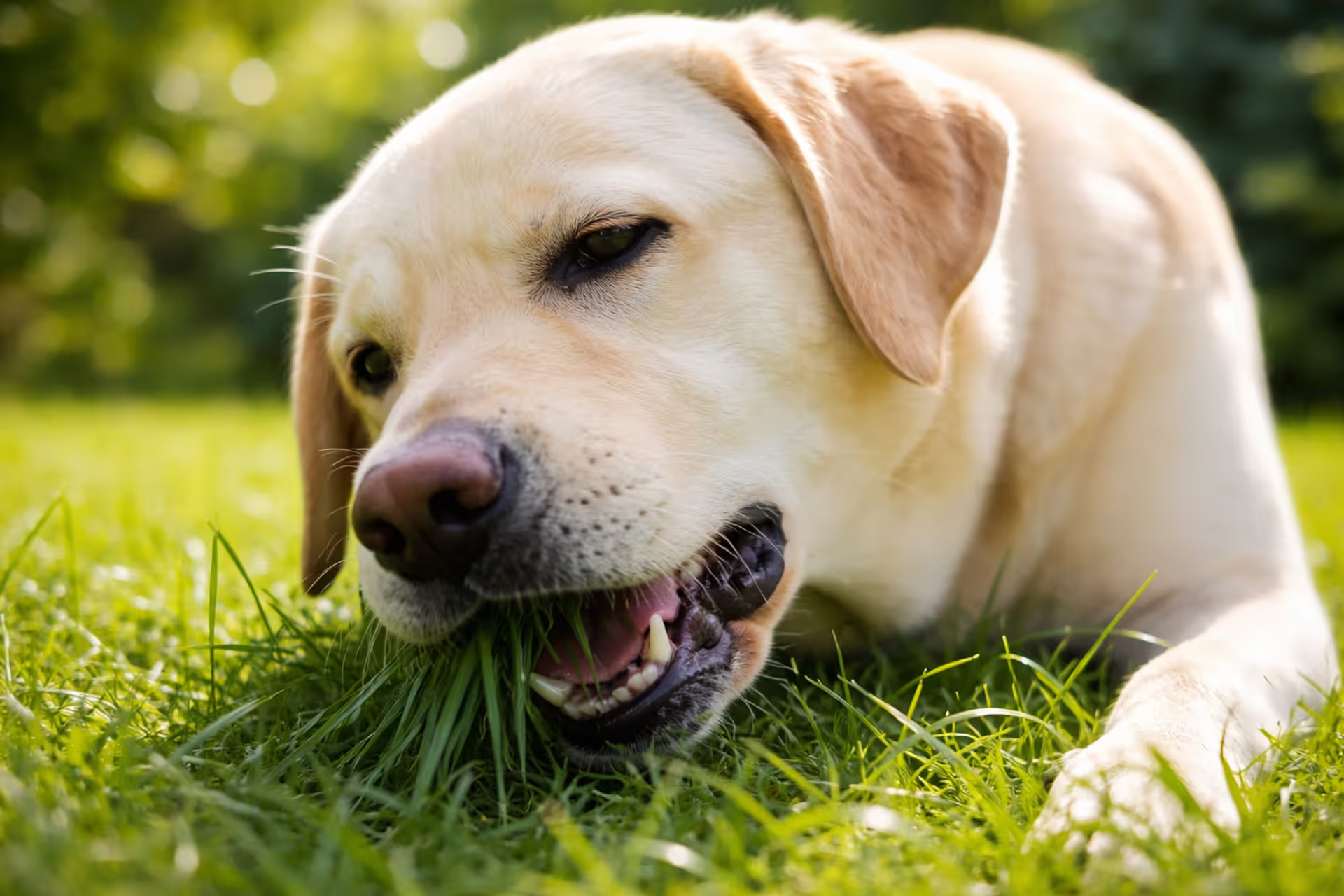
Last Tuesday, your normally calm Labrador shredded your couch cushions. Yesterday, she scratched the door frame so hard she left claw marks in the wood. This morning, your neighbor mentioned hearing constant howling while you were at work.
Here's what many owners don't realize: these behaviors aren't revenge for leaving or signs your dog needs "more discipline." You're watching anxiety in real time.
Dogs experience genuine psychological distress but can't exactly tell us about it. Instead, they show us through actions we often misread. That destroyed furniture? Probably panic, not spite. The constant barking? More likely terror than boredom. Learning to spot the real signals makes all the difference.
What Does Dog Anxiety Look Like? Physical and Behavioral Warning Signs
Spotting anxiety means watching for two distinct categories: what's happening in your dog's body and what they're doing about it.
Physical reactions usually show up first. Take panting—not the normal tongue-out breathing after a game of fetch, but rapid, shallow huffing when your dog's been lying down for an hour. This stress panting looks almost frantic, like they can't catch their breath.
Drooling becomes another tell-tale sign. I'm not talking about the normal slobber when dinner's coming. Anxious drooling creates puddles on the floor, soaks their chest fur, and happens nowhere near meal time.
Then there's trembling. Sure, Chihuahuas shake constantly, and some dogs shiver when cold. Anxiety trembling is different—it appears during specific triggers and vanishes once the stressor leaves. Your dog might shake violently during thunderstorms, then stop completely ten minutes after the weather clears.
Author: Hannah Bloomfield;
Source: alwaysonsalepetsupplies.com
Look at their eyes during stressful moments. Those pupils get huge, even in bright rooms. Many anxious dogs develop what trainers call "whale eye"—they track movement by rolling their eyes without turning their head, exposing the whites. Their ears flatten completely against their skull. The tail either tucks so far under it nearly touches their belly, or goes rigid and low.
Behavioral changes create the real headaches for most owners. Destructive chewing follows patterns that reveal motivation. Notice what gets destroyed: usually items that smell strongly of you. Shoes you wore yesterday, the TV remote you handled all evening, couch corners near where you sit, door frames you touch when leaving. Anxious dogs target these items specifically, not randomly.
Excessive vocalization sounds distinctly different from normal barking. It's higher pitched, more frantic, sometimes almost a scream. This barking or howling continues despite your attempts to stop it. The dog seems compelled to vocalize, unable to control it.
Watch for repetitive pacing along identical routes. Window to door. Door to couch. Couch to window. Same pattern, dozens of times, sometimes for hours. This compulsive movement signals internal distress they're trying to manage through motion.
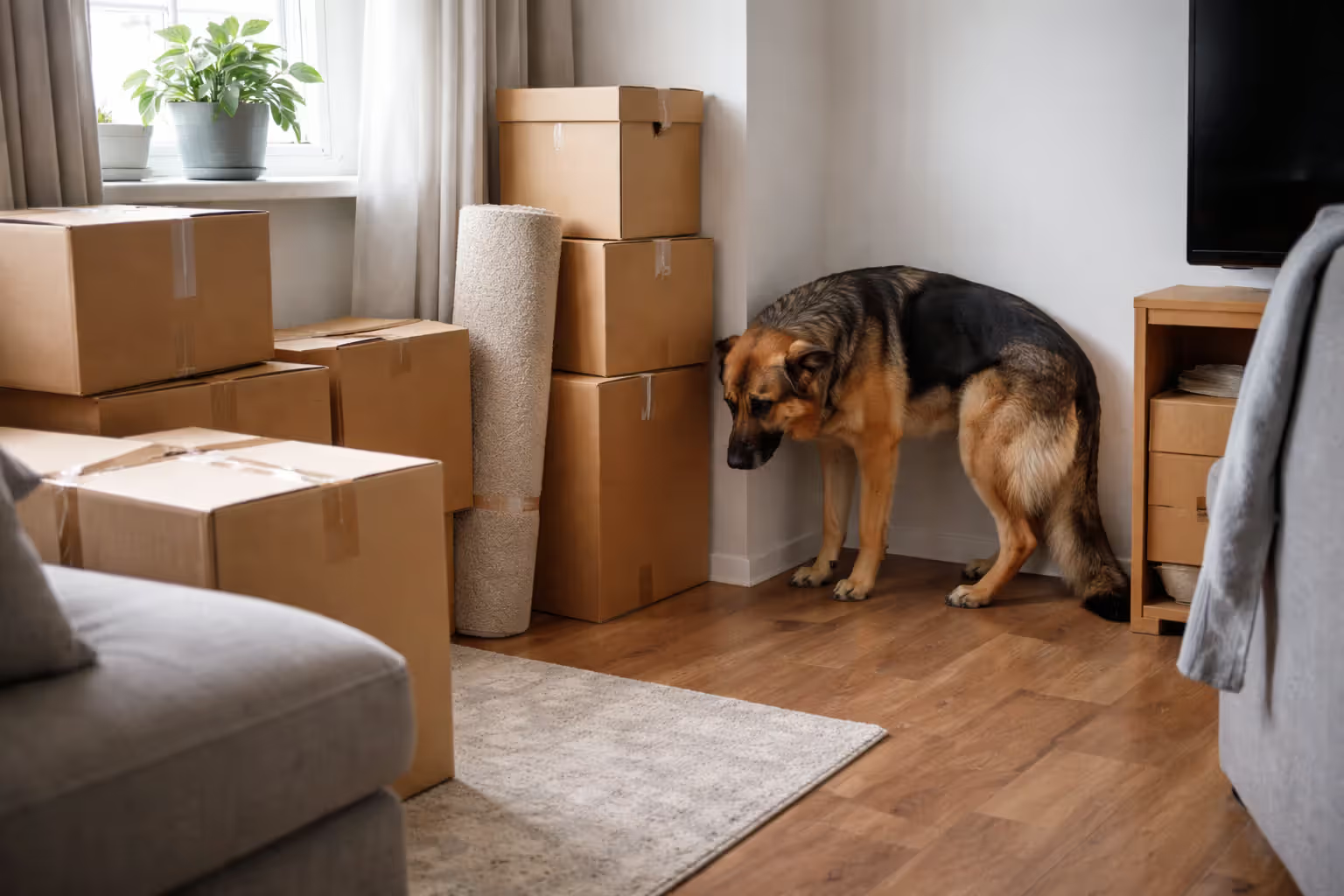
Some dogs go the opposite direction—complete shutdown mode. They wedge themselves behind toilets, press into corners, hide under beds for hours, or refuse to make eye contact. This freeze response is just as serious as the active symptoms.
Bathroom accidents in housetrained dogs raise red flags, especially when they happen near exits or in spots associated with stress triggers. The dog typically looks ashamed afterward—completely different from the confident posture of intentional marking.
Subtler indicators include obsessive licking (themselves, the floor, air), context-inappropriate yawning, and suddenly refusing food they'd normally inhale. When your food-motivated dog ignores breakfast because you're packing a suitcase, anxiety is talking.
The dog is a reflection of your energy, a mirror of your behavior. If you project calmness and confidence, you will find a calmer, more confident dog
— Cesar Millan
Why Dogs Develop Anxiety: Common Triggers and Root Causes
Anxiety doesn't materialize from nowhere. Specific circumstances create the conditions for it to take root.
Being separated from their person triggers the most common anxiety type. Dogs evolved as social animals with deep pack bonds. When you leave, some dogs don't just miss you—their brain interprets your departure as potential abandonment or incoming danger, triggering genuine panic responses.
Loud or unexpected sounds wreak havoc on canine nervous systems. Thunderstorms, fireworks, construction equipment, garbage trucks, even vacuum cleaners can create lasting fear. Remember, dogs hear frequencies humans can't detect and at volumes four times greater than ours. That distant firecracker sounds like an explosion right next to their head.
Previous trauma leaves permanent mental scars. That rescue who lived in a hoarding situation might panic in confined spaces forever. The dog adopted from an abusive home may always flinch when someone raises their voice, even years into living somewhere safe. A dog who experienced starvation might resource-guard food despite never missing a meal in your house.
Missing out on socialization during puppyhood's critical window (roughly three to fourteen weeks) produces adults terrified of normal everyday stimuli. Puppies who never met children often fear them as adults. Those who never rode in vehicles develop severe car anxiety. Limited early exposure to varied people, places, sounds, and experiences creates dogs who view the world as threatening.
Life changes shake a dog's foundation. Moving houses, welcoming a new baby, losing another household pet, even rearranging furniture—these alterations disrupt the predictability anxious dogs desperately need. Their entire sense of safety relies on familiar routines and scents. Change those foundational elements, and many dogs spiral.
Author: Hannah Bloomfield;
Source: alwaysonsalepetsupplies.com
Getting older introduces confusing new fears. Senior dogs develop cognitive dysfunction syndrome (essentially canine dementia), causing disorientation, confusion, and fear of previously familiar situations. An elderly dog might suddenly seem lost in the home they've navigated confidently for a decade.
Underlying medical problems frequently mimic anxiety. Thyroid imbalances, chronic pain from arthritis, neurological disorders, even intestinal parasites produce behaviors identical to psychological anxiety. This overlap explains why veterinary examination matters before assuming the issue is purely behavioral.
Genetic factors definitely contribute. Certain breeds—Border Collies, Australian Shepherds, German Shepherds, working dogs without adequate outlets—show higher anxiety rates. Some bloodlines within breeds produce anxious puppies regardless of environment. Dogs bred from anxious parents frequently inherit the predisposition.
Separation Anxiety in Dogs: The Most Common Form
Veterinary behaviorists report that separation anxiety accounts for 20-40% of their caseload, making it the most frequently diagnosed anxiety disorder in dogs.
How Separation Anxiety Differs from Normal Attachment
Every dog bonds with their family. Healthy bonding looks like your dog enjoying hanging out with you, maybe following you between rooms, showing happiness when you return home, but settling calmly when you leave.
Separation anxiety crosses into dysfunction territory. These dogs cannot achieve calmness alone, period. Their distress launches the second they catch pre-departure signals—sometimes when you just pick up your keys or put on work shoes. The panic doesn't decrease as time passes. A dog might be equally frantic after three hours as after twenty minutes.
Dogs with typical attachment might whine briefly when you leave, then nap or chew a toy. Dogs with separation anxiety escalate into full-blown panic: destructive episodes, non-stop vocalization, escape attempts that result in injuries, sometimes self-harm.
The fundamental distinction: dogs experiencing separation anxiety aren't acting out from spite or insufficient training. They're having what humans would recognize as a panic attack—complete loss of control over their fear response.
Animals are sentient beings who experience a range of emotions including fear, anxiety, and distress. Understanding this is the first step toward helping them heal
— Marc Bekoff
Specific Symptoms That Point to Separation Issues
During your pre-departure routine, separation-anxious dogs become your shadow, following you literally everywhere. They show visible stress when you grab your work bag or put on specific clothing. Some start panting, pacing, or whining just from watching these rituals. Others physically try to prevent your departure—blocking doorways, grabbing your clothing with their mouth, standing between you and the exit.
Within minutes of your departure, anxiety hits peak intensity. Neighbors frequently report that howling or barking begins before your car even leaves the driveway. Home security footage reveals dogs throwing themselves at doors, scratching at windows until their paws bleed, or destroying items specifically near exits. Drool production goes into overdrive—some dogs are literally soaked when owners return.
The destruction pattern tells the story. Bored dogs might chew various random objects throughout your house. Separation-anxious dogs laser-focus on escape routes: gouging door frames until nails break, chewing through window sills, ripping down blinds. They're attempting to reach you, not entertaining themselves.
Throughout your absence, anxiety either plateaus at extreme levels or the dog exhausts themselves into collapse. Many refuse any food, even high-value treats left as distractions. Water intake typically drops dramatically too.
When you return, these dogs display greeting behaviors wildly disproportionate to your absence length. A five-minute trip to check the mail gets the same frenzied reunion as an eight-hour shift at work. Dogs might urinate from excitement, jump uncontrollably, or vocalize so intensely they sound injured.
Physical evidence scattered throughout your home tells the complete story: excessive drool puddles, damaged doors or crate bars, destroyed belongings concentrated near exits, injuries to the dog's mouth, paws, or nails from desperate escape attempts.
Author: Hannah Bloomfield;
Source: alwaysonsalepetsupplies.com
When Dog Anxiety Requires Professional Help
Not every anxious dog needs professional intervention, but certain warning signs indicate you've exceeded what home management can fix.
Self-inflicted injuries demand immediate professional attention. Dogs who break teeth on crate bars, injure themselves attempting to escape, or lick themselves until they create open wounds need both veterinary care and behavioral intervention. Anxiety this severe overrides even pain signals—the dog literally can't control their response.
Total inability to function in the presence of triggers signals severe anxiety. Dogs who become completely catatonic during storms or so frantic during separation that they refuse food, water, and rest for extended periods need professional evaluation immediately.
Fear-based aggression—snapping when cornered while terrified, biting when approached during panic episodes—requires expert guidance before injuries occur. Fear aggression escalates rapidly without proper intervention protocols.
Zero improvement despite consistent home efforts after 4-6 weeks suggests deeper issues than simple management can address. If you've created safe spaces, maintained consistent routines, and attempted gradual desensitization without seeing any progress whatsoever, it's time to call in professionals.
Quality of life suffering should drive your decision timeline. If your dog spends the majority of their day stressed, if you can't leave home without triggering panic, or if anxiety prevents normal activities like walks or play, professional help isn't a luxury—it's necessary for your dog's wellbeing.
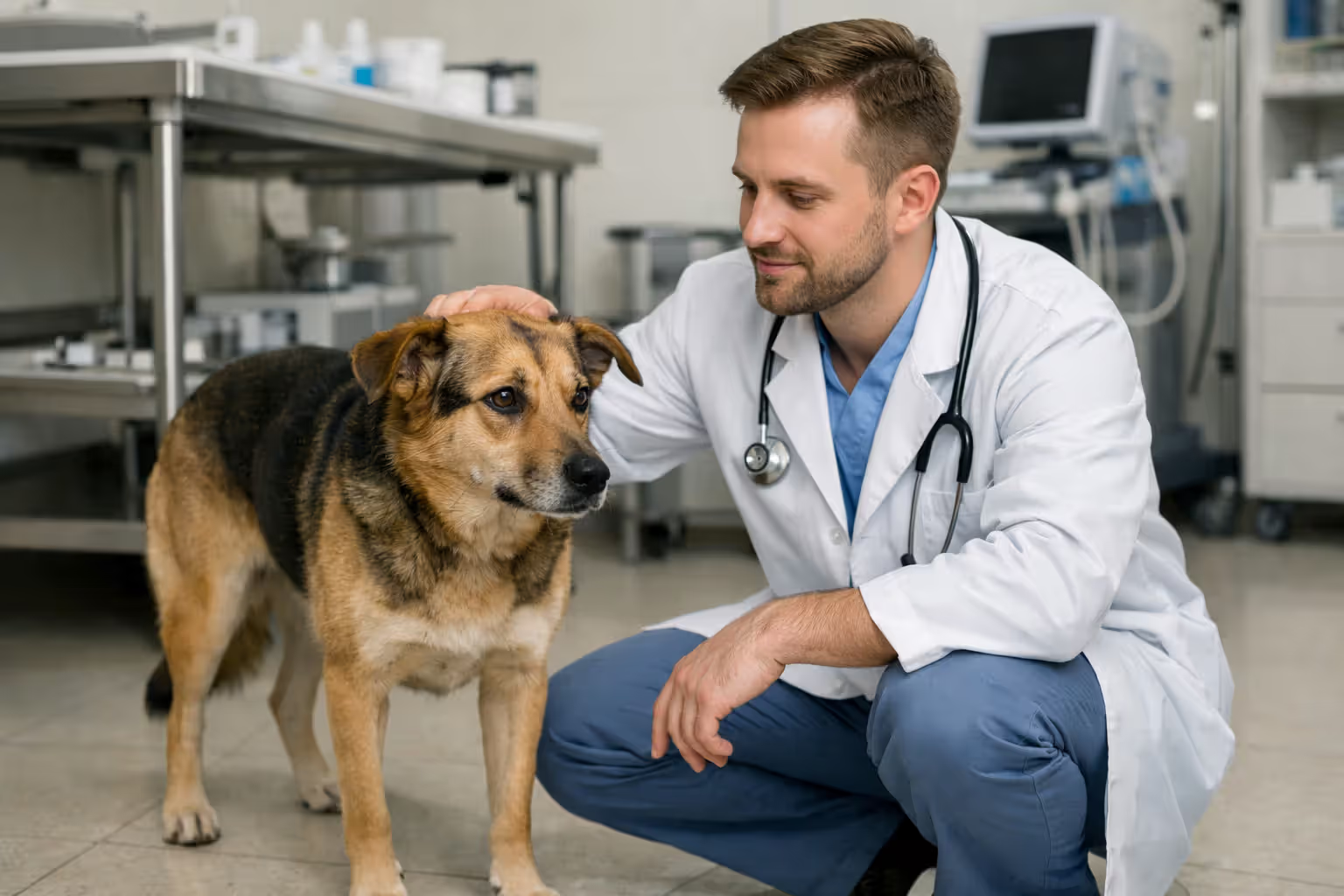
Start with your veterinarian to rule out medical causes and discuss medication options if appropriate. Many general practice vets successfully manage straightforward anxiety cases.
Veterinary behaviorists are DVMs with specialized training in behavioral medicine—board-certified specialists who handle complex cases, especially those requiring sophisticated medication management alongside behavior modification. The American College of Veterinary Behaviorists lists these rare specialists on their website.
Certified dog behavior consultants or certified applied animal behaviorists design detailed behavior modification plans without prescribing medication. They're valuable for creating structured training protocols and coordinate with your vet when medication becomes necessary.
The biggest mistake owners make: waiting until the problem becomes unbearable before seeking help. Early intervention produces dramatically better outcomes and prevents anxiety from becoming deeply embedded in your dog's behavioral patterns.
Author: Hannah Bloomfield;
Source: alwaysonsalepetsupplies.com
Proven Methods to Calm an Anxious Dog
Addressing anxiety effectively requires combining multiple strategies. Single-solution approaches rarely succeed for moderate to severe cases.
Environmental Changes and Management Strategies
Your dog's physical surroundings dramatically impact their stress levels. Thoughtful modifications reduce trigger intensity.
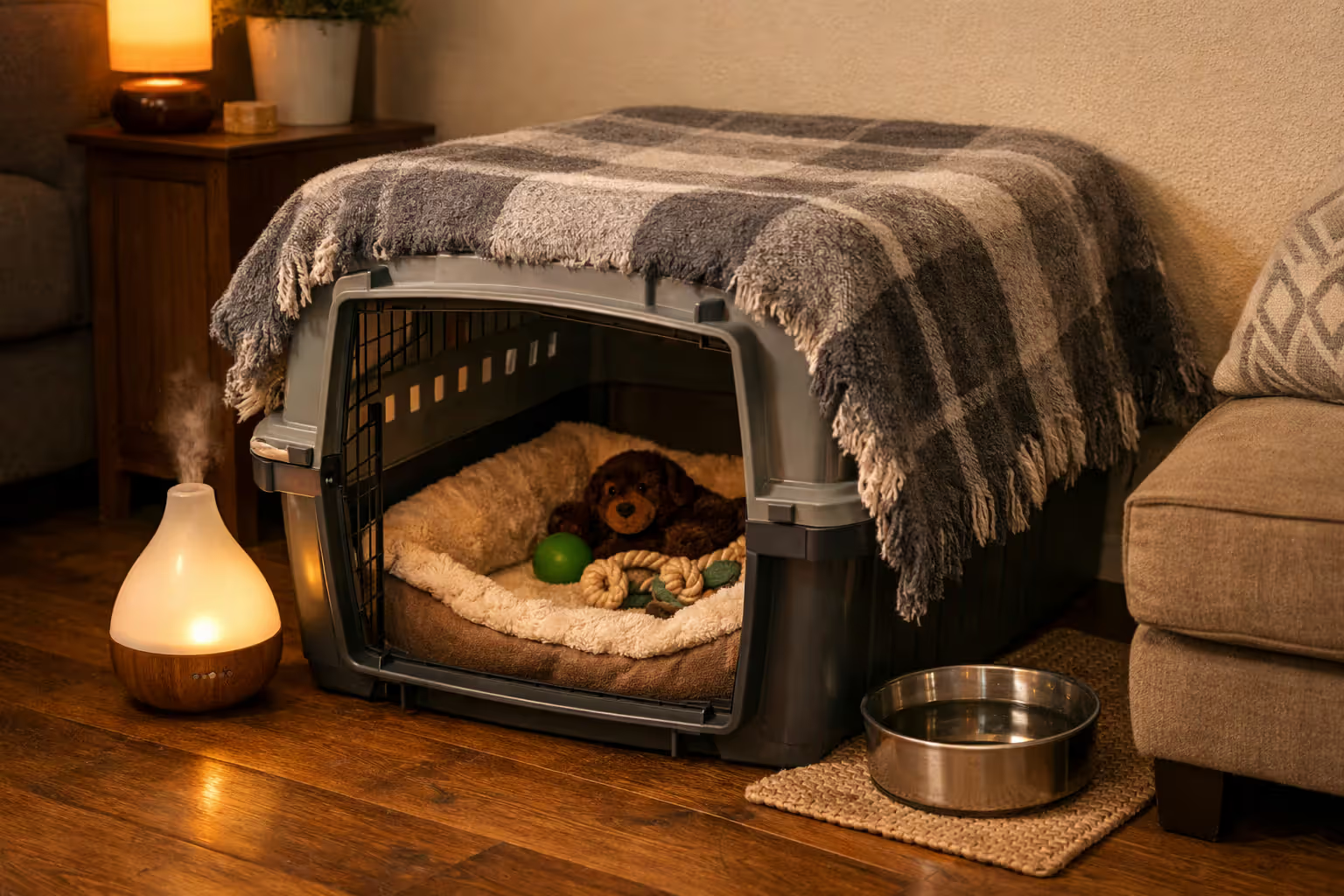
Build a genuine safe space—not just a crate shoved in a corner, but a genuinely comforting environment. Maybe it's a quiet bedroom with blankets that smell like you, a covered crate with soft music playing, or a specific corner filled with familiar toys. Critical point: this space needs 24/7 access, not just availability when you leave—otherwise it becomes psychologically linked with abandonment.
Lower trigger exposure during initial training phases. If thunderstorms trigger panic, create an interior "storm room" with white noise machines masking sounds. For separation anxiety, practice absences lasting only seconds initially rather than jumping straight to eight-hour workdays.
Lock in rigid consistency around routines. Feed at identical times daily, walk the same routes during early training, keep furniture in consistent positions. Anxious dogs find tremendous comfort in predictability. Variety can be gradually introduced once anxiety improves.
Decouple pre-departure signals from actual departures. If grabbing keys triggers panic, start picking them up randomly when you're staying home. Put on your coat, then settle in to watch TV. Systematically destroy the association between these signals and your actual leaving.
Use exercise strategically—but understand its real limitations. Tired dogs are generally calmer, but exercise alone won't cure true anxiety disorders. Morning walks before work help, but dogs with genuine separation anxiety will still panic once alone, just with marginally less energy to express it.
Introduce background sounds that provide company cues. Leaving a TV or radio playing gives the illusion of human presence. Specific music frequencies designed for canine hearing (yes, research-backed products exist) can measurably lower stress indicators like heart rate and cortisol.
Author: Hannah Bloomfield;
Source: alwaysonsalepetsupplies.com
Training Techniques That Reduce Anxiety
Behavior modification addresses root causes rather than just controlling symptoms.
Systematic desensitization means gradual exposure to anxiety triggers at intensities low enough to avoid triggering a reaction. For separation anxiety, you might start by stepping outside the door for literally five seconds, then returning before anxiety even begins. Gradually extend duration over weeks or months. The essential rule: never push into the anxiety zone. Always stay below reaction threshold.
Counter-conditioning rewires emotional responses to triggers. You're matching the scary thing with intensely positive experiences. If strangers terrify your dog, have strangers toss high-value treats from a distance without approaching. Eventually, the dog's emotional response shifts—strangers predict good things instead of threats.
Build "settle" behaviors that give anxious dogs a concrete job during stressful situations. Train your dog to go to a specific mat and lie down on cue, heavily rewarding calm behavior. Practice this hundreds of times in zero-stress situations first. Eventually, the mat itself becomes a trigger for calmness.
Develop impulse control through exercises that build confidence and coping capacity. Teaching "wait" before doorways, "leave it" with tempting items, and "stay" in various contexts helps dogs learn they can manage their own responses. This sense of self-control often reduces generalized anxiety.
Eliminate punishment entirely. Yelling at an anxious dog for destruction or accidents layers fear on top of existing anxiety. They're not deliberately misbehaving—they're experiencing panic. Punishment invariably worsens anxiety, never improves it.
Punishment suppresses behavior in the short term but does nothing to address the underlying emotional state driving that behavior. In fearful animals, it almost always makes things worse
— Karen Overall
Realistic timeline expectations matter: behavior modification for anxiety disorders takes months, not weeks. Expecting rapid results leads to frustration and abandoned training programs.
Supplements, Medications, and Products Worth Considering
Supplement options provide mild support for some dogs. L-theanine (an amino acid found in green tea leaves) encourages relaxation without causing sedation. Casein (a milk-derived protein) has demonstrated calming properties. Products containing these ingredients—like Anxitane or Zylkene—help some dogs experiencing mild anxiety. They lack the strength to address severe cases but can support broader intervention strategies.
Specific probiotic strains (like Bifidobacterium longum) show promise in research studies. The gut-brain connection operates in dogs just as it does in humans, and certain anxiety types respond to microbiome modifications.
CBD products have flooded the market with wildly varying quality and essentially no regulation. Some owners report positive results, but rigorous research remains limited. If experimenting with CBD, choose products specifically formulated for dogs with third-party testing confirming purity and potency.
Prescription medications become necessary tools for moderate to severe anxiety. They're not admissions of failure or options of last resort—they're legitimate medical treatments that often make behavior modification actually possible.
SSRIs (selective serotonin reuptake inhibitors) like fluoxetine or sertraline are daily medications that reduce baseline anxiety levels. They require 4-6 weeks to reach full effectiveness and work best when combined with behavior modification. These aren't sedatives—they're adjusting brain chemistry to reduce reactivity to triggers.
Benzodiazepines like alprazolam provide fast-acting relief for situational anxiety—dogs who panic during thunderstorms or fireworks displays. They're inappropriate for daily use but can prevent complete psychological meltdowns during predictable stressful events.
Trazodone occupies middle ground, providing both sedation and anxiety reduction. It starts working within hours and is commonly used for vet visits, travel, or leaving separation-anxious dogs alone during the training process.
Sileo—a gel applied directly to gums—specifically targets noise phobias. It's FDA-approved for this purpose and works relatively quickly without causing heavy sedation.
Pressure wraps like Thundershirts apply gentle, continuous pressure that calms some dogs through the same mechanism as infant swaddling. They show better results for mild anxiety and require proper introduction—just strapping one on a panicking dog won't magically help.
Pheromone diffusers (Adaptil brand) release synthetic versions of dog-appeasing pheromones. Research results are mixed, but they're completely safe and genuinely help some dogs. Their effect is subtle—insufficient for severe anxiety but potentially useful as one component of a broader approach.
Interactive puzzle toys and food-dispensing products provide mental stimulation that can reduce anxiety rooted in boredom or insufficient mental exercise. A Kong stuffed with frozen peanut butter gives an anxious dog a productive activity besides pacing or panicking.
The reality is this: products and supplements function best as components of comprehensive treatment plans, not magic bullets used in isolation.
Frequently Asked Questions About Dog Anxiety
Will my dog's anxiety improve on its own if I just wait it out?
Mild anxiety responses to temporary stressors might fade once that stressor disappears. Your dog who's stressed about construction happening next door will probably relax once the project finishes and normal quiet returns. However, true anxiety disorders—separation anxiety, trauma-based fears, noise phobias—rarely improve without active intervention. Actually, anxiety typically intensifies over time as dogs repeatedly practice anxious behaviors, strengthening those neural pathways with each repetition. The destruction escalates, the panic deepens, and triggers expand to include more and more situations. Getting ahead of it early prevents this progression and gives your dog the best shot at meaningful improvement.Mild anxiety responses to temporary stressors might fade once that stressor disappears. Your dog who's stressed about construction happening next door will probably relax once the project finishes and normal quiet returns. However, true anxiety disorders—separation anxiety, trauma-based fears, noise phobias—rarely improve without active intervention. Actually, anxiety typically intensifies over time as dogs repeatedly practice anxious behaviors, strengthening those neural pathways with each repetition. The destruction escalates, the panic deepens, and triggers expand to include more and more situations. Getting ahead of it early prevents this progression and gives your dog the best shot at meaningful improvement.
Which dog breeds struggle most with anxiety?
Working breeds like Border Collies, Australian Shepherds, and German Shepherds show elevated anxiety rates, particularly when their intense mental and physical requirements aren't adequately met. Small breeds including Chihuahuas and Italian Greyhounds frequently display anxious behaviors, possibly because their small size makes the world genuinely more threatening. Labrador Retrievers and Golden Retrievers, despite generally stable temperaments, commonly develop separation anxiety due to their intensely bonded nature. That said, literally any breed or mixed breed can develop anxiety—individual temperament and life experiences matter far more than breed alone. Rescue dogs and dogs from puppy mills show significantly elevated anxiety rates regardless of their breed background.
Should I leave my anxious dog home alone, or will that worsen the problem?
The answer depends entirely on severity. Dogs with mild anxiety who settle down within 15-20 minutes of your departure can be left alone while you work on training protocols. Dogs who panic intensely, injure themselves attempting escape, or never settle shouldn't be left alone during early treatment phases—repeatedly flooding them with stress hormones and panic reinforces the response rather than improving it. For severe cases, you'll need to arrange doggy daycare, hire pet sitters, work from home, or have family help while you implement your treatment plan. Build up to longer absences using systematic desensitization protocols. Leaving a severely anxious dog alone for eight-hour stretches while "hoping they'll eventually adjust" typically intensifies the anxiety rather than resolving it.
What age do dogs typically start showing anxiety?
Anxiety can surface at literally any life stage. Separation anxiety frequently appears between six months and two years as adolescent dogs develop stronger awareness of social bonds and attachment. Puppies experience fear periods around 8-11 weeks and again during adolescence (roughly 6-14 months), when they become more suspicious of novel stimuli—negative experiences during these developmental windows can create permanent anxiety issues. Senior dogs (seven years and older) develop new anxieties connected to cognitive decline, chronic pain conditions, or declining hearing and vision. Newly adopted rescue dogs might show anxiety immediately or months later once they've bonded and now fear losing this newfound security. Some puppies display anxious tendencies from their earliest weeks, suggesting genetic predisposition.
How do I tell the difference between an anxious dog and an excited one?
Both anxiety and excitement can produce jumping, vocalization, and intense energy, which creates confusion for many owners. Watch for these distinctions: Excited dogs move with loose, wiggly body language and relaxed facial muscles. Their tail wags in wide, full-body sweeping motions. They can easily redirect attention to toys or treats. The behavior makes sense in context—you just walked through the door, or it's dinner time. Anxious dogs display tense body language throughout—stiff rigid posture, ears pinned flat, showing the whites of their eyes, tail either tucked hard or wagging stiffly. They often can't focus on treats or toys because stress overrides their ability to engage with those items. The behavior seems disproportionate to what's actually happening—intense reaction to barely audible sounds, complete inability to settle down. Watch what happens after the first few minutes: excited dogs calm quickly, while anxious dogs maintain arousal or escalate further.
Does what I feed my dog affect their anxiety levels?
Diet can influence anxiety, though nutrition alone won't cure an anxiety disorder. Tryptophan (an amino acid found in turkey and certain other proteins) serves as a serotonin precursor, potentially supporting calmer moods. Some dogs improve when switched to different protein sources, possibly because undiagnosed food sensitivities were causing physical discomfort that manifested as anxious behaviors. Dog foods formulated with added calming ingredients (L-theanine, chamomile, specific probiotic strains) offer mild supportive benefits. Avoid foods loaded with simple carbohydrates that cause blood sugar spikes and crashes. Feeding schedule consistency matters too—erratic meal times increase anxiety in dogs who rely heavily on predictable routines for emotional stability. If you suspect diet plays a role in your dog's anxiety, work with your veterinarian to trial elimination diets or therapeutic formulas designed to support emotional health, while maintaining realistic expectations about how much diet alone can accomplish.
Catching anxiety symptoms early gives you the best opportunity to help your dog before patterns become deeply ingrained. Anxiety isn't a training failure or character flaw—it's a legitimate emotional disorder that responds to appropriate treatment.
The most successful approach combines environmental management, systematic behavior modification, and medical intervention when the situation requires it. Quick fixes don't exist for genuine anxiety disorders. You'll need patience, consistency, and frequently professional guidance to see meaningful progress.
Your anxious dog isn't deliberately making life difficult—they're struggling with genuine psychological distress. With proper recognition of symptoms, understanding of underlying causes, and commitment to a comprehensive treatment plan tailored to your specific dog's needs, most anxious dogs achieve significant improvement and can live comfortable, fulfilling lives.
Wondering why your dog humps people, other dogs, or random objects? You’re not alone. Discover the real triggers behind mounting behavior, find out when it’s completely normal, and learn 5 proven training methods that actually work to stop it for good
Discover why dogs eat poop, what health risks coprophagia carries, and 7 proven methods to stop this behavior fast. Vet-backed solutions that actually work — for puppies and adult dogs alike. Your clean, stress-free walks start right here
Discover why dogs eat grass, what it means for their health, and when to take action. Learn the science behind this common behavior, its link to vomiting, and how to keep your dog safe while grazing. Find out which signs are normal, which are red flags, and what vets recommend
Discover why dogs eat dirt — from boredom and nutritional gaps to pica and hidden illness. Understand the real health risks, spot the warning signs early, and apply 7 vet-approved methods to stop this behavior for good
The content on this website is provided for general informational and educational purposes only. It is intended to offer guidance on dog breeds, behavior, health, care, and lifestyle, and should not be considered a substitute for professional veterinary advice, diagnosis, or treatment.
All information published on this site is based on general knowledge, widely accepted research, and practical experience, but individual dogs may differ in behavior, health conditions, and needs. Results and outcomes may vary depending on the dog, environment, and circumstances.
The website is not responsible for any errors or omissions, or for actions taken based on the information provided. For specific concerns regarding your dog’s health or behavior, always consult a qualified veterinarian or professional dog specialist.